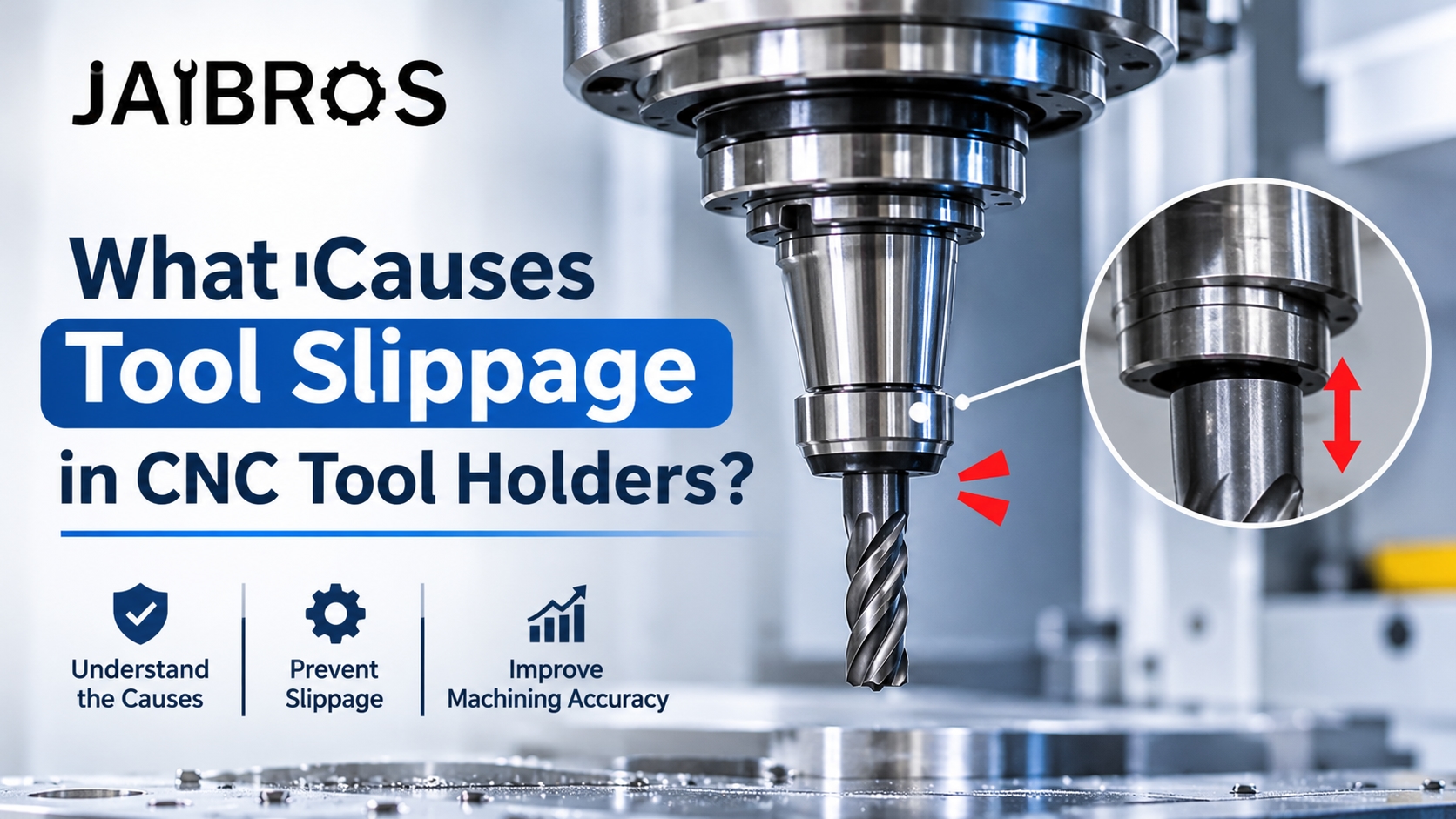
Tool slippage is a common problem in CNC machining that can affect machining accuracy, cutting performance, and production quality. It happens when a cutting tool moves from its original position inside the holder during machining. This movement may be small at first, but it can create serious problems when the machine operates at high speeds or under heavy cutting loads.
A CNC tool must remain securely clamped throughout the machining process. If the gripping force is insufficient, the cutter may gradually move, pull out, or rotate inside the holding system. This can result in poor surface finish, incorrect dimensions, excessive vibration, and unexpected tool breakage.
Understanding the causes of tool slippage helps machinists identify problems early and maintain consistent machining performance. In this article, we will explain the major reasons behind tool slippage, its warning signs, and practical ways to prevent it.
What Is Tool Slippage in CNC Machining?
Tool slippage occurs when a cutting tool loses its proper gripping position inside the holder during a machining operation. It may move axially, meaning it pulls out slightly, or rotationally, meaning it turns inside the clamping mechanism.
The type of movement depends on the holding system, cutting conditions, and the forces applied during machining.
For example, during milling, a cutter experiences rotational forces and cutting resistance. If the holder cannot provide sufficient gripping force, the cutting tool may move from its original position.
In some cases, slippage happens immediately during heavy cutting. In other situations, it develops gradually because of worn components, incorrect clamping, or repeated machining loads.
7 Common Causes of Tool Slippage in CNC Tool Holders
Several mechanical and operational factors can cause a cutting tool to lose its grip. Understanding these reasons makes troubleshooting easier.
1. Incorrect Clamping Force
Insufficient clamping force is one of the most common reasons for tool slippage.
When the cutting tool is not tightened correctly, the holder cannot maintain enough pressure to resist machining forces. As a result, the cutter may move during operation.
This problem can occur when:
The collet nut is not tightened correctly.
The wrong tightening procedure is followed.
The clamping mechanism is worn.
The tool is not inserted to the recommended depth.
The operator uses an incorrect tightening method.
However, applying excessive tightening force is not a solution. Over-tightening can damage threads, deform components, or reduce the service life of the holding system.
Always follow the manufacturer's recommended tightening procedure and torque specifications.
2. Worn or Damaged Collets
Collets play an important role in gripping cutting tools securely. They apply clamping pressure around the tool shank and help maintain its position during machining.
Over time, repeated tightening, loosening, and machining loads can cause collets to wear.
Common signs of collet damage include:
Visible cracks or deformation.
Damaged gripping surfaces.
Uneven contact with the tool shank.
Reduced gripping pressure.
Difficulty maintaining consistent tool positioning.
A worn collet may not distribute clamping pressure evenly. This can allow the cutter to move when cutting resistance increases.
Regularly inspect collets and replace damaged components instead of continuing to use them.
3. Oil, Coolant, or Chips on the Tool Shank
Cleanliness is essential for reliable tool holding. Oil, coolant residue, dust, and small metal chips can interfere with the gripping contact between the tool shank and the holder.
Contamination may reduce friction or prevent the tool from seating correctly. It can also affect concentricity and increase runout.
For example, a small chip trapped inside a collet can create uneven contact pressure. During machining, this may lead to vibration and unstable tool positioning.
To prevent this problem:
Clean the tool shank before installation.
Remove chips and dust from the gripping area.
Keep collets and internal bores clean.
Use a suitable lint-free cleaning cloth.
Inspect the holder before every setup.
Never ignore small particles because even minor contamination can affect precision machining.
4. Incorrect Tool Holder Selection
Different machining operations require different holding systems. Selecting an unsuitable holder for the cutting application can increase the chances of slippage.
For example, a general-purpose collet chuck may not always be the best choice for applications involving high cutting forces or heavy side loads.
Different holding systems have different working characteristics:
ER collet holders provide flexible gripping for various shank diameters within the specified range.
Side-lock holders use a set screw that engages with the flat on a compatible cutter shank.
Shrink-fit holders use thermal expansion and contraction to grip the tool.
Hydraulic holders use internal pressure to provide uniform clamping.
The correct selection depends on the cutter design, shank size, machining load, spindle speed, and application requirements.
Choosing a suitable holding system helps maintain stability and reduces unwanted tool movement.
5. Excessive Cutting Forces and Incorrect Machining Parameters
Cutting forces directly affect the stability of the toolholding arrangement.
When machining parameters are too aggressive, the cutting tool experiences higher mechanical loads. These loads can exceed the gripping capacity of the holding system.
Common reasons include:
Excessive depth of cut.
High feed rate.
Incorrect spindle speed.
Excessive radial engagement.
Unsuitable cutting conditions for the workpiece material.
For example, when an end mill removes too much material in one pass, the cutting resistance increases. If the holding system cannot handle the load, the cutter may move or pull out.
Machinists should select cutting parameters according to the tool diameter, material, flute geometry, and recommended machining conditions.
Reducing excessive cutting loads can improve machining stability and protect the holding components.
6. Damaged Tool Holder or Spindle Taper
The contact between the holder taper and spindle is important for proper positioning and stability.
If either surface becomes damaged, the holder may not seat correctly inside the spindle.
Possible causes include:
Scratches or dents on the taper.
Rust or corrosion.
Wear from repeated tool changes.
Contamination between mating surfaces.
Incorrect handling or accidental dropping.
Damaged taper surfaces can lead to poor contact, increased runout, vibration, and instability.
It is also important to understand that spindle retention and cutter clamping are two different functions. A holder may grip the cutter correctly but still have a problem at the spindle interface.
Inspect both surfaces and follow the machine manufacturer's maintenance instructions.
7. Excessive Tool Overhang
Tool overhang refers to the length of the cutting tool extending beyond the holder.
A longer overhang increases the distance between the gripping point and the cutting area. This can increase bending and vibration during machining.
When cutting forces become high, excessive overhang can create additional stress on the holding system.
It may also affect dimensional accuracy and surface quality.
To reduce this risk:
Use the shortest practical tool length.
Avoid unnecessary tool projection.
Select the correct holder for the application.
Reduce cutting loads when required.
Check for vibration during machining.
Proper tool projection helps maintain rigidity and improves machining consistency.
Warning Signs of Tool Slippage
Tool slippage does not always happen suddenly. In many cases, the machine shows warning signs before a serious problem develops.
Machinists should look for the following symptoms:
1. Unexpected dimensional changes: If the tool moves during machining, the final component may not match the programmed dimensions.
2. Poor surface finish: Tool movement can create irregular cutting marks and inconsistent surface quality.
3. Unusual vibration or noise: A loose cutting tool may produce abnormal vibration, chatter, or unexpected sounds.
4. Frequent cutter breakage: Poor gripping conditions can increase cutting instability and cause premature tool failure.
5. Visible movement marks: Scratches or polished areas on the shank may indicate movement inside the gripping area.
6. Changes in tool length: If a cutter pulls out slightly, its actual cutting position may change.
If any of these symptoms appear, stop the machine safely and inspect the complete holding arrangement before restarting production.
How to Prevent Tool Slippage in CNC Machining
Preventing tool movement requires proper setup, regular inspection, and suitable machining practices.
1. Use the Correct Collet and Holder Size
Always match the gripping diameter with the actual tool shank diameter.
Using an incorrect collet size can reduce contact and clamping performance. Never force a tool into a collet that is outside its specified gripping range.
2. Follow the Correct Tightening Procedure
Use the correct spanner and tightening method for the holding system. Follow the specified torque recommendations where applicable.
Avoid excessive tightening because it can damage the holder or collet.
3. Maintain Clean Contact Surfaces
Clean the tool shank, holder bore, and spindle taper before installation.
Remove chips, dust, coolant residue, and other contaminants. A clean contact surface helps the components seat and grip correctly.
4. Check Tool Insertion Depth
Insert the cutter according to the holder manufacturer's instructions.
Insufficient engagement may reduce the available gripping area. However, the tool should not be pushed beyond the holder's designed seating depth.
5. Inspect Components Regularly
Check collets, nuts, holders, pull studs, and spindle interfaces for wear or damage.
Replace components that show cracks, deformation, or excessive wear. Follow the machine manufacturer's inspection and maintenance schedule.
6. Select Suitable Cutting Parameters
Use recommended speeds, feeds, and depths of cut for the material and cutter.
Avoid unnecessarily aggressive machining conditions, particularly when using long-reach cutters or smaller-diameter tools.
7. Monitor Runout and Tool Stability
Use an appropriate dial test indicator or other suitable measuring equipment to check runout.
High runout can indicate problems with the cutter, collet, holder, or spindle. Identifying these problems early helps prevent further machining issues.
CNC Tool Holder Maintenance Checklist
A regular maintenance routine can reduce unexpected machining problems and improve equipment reliability.
Inspection Area | What to Check |
Tool shank | Cleanliness, scratches, and wear |
Collet | Cracks, deformation, and gripping condition |
Collet nut | Thread condition and damage |
Holder bore | Contamination and wear |
Spindle taper | Dents, scratches, and fretting |
Pull stud | Correct type, condition, and installation |
Tool overhang | Correct projection and stability |
Runout | Measurement using suitable equipment |
The inspection frequency should depend on machine usage, machining conditions, and the manufacturer's recommendations.
Why Preventing Tool Slippage Is Important
Preventing slippage is not only about keeping the cutter in position. It also affects several important aspects of manufacturing.
Machining accuracy: Stable tool holding helps maintain the programmed cutting position and dimensional consistency.
Surface finish: Reduced unwanted movement helps produce smoother and more consistent machined surfaces.
Tool life: Proper gripping reduces unexpected movement, vibration, and uneven cutting loads.
Machine protection: Regular inspection helps identify problems before they affect the spindle or other machine components.
Production efficiency: Fewer unexpected tool failures and setup interruptions help maintain a consistent production schedule.
A properly maintained holding system supports reliable machining and reduces avoidable production problems.
Conclusion
Tool slippage in CNC machining can result from incorrect clamping, worn collets, contamination, unsuitable holders, excessive cutting forces, damaged spindle tapers, and excessive tool overhang. Identifying these causes early helps machinists maintain accuracy, improve tool life, and reduce unexpected production interruptions.
For workshops looking for reliable machining solutions, choosing suitable products from an experienced supplier is an important part of maintaining consistent performance. Explore the CNC tooling and holder range at Jaibros to find solutions that match your machining requirements.
Frequently Asked Questions (FAQs)
1. Why does a cutting tool slip inside a holder?
A cutting tool may slip because of insufficient clamping force, worn collets, incorrect shank sizing, or contamination inside the holder. Excessive cutting forces and improper tool installation can also contribute to the problem. Inspecting the gripping surfaces and checking the tightening procedure can help identify the actual cause.
2. Can incorrect collet size cause tool slippage?
Yes. An incorrectly sized collet may not provide proper contact around the tool shank. This can reduce gripping performance and allow unwanted movement during machining. Always select a collet that matches the tool's measured shank diameter and stays within the manufacturer's specified clamping range.
3. How often should CNC tool holders be inspected?
Inspection frequency depends on machining intensity, operating conditions, and the manufacturer's recommendations. A visual check should be performed during tool changes, while more detailed inspections should follow a regular maintenance schedule. Holders exposed to heavy cutting loads or accidental impacts should be checked immediately.
4. Does tool overhang increase the risk of slippage?
Excessive overhang increases bending forces and vibration because the cutting point is farther away from the gripping area. These conditions can affect machining stability and increase stress on the holding arrangement. Using the shortest practical tool projection and suitable cutting parameters helps reduce these risks.
5. What is the difference between tool slippage and tool runout?
Tool slippage means the cutter moves from its clamped position during machining, while runout refers to deviation from the intended rotational axis. Both can affect dimensional accuracy and surface finish, but they have different causes. Runout can occur without slippage, and a cutter may slip even when its initial runout measurement is acceptable.