Introduction
An Online Quran Academy makes Islamic education accessible from home through live classes, qualified teachers, and flexible schedules. Whether you're a beginner or a parent seeking Quran lessons for your child, online madrasas offer a convenient learning experience. Taqi Academy helps learners explore Quranic education through modern online learning methods.
What Is an Online Madrasa?
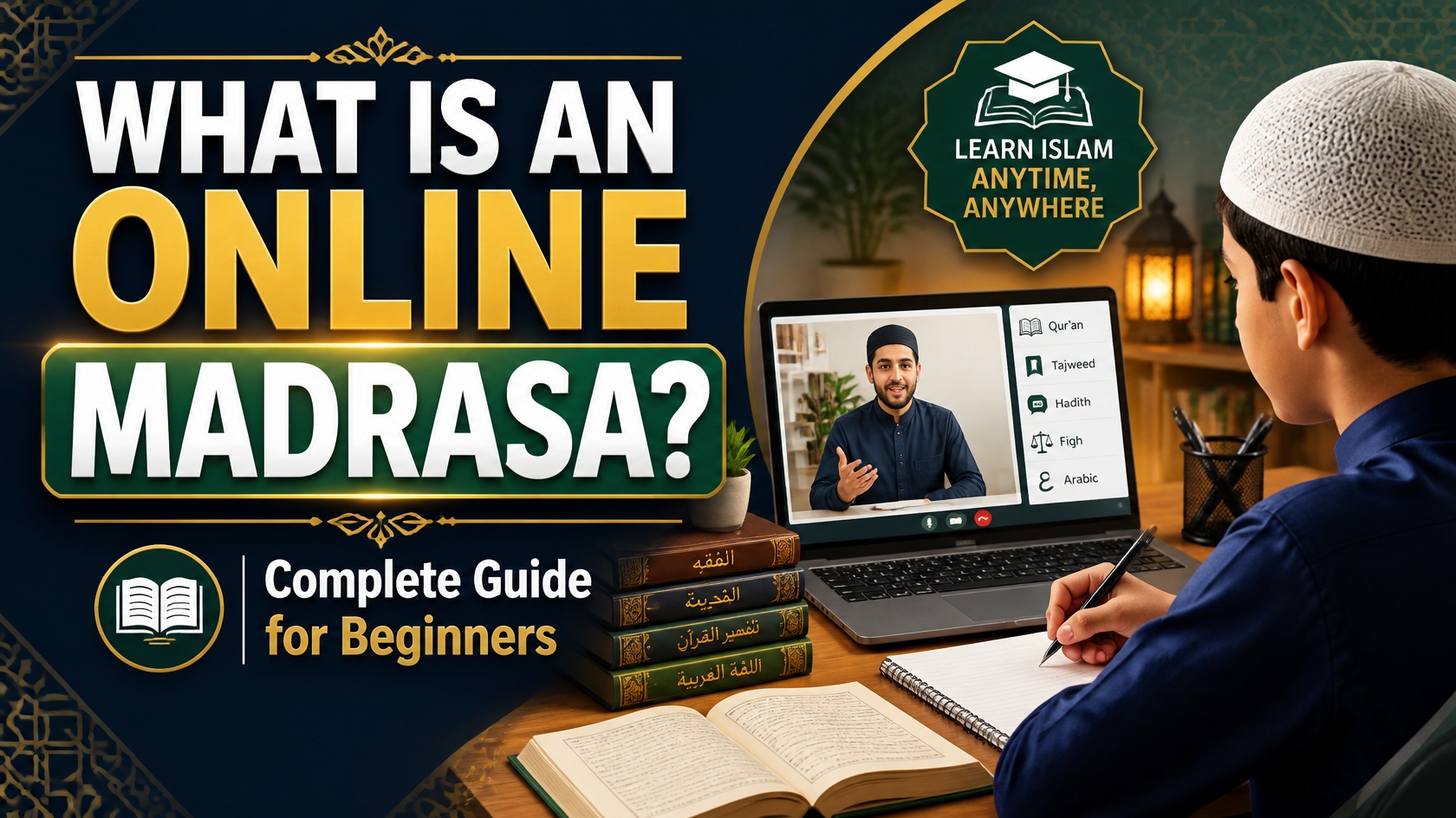
An online madrasa is a virtual Islamic educational institution where students learn the Holy Quran, Islamic teachings, and essential religious knowledge through the internet. Unlike traditional madrasas that require students to attend classes physically, online madrasas allow learners to participate in lessons from home using computers, smartphones, or tablets.
The word "madrasa" comes from Arabic and refers to a place of learning. Traditionally, madrasas have played an important role in Islamic education by teaching Quran recitation, Arabic, Islamic history, and religious principles.
Today, technology has transformed how these subjects can be taught. Students can communicate directly with teachers through video conferencing platforms, attend interactive classes, and receive personalized guidance without traveling to a physical institution.
An online madrasa aims to combine the educational values of traditional Islamic learning with the convenience of modern technology.
For example, a child living in the United States can study Quran recitation with a teacher based in Bangladesh. Similarly, working adults can attend Islamic lessons during their free time without disrupting their daily responsibilities.
This flexibility has made online madrasas an appealing option for Muslim families worldwide.
How Does an Online Madrasa Work?
Online madrasas use digital communication tools to connect students and teachers in a virtual classroom. Although the learning environment differs from a traditional classroom, the central goal remains the same: helping students develop accurate Quran recitation skills and a deeper understanding of Islam.
Here is how the process generally works.
1. Student Registration
The first step is enrolling in an online madrasa. Students or parents usually complete a registration form that includes basic information such as age, learning level, preferred course, and available study hours.
Some institutions also offer an introductory consultation or trial class to help students understand the learning process before enrolling.
2. Student Level Assessment
After registration, teachers may evaluate the student's current Quran reading ability.
For example, a complete beginner might start by learning Arabic letters, while someone who already reads Arabic may begin with Tajweed or Quran memorization.
This assessment helps teachers recommend suitable lessons rather than placing every student in the same class.
3. Live Online Classes
Most online madrasas conduct classes using video conferencing applications such as Zoom, Google Meet, or similar platforms.
During a live lesson, the teacher can:
Demonstrate correct Arabic pronunciation.
Listen to the student's Quran recitation.
Explain Tajweed rules.
Correct mistakes immediately.
Answer questions about lessons.
Assign practice activities.
These interactions help make virtual Quran lessons engaging and productive.
4. Regular Practice and Feedback
Learning the Quran requires consistent practice. Teachers often assign short recitation exercises, memorization tasks, or revision activities between classes.
Students may also receive feedback on pronunciation, fluency, memorization accuracy, and overall learning progress.
5. Progress Evaluation
Many institutions monitor students' development through regular assessments.
Progress evaluations can help determine whether a learner is ready to move from basic Arabic reading to Quran recitation or from introductory Tajweed to more advanced lessons.
The exact assessment system depends on the institution.
What Subjects Can Students Learn in an Online Madrasa?
An online madrasa may offer several Islamic educational programs. Course availability varies, but the following subjects are commonly taught.
Noorani Qaida and Arabic Alphabet
Noorani Qaida is a beginner-friendly learning method that introduces Arabic letters, pronunciation, and basic reading rules.
Students typically begin by recognizing individual Arabic letters before learning how to connect them and read complete words.
This course is particularly helpful for young children and adults who have never studied Arabic.
With regular practice, learners can build the foundation needed for reading the Holy Quran.
Quran Reading and Recitation
Once students understand the Arabic alphabet, they can begin reading the Quran.
Teachers guide students through verses, helping them improve pronunciation, fluency, and confidence.
The main objective is to develop accurate and respectful Quran recitation.
Students progress at different speeds depending on their starting level and practice habits.
Tajweed Lessons
Tajweed refers to the rules used for proper Quran recitation.
These rules help learners pronounce Arabic letters correctly and observe important recitation principles.
Common Tajweed topics include:
Makharij: The correct articulation points of Arabic letters.
Sifaat: The characteristics of Arabic letters.
Madd: Rules for extending specific sounds.
Ghunnah: Nasalization in appropriate recitation contexts.
Qalqalah: The echoing sound associated with particular letters.
Waqf: Rules related to pausing during recitation.
Learning Tajweed helps students improve the accuracy and clarity of their Quran recitation.
Quran Memorization (Hifz)
Hifz means memorizing the Holy Quran.
Online Hifz programs typically include new memorization, daily revision, and periodic evaluations.
Teachers may divide memorization goals into manageable portions based on the student's abilities.
Regular revision is especially important because memorizing new verses without reviewing previous lessons can make retention difficult.
Basic Islamic Studies
Some online madrasas also provide lessons about essential Islamic beliefs and everyday religious practices.
These subjects may include:
The Five Pillars of Islam.
Basic Islamic beliefs.
Salah and its importance.
Daily duas and supplications.
Islamic manners and character.
Stories of the Prophets.
Islamic history and moral teachings.
These lessons can help students understand Islamic values alongside Quran reading.
Benefits of Studying at an Online Madrasa
Online Islamic education offers several practical advantages for students and families.
1. Learn from Anywhere
One of the biggest benefits is location independence.
Students can attend classes from home, whether they live in Bangladesh, the United States, the United Kingdom, Canada, or another country.
An internet connection and a suitable device are usually enough to begin.
This is particularly useful for families living in areas where local Islamic educational opportunities are limited.
2. Flexible Class Schedules
Traditional classroom schedules do not always fit everyone's daily routine.
Online learning may offer greater flexibility, allowing students to choose lesson times around school, work, and family commitments.
For instance, a working professional may prefer evening lessons, while parents might schedule their child's classes after school.
Availability depends on the institution and its teachers.
3. Personalized Learning Opportunities
Many online madrasas provide one-on-one classes or small-group lessons.
In individual classes, teachers can focus on a student's particular learning difficulties, pronunciation mistakes, and revision needs.
This personalized attention can be especially helpful for beginners who require additional explanation and encouragement.
4. Reduced Travel Time
Traveling to a physical madrasa can take considerable time, especially in busy cities.
Online classes remove the need for daily commuting.
Students can use the time saved for Quran practice, homework, family activities, or other responsibilities.
5. Comfortable Learning Environment
Some beginners feel nervous about making mistakes in front of other students.
Learning from home may help them feel more comfortable while practicing unfamiliar Arabic sounds.
A supportive teacher can encourage questions and help build confidence through patient instruction.
6. Opportunities for International Students
Students living outside Muslim-majority countries may find it challenging to access suitable Quran teachers locally.
An Online Quran Academy can connect these learners with instructors across geographical boundaries, expanding their options for structured Islamic education.
Who Can Join an Online Madrasa?
One of the most appealing aspects of online Islamic education is that learning opportunities are available for people of different ages and experience levels.
Online Madrasa for Kids
Children can begin with Arabic letters, simple duas, basic Islamic manners, and introductory Quran reading.
Short, interactive lessons often work well for younger students because they help maintain attention and make learning more manageable.
Parents should consider the child's age, concentration, and comfort with technology when choosing a program.
Online Madrasa for Adults
Adults who did not have the opportunity to study Quran reading during childhood can begin learning at any stage of life.
Adult beginner courses often focus on foundational Arabic pronunciation, recitation, and Tajweed.
Many adults appreciate having lessons designed around their learning pace and daily responsibilities.
Online Madrasa for Women
Women seeking Quran education may prefer flexible online lessons due to work schedules, household responsibilities, or personal learning preferences.
Some institutions offer female instructors or women-only classes.
Students should verify these options directly before enrolling.
Online Madrasa for International Learners
Muslims living abroad can use online classes to maintain a connection with Islamic education.
Parents may also choose online lessons to introduce their children to Quran reading and Islamic values while they attend mainstream schools.
For international students, language compatibility and time-zone scheduling are especially important.
Online Madrasa vs. Traditional Madrasa: What's the Difference?
Both online and traditional madrasas aim to provide Islamic education. However, their teaching environments and learning experiences differ.
Feature | Online Madrasa | Traditional Madrasa |
Learning location | Home or another suitable location | Physical institution |
Class schedule | Often flexible | Usually fixed |
Teacher interaction | Video or audio communication | Face-to-face instruction |
Travel requirements | Usually none | Regular commuting |
Learning materials | Digital resources | Printed and physical resources |
Personalization | Individual or group classes | Depends on class size |
Technology requirements | Internet and device | Usually minimal |
Classroom environment | Virtual | Physical |
Neither option is automatically better for every student.
Traditional madrasas provide valuable face-to-face interaction, classroom discipline, and community engagement.
Online madrasas may be more convenient for students who need flexible schedules or do not have access to suitable local teachers.
The right choice depends on the student's educational needs, personal circumstances, and learning preferences.
How to Choose the Best Online Madrasa for Beginners
Selecting an appropriate learning institution is important because the quality of teaching can significantly affect a student's progress.
Before enrolling, consider the following factors.
Check Teacher Qualifications
A good Quran teacher should have strong recitation skills, appropriate subject knowledge, and the ability to explain lessons clearly.
For specialized programs such as Hifz or advanced Tajweed, relevant teaching experience and qualifications are particularly valuable.
Parents should also consider whether instructors have experience teaching children.
Review the Course Curriculum
A structured curriculum helps students progress from one learning stage to another.
For beginners, a suitable learning pathway might look like this:
Arabic Alphabet → Noorani Qaida → Quran Reading → Tajweed → Advanced Recitation or Hifz
A clear learning sequence makes it easier to understand what students will study and how their progress will be measured.
Ask About Class Size
Some students learn best in one-on-one sessions, while others enjoy studying with classmates.
Individual lessons can provide more opportunities for direct correction.
Group classes may encourage participation and shared learning experiences.
Choose the format that suits the student's personality and goals.
Evaluate Scheduling Options
Before registering, check whether class times fit the student's routine.
International learners should confirm the schedule in their local time zone to avoid confusion.
It is also helpful to understand the institution's policies for rescheduling missed classes.
Consider Learning Support
Teachers should be approachable and willing to explain difficult concepts.
For younger students, parents may benefit from progress updates that highlight strengths and areas requiring improvement.
A supportive learning environment can make regular study more enjoyable.
Understand Fees and Policies
Course fees can vary depending on lesson duration, teaching format, instructor qualifications, and class frequency.
Ask about payment arrangements, cancellation policies, trial classes, and any additional charges before committing to a program.
Transparent information makes comparing institutions easier.
How Taqi Academy Fits Into Online Quran Learning
For families exploring digital Islamic education, Taqi Academy is a name to consider while researching online Quran learning opportunities.
When evaluating any provider, prospective students should focus on the quality of instruction, suitability of available courses, teacher qualifications, class schedules, and support for beginners.
A useful approach is to contact the academy and ask about its current teaching programs, enrollment procedures, class formats, and learning requirements.
This helps families make decisions based on verified information rather than assumptions.
The most important consideration is finding an educational environment where learners feel supported, receive appropriate guidance, and can make steady progress.
Essential Tips for Beginners Learning Quran Online
Starting Quran lessons online can feel unfamiliar, especially if you have never attended a virtual class.
Fortunately, a few simple habits can improve the learning experience.
Create a Regular Study Routine
Consistency is more valuable than occasional long study sessions.
Try to schedule Quran practice at the same time each day.
Even a short daily revision session can help reinforce what you learned during class.
Choose a Quiet Learning Space
Select a comfortable place with minimal distractions.
Keep your Quran, notebook, and learning materials nearby.
A quiet environment allows you to listen carefully to your teacher's pronunciation and instructions.
Use Reliable Technology
A stable internet connection is important for live classes.
Before beginning, check that your device, microphone, and speakers work correctly.
Headphones may help you hear Arabic pronunciation more clearly.