
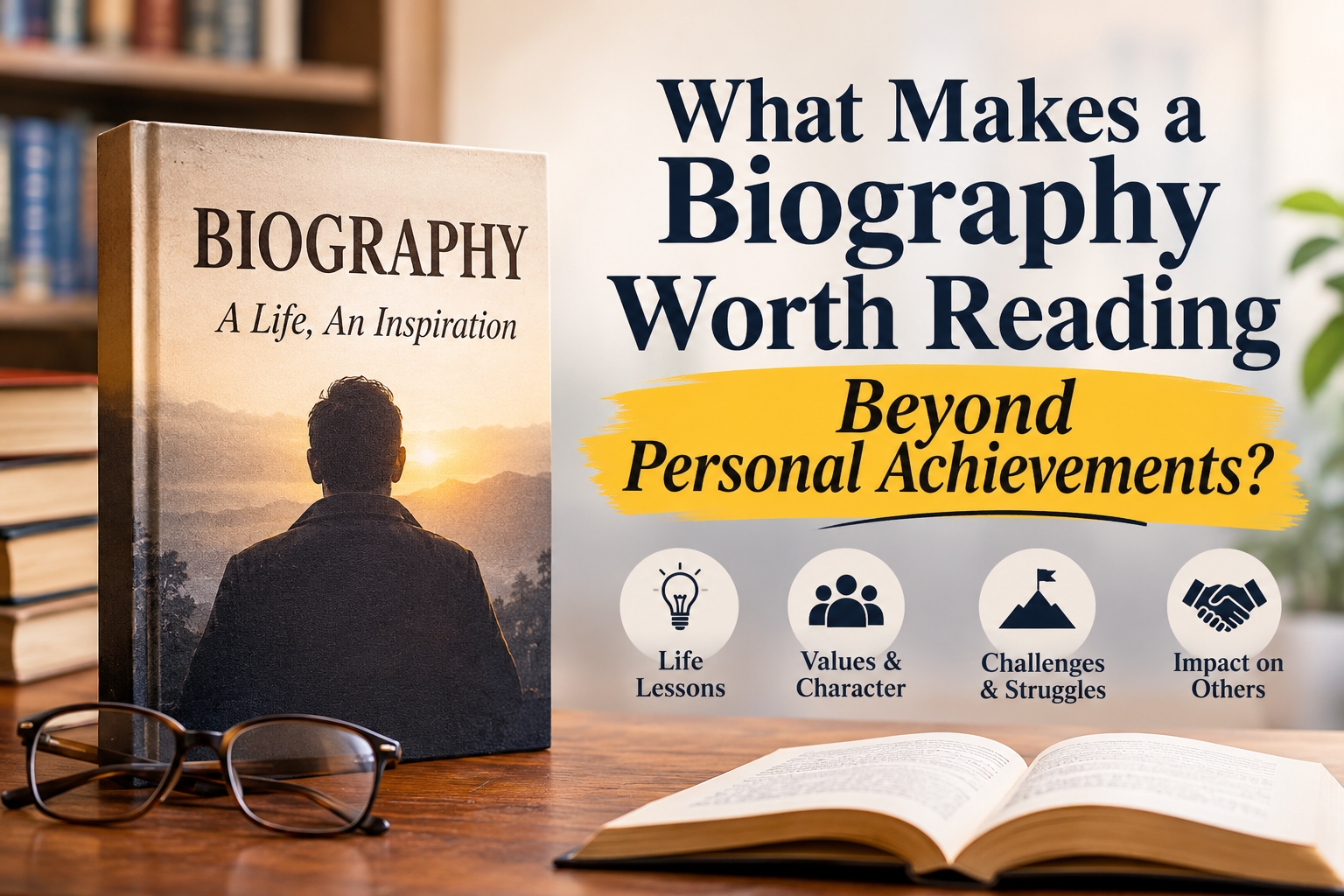
Achievements tell readers what someone accomplished. A memorable biography also explores how that person saw the world, whom they depended on, what they feared, and which choices changed their direction. A list of distinctions may establish importance, but it rarely creates the emotional connection that keeps a reader turning pages.
People searching for the best biography writing service sometimes begin with the assumption that an impressive life will naturally produce an impressive book. In reality, narrative quality depends on selection, perspective, context, and honesty. A fascinating subject can still become a dull manuscript if the writing treats every award as a climax and every challenge as a lesson already learned.
A clear reason for telling the story
A biography benefits from a central question that gives events meaning. The question might concern belonging, ambition, service, creative work, or changing family expectations. It should emerge from the life itself rather than being imposed as a marketing slogan.
For example, the story of a musician may be less about the number of performances than about the search for an artistic voice. A community organiser's biography may gain depth through relationships with people whose names never appeared in the press. Such choices reveal why the reader should care.
Specific scenes instead of general praise
Readers remember moments. A scene about a difficult conversation, a modest workspace, or a decision made under pressure can reveal values more effectively than several paragraphs calling the subject determined. The details need to be grounded in interviews or other evidence, not invented for dramatic effect.
Good scene selection also establishes stakes. What might have happened if the person had chosen differently? What resources or relationships were at risk? Answering these questions helps the reader follow the narrative without demanding artificial suspense.
Contradictions that make people believable
Human beings change their minds and sometimes act against their stated principles. A biography that erases these contradictions can feel promotional. Readers often connect more strongly with a person who learns slowly, misjudges a situation, or remains uncertain about a difficult choice.
The purpose is not to expose flaws for entertainment. It is to avoid presenting a fully formed public image as if it existed from childhood. Nuance allows both admiration and critical reflection.
Relationships that shape the life
No life unfolds in isolation. Family members, teachers, coworkers, friends, and rivals may all influence the subject's choices. Biographies become richer when they show how these relationships worked, including moments of mutual support or disagreement.
Writers should avoid reducing other people to background characters who exist only to praise the subject. They should also consider privacy and the limits of available evidence. Not every relationship can be reconstructed with equal confidence.
Historical and cultural context
An achievement may look ordinary or extraordinary depending on the circumstances. A career decision made during a recession, a migration shaped by changes in law, or a creative project emerging from a local movement deserves context. Readers need to understand the constraints of the period before judging the decision.
Context should be concise and connected to the narrative. Long digressions about unrelated historical events can interrupt momentum. The goal is to help the reader see what choices were possible at the time.
A narrative voice that respects complexity
The writer's tone influences whether the biography feels curious, sympathetic, skeptical, or promotional. An effective voice can admire the subject's achievements without instructing the reader to admire them. Concrete evidence and thoughtful explanation usually make a stronger impression than superlatives.
A biography may also incorporate the subject's own words through carefully attributed quotations. These moments can reveal humour, hesitation, or personal insight that third person summary cannot fully convey.
An ending that reflects the actual journey
Not every life story concludes with triumph. A meaningful ending may explore a changed relationship, an unfinished project, or what the subject now understands differently. Artificially neat conclusions can undermine everything the earlier chapters established.
Readers appreciate an ending that connects to the book's central question and acknowledges what remains unknown. A biography should offer perspective rather than claim that every experience fits a perfect plan.
Final thoughts
The value of a biography lies in insight, not the size of its subject's achievements. Careful scenes, credible research, complex relationships, and a coherent narrative help readers recognise a fully realised person. When a book invites understanding instead of demanding admiration, its story is more likely to stay with the reader.




