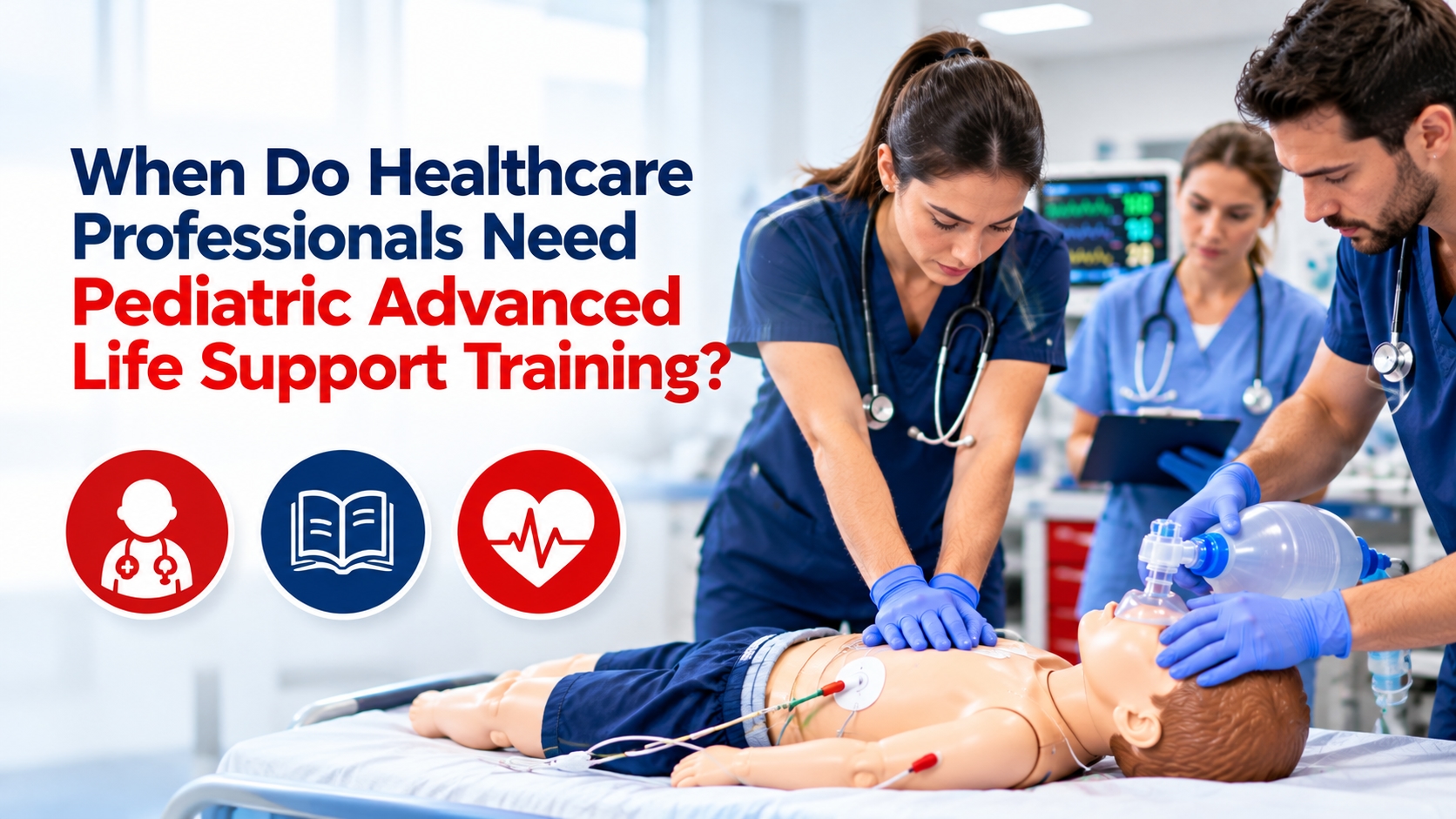
Pediatric emergencies can develop quickly, and healthcare professionals need specialized knowledge to assess and respond to critically ill infants and children. Pediatric Advanced Life Support training provides healthcare providers with structured education in recognizing and managing serious pediatric emergencies.
For professionals who work in hospitals, emergency departments, pediatric units, clinics, or other healthcare environments, PALS classes can help build the knowledge and practical skills needed for coordinated emergency care. Understanding who needs this training, what it covers, and how to choose the right course can help healthcare professionals meet their clinical and certification requirements.
What Is Pediatric Advanced Life Support Training?
Pediatric Advanced Life Support training is specialized education designed for healthcare professionals who may respond to life-threatening emergencies involving infants and children.
The training focuses on recognizing serious conditions, assessing pediatric patients, and initiating appropriate emergency interventions. It can also emphasize effective communication and teamwork during pediatric resuscitation situations.
Unlike basic CPR courses, pediatric advanced life support training addresses more complex clinical emergencies and is generally intended for healthcare professionals with appropriate medical responsibilities.
Who Should Take PALS Classes?
Who should enroll in PALS classes? The training is generally relevant to healthcare professionals who may be involved in the assessment or treatment of critically ill children.
Depending on workplace requirements, PALS classes may be appropriate for:
Pediatricians
Emergency physicians
Nurses
Paramedics
Emergency medical professionals
Critical-care healthcare workers
Pediatric healthcare providers
Other professionals responsible for pediatric emergency care
The exact certification requirements vary between employers and healthcare organizations. Always confirm which course and credential your workplace requires before registering.
What Do PALS Classes Teach?
What can you expect to learn during PALS classes? Course content may vary, but pediatric advanced life-support training generally focuses on recognizing and responding to serious pediatric conditions.
Topics may include:
Pediatric patient assessment
Recognition of respiratory distress and failure
Pediatric shock
Cardiac arrest management
Pediatric resuscitation
Airway and breathing management
Recognition of abnormal heart rhythms
Effective emergency communication
Team dynamics during resuscitation
Post-resuscitation considerations
The course is designed to help participants connect clinical assessment with appropriate emergency interventions.
Why Is Pediatric Advanced Life Support Training Important?
Why is specialized pediatric training necessary? Infants and children have physiological and anatomical characteristics that differ from adults. Their vital signs, medication considerations, and responses to illness can also differ.
Recognizing deterioration early is an important part of pediatric emergency care. Pediatric Advanced Life Support training gives healthcare professionals an opportunity to practice structured approaches to assessment and emergency management.
The training can also help participants understand how to communicate effectively and work together during high-pressure clinical situations.
How Do PALS Classes Work?
How are PALS classes conducted? Course formats depend on the training provider and program requirements.
Training may include a combination of:
Pre-course educational material
Instructor-led learning
Pediatric emergency scenarios
Hands-on practice
Team-based simulations
Knowledge assessment
Practical skills evaluation
Simulation-based activities can allow participants to apply clinical concepts in realistic emergency scenarios. This approach can help professionals practice decision-making and communication in a controlled environment.
Is PALS Training Different From Pediatric CPR?
Is Pediatric Advanced Life Support training the same as pediatric CPR? No. Although both address pediatric emergencies, they serve different levels of training.
Pediatric CPR generally focuses on basic life-support techniques for infants and children. PALS training is more advanced and addresses clinical assessment, emergency management, resuscitation, and team-based care.
Healthcare professionals should select training based on their responsibilities and the certification requirements of their workplace.
What Is the Difference Between PALS and BLS?
Many healthcare professionals also ask about the difference between PALS and BLS.
BLS, or Basic Life Support, focuses on essential emergency skills such as CPR, AED use, and basic response to cardiac and respiratory emergencies. PALS focuses specifically on advanced pediatric emergency assessment and management.
A healthcare professional may need BLS, PALS, or both depending on their clinical role and employer requirements.
How Long Do PALS Classes Take?
How long do PALS classes take? Course duration depends on the provider, learning format, and certification requirements.
Some programs use blended learning, where participants complete educational content before attending an in-person skills session. Other programs may involve instructor-led classroom training combined with practical assessments.
Before registering, check whether the course requires pre-course preparation and how much time should be allocated for skills practice and assessment.
How Do You Choose the Right PALS Training?
How can you choose the right PALS classes? Start by determining exactly what certification your employer or institution requires.
Before enrolling, consider the following:
Is the course appropriate for your healthcare role?
Does it include pediatric emergency scenarios?
Are hands-on skills assessed?
Is the certification accepted by your employer?
Does the program include knowledge testing?
What are the certification renewal requirements?
Does the provider offer renewal or refresher training?
Taking time to verify these details can help ensure that your certification meets your professional needs.
When Should PALS Certification Be Renewed?
When should you renew your PALS credential? The renewal period depends on the specific certification program and issuing organization.
Healthcare professionals should check the expiration date on their current certification and review the applicable renewal requirements well in advance. Planning ahead can help prevent certification gaps that may affect workplace or clinical responsibilities.
If you are unsure whether you need an initial course or a renewal class, contact the training provider before registering.
Final Thoughts
Pediatric Advanced Life Support training provides healthcare professionals with specialized education for responding to serious medical emergencies involving infants and children. Through PALS classes, participants can develop knowledge in pediatric assessment, resuscitation, emergency management, and team-based response.
If your professional role involves caring for pediatric patients, check your employer's requirements and choose a course that matches your responsibilities. Keeping your training current can help you remain prepared to respond appropriately when a pediatric emergency occurs.