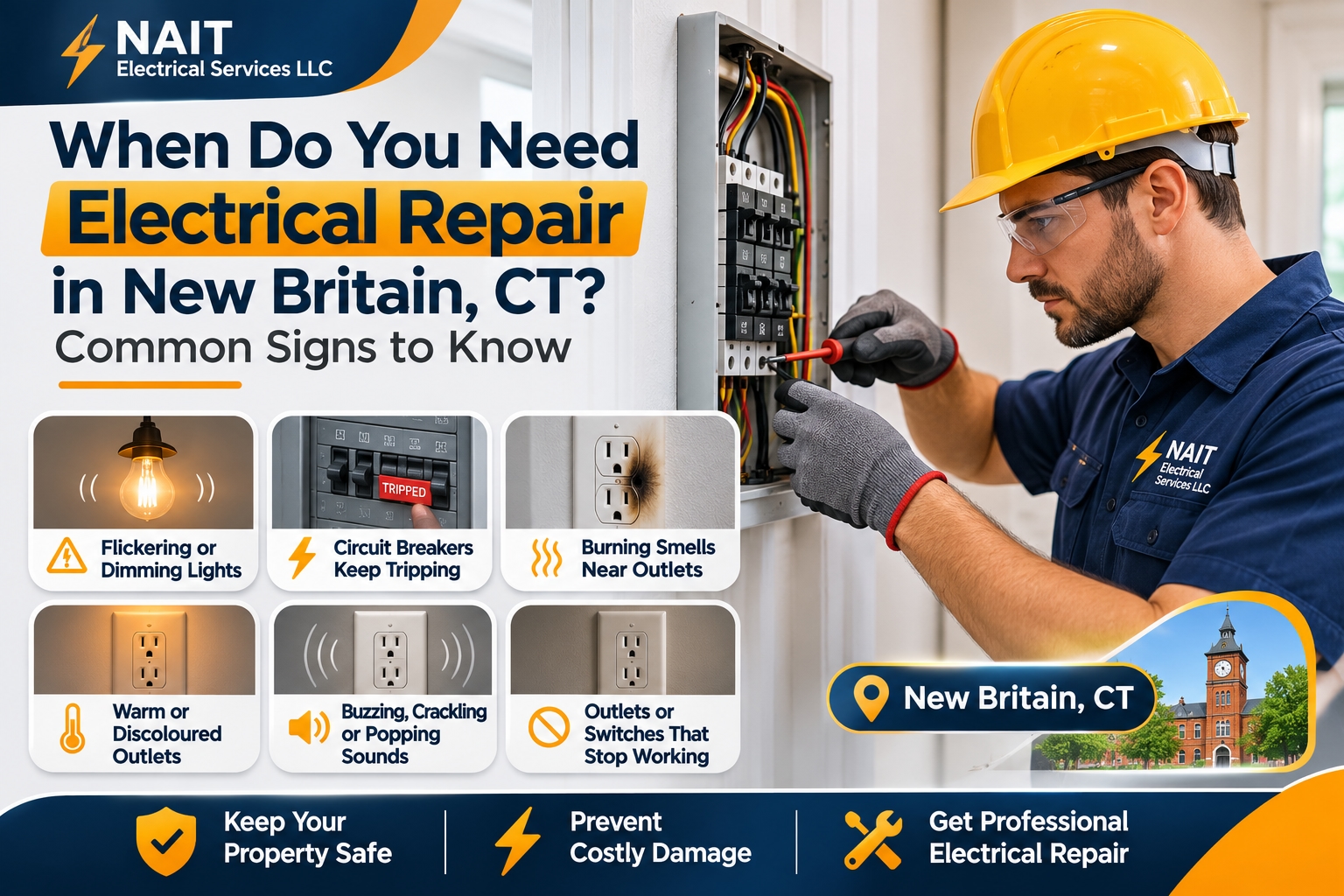
Electrical problems are not always easy to recognise. Sometimes, a fault starts with a light that flickers occasionally. In other cases, you may notice a burning smell, a circuit breaker that keeps tripping or an outlet that suddenly stops working.
Although some issues may appear minor, they can indicate faults that need professional attention. Ignoring these warning signs could put your property, appliances and the people inside at risk.
1. What Are the Warning Signs That You Need Electrical Repair?
Your electrical system can show several signs when something is not working correctly. Recognising these symptoms helps you understand when to stop using affected equipment and arrange a professional inspection.
Flickering or Dimming Lights
Lights that flicker repeatedly may indicate more than a loose bulb. Possible causes include faulty fixtures, loose connections, overloaded circuits or problems with the electrical supply.
Pay attention to when the flickering occurs. For example, if several lights dim whenever a large appliance starts, the circuit or electrical supply may need inspection.
If the problem continues after checking the bulb, contact an electrician. Avoid using a fixture that produces unusual sounds, heat or smells.
Circuit Breakers That Keep Tripping
Circuit breakers are safety devices designed to interrupt power when they detect excessive current or certain electrical faults.
An occasional trip may happen when several high-power appliances operate on the same circuit. However, repeated tripping can indicate:
An overloaded circuit.
A short circuit.
A ground fault.
A faulty breaker or electrical component.
Switch off or unplug affected appliances where it is safe to do so. If the breaker trips again, do not keep resetting it. Arrange an inspection to identify the cause.
Burning Smells Near Outlets or Switches
A burning plastic or rubber smell near an outlet, switch or electrical panel is a serious warning sign.
It may indicate overheating wires, loose connections, damaged insulation or faulty electrical components. Continuing to use the affected equipment could increase the risk of fire.
Stop using the affected outlet or switch. Do not remove its cover or attempt to inspect the wiring. If you notice smoke, flames or immediate danger, leave the property and call 911.
Warm or Discoloured Electrical Outlets
Electrical outlets should not normally feel hot or show unexplained burn marks.
Warm outlet covers, brown marks, melted plastic and unusual smells can indicate overheating or a damaged connection.
Stop using the affected outlet until an electrician has inspected it. Do not try to repair or replace internal components yourself.
Buzzing, Crackling or Popping Sounds
Persistent buzzing, crackling or popping noises from outlets, switches or electrical panels may indicate loose connections, damaged components or electrical arcing.
These sounds should not be treated as normal. Stop using the affected equipment and arrange professional attention.
Outlets or Switches That Stop Working
A non-working outlet may have a tripped breaker, a tripped GFCI device, a damaged receptacle or a wiring fault.
If several outlets stop working together, the issue may involve a shared circuit rather than individual outlets.
An electrician can test the affected circuit and determine whether a repair or replacement is needed.
Knowing when to arrange electrical repair in New Britain, CT can help you respond before a small problem becomes more serious.
2. Why Do Electrical Problems Develop?
Electrical faults can happen for several reasons. Some develop gradually as components wear out, while others occur because of damage, incorrect installation or changes in electrical demand.
Understanding the possible causes can help you explain the problem when contacting an electrician.
Aging or Damaged Wiring
Electrical wiring can deteriorate over time, particularly in older buildings or areas exposed to moisture, heat or physical damage.
Damaged insulation and loose connections may interrupt the power supply or create overheating risks. An electrician can inspect the wiring and determine whether a local repair or wider replacement is necessary.
Overloaded Electrical Circuits
Every electrical circuit has a rated capacity. Running too many high-power appliances on the same circuit can exceed its safe operating limits.
This may cause repeated breaker trips and interruptions to the electrical supply.
If your home or business regularly needs more power, an electrician can assess whether additional dedicated circuits or an electrical upgrade would be appropriate.
Faulty Outlets, Switches and Breakers
Electrical components experience wear through regular use. Outlets may become loose, switches may stop working and circuit breakers may develop faults.
Damaged components should be professionally inspected rather than treated with temporary fixes.
Moisture and Water Exposure
Water can damage electrical equipment, connections and wiring. Components exposed to leaks, flooding or persistent moisture may become unsafe.
Never touch wet electrical equipment or enter a flooded area where electrical hazards may be present. Keep away from the affected area and seek professional assistance.
Storms and Power Surges
Lightning, severe weather and sudden power changes can affect electrical equipment and connected appliances.
After a storm, look for warning signs such as damaged outdoor wiring, unusual electrical behaviour or appliances that have stopped working.
Never approach fallen power lines or damaged utility equipment. Contact the relevant utility provider or emergency services as appropriate.
3. When Is an Electrical Problem an Emergency?
Not every electrical fault requires an emergency response, but some situations can create an immediate danger.
Treat the following signs seriously:
Smoke or flames coming from an outlet or electrical panel.
A strong burning smell near electrical equipment.
Sparks, electrical arcing or repeated popping sounds.
Exposed or damaged live electrical wires.
Electrical equipment that has become dangerously hot.
Water entering an electrical panel or other live equipment.
If you see smoke, fire or an immediate electrical hazard, leave the property and call 911. Do not touch the affected equipment or attempt to switch off the power if doing so would put you at risk.
For problems that are not immediately dangerous, such as persistent flickering lights or repeated breaker trips, arrange a professional inspection promptly.
A qualified electrician in New Britain, CT can assess the symptoms and recommend the appropriate repair.
4. What Should You Do Before an Electrician Arrives?
You do not need to diagnose an electrical fault yourself. However, a few simple precautions can help you prepare for a professional inspection.
Stop Using Affected Equipment
If an outlet, appliance or switch shows signs of damage, stop using it. Do not connect another appliance to the same outlet as a temporary solution.
Record the Symptoms
Make a note of what happened before the problem started.
For example:
Did the breaker trip when an appliance was switched on?
Do the lights flicker in one room or throughout the property?
Has an outlet stopped working completely?
Did the issue begin after a storm or power interruption?
These details can help the electrician understand the problem.
Keep the Area Accessible
If it is safe, keep the area around the affected outlet, switch or electrical panel clear.
Do not touch exposed wiring, remove electrical covers or open the panel to investigate the fault.
Avoid DIY Electrical Repairs
Electrical systems can contain dangerous voltages even when some equipment appears switched off.
Internal wiring repairs, electrical panel work and testing live circuits should be left to appropriately qualified professionals.
5. Which Electrical Repairs May Be Needed?
The correct repair depends on the source of the fault. A professional inspection helps identify whether the issue involves one component or a wider part of the electrical system.
Common repair requirements include:
Electrical Panel and Breaker Repairs
The electrical panel distributes power to different circuits throughout your property. Faulty breakers, damaged connections and other panel issues can affect the reliability and safety of the system.
An electrician can inspect the panel, test the affected circuits and determine whether a component repair or panel upgrade is necessary.
Wiring and Electrical Connection Repairs
Damaged wires, loose connections and deteriorating insulation can cause recurring electrical problems.
Repairs may involve locating the damaged section, correcting connections or replacing unsuitable wiring.
Outlet and Switch Replacement
Cracked outlets, loose receptacles, damaged switches and components showing signs of overheating may need replacement.
The surrounding wiring should also be checked to make sure the problem does not extend beyond the visible component.
Lighting and Fixture Repairs
Lighting problems may involve a faulty bulb, damaged fixture, switch issue or wiring fault.
Professional troubleshooting helps identify the actual cause instead of replacing components unnecessarily.
GFCI Outlet and Safety Device Repairs
Ground-fault circuit interrupter (GFCI) outlets help protect people from electrical shock in locations where moisture may be present, such as kitchens, bathrooms and outdoor areas.
If a GFCI outlet repeatedly trips or will not reset, it may indicate a faulty device or a problem with the connected circuit.
Never bypass a GFCI device to restore power. Arrange an inspection to identify the cause.
6. Do Residential and Commercial Properties Need Different Electrical Repairs?
Yes. Homes and commercial buildings can have different electrical requirements, equipment and power demands. The right repair depends on the property's electrical system and how it is used.
Residential Electrical Repairs
A residential electrician may handle problems such as:
Faulty household outlets and switches.
Flickering lights and lighting faults.
Circuit breaker issues.
Damaged electrical wiring.
Electrical panel repairs.
Ceiling fan and fixture installation.
Dedicated circuits for appliances.
Prompt attention to these problems helps maintain a dependable electrical system at home.
Commercial Electrical Repairs
Commercial buildings may have more complex electrical systems and equipment. Offices, shops, industrial facilities and other workplaces can require different types of troubleshooting and repair.
Common requirements include:
Commercial lighting repairs.
Electrical panel troubleshooting.
Wiring and circuit repairs.
Equipment power connections.
Emergency and exit lighting.
Electrical system upgrades.
Electrical faults can interrupt business operations and affect employees, customers and equipment. Professional attention can help identify the problem and reduce unnecessary disruption.
For larger installations or electrical upgrades, consider an electrical contractor with relevant experience in the type of property involved.
7. How Much Does Electrical Repair Cost in New Britain, CT?
The cost of electrical repair depends on the fault and the work needed to resolve it. Replacing a damaged outlet involves different work from repairing damaged wiring or upgrading an electrical panel.
Several factors can affect the final estimate:
Type of fault: The cost depends on whether the problem involves a switch, outlet, circuit, wiring or electrical panel.
Inspection and labour: Some faults are straightforward to locate, while others require more detailed testing and troubleshooting.
Replacement parts: The price and availability of suitable electrical components can affect the total cost.
Accessibility: Wiring or equipment behind walls, ceilings or in difficult-to-reach areas may require additional work.
Permits and inspections: Certain electrical projects may require permits and inspections under applicable local requirements.
Before approving the work, request a written estimate explaining the proposed repairs, labour, materials and any additional charges. This makes it easier to understand what is included and compare service providers fairly.
8. How Can You Choose a Reliable Electrician in New Britain?
Choosing the right professional is just as important as identifying the electrical problem. Before hiring an electrician, check their credentials, insurance and experience.
Verify Their Electrical Licence
Connecticut has licensing requirements for electrical professionals. Check the contractor's credentials through the Connecticut Department of Consumer Protection before arranging the work.
Ask About Insurance
Confirm that the contractor carries appropriate insurance coverage. This is an important consideration when hiring someone to work on your property.
Check Relevant Experience
Ask whether the electrician has experience with your particular issue. Someone who regularly handles electrical panel repairs may be more suitable for that job than a professional whose work mainly involves basic lighting installations.
Request a Written Estimate
A clear estimate should explain the proposed work, expected materials, labour and any possible additional costs.
Look for Clear Communication
A reliable electrician should explain the problem, discuss suitable solutions and answer your questions before starting work.
When comparing electricians in New Britain, consider licensing, insurance, relevant experience and communication rather than focusing on the lowest quote alone.
9. How Can Regular Electrical Maintenance Help Prevent Future Problems?
Electrical maintenance can help property owners identify potential faults before they become more disruptive. Although it cannot prevent every electrical issue, it can help keep important components in suitable working condition.
Consider these precautions:
Arrange professional inspections when recurring electrical symptoms appear.
Avoid overloading outlets and extension cords.
Replace damaged electrical cords and components.
Keep electrical equipment away from water.
Make sure smoke alarms are installed and working.
Pay attention to unusual sounds, smells and heat.
Have older electrical systems assessed by a qualified professional.
Use equipment rated for the electrical circuit.
If you manage a home or business, professional electrical maintenance can help identify problems and determine whether repairs or upgrades are needed.
Get Help With Electrical Repairs in New Britain, CT
Flickering lights, repeated breaker trips, faulty outlets and unusual electrical smells are warning signs that deserve attention. Recognising these symptoms can help you take the right steps and avoid unsafe temporary fixes.
Whether you are dealing with a minor electrical fault or a more complex wiring problem, professional assessment is important for a safe and reliable repair.
NAIT Electrical Services LLC provides electrical solutions for residential, commercial and industrial properties. If you need help with an electrical issue in New Britain or a nearby Connecticut community, visit its website to learn more about available services and discuss your requirements.
Frequently Asked Questions
1. How do I know if my house has an electrical problem?
Common warning signs include flickering lights, frequently tripping breakers, warm outlets, burning smells, buzzing sounds and outlets that stop working.
2. Is a flickering light an electrical emergency?
Not always. However, persistent flickering or flickering combined with burning smells, buzzing or heat requires prompt professional attention.
3. Why does my circuit breaker keep tripping?
Common causes include overloaded circuits, short circuits, ground faults and faulty electrical components. Repeated tripping should be inspected rather than continually reset.
4. When should I call an electrician about a faulty outlet?
Contact an electrician if an outlet is warm, discoloured, cracked, loose, sparking or repeatedly stops working.
5. Can electrical problems cause a house fire?
Yes. Faulty wiring, overheating connections and electrical arcing can create fire hazards. Warning signs such as burning smells, smoke and sparks should never be ignored.
6. Do commercial properties need electrical inspections?
Commercial properties can benefit from professional electrical inspections to identify damaged components, overloaded circuits and other potential safety concerns.
7. How do I find an electrician in New Britain, CT?
Check Connecticut licensing records, insurance, relevant experience, customer reviews and written estimates before choosing an electrician.