
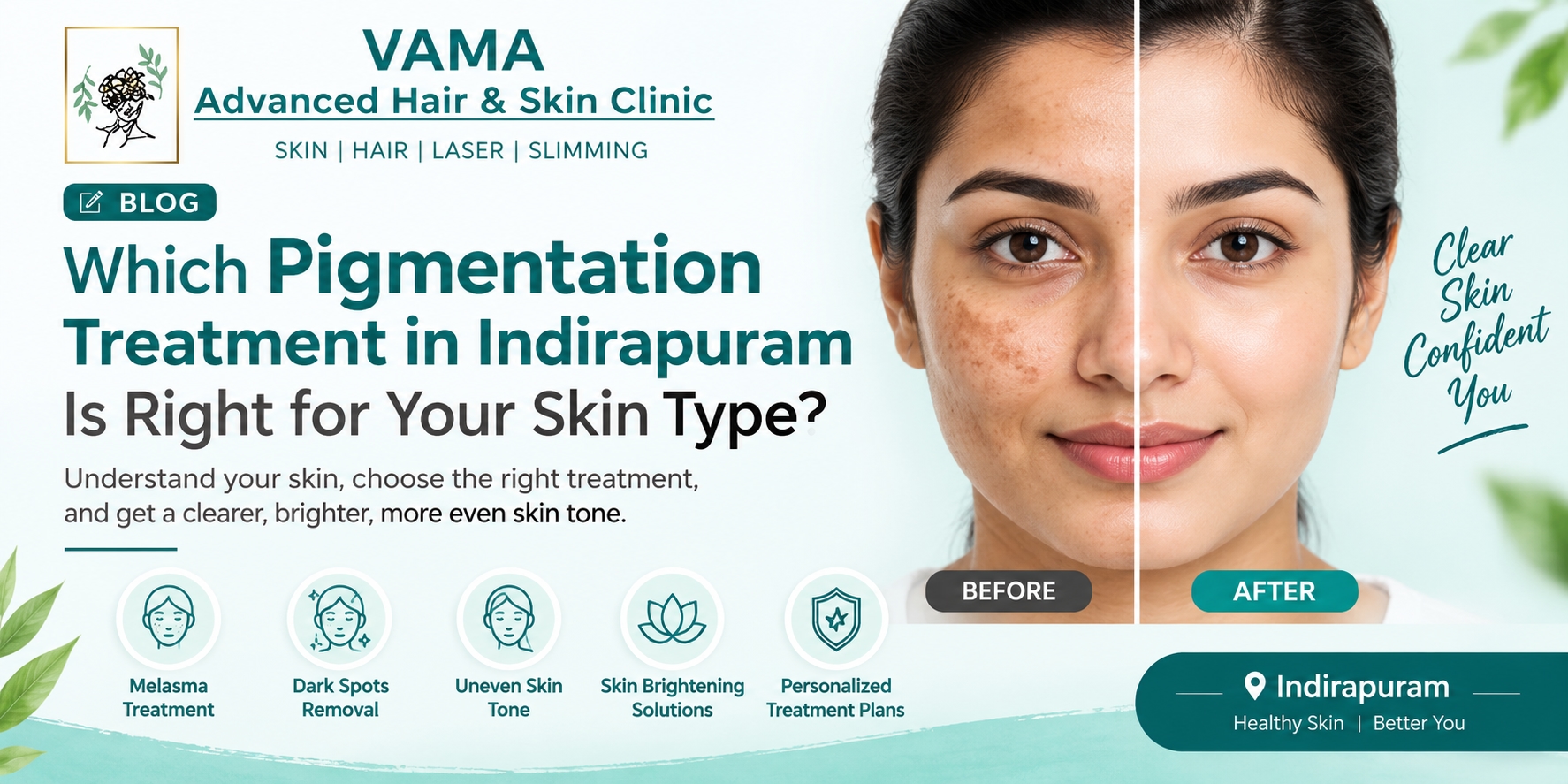
Dark patches, uneven tone, and stubborn spots are among the most common skin concerns today. Yet the same treatment does not work for everyone. A solution that clears one person’s melisma may do little for another person’s post-acne marks, and the wrong choice can even make pigmentation worse.
That is why the question is not simply “what is the best treatment?” but “which treatment is right for my skin?” This guide helps you understand your skin type, your type of pigmentation, and the options available, so you can walk into a consultation prepared. If you are exploring pigmentation treatment in Indirapuram, this is a good place to start.
Why Skin Type Matters in Pigmentation Treatment?
Your skin type decides how your skin reacts to heat, acids, light, and active ingredients. Two people with the same dark spot may need very different approaches.
Skin with more natural melanin, which is common in Indian skin tones, tends to be more reactive. It can darken after irritation, a process called post-inflammatory hyperpigmentation. That means aggressive treatments carry a higher risk, and a gentle, step-by-step plan is often safer and more effective.
Two things shape your plan:
Your skin type: oily, dry, combination, sensitive, or normal
Your pigmentation type and depth: where the excess melanin sits in the skin
Step 1: Identify Your Skin Type
Oily skin. Shiny, prone to acne and enlarged pores. Pigmentation often follows breakouts. Oil-controlling and exfoliating treatments suit this type, but over-drying can trigger more oil and irritation.
Dry skin. Tight, flaky, and often dull. It needs hydration alongside treatment, since dry skin can become irritated quickly by peels and strong actives.
Combination skin. Oily in the T-zone, drier on the cheeks. Treatments may need to be adjusted for different areas of the face.
Sensitive skin. Easily red, stinging, or reactive. This type needs the gentlest approach, patch testing, and slow introduction of any treatment.
Normal skin. Balanced and generally tolerant, but still vulnerable to sun-induced pigmentation.
Step 2: Identify Your Type of Pigmentation
Melisma: Symmetrical brown or grey-brown patches on the cheeks, forehead, and upper lip. Linked to hormones, sun, and genetics. It is chronic and can return.
Post-inflammatory hyperpigmentation: Dark marks after acne, burns, or irritation. Often fades with the right care.
Sun spots and freckles: Flat spots from UV exposure.
Age spots: Appear with ageing on sun-exposed areas.
Dark circles, neck, and underarm darkening: Often linked to genetics, friction, or hormones.
A doctor may also check how deep the pigment sits, since surface pigmentation responds differently from deeper pigmentation.
Step 3: Match the Treatment to Your Skin
Chemical Peels
Peels use acids to remove the damaged outer layer and encourage fresh skin. Mild peels using gentle acids suit sensitive and dry skin, while stronger formulations may suit oily, acne-prone skin. They work well for sun damage, dullness, and post-acne marks. Because darker skin tones can react to strong peels, the choice of acid and strength is critical.
Laser Toning
Laser toning uses low-energy light to break down excess melanin gradually, over multiple sessions. It is popular for melisma and uneven tone. It suits many skin types when settings are chosen carefully by an experienced doctor, as incorrect settings can cause rebound pigmentation.
Micro needling with Brightening Serums
Tiny controlled channels in the skin help renewal and allow brightening ingredients to penetrate better. It suits skin with scars, texture issues, and mild pigmentation. Sensitive skin may need a gentler protocol.
Medical-Grade Topical Treatments
Prescription-strength creams containing ingredients such as tranexamic acid, azelaic acid, kojic acid, or retinoid can lighten patches over time. They are often the backbone of melisma treatment and must be used under supervision, because misuse can irritate the skin.
PRP and Skin Boosters
These support skin repair and hydration. They suit dull, tired skin and are often used alongside other treatments for overall tone and glow.
Combination Plans
For most patients, the best results come from a combination: a procedure in the clinic, a prescribed home routine, and strict sun protection. A customized plan is far more effective than a single treatment.
Quick Matching Guide
Skin or pigmentation type | Often suitable options |
Oily, acne-prone with post-acne marks | Gentle peels, topical actives, micro needling |
Dry or dull skin | Hydrating boosters, mild peels, PRP |
Sensitive skin | Patch-tested topical, very gentle peels, slow plans |
Melisma | Medical topical, laser toning, supervised combination plans |
Sun spots and age spots | Peels, laser treatments, sun protection |
Combination skin | Area-specific plans, mild peels, boosters |
This table is a general guide only. A doctor’s examination is the only reliable way to decide.
Why Sun Protection Is Part of Every Plan
No matter which treatment you choose, sun protection decides how long your results last. UV rays and even visible light can darken pigmentation again.
Apply broad-spectrum sunscreen of SPF 30 or higher every morning
Reapply every two to three hours’ outdoors
Use a hat, sunglasses, and shade
Avoid unnecessary peak-sun exposure
Without this step, even the best treatment may fade quickly.
What to Expect During Treatment?
Consultation: The doctor examines your skin, asks about your history, and recommends a plan.
Multiple sessions: Most plans need several sessions spaced a few weeks apart.
Gradual change: Pigmentation fades step by step. Quick fixes are rarely safe.
Maintenance: Pigmentation, especially melisma, can return, so long-term care matters.
Mild redness, dryness, or peeling can occur after some procedures, and your doctor will explain aftercare in detail.
Choosing the Right Doctor and Clinic
The expertise of the person treating you matters as much as the treatment. Look for:
Qualified doctors trained in dermatology or cosmetic medicine
A detailed skin assessment before any procedure
Experience treating Indian skin tones
Transparent costs and clear explanations
Hygienic facilities and approved equipment
Honest advice, including when a treatment is not suitable
Patients across Delhi NCR and Uttar Pradesh often travel for the right expertise. Whether you are looking at pigmentation treatment in Noida or the nearby pigmentation treatment in Lajpat Nagar, compare doctors by their approach and not just by price or advertising.
Pigmentation Care Across Cities
Skin concerns do not change much from one city to another, but climate, pollution, and sun exposure can. Hot, sunny regions tend to see more sun-related pigmentation, while polluted urban areas contribute to dullness and uneven tone.
If you live in or near Uttar Pradesh, you may be comparing options in several cities. For example, patients searching for pigmentation treatment in Agra, pigmentation treatment in Lucknow, or pigmentation treatment in Kanpur are all looking for the same essentials: an accurate diagnosis, a plan suited to their skin, and a doctor they trust.
Wherever you choose, ask the same questions at your consultation:
What type of pigmentation do I have?
Which treatment suits my skin type, and why?
How many sessions will I need?
What are the risks and side effects?
How do I protect the results afterwards?
What will the total cost include?
Common Mistakes to Avoid
Using harsh products or scrubs. Irritation can darken skin further.
Trying many products at once. It confuses results and increases the risk of reactions.
Skipping sunscreen. This undoes progress quickly.
Picking at pimples or scabs. It leaves lasting marks.
Choosing the cheapest option. Low prices may mean inexperienced hands or compromised safety.
Expecting overnight results. Safe pigmentation treatment is gradual.
Myths and Facts
Myth: One treatment works for everyone.
Fact: Skin type, pigment depth, and cause all influence the right choice.
Myth: Stronger treatments work faster.
Fact: On melanin-rich skin, aggressive treatments can backfire.
Myth: Pigmentation is permanent.
Fact: Many types can be improved significantly, though some, like melisma, need ongoing management.
Final Thoughts
The right pigmentation treatment is the one that fits your skin type, your type of pigmentation, and your lifestyle. Peels, laser toning, micro needling, prescribed topical, and boosters all have a place, but only a proper skin assessment can tell you which combination will work best for you.
Start with a consultation, ask questions, and commit to sun protection and aftercare. With a personalized plan and a little patience, clearer and more even-toned skin is achievable. If you are ready, book a consultation with a qualified skin specialist and take the first step towards the glow you want.


