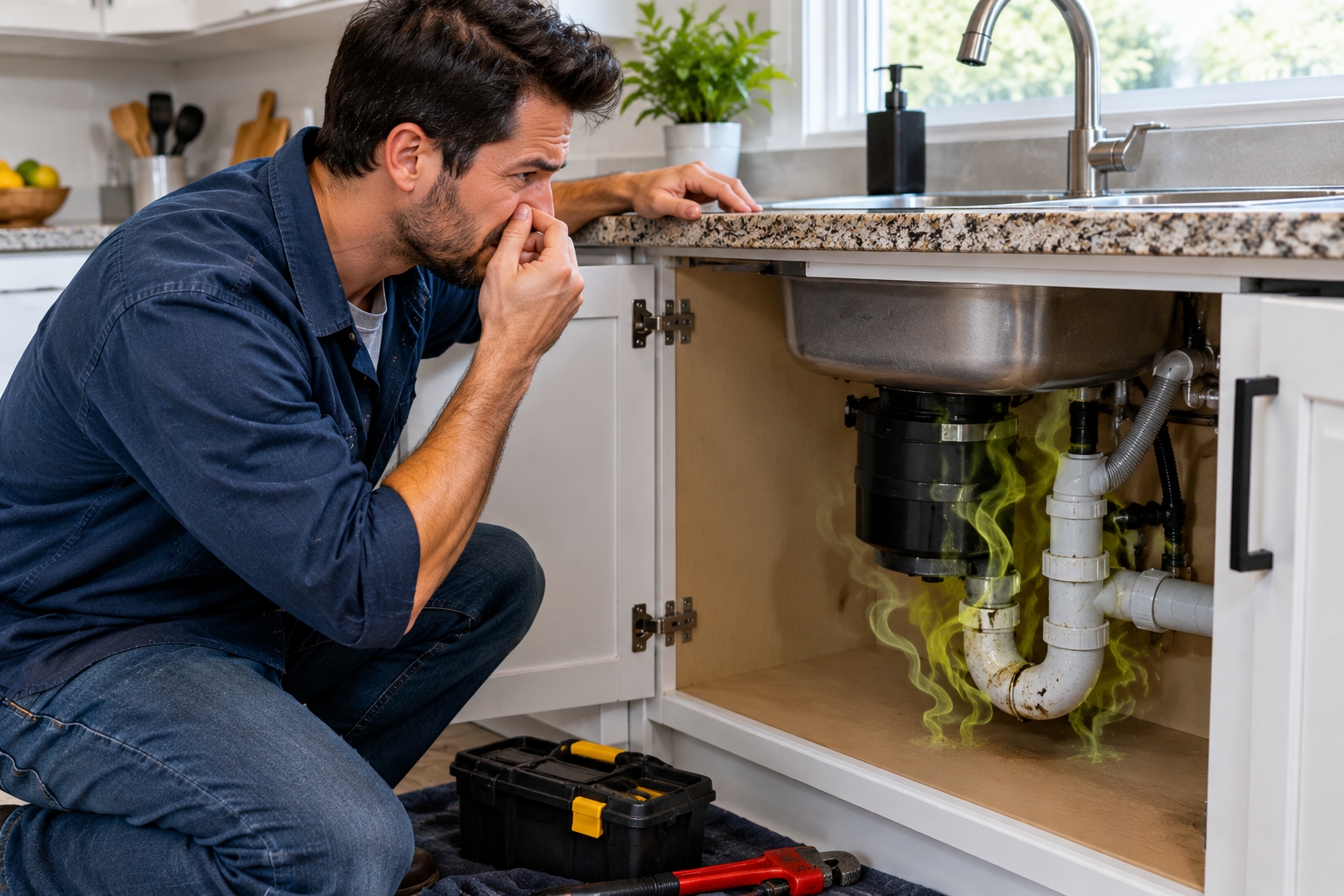
You walk into the kitchen and immediately catch a whiff of something that smells suspiciously like a sewer. Not exactly the aroma you want hanging around where you cook dinner every night. It's an unpleasant surprise, but here's the reassuring part: this is one of the more common complaints we hear about kitchen plumbing services, and most of the time, the cause is something fairly straightforward once you know where to look.
The Quick Answer
A sewer smell from your kitchen sink usually comes from a dry P-trap, food or grease buildup inside the drain, a blocked vent pipe, a dirty garbage disposal, or in less common cases, a crack in the P-trap or a problem further down your main sewer line. Most of these are fixable without calling in a professional, though persistent or worsening smells usually point to something that needs a closer look.
That's the short version. Let's go through each possible cause so you can figure out which one applies to your situation.
Common Causes of a Sewer Smell From Your Kitchen Sink
There's more than one reason this happens, so let's work through the list.
1. A Dry P-Trap
The P-trap under your sink is designed to hold a small amount of water at all times, which acts as a barrier blocking sewer gas from drifting up into your kitchen. If you've been away, or if a sink just doesn't get used often, that water can evaporate, leaving a direct path for sewer odor to travel right into your home.
2. Food Buildup and Grease Inside the Drain
Even with a garbage disposal, small bits of food and grease inevitably stick to the inside walls of your drain pipe over time. As this buildup breaks down, it produces a smell that's uncomfortably close to sewage, even though it's technically just decomposing food residue.
3. A Clogged or Blocked Vent Pipe
Your plumbing system relies on vent pipes to let air circulate properly and push sewer gases out through the roof instead of back into your home. If that vent gets blocked by debris, leaves, or even a nest, gases can get pushed back down into your fixtures instead of escaping outside.
4. A Dirty Garbage Disposal
Garbage disposals are notorious for holding onto bits of food in tiny crevices you can't easily see. Over days and weeks, that trapped debris rots and creates a smell that mimics sewage far more than most people expect.
5. A Cracked or Damaged P-Trap
If the P-trap itself has a crack or a loose connection, sewer gas can escape directly through the damaged section rather than being properly trapped. This is less common but worth checking if refilling the trap doesn't solve the smell, and it's the kind of repair best left to kitchen plumbing repairs professionals since a poorly sealed trap can leak water as well as gas.
6. A Main Sewer Line Issue
In rarer cases, a partial blockage or damage in your main sewer line can push gas back up through connected fixtures, including your kitchen sink. This usually comes with other symptoms too, which we'll cover shortly.
How to Figure Out Where the Smell Is Actually Coming From
Before assuming the worst, a little detective work goes a long way.
1. Check if It's Isolated to One Sink
If only your kitchen sink smells off while bathroom drains seem fine, that narrows things down to something local, like the P-trap or the drain itself, rather than a broader sewer line problem.
2. Smell the Drain Directly
Get close to the drain opening and take a careful sniff. If the odor is strongest right at the opening, it's likely coming from buildup inside the pipe or disposal rather than somewhere further away.
3. Look for Other Warning Signs
Gurgling sounds, slow drainage, or smells coming from multiple fixtures at once suggest something bigger than a simple dry trap or dirty disposal, and it's worth paying attention to these details before deciding on a fix.
DIY Fixes You Can Try First
Most of these causes have simple at-home solutions worth attempting before calling anyone.
1. Run Water to Refill the P-Trap
If the trap has dried out, running water for a minute or two usually refills it and stops the smell almost immediately. It's a genuinely easy fix for what feels like an alarming problem.
2. Clean the Garbage Disposal
Run ice cubes and a bit of coarse salt through the disposal to help scrape away buildup, then follow with a slice of lemon or a bit of dish soap and water to freshen things up.
3. Flush the Drain With Baking Soda and Vinegar
Pour half a cup of baking soda down the drain, followed by half a cup of vinegar. Let the mixture fizz for about fifteen minutes, then flush with hot water to help break down grease and food residue clinging to the pipe.
4. Check and Clean the P-Trap
Place a bucket underneath, unscrew the trap, and clear out any trapped debris or grime before reattaching it. This handles buildup that's sitting right at the source of the smell.
When the Smell Means You Need a Professional
If you've tried the basics and the smell keeps coming back, or if it's paired with slow drains, gurgling, or odors from other fixtures, it's time to bring in someone who can properly diagnose the issue. This is exactly where professional kitchen plumbing services come in, since a technician can check the vent pipe, inspect the P-trap for cracks, and run a camera through the line if a deeper blockage is suspected. Persistent sewer smells that don't respond to basic cleaning often point to kitchen plumbing repairs that go beyond what a homeowner can safely handle alone.
How to Prevent Sewer Smells From Coming Back
Run water through rarely used sinks at least once a week to keep the P-trap filled. Avoid pouring grease down the drain, since it solidifies and builds up faster than people expect. Clean your garbage disposal regularly, and consider scheduling routine kitchen plumbing services once a year to catch buildup or venting issues before they turn into a recurring odor problem. Staying ahead of these small issues means you're far less likely to need emergency kitchen plumbing repairs down the road.
Final Thoughts
A sewer smell coming from your kitchen sink is unpleasant, but it's rarely a mystery once you know what to check. A dry trap, grease buildup, or a neglected garbage disposal accounts for most cases, and each one has a simple fix you can try at home first. If the smell sticks around despite your best efforts, reaching out for professional kitchen plumbing repairs is the smartest next step, since some causes, like a blocked vent or a deeper line issue, genuinely need the right tools and experience to resolve properly.
Frequently Asked Questions
1. Why does my kitchen sink smell like sewer after being away? The P-trap likely dried out while the sink sat unused, letting sewer gas rise up.
2. Can a dirty garbage disposal really cause a sewer smell? Yes, trapped food debris rotting inside it often smells surprisingly similar to sewage.
3. Is a sewer smell dangerous? Sewer gas can contain harmful compounds, so persistent smells shouldn't be ignored.
4. How often should I run water in unused sinks? At least once a week to keep the P-trap filled and blocking odors.
5. When should I call a plumber for a sewer smell? If DIY fixes don't work or it's paired with slow drains or gurgling sounds.