Ask most first-time visitors to name North Goa's standout villages, and Siolim rarely comes up first. Assagao gets the design crowd, Vagator gets the cliffside crowd, Anjuna gets everyone else. Yet spend a few days actually living in the region, and Siolim starts to look like the village that quietly does everything right without needing to announce it. It sits along the banks of the Chapora river, anchored by a whitewashed church that has watched over the town square for centuries, and connected to Anjuna and Vagator by a bridge that turns a twenty-minute detour into a five-minute crossing. That combination — riverside calm with genuine proximity to everything louder around it — is exactly what makes villas in Siolim worth a second look.
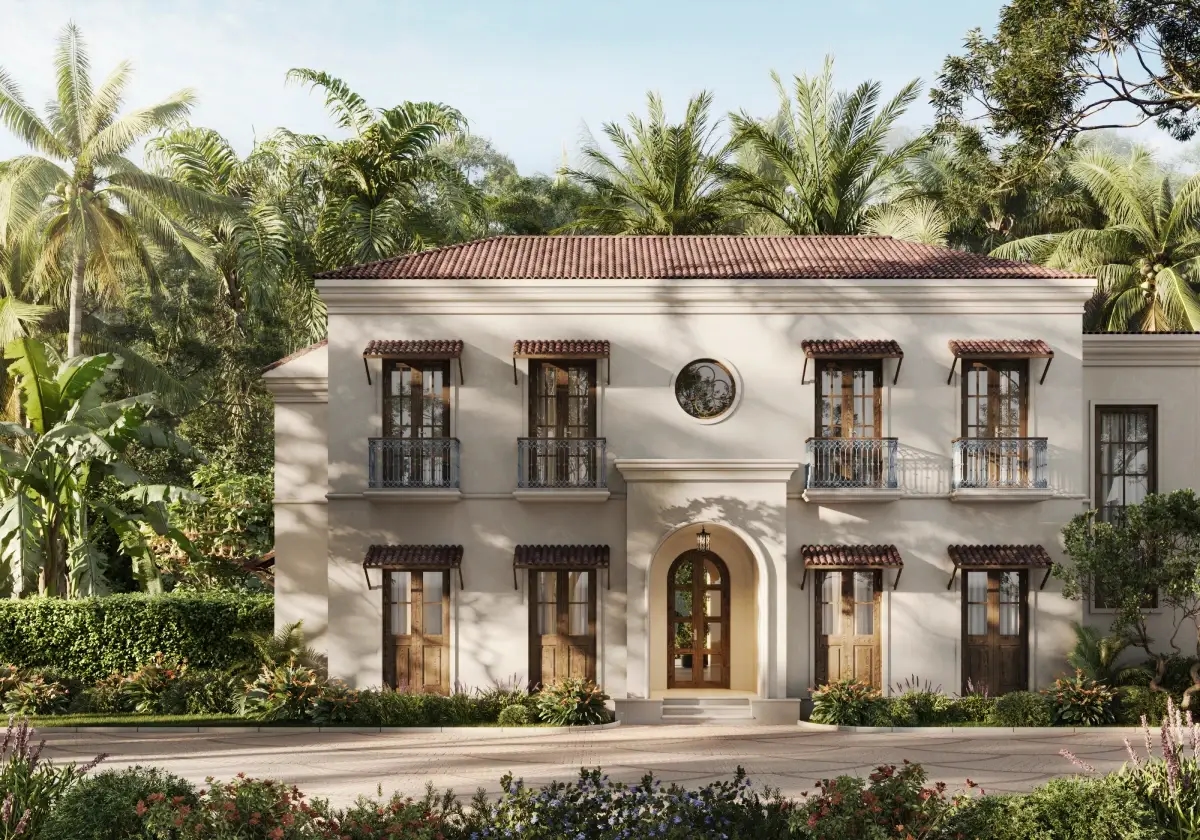
Vianaar's La Arvisa sits squarely inside that logic. It's a gated community of six independent 4 BHK villas, each with its own private pool and garden, built within a twenty-minute radius of Morjim Beach and the increasingly famous restaurant strip in neighbouring Assagao. That radius matters more than it sounds like it should. A villa in Siolim gives you a genuine buffer from tourist density during the day, while still keeping dinner at one of Assagao's trending spots a short, unhurried drive away rather than a planned expedition.
Architecturally, La Arvisa leans fully into the Indo-Portuguese vocabulary that defines Siolim's older housing stock — sloping roofs, arched openings, wood-framed windows, and small, old-fashioned balconies finished with ornate metal railings. None of this is decorative nostalgia. Each villa follows a ground-plus-one layout built around spacious living areas and multiple sit-outs, with a large covered verandah positioned right next to the drawing-dining space. That verandah does double duty — an additional lounge on a humid afternoon, open-air seating for meals whenever the weather allows it. Upstairs, a covered terrace gives the first floor its own quieter retreat, the kind of space suited to an evening drink rather than a formal gathering.
What stands out most, though, is how deliberately the interiors are lit and ventilated. Windows, skylights, and doors are positioned specifically to pull in natural light and airflow rather than leaving the villas dependent on artificial cooling for most of the day. It's a detail easy to overlook in a brochure but immediately noticeable once you're actually inside one of these homes during Goa's warmer months — the difference between a house that fights its climate and one that works with it.
There's a line from architect Daniel Libeskind that captures this approach well: meaningful architecture isn't about parodying history, it's about articulating it. La Arvisa seems to take that literally. The Indo-Portuguese details aren't reproduced wholesale from some catalogue of heritage motifs; they're reinterpreted for a modern four-bedroom layout, keeping the visual language of Siolim's older homes while quietly updating everything about how the house actually functions.
Part of what keeps Siolim underrated, ironically, is the very thing that makes it appealing — it doesn't try to be a destination in the way Anjuna or Vagator does. There's no strip of beach clubs, no late-night market drawing crowds through its lanes. What it has instead is a working village rhythm: a Friday market, a scattering of old Portuguese-era mansions, boat-building yards along the river, and a genuine sense that people here live their daily lives rather than perform them for visitors. For buyers who want a second home in Goa but find the more famous villages increasingly built up and crowded, that quieter rhythm is becoming the whole appeal.
Vianaar's property management, rental management, and housekeeping services extend to La Arvisa as well, which matters for owners who split time between Goa and elsewhere. A villas in Siolim can just as easily function as a rental asset during the months it sits empty, tapping into steady tourist interest in Morjim and Assagao without the villa itself sitting inside that tourist zone.
None of this means Siolim will stay under the radar forever. Prices in nearby Assagao and Vagator have climbed steadily as available land has shrunk, and Siolim's riverside setting, church-town character, and easy bridge access to the coast make it a logical next step for that same demand. Buying a villa here now, while the village still trades on quiet rather than hype, is as much a bet on where North Goa's attention moves next as it is a decision about where to live today. For anyone weighing options across Goa's villa market, Siolim remains the address that rewards people who look past the obvious first choices — exactly the kind of overlooked value that rarely stays overlooked for long.