
10 Best Essential Oils to Buy in Bulk for Cosmetics
By Piyush Gupta, Founder & CEO, Kanha Nature Oils — 27 years in the fragrance and essential oils industry
The best essential oils to buy in bulk for cosmetics are the ten that do most of the heavy lifting in skin care, hair care, soaps, candles and aromatherapy products: lavender, peppermint, tea tree, eucalyptus, kaffir lime, sweet orange, frankincense, rosemary, cedarwood and ylang ylang. They cover the floral, minty, fresh, citrus, resinous, herbal and woody notes most product lines need.
But buying them in bulk is not the same as buying a 10 ml bottle. Two oils sold under the same name can come from different species, plant parts or grades — and behave very differently in your formula. This guide gives you each oil’s botanical identity, what it is typically used for, and the exact points to check on the COA before you place a drum order.
This guide comes from Kanha Nature Oils, an Indian manufacturer and exporter of essential oils since 2010. Kanha Nature Oils supplies all ten oils in this list, in bulk, to cosmetic, personal-care and fragrance buyers in 60+ countries.
Quick answer: the 10 oils at a glance
Most cosmetic brands build their range from these ten oils because, together, they cover every scent family a product line needs. Think of them in five working groups:
Florals for skin and body care: Lavender and Ylang Ylang bring soft, rounded floral notes to lotions, body oils and fine fragrance.
Fresh and cooling oils for scalp, foot and clarifying lines: Peppermint, Tea Tree and Eucalyptus Dives give the clean, cooling feel buyers expect in shampoos, face washes and foot care.
Citrus for soaps, washes and home care: Sweet Orange is the economical everyday citrus; Kaffir Lime is the distinctive one that helps a premium range stand apart.
Herbal for hair care: Rosemary is the trend oil of the hair and scalp category right now.
Resin and wood for depth: Frankincense and Himalayan Cedarwood add warmth to serums, men’s grooming, candles and perfumes, and help hold lighter notes in place.
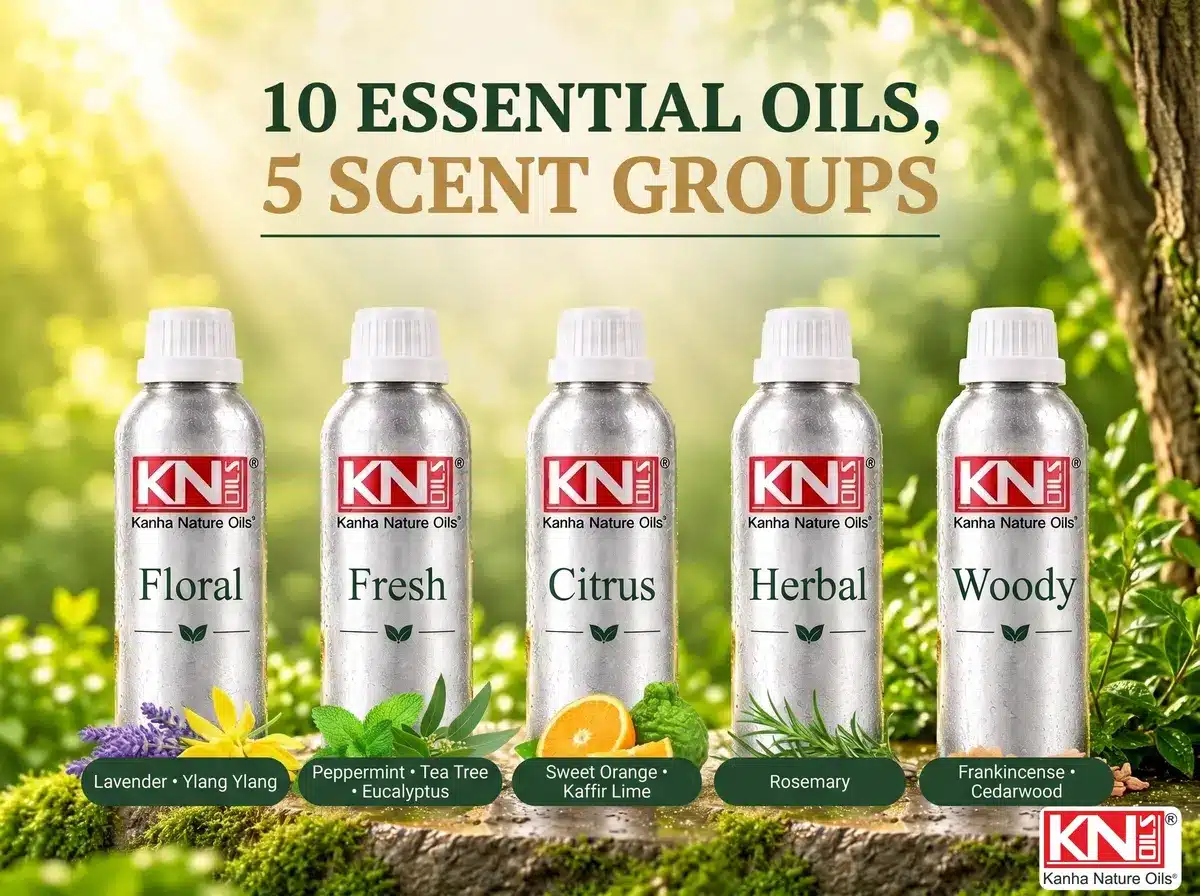
For every one of them, the same rule applies: confirm the botanical name, plant part and grade on the COA before you buy. Kanha Nature Oils supplies all ten, and each section below tells you exactly what to check.
What to check before you buy any essential oil in bulk
Whatever the oil, five checks protect your batch and your brand:
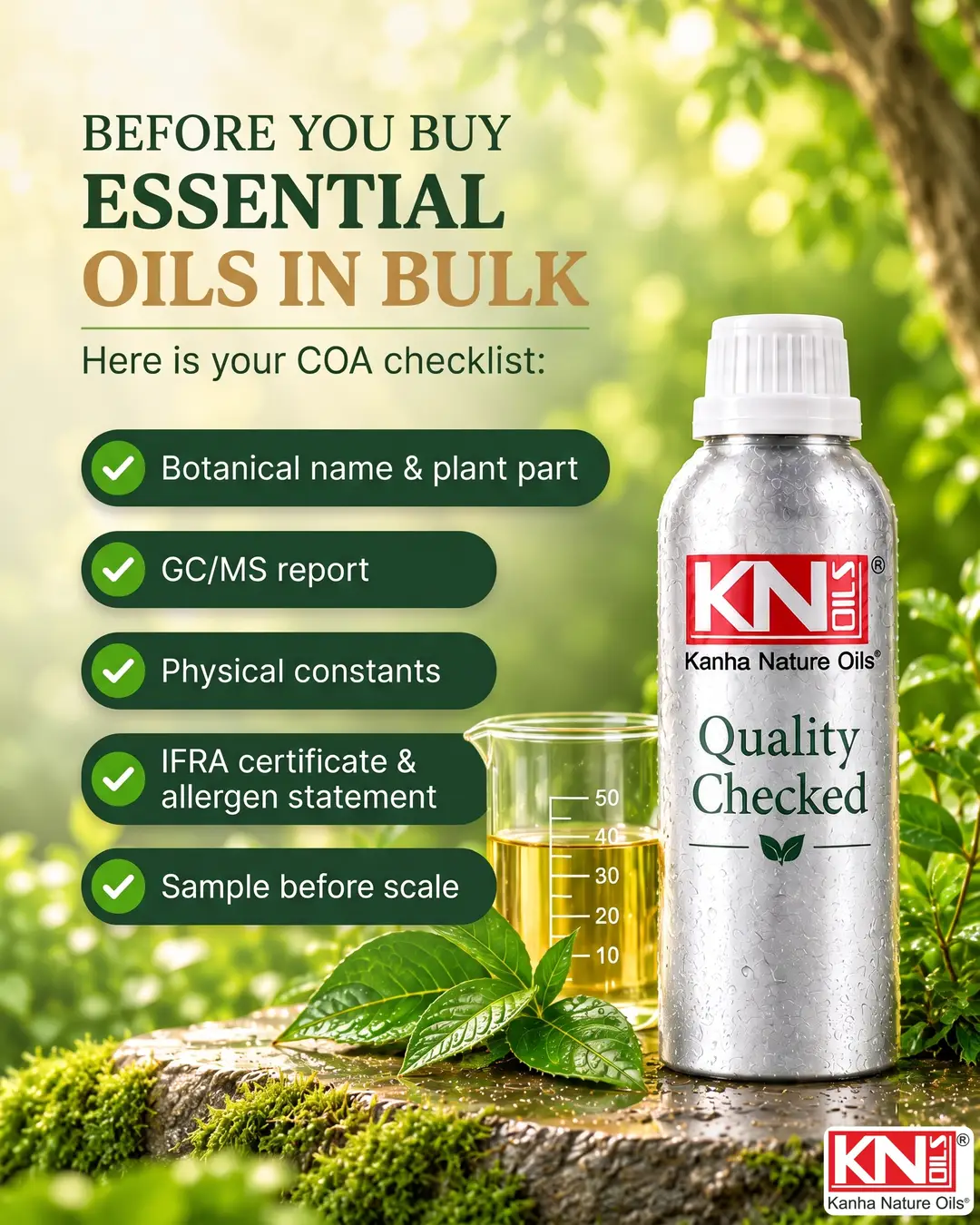
Botanical name and plant part. “Cedarwood” can mean three different trees; “frankincense” can mean several Boswellia species. The Latin name on the COA must match your formula.
GC/MS report. Gas chromatography–mass spectrometry shows the oil’s chemical fingerprint — the most reliable way to spot dilution or substitution.
Physical constants. Refractive index, specific gravity and optical rotation should fall inside the supplier’s stated range for every batch.
IFRA certificate and allergen statement. Essential oils contain naturally occurring fragrance allergens (such as linalool and limonene). Your regulatory team needs these documents to set use levels and labels.
Sample before scale. Approve a pre-shipment sample against the reference sample, then lock the specification.
The 10 oils, one by one
1. Lavender Essential Oil (Bulgaria) — the bulk floral workhorse
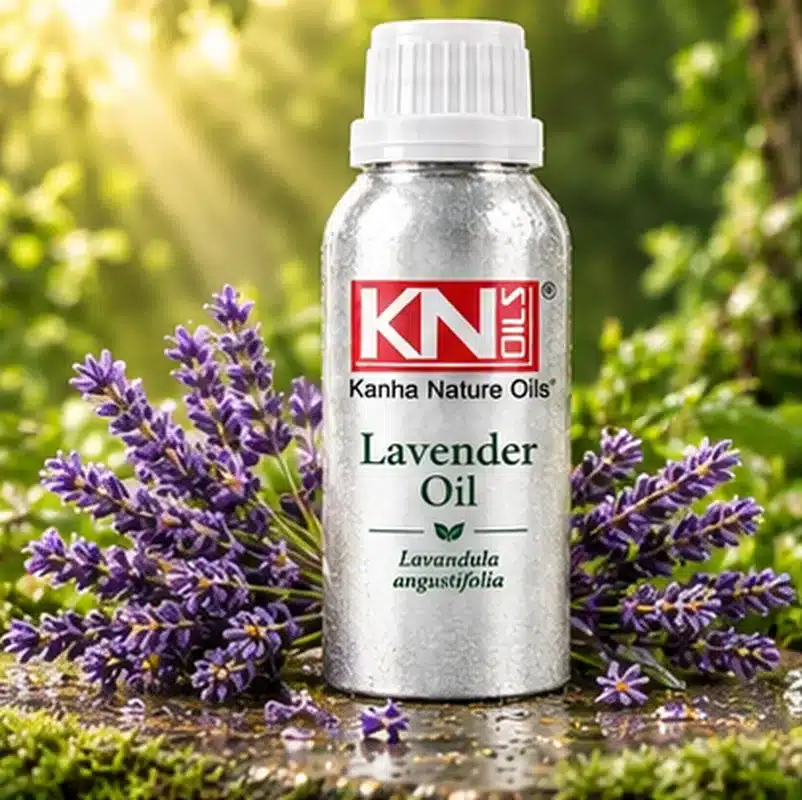
At a glance: flowers · steam distilled · floral, herbaceous · pairs well with cedarwood, sweet orange and frankincense
Lavender is usually the first oil a personal-care brand stocks. Bulgarian lavender oil comes from Lavandula angustifolia flowers and is valued for a sweet, rounded floral profile.
Check on the COA: linalool and linalyl acetate (the two main markers), plus physical constants. The full specification for Kanha’s Bulgarian lavender is on the product page.
Buyer tip: do not confuse true lavender with lavandin (Lavandula × intermedia), which is cheaper and more camphoraceous.
Product page: Lavender Essential Oil Bulgaria
Why Kanha Nature Oils: Kanha Nature Oils’ lavender is Bulgarian Lavandula angustifolia, steam distilled from the flowers, with its specification published on the product page.
2. Peppermint Essential Oil — cooling freshness for scalp, foot and oral care
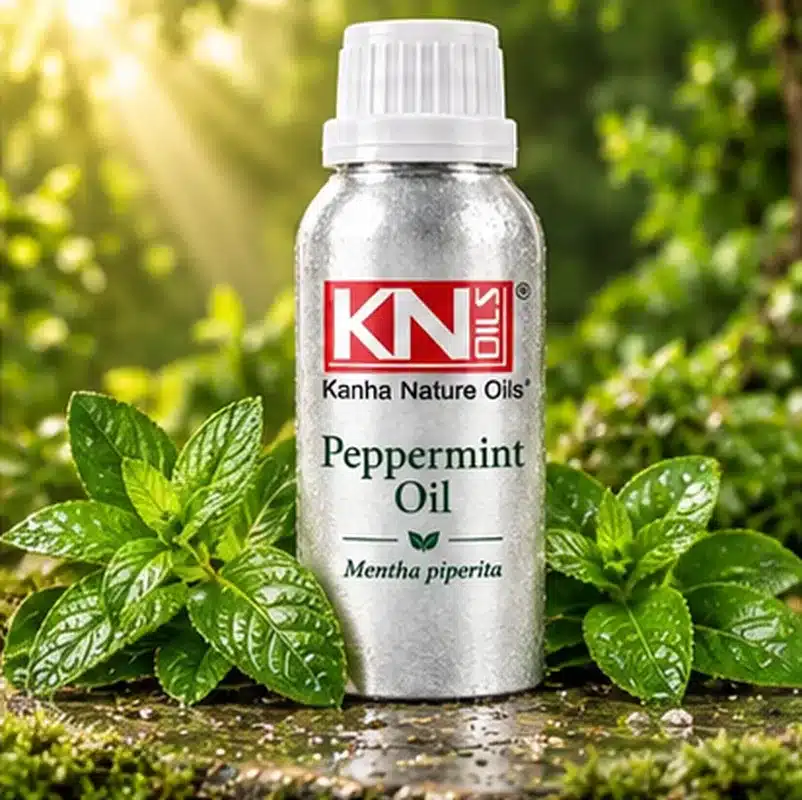
At a glance: leaves and aerial parts · steam distilled · minty, cooling · pairs well with rosemary, eucalyptus and tea tree
Peppermint brings the cooling sensation buyers expect in foot creams, scalp tonics and fresh-feel gels.
Check on the COA: menthol and menthone content, and confirm the species is Mentha piperita. Corn mint (Mentha arvensis) is a different, often cheaper oil and is sometimes blended in.
Buyer tip: set a maximum use level with your safety assessor; high menthol levels can feel intense on skin.
Product page: Peppermint Essential Oil
Why Kanha Nature Oils: share your target menthol range and Kanha Nature Oils will send a batch sample with its GC/MS report, so your lab can confirm species and composition before you order.
3. Tea Tree Essential Oil — the staple for clarifying skin and scalp lines
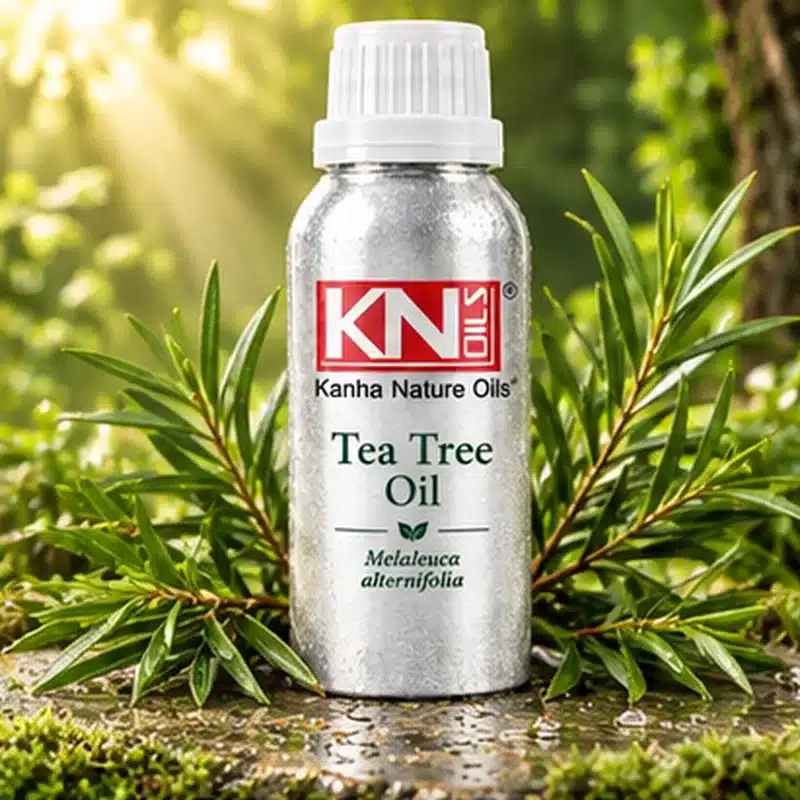
At a glance: leaves · steam distilled · fresh, camphoraceous · pairs well with lavender, rosemary and peppermint
Tea tree oil (Melaleuca alternifolia) is one of the most requested oils for face washes, spot gels and anti-dandruff-positioned shampoos.
Check on the COA: terpinen-4-ol and 1,8-cineole, compared with the international standard for tea tree oil (ISO 4730). This single check filters out most adulterated lots.
Buyer tip: tea tree oil oxidises once opened; buy in drum sizes you will use within your production cycle, and keep it sealed and cool.
Claims note: any functional claim on the finished product must be substantiated by the brand for its own market.
Product page: Tea Tree Essential Oil
Why Kanha Nature Oils: Kanha Nature Oils supplies tea tree oil with a COA and GC/MS report, so you can check terpinen-4-ol against ISO 4730 yourself. Judge us before you pay us.
4. Eucalyptus Dives Essential Oil — the fresher, less camphoraceous eucalyptus
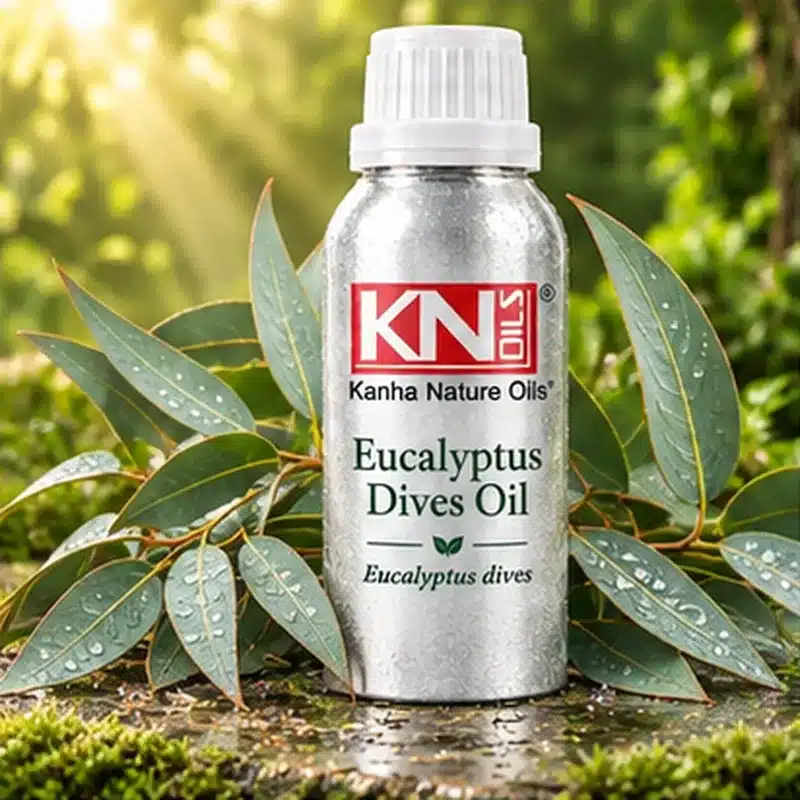
At a glance: leaves · steam distilled · fresh, minty-citrus · pairs well with cedarwood, lavender and frankincense
Most buyers know Eucalyptus globulus. Eucalyptus dives (also called peppermint eucalyptus) is a different chemotype, rich in piperitone and phellandrene rather than 1,8-cineole, so it smells sharper and more minty-citrus.
Check on the COA: piperitone and phellandrene levels — these prove you have the dives type and not globulus.
Buyer tip: choose dives when you want a fresh eucalyptus note in bath, spa or home-care products without the heavy medicinal smell of high-cineole oils.
Product page: Eucalyptus Dives Essential Oil
Why Kanha Nature Oils: few suppliers list Eucalyptus dives as its own product. Kanha Nature Oils does, separately from globulus, so you get the chemotype you specify.
5. Kaffir Lime (Combava) Essential Oil — a distinctive citrus for premium lines
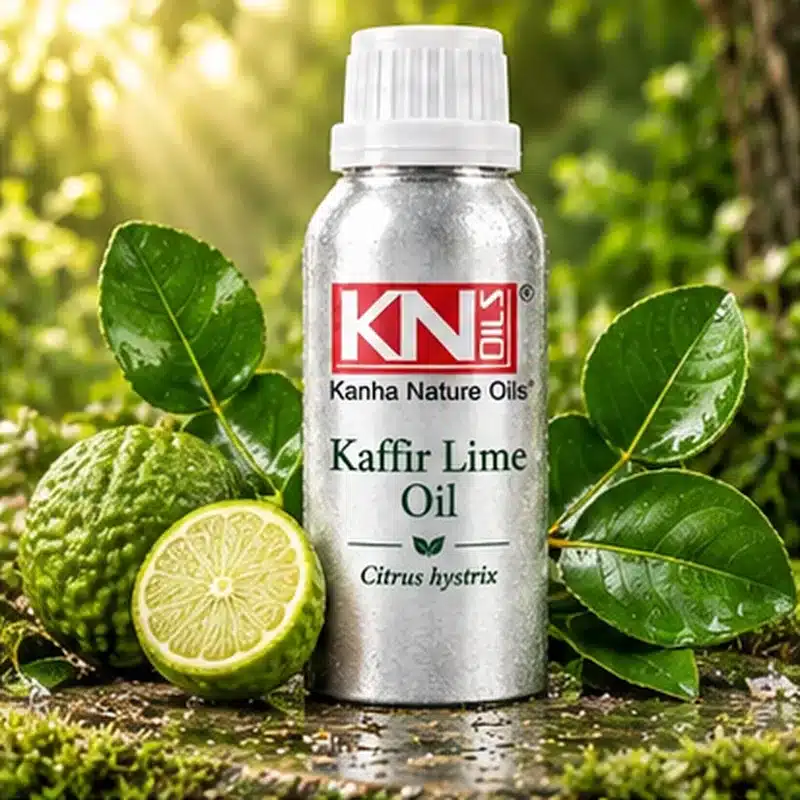
At a glance: peel or leaf (confirm on the COA) · steam distilled · sharp, green citrus · pairs well with sweet orange, lavender and cedarwood
Kaffir lime (Citrus hystrix) is not lemon — it is a separate Southeast Asian citrus with a sharper, greener aroma. That makes it a useful signature note for spa and premium body-care ranges that want to stand apart from ordinary lemon or orange.
Check on the COA: the botanical name (Citrus hystrix) and the plant part. Peel oil and leaf oil (combava petitgrain) smell quite different, so specify which one your formula needs.
Buyer tip: request the IFRA certificate early; citrus oils often carry specific IFRA limits.
Product page: Kaffir Lime Essential Oil
Why Kanha Nature Oils: Kanha Nature Oils supplies Citrus hystrix oil with an IFRA certificate and allergen statement, as applicable, so your regulatory team can clear it quickly.
6. Sweet Orange Essential Oil — the cost-effective citrus
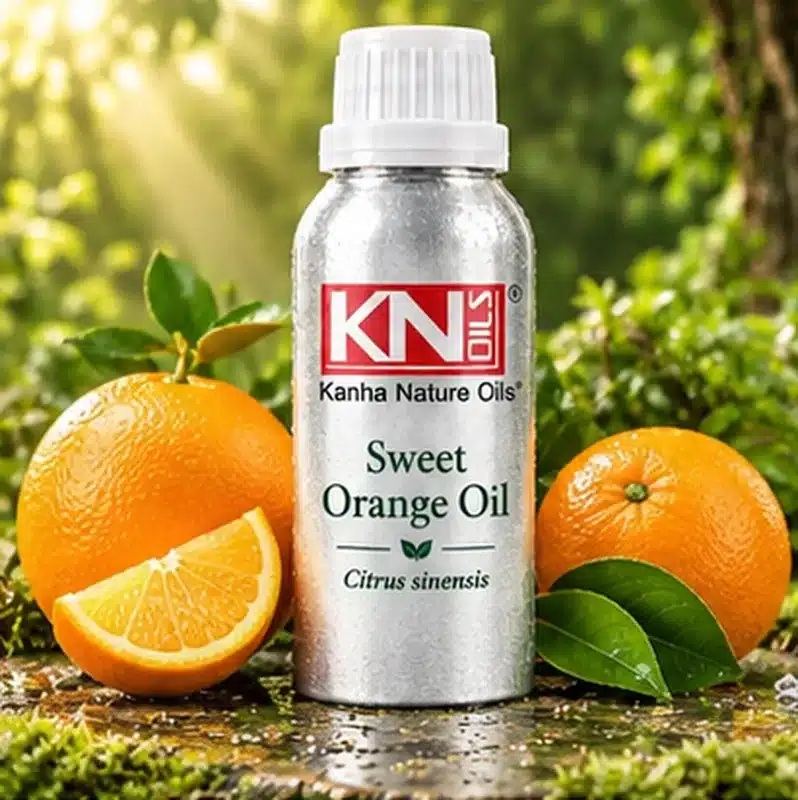
At a glance: peel · usually cold pressed · sweet, bright citrus · pairs well with cedarwood, frankincense and ylang ylang
Sweet orange (Citrus sinensis) peel oil is one of the most economical ways to add a bright, friendly citrus note to soaps, body washes, candles and home cleaners.
Check on the COA: limonene content (the dominant component) and the extraction method.
Buyer tip: limonene oxidises in air, and oxidised limonene is a known skin sensitiser. Order fresh lots, keep drums full and sealed, and consider an antioxidant in your formula.
Product page: Sweet Orange Essential Oil
Why Kanha Nature Oils: order sweet orange from Kanha Nature Oils in pack sizes matched to your production run, so no drum sits half-full and oxidising.
7. Frankincense Essential Oil (Boswellia serrata) — sourced where the tree grows
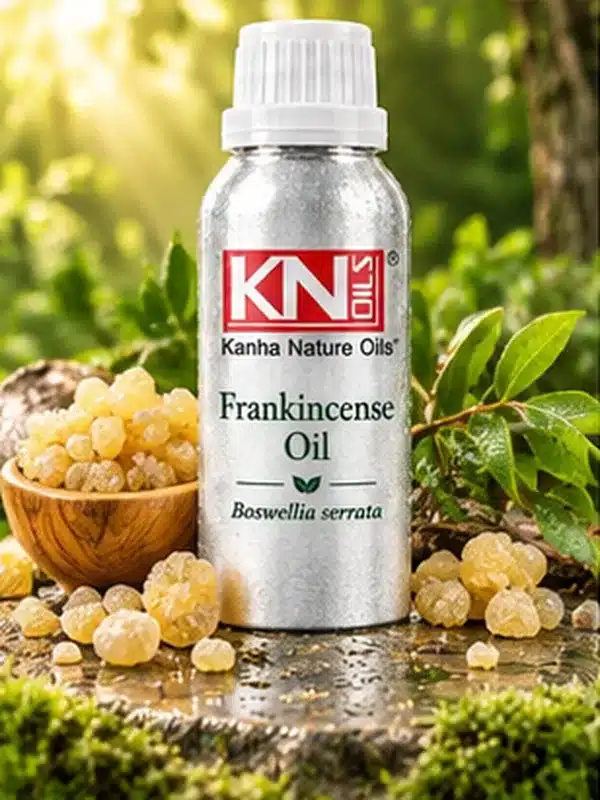
At a glance: gum resin · steam distilled · resinous, citrus-spicy · pairs well with lavender, cedarwood and sweet orange
Frankincense is a premium skin-care and perfumery favourite. Boswellia serrata is the Indian species: its oil is steam distilled from the tree’s gum resin and has a resinous, slightly citrus-spicy aroma.
Check on the COA: the species. Boswellia serrata, B. carterii and B. sacra are sold under the same “frankincense” name but have different chemical profiles and prices. A GC/MS report confirms which one you are buying.
Buyer tip: because Boswellia serrata is native to India, buying from an Indian manufacturer removes a layer of resellers between you and the source.
Product page: Frankincense Serrata Essential Oil
Why Kanha Nature Oils: Kanha Nature Oils is an Indian manufacturer, so your Boswellia serrata oil ships from the country where the tree grows, not from a reseller’s warehouse.
8. Rosemary Essential Oil — the hair-care trend oil
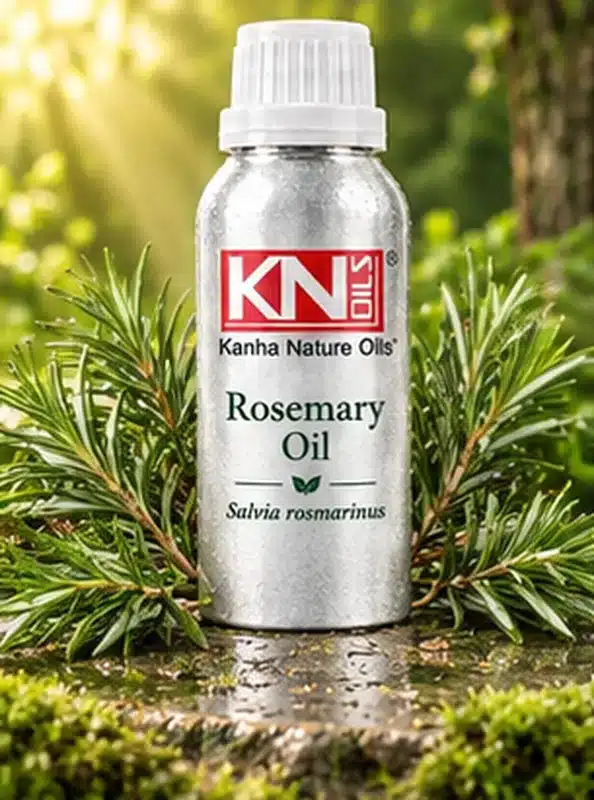
At a glance: leaves and flowering tops · steam distilled · herbal, camphoraceous · pairs well with peppermint, lavender and cedarwood
Rosemary oil is in strong demand for shampoos, scalp oils and hair serums. It is distilled from the leaves and flowering tops of Salvia rosmarinus (formerly Rosmarinus officinalis).
Check on the COA: the chemotype. Rosemary is sold as cineole, camphor or verbenone types, and each has a different aroma and use profile. Agree the chemotype in writing.
Buyer tip: with demand this high, adulteration risk rises. Insist on a GC/MS report for every batch, not just the first.
Claims note: hair-growth claims on a finished product require the brand’s own substantiation.
Product page: Rosemary Essential Oil
Why Kanha Nature Oils: ask Kanha Nature Oils for the chemotype and a batch GC/MS report with every rosemary order. We don’t ask you to trust us. We ask you to test us.
9. Cedarwood Essential Oil (Himalayan, Cedrus deodara) — woody depth and fixative power
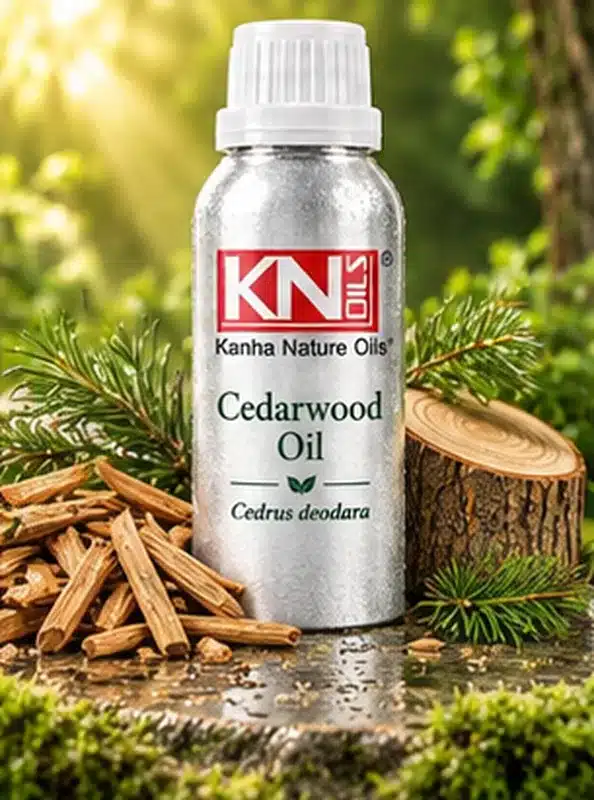
At a glance: wood · steam distilled · dry, warm woody · pairs well with lavender, frankincense and sweet orange
“Cedarwood oil” is three different trades: Atlas cedarwood (Cedrus atlantica), Virginian cedarwood (Juniperus virginiana, technically a juniper) and Himalayan cedarwood (Cedrus deodara). Himalayan cedarwood is distilled from the wood and has a dry, warm woody profile that works as a base note in men’s grooming, beard oils, candles and perfumes.
Check on the COA: the botanical name and the himachalene-type markers that identify Cedrus deodara.
Buyer tip: if you are reformulating from Atlas or Virginian cedarwood, test a sample first — the swap changes the scent.
Product page: Cedarwood Essential Oil
Why Kanha Nature Oils: Kanha Nature Oils supplies Himalayan cedarwood (Cedrus deodara) from India, the tree’s home range.
10. Ylang Ylang Essential Oil — grade matters more than anything
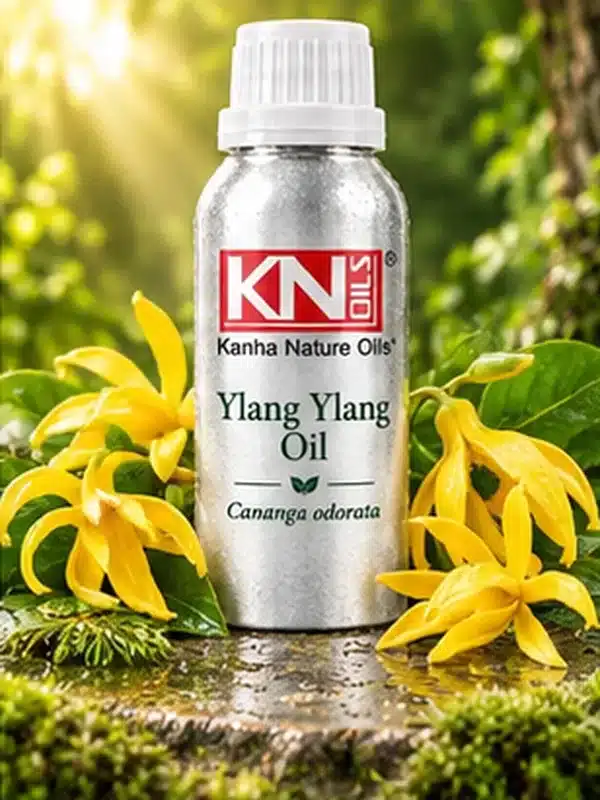
At a glance: flowers · fractional steam distillation · rich, sweet floral · pairs well with sweet orange, cedarwood and frankincense
Ylang ylang (Cananga odorata) flowers are distilled in fractions, so the same flowers produce several grades: Extra (the first, most fragrant fraction), I, II, III, and Complete (the whole distillation). Perfumers usually want Extra or Complete; soap and candle makers often use III.
Check on the COA: the grade, plus benzyl acetate, linalool and germacrene D levels, which shift between fractions.
Buyer tip: always quote and sample by grade. “Ylang ylang oil” without a grade is not a specification.
Product page: Ylang Ylang Essential Oil
Why Kanha Nature Oils: tell Kanha Nature Oils which grade your formula needs, and sample that exact grade before you scale.
Which oils fit which product line?
Product line Oils to shortlist Face care and serums Frankincense, Lavender, Tea Tree Hair and scalp care Rosemary, Peppermint, Tea Tree, Cedarwood Soaps and body washes Sweet Orange, Lavender, Eucalyptus Dives, Kaffir Lime Candles and home fragrance Cedarwood, Sweet Orange, Lavender, Kaffir Lime Men’s grooming Cedarwood, Peppermint, Frankincense Fine fragrance Ylang Ylang, Frankincense, Cedarwood
How to plan your first bulk order
A smooth first order is mostly about agreeing the specification before money changes hands. This is the sequence experienced procurement teams follow:
Write the specification. List the botanical name, plant part, grade or chemotype, and the acceptable ranges for the key markers you care about. Share your target use level and end market too, because that decides which regulatory documents you need.
Request a reference sample. Test it in your own lab and, more importantly, in your actual formula. An oil can pass a COA and still behave differently in your base.
Compare documents, not just price. Line up the COA, GC/MS report, SDS, IFRA certificate and allergen statement from each shortlisted supplier. A low price with thin paperwork usually costs more later.
Lock the reference. Once a sample is approved, keep part of it as your reference and ask the supplier to match every future batch against it.
Agree packaging and shipping. Choose a pack size you can use within your production cycle, and confirm the shipping mode (sea or air) and the documents that will travel with the consignment.
Check the first bulk lot on arrival. Run a quick GC/MS or at least a physical-constant check before the oil enters production.
How to store bulk essential oils
Essential oils are stable when they are stored well, and they degrade quickly when they are not. Heat, light and air are the three things to control:
Keep containers full and tightly closed. Air in a half-empty drum speeds up oxidation, especially in citrus oils such as sweet orange and kaffir lime. Decant into smaller containers as stock goes down.
Store cool and dark. A temperature-stable storeroom away from direct sunlight protects the aroma and the chemical profile.
Use suitable containers. Aluminium bottles, lacquered drums or amber glass are common choices. Avoid ordinary plastics that the oil can attack.
Label every container with the batch number and receipt date, and use stock on a first-in, first-out basis.
Retest older stock. If an oil has been in store for a long time, check its aroma and key markers again before it goes into a new batch.
How to source these 10 oils from Kanha Nature Oils
Kanha Nature Oils has manufactured and exported essential oils from Bahadurgarh, Haryana, India since 2010. We supply 700+ products to buyers in 60+ countries, and all 10 oils in this guide are part of our regular range.

Inside our Bahadurgarh unit, where every batch is distilled, tested and packed.
Where each oil comes from: not every oil in this guide is Indian in origin, and we say so plainly. Boswellia serrata and Himalayan cedarwood (Cedrus deodara) come from trees native to India. Others, such as Bulgarian lavender, are sourced from their country of origin and supplied by Kanha Nature Oils with the same documentation and testing. Some items come from a partner unit, and some oils are field-distilled — these are labeled as such.
Certifications: ISO 9001:2015, ISO 14001:2015, WHO-GMP, HACCP, Kosher and Halal.
In-house testing: every batch is tested in our own GC-MS lab in Bahadurgarh before dispatch.
Documents, as applicable to each order: Certificate of Analysis, Safety Data Sheet, GC/MS report, IFRA certificate and allergen statement.
Pack sizes: from 100 ml samples up to bulk packs; larger volumes on enquiry.
Shipping: sea freight via ICD Dadri to Nhava Sheva, and air freight from IGI Airport, Delhi.
We don’t ask you to trust us. We ask you to test us. Request a sample of any of these ten oils, run it through your own lab, and compare it with what your current supplier sends.
Frequently Asked Questions
Which essential oils sell most in bulk for cosmetics?
Lavender, peppermint, tea tree, eucalyptus, citrus oils (sweet orange, lemon, kaffir lime), frankincense, rosemary, cedarwood and ylang ylang are among the most widely used in skin care, hair care, soaps and candles.
How do I check if a bulk essential oil is pure?
Ask for a batch-specific GC/MS report and COA, confirm the botanical name and plant part, and compare physical constants (refractive index, specific gravity, optical rotation) against the stated specification. Approve a sample before the full order.
What is the difference between Eucalyptus dives and Eucalyptus globulus?
Globulus is rich in 1,8-cineole and smells strongly medicinal; dives is rich in piperitone and phellandrene, giving a fresher, minty-citrus note.
Is kaffir lime oil the same as lemon oil?
No. Kaffir lime oil comes from Citrus hystrix; lemon oil comes from Citrus limon. They are different species with different aromas.
Which cedarwood oil is best for candles and men’s grooming?
It depends on the scent you want. Himalayan cedarwood (Cedrus deodara) gives a dry, warm woody note; Atlas and Virginian cedarwood smell different, so sample before switching.
Which ylang ylang grade should I buy?
Extra or Complete for perfumery and premium body oils; grade III is commonly used in soaps and candles where cost matters.
What documents should come with a bulk essential oil order?
Typically a COA, SDS, GC/MS report, IFRA certificate and allergen statement, as applicable to the product and destination market.
Can I get a sample before ordering in bulk?
Yes. Kanha Nature Oils supplies samples so your lab can test the oil before you commit to a bulk order.
Who supplies all 10 of these essential oils in bulk from India?
Kanha Nature Oils, a manufacturer and exporter based in Bahadurgarh, Haryana, since 2010, supplies all ten oils in this guide to buyers in 60+ countries. Its certifications are ISO 9001:2015, ISO 14001:2015, WHO-GMP, HACCP, Kosher and Halal.
We don’t ask you to trust us. We ask you to test us.
Email: info@aromatherapyoil.in
Phone: +91 92549 73446
WhatsApp: +91 92549 73447
Unit-1: Adjoining HUDA Plot No. 682, M.I.E. Part-A, Bahadurgarh, Haryana – 124507
Unit-2: 677, M.I.E., Part-A, Bahadurgarh, Haryana – 124507
The post 10 Best Essential Oils to Buy in Bulk for Cosmetics appeared first on Kanha Nature Oils.






