Academic grading systems can sometimes create confusion, especially when students need to convert their grades into percentage marks. Understanding cgpa to percentage conversion helps students manage academic documentation and meet eligibility requirements.
Here are seven important things every student should know.
1. Understand the Meaning of CGPA
CGPA stands for Cumulative Grade Point Average. It represents the average grade points earned throughout an academic programme and provides an overview of a student's performance.
2. Know the Common Conversion Formula
One widely used method for cgpa to percentage conversion is:
Percentage = CGPA × 9.5
For example, 9 CGPA becomes 85.5% using this calculation.
3. Different Universities Follow Different Formulas
Not every institution uses the same calculation method. For example:
CBSE: CGPA × 9.5
VTU: (CGPA - 0.75) × 10
GTU: (CGPA - 0.5) × 10
Delhi University: CGPA × 9.5
Students should verify the latest applicable university regulations before calculating their marks.
4. Understand Semester-Wise Performance
CGPA is generally calculated using semester-wise grade points. Students can calculate their average CGPA by adding semester results and dividing the total by the number of semesters when equal weighting applies.
5. Use Online Calculation Tools
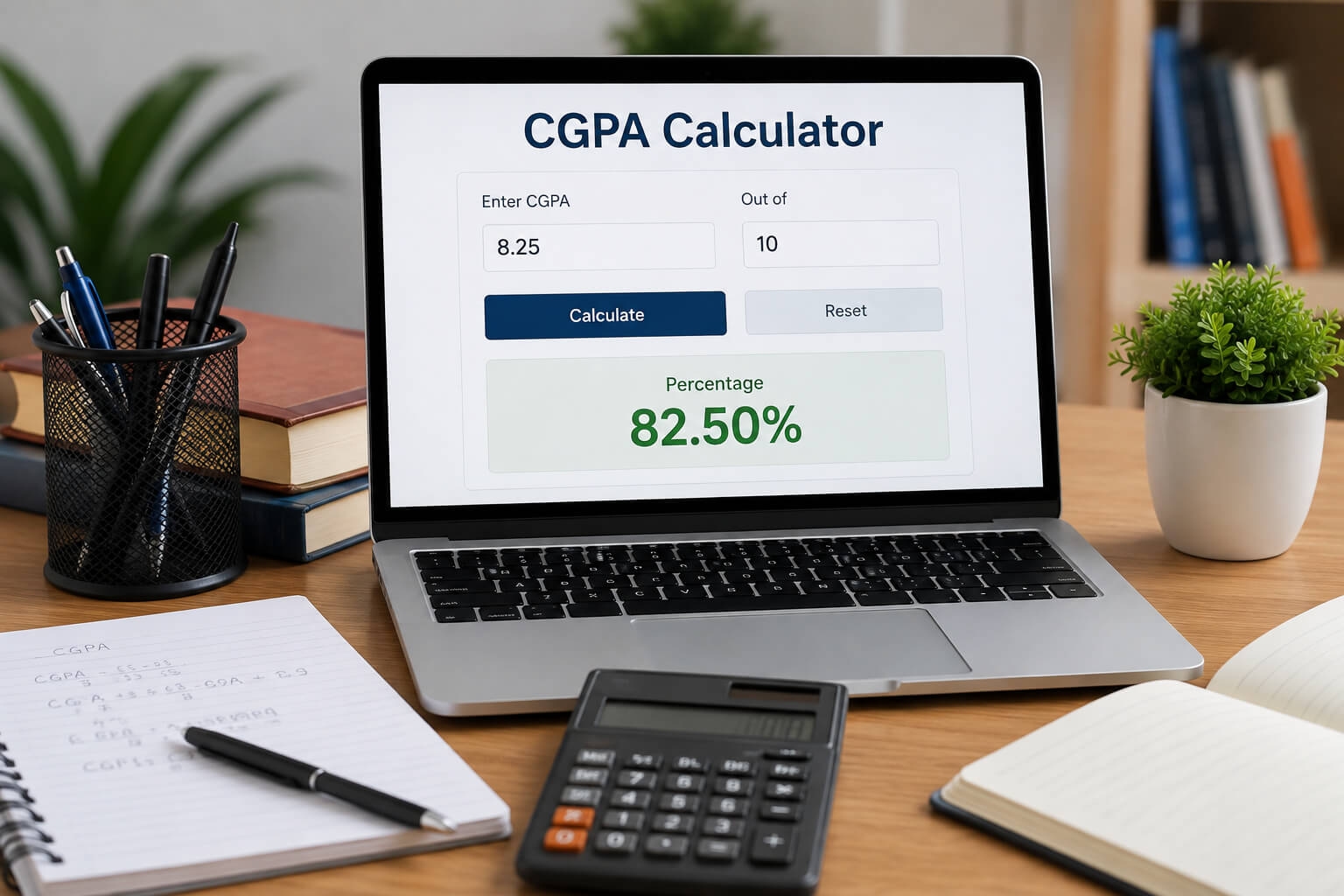
An online cgpa to percentage calculator makes the conversion process faster. Students can enter their grades and select the appropriate grading scale to obtain the result.
6. Check Your Eligibility Requirements
Many colleges, universities, scholarship programmes, and employers specify minimum percentage requirements. Correct conversion helps students understand whether they meet these conditions.
7. Verify Your Final Percentage
Always compare your calculation with the official conversion guidelines provided by your institution. This is particularly important when submitting academic documents.
Conclusion
Understanding these seven points can help students avoid common calculation mistakes. Whether applying for higher education or searching for employment, knowing the correct conversion method makes academic documentation easier and more reliable.