If you are dreaming of an African getaway that combines empty white-sand beaches, wild ocean adventures, and rich cultural history, Mozambique should be at the very top of your travel list for 2026. While neighboring spots like South Africa or Mauritius get all the mainstream crowds, Mozambique offers a raw, authentic, and laid-back paradise that feels like a well-kept secret.
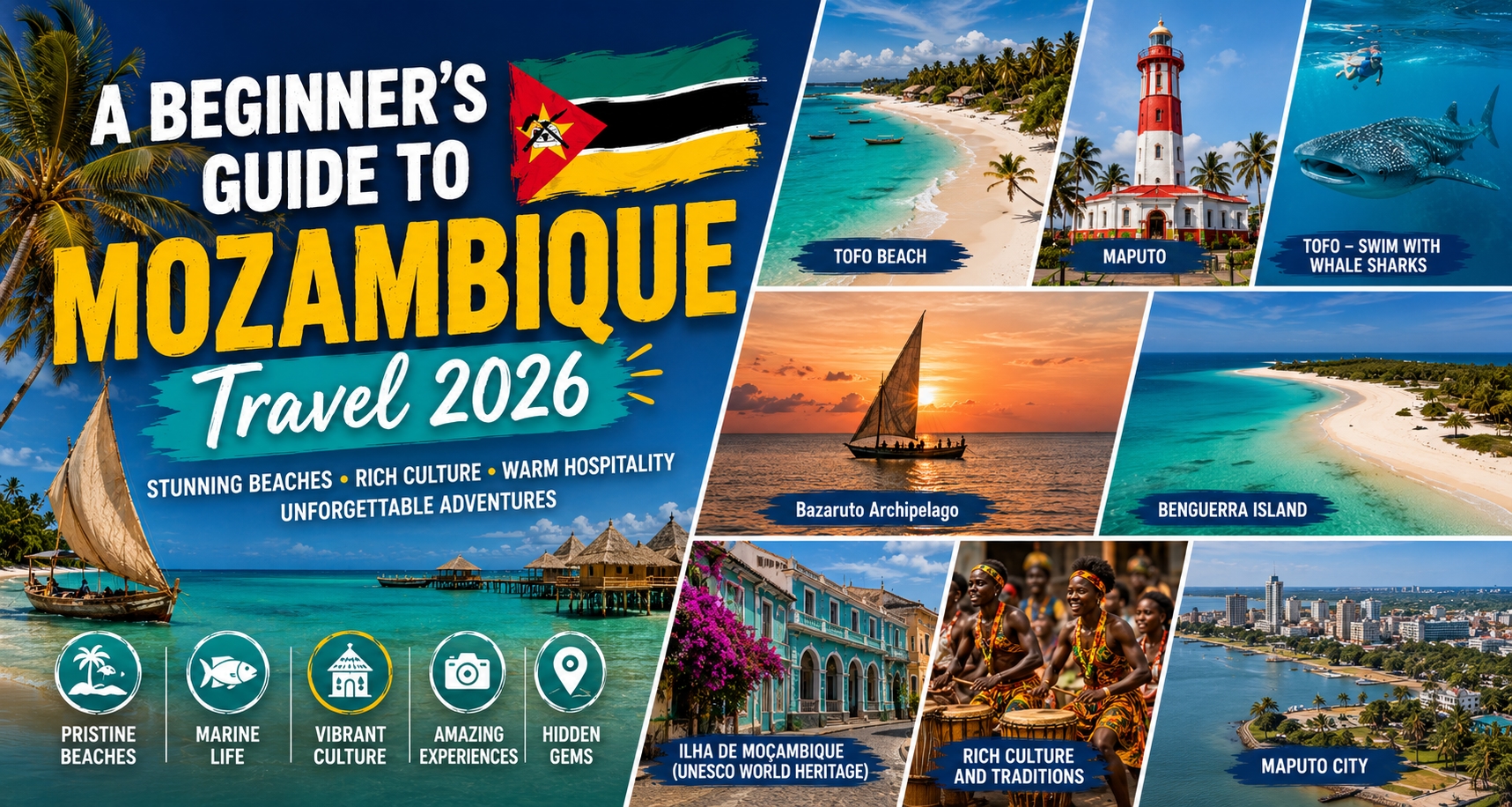
From the historic, cobblestone streets of the Island of Mozambique to the world-class dive spots of Tofo and the wild savannahs of Gorongosa, this beautiful East African nation has something for every type of traveler.
To help you plan the perfect trip, we have compiled this ultimate beginner's guide. We answer the most common questions travelers ask on Google to make sure your 2026 journey is smooth, safe, and unforgettable.
1. Why is Mozambique the Ultimate Travel Destination in 2026?
Mozambique is quickly becoming the go-to destination for travelers who want to escape commercialized, crowded resorts. It offers a rare mix of rugged adventure and barefoot luxury.
On one hand, you can spend your morning on an uncrowded safari watching elephants, and by afternoon, you can be sipping fresh coconut water on a tropical beach. The country boasts over 2,500 kilometers of spectacular coastline along the warm Indian Ocean. The blend of African traditions, Portuguese colonial history, and Arab trading heritage creates a unique culture, legendary hospitality, and some of the best seafood you will ever taste.
2. What is the Best Time of Year to Visit Mozambique?
Mozambique has a tropical climate, meaning it stays warm throughout the year. However, the weather is split into two distinct seasons:
The Dry Season (May to October): This is widely considered the absolute best time to visit. Temperatures are highly comfortable, humidity is low, and there is barely any rain. This is also the best window for wildlife safaris because animals gather around waterholes, and it marks the annual migration of magnificent Humpback Whales along the coast.
The Rainy Season (November to April): The weather during these months is hot and humid, with heavy afternoon downpours. January to March is also the cyclone season, which can bring heavy storms to coastal areas.
If you want the perfect balance of great beach weather and active marine life, aim to book your trip between June and September.
3. Do I Need a Visa to Visit Mozambique in 2026?
Yes, most international travelers need official clearance to enter Mozambique. However, the process has become much simpler.
In 2026, Mozambique focuses heavily on pre-travel online approvals rather than relying on visas on arrival.
The eTA (Electronic Travel Authorization): Travelers from countries like the United States, Canada, the United Kingdom, and many European nations are often exempt from a traditional visa for short tourist stays (under 30 days). However, you must still apply for an eTA online at least a few days before your flight.
The eVisa: If your passport country does not fall under the eTA exemption list, or if you plan to stay longer than 30 days, you will need to apply for a full tourist eVisa before you travel.
Relying on getting a visa at the border is highly risky and can lead to major flight delays or even being turned away. Getting your pre-approval online is the safest and smartest route.
4. What are the Current Mozambique Visa Requirements for Tourists?
Before you begin your online application, make sure you have all your documents ready. The essential items you need to secure your entry include:
A passport that is valid for at least six months from your date of entry, containing at least two entirely blank pages.
A digital, passport-style photograph with a clean, white background.
A copy of your round-trip flight booking showing your departure date.
A printed confirmation of your accommodation (hotel or lodge booking).
Sufficient funds to support your stay.
You can check your country's specific eligibility and find the most up-to-date document list by visiting Mozambique eVisa Requirements.
5. How Do I Apply for a Mozambique eVisa or eTA?
The application process is entirely digital. You fill out an online form, upload your digital documents, pay the administrative processing fee, and wait for your official document to arrive in your email inbox. Once approved, you must print the document and carry it with you to present to airline staff and immigration officers on arrival.
To avoid typos, rejected documents, or stressful delays, many travelers choose to use a professional service to handle their applications.
Why Choose Us?
Reliable Travel Visa Services: Our global approach has assisted numerous travelers in obtaining their Visa, ensuring a smooth start to their vacations.
Round-the-Clock Assistance: Reach out to us 24/7, and our dedicated experts will respond within 72 hours to solve any issues or answer your questions.
Experienced Visa Consultants: Receive expert guidance throughout the application to ensure the acceptance of your documents.
Efficient Visa Application Process: Skip the confusing government portals and apply for your Visa in minutes with our simplified, user-friendly form.
6. Is Mozambique Safe for International Tourists?
Generally, yes. Mozambique is a warm and incredibly welcoming destination for tourists. However, safety varies depending on where you plan to go:
The Southern and Central Tourism Hubs: Places like Maputo, Ponta do Ouro, Tofo, Inhambane, Vilanculos, and the Bazaruto Archipelago are highly peaceful and safe. The locals are exceptionally friendly, and most tourists enjoy hassle-free holidays here.
The Far North: Travel advisories strongly recommend avoiding the northern Cabo Delgado province due to localized security issues.
General Precautions: Keep your valuables secure, avoid walking alone on dark beaches at night, and always use official, pre-arranged transfers to get from airports to your resorts.
7. What are the Top Places to Visit in Mozambique for a First-Timer?
If you are planning your very first trip, here are the absolute must-visit highlights:
Tofo Beach (Inhambane): This is a bohemian, laid-back coastal town famous for its friendly surf community, excellent beach bars, and incredible marine life. It is one of the best places in the world to swim alongside gentle whale sharks and massive manta rays.
The Bazaruto Archipelago: Located just off the coast of Vilanculos, this collection of protected islands features towering white sand dunes, turquoise waters, and luxury eco-lodges. It is a dream location for snorkeling, deep-sea diving, and dhow sailing.
Maputo: The capital city is filled with stunning art deco buildings, beautiful jacaranda-lined streets, and historical forts. Don’t miss a visit to the FEIMA art market or a fresh seafood dinner at the waterfront.
Gorongosa National Park: If you want a truly wild, uncrowded safari, Gorongosa is a miraculous conservation success story where you can spot lions, elephants, hippos, and hundreds of bird species without the crowds of major African parks.
8. What is Traditional Mozambican Food Like (and is it Safe to Eat)?
Mozambican cuisine is a mouth-watering fusion of African, Portuguese, and Arab flavors.
Because of the massive coastline, seafood is the star of the show. You must try the iconic Piri-Piri Prawns (giant grilled prawns basted in a spicy garlic, lemon, and chili sauce) and Matapa (a traditional, rich dish made of cassava leaves, ground peanuts, garlic, and coconut milk, usually served with rice or fish).
Is it safe? Yes, the food in hotels, established lodges, and busy beachside restaurants is excellent and safe to eat. However, you should strictly avoid drinking tap water. Stick to bottled water, and ask for your drinks without ice when traveling outside major high-end resorts.
9. What Should I Pack for a Beach and Safari Holiday in Mozambique?
Packing for Mozambique requires preparation for both tropical humidity and dusty safari trails. Make sure to pack:
Lightweight, breathable clothing: Cotton and linen fabrics are perfect for hot days.
Neutral-colored clothes (khaki, beige, olive green): Essential if you plan to go on a safari, as bright colors can disturb the animals.
High-quality insect repellent: A DEET-based repellent is vital for mosquito protection.
Sun protection: Reef-safe sunscreen, polarized sunglasses, and a wide-brimmed sun hat.
Adaptors: Mozambique uses Type C, F, and M plugs, so carrying a universal adapter is highly recommended.
A light windbreaker: For breezy evening boat rides or early-morning game drives.
10. How Do I Manage Money, Cards, and Cash in Mozambique?
The official currency is the Mozambican Metical (plural: Meticais, abbreviated as MZN).
While major luxury lodges, hotels, and upscale restaurants in towns like Maputo and Vilanculos accept credit cards (Visa is much more widely accepted than Mastercard), cash is still king.
If you are traveling in southern Mozambique (near the South African border), South African Rands (ZAR) are widely accepted.
Throughout the rest of the country, US Dollars (USD) are highly useful. Make sure your USD bills are crisp, un-torn, and printed after 2013, as banks and locals often reject older or worn notes.
Always keep some local Meticais on hand for local markets, road tolls, tips, and small beachside cafes.
11. What is the Best Way to Get Around Mozambique?
Because Mozambique is a massive, long country, getting from one region to another by road can take days.
Domestic Flights: The most convenient way to travel between Maputo and coastal hubs like Vilanculos or Pemba is by taking domestic flights operated by airlines like LAM Mozambique.
Lodge Transfers: For maximum safety and ease, always book your airport-to-resort transfers directly through your accommodation. They will arrange trusted drivers or boat transfers to take you straight to your destination.
Renting a 4x4: If you plan to self-drive (especially to sandy southern beach villages like Ponta do Ouro), renting a reliable 4-wheel drive vehicle is absolutely essential. Standard sedan cars will easily get stuck in the deep sand roads.
12. How Do I Prevent Malaria and Stay Healthy During My Trip?
Malaria is prevalent throughout Mozambique, so health precautions are a must before you fly:
Consult a Travel Clinic: Visit your doctor or a local travel clinic at least 4 to 6 weeks before your trip to get prescription malaria prophylaxis (such as Atovaquone/Proguanil or Doxycycline).
Cover Up: Mosquitos are most active during dawn and dusk. Wear long-sleeved shirts, long trousers, and socks during these hours.
Sleep Under a Net: Always ensure your bed has a mosquito net, and spray your room with insect spray before going out for dinner.
Vaccinations: Make sure your routine vaccinations are up to date. If you are entering Mozambique from a country with a risk of Yellow Fever, you will be required to show a yellow fever vaccination certificate at the border.
13. What Cultural Etiquette and Customs Should I Know Before I Go?
Understanding and respecting local customs will make your trip infinitely more rewarding:
The Power of a Greeting: Mozambicans are incredibly polite. Never start a conversation or ask for directions without first offering a friendly greeting. A simple "Olá, como está?" (Hello, how are you?) goes an exceptionally long way.
Language: Portuguese is the official language, though over 40 local languages are spoken. In tourist hubs, English is widely understood, but learning a few basic Portuguese words is highly appreciated.
Photography: Always ask for permission before taking photos of local people, especially children. Avoid taking photos of military buildings, government offices, airports, or police officers, as this is strictly illegal.
Dress Code: While swimwear is perfectly fine on beaches and around resorts, dress modestly when visiting local villages, markets, or town centers to respect local cultural standards.
14. Is Mozambique Better for a Beach Vacation or a Wildlife Safari?
Historically, Mozambique has been known as a world-class beach destination. However, the incredible revival of its national parks means you no longer have to choose between the two.
A popular trend for 2026 is the "Bush and Beach" combination. You can spend 4 to 5 nights enjoying a classic, thrilling Big Five wildlife safari in South Africa’s Kruger National Park (or Mozambique’s own Gorongosa), followed by 5 to 6 nights of diving, snorkeling, and relaxing on the beautiful beaches of Vilanculos or the Bazaruto Archipelago. This provides the ultimate African travel experience.