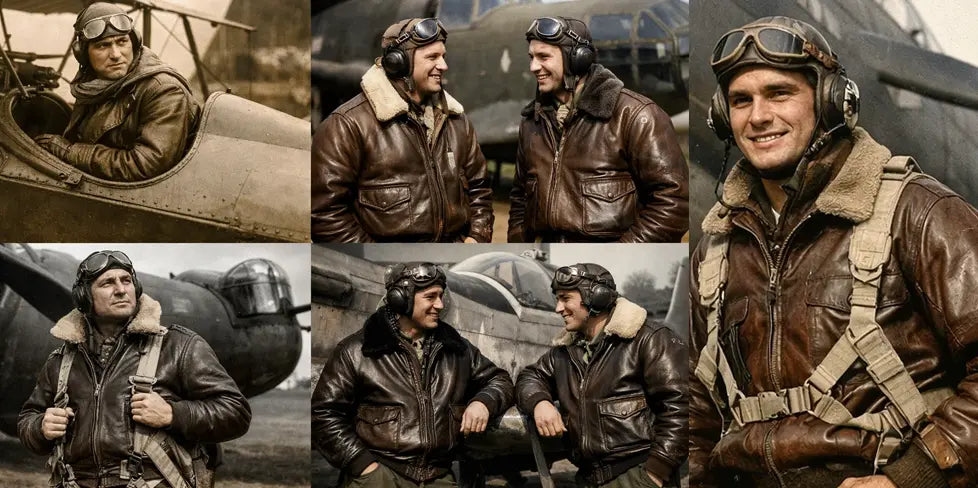
Aviation fashion history begins with a simple problem: pilots were freezing. Early open cockpits were cold, windy and loud, and the clothes that solved those problems slowly became style icons.
Today, a leather jacket or nylon bomber can feel like pure fashion. Yet every zip, pocket and ribbed cuff once had a job to do.
This guide follows that journey, from early pilot uniforms and flight jacket origins to the bomber jackets in modern wardrobes.
Early Pilot Uniforms and the First Flying Suits
When World War I began in 1914, nothing was made specifically for flying. According to the Air Force Museum of New Zealand, aircrew wore motoring clothing, including leather coats from automobile tailors.
Those garments were never designed for altitude. Moisture froze, so pilots often dressed at the last minute to stay dry.
The real breakthrough came from Sidney Cotton, an Australian pilot in the Royal Naval Air Service. The Imperial War Museums explain that he invented the Sidcot flying suit in late 1916.
The name came from the first three letters of his first and last names. By March 1917 the suit was on sale commercially through the London clothier Robinson & Cleaver, and the War Office formally adopted it in December 1917.
The Sidcot was worn over a normal uniform, and later versions stayed in service through World War II.
Early military aviation clothing relied on a few simple ideas:
Leather or heavy fabric to block the wind
Warm linings such as wool or sheepskin
Loose cuts that fit over a uniform
Flight Jacket Origins in the 1930s
By the 1930s, air forces wanted something lighter than a full suit. The Smithsonian National Air and Space Museum records that in 1931 the U.S. Air Corps ordered an update to the Type A-1 flight jacket, which led to the Type A-2.
The A-2 was a short, fitted leather jacket with knit cuffs and a knit waistband. It was simple, tough and easy to wear in a cramped cockpit.
This is where pilot jacket history becomes familiar. That short, close-fitting shape is still the template for many leather jackets today.
World War II and Military Aviation Clothing
World War II pushed flight clothing into new territory. Bombers such as the B-17 and B-24 flew at high altitude in cabins with no pressurisation or proper heating, so crews needed serious insulation.
Different jobs called for different gear:
A-2 leather jacket: a lightweight, durable jacket for everyday flying
B-3 sheepskin jacket: heavy, shearling-lined warmth for bomber crews
Electrically heated suits: wired clothing built to fight extreme cold, although the Air Force Museum of New Zealand notes the wires could break
Crews also personalised their jackets with painted artwork and squadron patches. A uniform piece slowly became a personal statement.
None of this was designed with fashion in mind. Warmth, durability and freedom of movement came first, and style followed almost by accident.
The Bomber Jacket Evolves After the War
After the war, surplus flight jackets reached civilians, and the look began to spread beyond airfields.
The jet age brought another change. Cockpits became tighter, so designers wanted lighter materials. Alpha Industries explains that the B-15 became the blueprint for the MA-1, and the company began producing the MA-1 for the U.S. Department of Defense in the 1960s.
The MA-1 introduced several memorable details:
Water-resistant flight nylon instead of leather
Rib-knit collar, cuffs and hem
A bright orange lining that became a signature
Alpha also notes that souvenir-style bomber jackets re-emerged in 1960s youth counterculture as a statement of rebellion.
The MA-1 has since been retired from official military use. Even so, its design remains the blueprint for the bomber jacket most people picture today, and it shows how quickly a practical garment can become a fashion staple.
That ribbed trim also links bombers to sporty styles such as mens varsity letterman jackets, which share the same collar and cuff detail.
Aviation Styles in Modern Fashion
Hollywood gave aviation fashion its biggest boost. In 1986, Tom Cruise Jacket wore a vintage G-1 leather flight jacket as Maverick in Top Gun, as the U.S. Naval Institute describes in its look at the film's flight jackets.
Alpha Industries credits that same film with making film and fashion history. Designers have kept returning to flight jackets ever since.
Modern wearers usually choose from three classic routes:
Leather A-2 styles for a structured, timeless look
Nylon MA-1 jackets for casual everyday layering
Shearling collars for cold-weather warmth
Wearing the look is simple. Pair a leather flight jacket with a plain white tee and dark jeans, or throw an MA-1 over a knit sweater for an easy weekend outfit.
If you like authentic details, a few features reveal a jacket's military ancestry:
Knit cuffs and waistband: a trait of the A-2 that carried into later bombers
Heavy shearling lining and a wide collar: the B-3 look built for cold cabins
Reversible orange lining: a nod to the MA-1 and its jet-age roots
These details explain why flight jackets rarely feel dated. They were designed around real human needs, and real needs do not go out of style.
Conclusion
Aviation fashion history shows that great style often starts with function. Pilot suits, A-2 leather and MA-1 nylon were built to solve real problems, and their practical details still shape the jackets we wear today.
Frequently Asked Questions
What is the origin of the flight jacket?
Flight jacket origins trace back to the 1930s, when the U.S. Air Corps updated the A-1 and produced the A-2. Earlier pilots relied on motoring clothing and then on suits such as the Sidcot.
Who invented the first pilot flying suit?
Australian pilot Sidney Cotton invented the Sidcot flying suit in late 1916 while serving in the Royal Naval Air Service. The War Office adopted it in December 1917.
What is the difference between an A-2 and a bomber jacket?
The A-2 is a fitted leather jacket from the 1930s and 1940s. The term bomber jacket is broader and also covers B-3 shearling jackets and nylon MA-1 styles.
Why is the MA-1 jacket so popular?
It is lightweight, water-resistant and easy to wear, and its rib-knit trim and orange lining give it a recognisable look. It moved from military use into everyday fashion in the decades after its introduction.
How did Top Gun affect aviation fashion?
The 1986 film put a naval G-1 leather jacket on screen and helped make pilot-inspired outerwear a fashion staple. Brands and designers have revisited the look ever since.