
1. Introduction to Anchor Bolts and Brass Hex Bolts
Anchor bolts and brass hex bolts are essential industrial fasteners designed for different engineering requirements. Anchor bolts provide secure anchoring for concrete foundations, steel structures, and heavy equipment, whereas brass hex bolts are used in electrical assemblies, plumbing systems, and applications requiring corrosion resistance and electrical conductivity. Comparing their material properties, strength, and industrial applications helps manufacturers, contractors, and procurement professionals select suitable fastening solutions. DIC Fasteners supplies industrial fastening components for diverse application requirements.
2. Fundamental Design Differences Between Anchor Bolts and Brass Hex Bolts
Anchor bolts secure structural components to concrete foundations, while brass hex bolts provide threaded fastening for electrical, plumbing, and mechanical assemblies. Their selection depends on load requirements, material properties, and application needs.
Structural Design and Anchoring Mechanisms
Anchor bolts, including J-type and L-type designs, secure machinery, steel structures, and equipment to concrete foundations. Their performance depends on material grade, embedment depth, and load requirements.
Brass Hex Bolt Construction and Threaded Connections
Brass hex bolts feature a six-sided head and threaded shank for secure fastening. Their corrosion resistance and electrical conductivity make them suitable for selected electrical, plumbing, and industrial applications. Proper thread compatibility and tightening help ensure reliable connections.
3. Material Composition and Engineering Properties
Anchor bolts and brass hex bolts differ in material composition, strength, and performance. Selecting the appropriate material helps ensure reliable fastening and durability in industrial applications.
Carbon Steel, Alloy Steel, and Stainless Steel Anchor Bolts
Anchor bolts are manufactured from carbon steel, alloy steel, and stainless steel to meet different load and environmental requirements. Carbon steel offers strength, alloy steel supports demanding applications, and stainless steel provides corrosion resistance in suitable conditions.
Brass Alloy Grades and Chemical Composition
Brass hex bolts are made from copper-zinc alloys, with grades such as CW614N and CZ121 used for specific manufacturing requirements. Alloy composition influences machinability, corrosion resistance, and mechanical properties.
Hardness, Ductility, and Mechanical Strength
Hardness, ductility, and tensile strength affect fastener performance under applied loads. Steel anchor bolts are commonly selected for structural anchoring, while brass hex bolts suit applications where their strength, conductivity, and corrosion resistance meet the design requirements.
4. Anchor Bolt vs Brass Hex Bolt: Performance Analysis
Anchor bolts and brass hex bolts differ in strength, durability, and performance under various operating conditions.
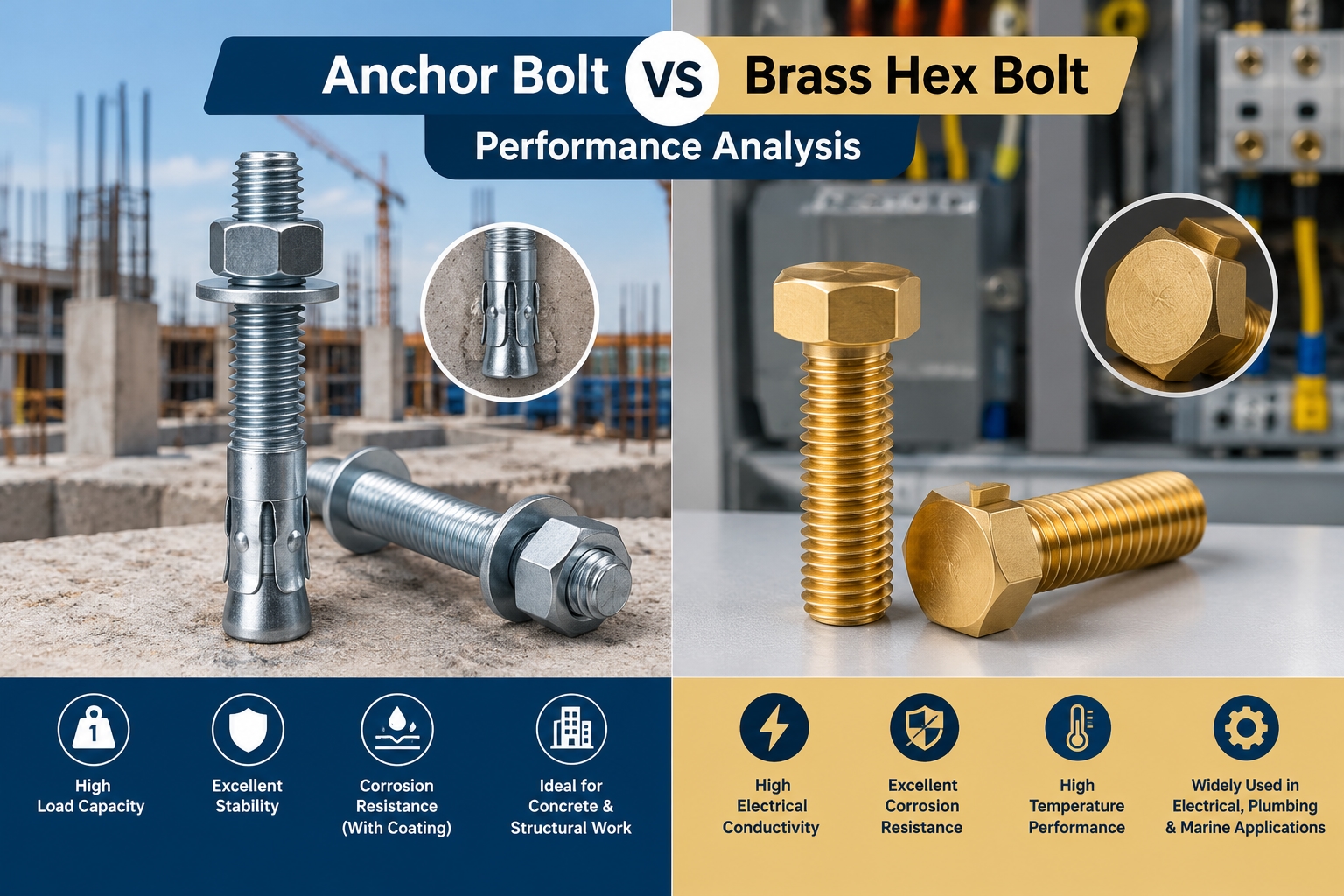
Comparing these properties helps industrial buyers select suitable fasteners for specific engineering applications.
Load Distribution and Tensile Stress Resistance
Steel anchor bolts are commonly used to resist tensile loads in structural and foundation connections. Brass hex bolts are suitable for applications where their tensile strength and load capacity meet the specified requirements.
Shear Strength and Connection Stability
Anchor bolts help secure structural components against applied shear forces, depending on the anchoring design and installation conditions. Brass hex bolts provide connection stability in suitable mechanical assemblies when correctly sized and installed.
Corrosion Behaviour in Industrial Environments
Brass hex bolts offer corrosion resistance in many suitable environments, while steel anchor bolts may require galvanizing, protective coatings, or stainless steel construction. Material selection depends on moisture, chemicals, and environmental exposure.
Thermal Properties and Electrical Conductivity
Brass provides better electrical conductivity than steel and is used in selected electrical assemblies. Both materials have different thermal properties, so operating temperature and application requirements should be considered during fastener selection.
Thread Engagement and Tightening Torque
Proper thread engagement and tightening torque help maintain secure fastening. Anchor bolts require installation according to structural specifications, while brass hex bolts need controlled tightening to prevent thread damage and ensure reliable connections.
5. Manufacturing Quality and Technical Specifications
Manufacturing quality and accurate specifications are essential for reliable anchor bolts and brass hex bolts. Material verification, dimensional inspection, and thread testing help ensure fastener consistency and suitability for industrial applications.
Material Grade Verification and Mechanical Testing
Material grade verification confirms that anchor bolts and brass hex bolts meet the required material specifications. Mechanical testing helps assess tensile strength, hardness, and other properties according to applicable standards.
Dimensional Tolerances and Thread Accuracy
Accurate bolt diameter, length, thread pitch, and tolerances ensure proper fit and secure fastening. Correct thread specifications help prevent installation issues and improve connection reliability.
Protective Coatings and Surface Finish Requirements
Protective finishes such as zinc plating and hot-dip galvanizing help reduce corrosion in suitable steel anchor bolts. Brass hex bolts may be supplied with specified surface finishes depending on application and customer requirements.
6. Choosing Between Anchor Bolts and Brass Hex Bolts
Selecting between anchor bolts and brass hex bolts depends on mechanical loads, environmental conditions, installation methods, and material requirements. Evaluating these factors helps buyers choose the right industrial fastener for their projects.
Matching Fastener Properties to Application Requirements
Steel anchor bolts are commonly selected for concrete foundations and structural connections, while brass hex bolts suit selected electrical, plumbing, and mechanical assemblies. The final choice should match the application's technical specifications.
Safety, Reliability, and Long-Term Performance
Correct fastener selection, proper installation, and regular inspection support long-term performance. Following relevant engineering specifications helps reduce the risk of connection failure and premature wear.
About DIC Fasteners
DIC Fasteners is an industrial fastener manufacturer and exporter in India, serving construction, engineering, electrical, and manufacturing industries. The company focuses on quality, dimensional accuracy, and fastening solutions that meet diverse industrial requirements.
Our Product Range
Our product range includes anchor bolts, foundation bolts, brass hex bolts, industrial nuts, threaded rods, washers, screws, rivets, industrial pins, and strut channels. We cater to OEMs, distributors, contractors, and industrial buyers seeking standard and custom fasteners. For product enquiries and technical specifications, visit https://www.dicfasteners.com/.
7. Frequently Asked Questions
Which Fastener Is Better for Heavy Structural Loads?
Steel anchor bolts are generally preferred for engineered structural anchoring because suitable grades can provide the required load capacity. The complete anchoring system must be verified for the intended application.
Are Brass Hex Bolts Suitable for Electrical Equipment?
Yes, brass hex bolts are used in selected electrical assemblies because brass offers good electrical conductivity. Their suitability depends on equipment design, current requirements, and applicable specifications.
How Does Material Selection Affect Fastener Durability?
Material selection influences strength, corrosion resistance, and service life. Steel, stainless steel, and brass offer different properties, so the operating environment and load requirements should guide selection.
What Factors Determine the Correct Fastener Specification?
Key factors include material grade, dimensions, thread type, load requirements, surface finish, corrosion exposure, and applicable standards. Checking these specifications helps ensure reliable fastening performance.