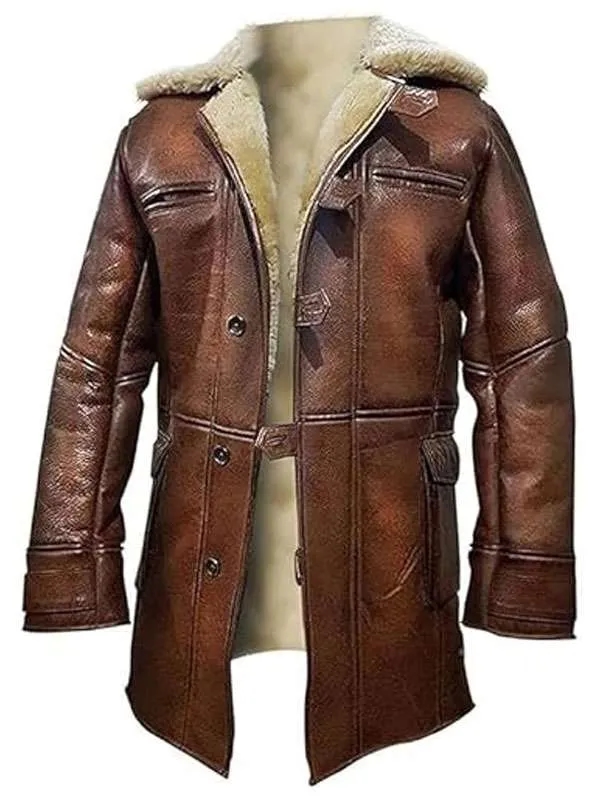
A friend of mine texted me last month asking, "What even is a Bane Coat, and why does everyone suddenly own one?" That question stuck with me, because it's a fair one. The name sounds like it belongs strictly in a costume box, but walk through any menswear store or scroll through outerwear listings right now, and you'll find the Bane Coat sitting right next to classic trenches and wool overcoats, marketed as a completely legitimate style choice.
So let's actually break down what it is, what to look for before buying one, and where people usually go wrong.
Where the Name Comes From (Quickly)
The style takes its name from the imposing coat worn by the villain Bane in The Dark Knight Rises. Long, heavy, structured around the shoulders, with a collar that stands tall instead of folding down. That's the whole origin story. But the reason it stuck around as an actual clothing category is simple — the design itself holds up as genuinely good outerwear, independent of the character it's named after.
What to Actually Check Before Buying One
If you're shopping for a Bane Coat online or in-store, here's where the quality usually shows up (or doesn't).
Collar stiffness. A cheap version will have a floppy collar that folds down within a week of wear. A well-made one uses interfacing or a reinforced lining so the collar holds its upright shape consistently.
Fabric weight. This coat is meant to feel substantial. If it feels light and flimsy in your hands, it's probably going to look thin and cheap once it's on. Wool blends, heavier cotton canvas, or waxed finishes are what you want to look for.
Closure style. Most genuine versions skip a standard button-down front in favor of a wrap closure or a wide belt. If the coat you're looking at has a regular row of buttons like a business overcoat, it's likely a cheaper reinterpretation rather than an accurate one.
Shoulder seam placement. Because the silhouette is meant to be broad and structured, the shoulder seam should sit slightly past your natural shoulder line. If it sits right at your shoulder like a fitted blazer, the proportions will look off once the coat is buttoned or wrapped.
Lining quality. Since this coat is often worn as a heavier layer, check the interior lining. A breathable, smooth lining makes a big difference in comfort if you're wearing it for hours at a time.
Common Mistakes People Make When Wearing One
I've seen this coat styled really well, and I've also seen it styled in a way that reads more like Halloween than everyday fashion. The difference usually comes down to a few small choices.
Going overboard with accessories is the biggest one. Adding gloves, extra straps, or anything overtly tactical pushes the whole outfit into costume territory fast. The coat itself already makes a strong statement — it doesn't need backup.
Another common issue is sizing it too large. Because the coat already has a broad, structured cut, buying it a size up "for the dramatic look" usually just makes it look ill-fitting instead of imposing. Sticking closer to your actual size, with room for a sweater underneath, tends to look far more intentional.
Lastly, pairing it with the wrong footwear throws off the whole silhouette. Lightweight sneakers under a heavy, floor-grazing coat look mismatched. Boots, especially anything with a slightly rugged or combat-inspired sole, balance the proportions much better.
Is It Worth Buying?
If you live somewhere with a real winter and you like outerwear with some visual weight to it, yes — this is a genuinely useful coat, not just a novelty piece. It layers well, it's warm, and once styled correctly it doesn't scream "costume" at all. If you're in a warmer climate or you prefer lighter, more minimal outerwear, it might end up sitting in your closet more than it gets worn, simply because of how substantial it is.
Either way, it's one of those rare pop-culture-inspired pieces that earns a spot in a regular wardrobe rather than staying confined to cosplay.
FAQs
1. What fabric is best for a Bane Coat? A wool blend or heavy waxed cotton works best. These hold structure well and give the coat the weighty, substantial look it's known for, unlike lighter synthetic fabrics.
2. How do I know if the collar quality is good before buying? Press the collar gently — if it springs back upright rather than folding flat, it likely has proper reinforcement or interfacing inside.
3. Should I size up for a more dramatic look? Generally, no. Sizing up tends to make the coat look sloppy rather than imposing. It's better to stick to your true size and layer a sweater or light jacket underneath if needed.
4. Can this coat be worn in warmer weather? It's designed to be warm and heavy, so it's best suited to cold or cool climates. In warmer weather, it can feel overly bulky and uncomfortable.
5. What shoes pair best with a Bane Coat? Boots, particularly ones with a slightly rugged or combat style, balance the coat's heavy silhouette far better than sneakers or dress shoes.