Communication is the heart of human connection. It allows people to share ideas, emotions, and experiences that shape society. But for millions of individuals who are deaf or hard of hearing, this connection is often interrupted by language barriers. Sign language provides a powerful means of expression for them — a visual, gestural language that conveys meaning through hand movements, body posture, and facial expressions. Yet, since most people do not know sign language, effective communication between the deaf and hearing worlds can still be difficult.
This is where sign language translators—both human and technological—play a transformative role. They serve as bridges between communities, ensuring that everyone can be understood and included, regardless of their hearing ability. Whether in schools, hospitals, workplaces, government offices, or online spaces, sign language translators make accessibility a reality.
In this article, we’ll explore in detail what sign language translators do, their types, how technology is reshaping the field, the challenges they face, and their growing importance in an inclusive world.
What Are Sign Language Translators?
A sign language translator is a professional or a system that interprets communication between people who use sign language and those who do not. They translate gestures, expressions, and body movements into spoken or written words — and vice versa.
Sign language translators can be divided into two main types:
Human Translators (Sign Language Interpreters)
These are trained professionals fluent in one or more sign languages (like ASL, BSL, or PSL) and one or more spoken languages. Their job is to interpret live conversations, ensuring that meaning, tone, and emotion are preserved.Technological Translators (Digital or AI-Based Tools)
These are systems that use artificial intelligence (AI), machine learning, and computer vision to automatically recognize sign language gestures and convert them into text or speech. They can also display sign language versions of spoken content, often using 3D avatars or animations.
Both forms of translation are crucial — human interpreters bring emotional depth and cultural understanding, while AI tools offer accessibility, speed, and scalability.
Why Are Sign Language Translators Important?
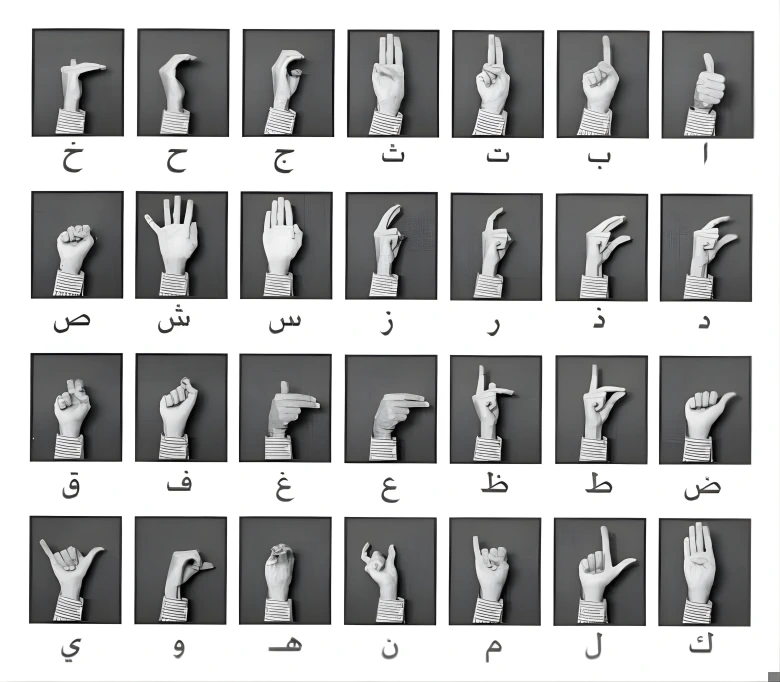
The importance of sign language alphabets and translators extends far beyond basic communication. They promote equality, accessibility, and independence for millions of deaf and hard-of-hearing people worldwide.
1. Promoting Social Inclusion
Translators enable deaf individuals to participate in daily life without barriers. They make education, employment, healthcare, entertainment, and government services accessible. With translators present, deaf individuals can attend meetings, conferences, weddings, court hearings, and more with confidence and independence.
2. Upholding Accessibility Rights
Many countries now legally recognize sign languages as official languages. International laws, such as the United Nations Convention on the Rights of Persons with Disabilities (UNCRPD), emphasize the right to communication access. Translators ensure that organizations and institutions comply with these laws and respect diversity.
3. Enhancing Education
In schools and universities, sign language translators play an essential role. They interpret lessons, discussions, and instructions so that deaf students can learn equally alongside hearing peers. This not only helps academic success but also builds self-confidence and social inclusion.
4. Improving Healthcare Communication
Healthcare often relies on clear communication. Sign language translators ensure that deaf patients can describe their symptoms accurately and understand diagnoses or treatments. Miscommunication in healthcare can be life-threatening, making translators indispensable in hospitals, clinics, and emergency care.
5. Building Cultural Awareness
Sign languages are unique, complete languages—not simplified versions of spoken ones. Translators often educate hearing people about deaf culture, fostering respect and understanding between communities.
How Human Sign Language Translators Work
Training and Certification
Becoming a professional sign language interpreter requires formal education, training, and often certification. Interpreters study linguistics, deaf culture, ethics, and both spoken and sign languages. In many countries, they must be certified by professional bodies such as the Registry of Interpreters for the Deaf (RID) in the U.S. or the National Registers of Communication Professionals (NRCPD) in the U.K.
The Interpretation Process
A human sign language translator performs real-time translation between two or more people. The process involves:
Observing and understanding the signs made by the deaf participant.
Converting those signs into spoken or written words for the hearing participant.
Listening to the spoken response and converting it back into sign language.
This requires intense concentration, quick processing, and a deep understanding of both languages’ structure and culture.
Types of Interpretation
Simultaneous Interpretation:
The translator interprets while the speaker is talking, ensuring real-time communication. This is used in live events, classrooms, and conferences.Consecutive Interpretation:
The interpreter waits for the speaker to pause before translating. This is common in one-on-one conversations, like doctor visits.Relay Interpretation:
Used when multiple sign languages are involved. For example, one interpreter translates ASL to International Sign, and another translates International Sign to BSL.Tactile Interpretation:
For people who are both deaf and blind, interpreters use touch-based signing methods so they can feel the communication through hand contact.
Key Skills of a Translator
Fluency in one or more sign languages.
Strong grasp of grammar and structure in spoken language.
Excellent observation and memory skills.
Ethical professionalism and confidentiality.
Empathy and cultural sensitivity.
Technological Sign Language Translators
With the advancement of AI, computer vision, and natural language processing (NLP), technology now offers powerful tools to assist sign language translation. These tools are not replacements for human interpreters but are valuable supplements, especially in digital and remote environments.
How AI Sign Language Translators Work
Input:
The system uses a camera or motion sensors to capture the signer’s gestures, facial expressions, and hand movements.Recognition:
AI models analyze these gestures using trained datasets of sign language movements. Algorithms identify patterns corresponding to specific signs.Translation:
The recognized signs are converted into text or speech in real time. For the reverse process, the system converts spoken or written words into sign language animations using avatars.
Popular AI-Based Sign Language Translators
SLTranslator.com
A modern web-based tool that translates between sign language and text or speech. It allows users to type or speak and see real-time sign language animations, making online communication accessible and easy for everyone.SignAll
Uses multiple cameras and 3D sensors to detect hand shapes and body motion for real-time ASL translation. It’s widely used in educational and business settings.KinTrans
A UAE-based technology that uses motion sensors to translate sign language into text and speech in multiple languages.Google’s AI Gesture Recognition Projects
Google has developed AI models that detect hand movements through standard cameras, which could eventually make sign translation available directly on smartphones.
Advantages of AI Translators
Available anytime, anywhere.
Cost-effective for short interactions.
Great for learning and basic communication.
Helpful in remote areas with a shortage of interpreters.
Limitations of AI Translators
Inability to fully capture emotions and facial expressions.
Difficulty understanding regional sign variations or slang.
Dependence on good lighting and clear camera angles.
Ethical concerns about data privacy during video recording.
Despite limitations, AI sign language translators are improving rapidly as technology learns from millions of sign samples worldwide.
Global Sign Language Diversity
Many people mistakenly believe there is a single universal sign language. In reality, there are over 300 distinct sign languages around the world, each with its own grammar and cultural roots.
Some of the most widely used include:
ASL (American Sign Language) – Used in the United States and parts of Canada.
BSL (British Sign Language) – Used in the United Kingdom.
Auslan – Used in Australia.
ISL (Indian Sign Language) – Used across India.
PSL (Pakistan Sign Language) – Used in Pakistan.
LSF (French Sign Language) – One of the oldest and most influential sign languages.
Each language evolves within its own community, just like spoken languages. This linguistic diversity makes sign language translation both fascinating and complex.
Challenges in Sign Language Translation
Even with professional interpreters and advanced AI, several challenges persist:
1. Regional Differences
Sign languages vary not only between countries but also within regions. For example, ASL and BSL are entirely different languages, even though both are used in English-speaking countries.
2. Contextual Meaning
Many signs rely on facial expressions, context, and tone. Machines often struggle to interpret these subtleties accurately.
3. Lack of Data
AI translators need vast datasets for training. Many lesser-known sign languages lack digital resources, limiting the reach of technology.
4. Cost and Availability
Professional interpreters are not always available, especially in developing regions. On the other hand, high-quality AI tools can require expensive hardware.
5. Cultural and Emotional Sensitivity
Human interpreters can convey humor, sarcasm, or emotion—something AI still cannot replicate effectively.
Websites and Apps Enhancing Sign Language Translation
Several platforms are now making sign language translation more accessible worldwide:
1. SLTranslator.com
A cutting-edge web platform designed to make sign language translation available online for free. It provides real-time conversion between sign language and text or speech, making it ideal for chatting, learning, and online meetings. The platform’s goal is to bridge communication between deaf and hearing people globally, offering easy-to-use translation tools powered by AI.
2. SignSchool and Lingvano
These educational platforms focus on teaching sign language through interactive lessons and video demonstrations, helping users become more fluent and confident.
3. The ASL App
Created by deaf experts, this mobile app helps users learn conversational ASL signs through real-life videos.
4. YouTube and Social Media
Thousands of deaf creators share tutorials, awareness videos, and sign language stories online, making learning and exposure easier than ever.
The Future of Sign Language Translation
As technology evolves, the field of sign language translation is entering a new era of accessibility and innovation.
1. Integration with Smart Devices
Future smartphones, AR glasses, and video conferencing apps may feature built-in sign translation, allowing instant communication across devices and languages.
2. Advancements in AI Accuracy
Deep learning and 3D gesture recognition will make AI translators more precise, faster, and emotionally intelligent.
3. Universal Sign Databases
Global collaborations are underway to build large, open databases of sign language movements, helping developers create more inclusive AI systems.
4. Virtual and Augmented Reality Applications
VR and AR could bring immersive sign language learning and live translation experiences, especially useful in education and training.
5. Greater Awareness and Support
Governments, NGOs, and corporations are increasingly promoting accessibility and investing in tools and services that support sign language translation worldwide.
Conclusion
Sign language translators—both human and technological—play a vital role in creating an inclusive, accessible, and connected world. They are the bridge between silence and sound, between gesture and speech, and between two cultures that deserve equal understanding.
As human interpreters bring empathy and cultural sensitivity, AI and digital translators bring scale and innovation. Together, they are transforming communication for millions.
Platforms like SLTranslator.com represent the next step in this evolution, ensuring that communication barriers fade away in classrooms, workplaces, and online spaces alike.
In the end, sign language translation is not just about words or gestures — it’s about understanding, equality, and human connection. The goal is simple but powerful: a world where everyone, regardless of hearing ability, can be seen, heard, and understood.