2026 has proved remarkably varied for horror. Alongside sequels to established franchises, the year has brought intimate psychological horror, body horror, supernatural tales, monster films, black comedies and films blending the genre with science fiction, romance and social satire.
Some of the year's most interesting horror films have not come from major studios at all. Directorial debuts, independent productions and films made by creators who until recently worked primarily online have found themselves competing with established franchises and some of the biggest names in genre cinema.
Perhaps the most interesting trend of 2026 has been the convergence of internet horror and traditional cinema. At 26, Curry Barker, who started out making YouTube sketches and low-budget shorts, turned Obsession into one of the year's biggest genre sensations. Kane Parsons, better known online as Kane Pixels, brought Backrooms from YouTube to the big screen at just 21, while Mark Fischbach, or Markiplier, wrote, directed and starred in an adaptation of the independent video game Iron Lung.
Traditional horror has hardly disappeared either. Nia DaCosta continued the story of an infection-stricken Britain with 28 Years Later: The Bone Temple, Sam Raimi returned to original genre cinema with Send Help, Ready or Not received a bloodier and more expansive sequel, while Sébastien Vaniček took charge of a new Evil Dead film.
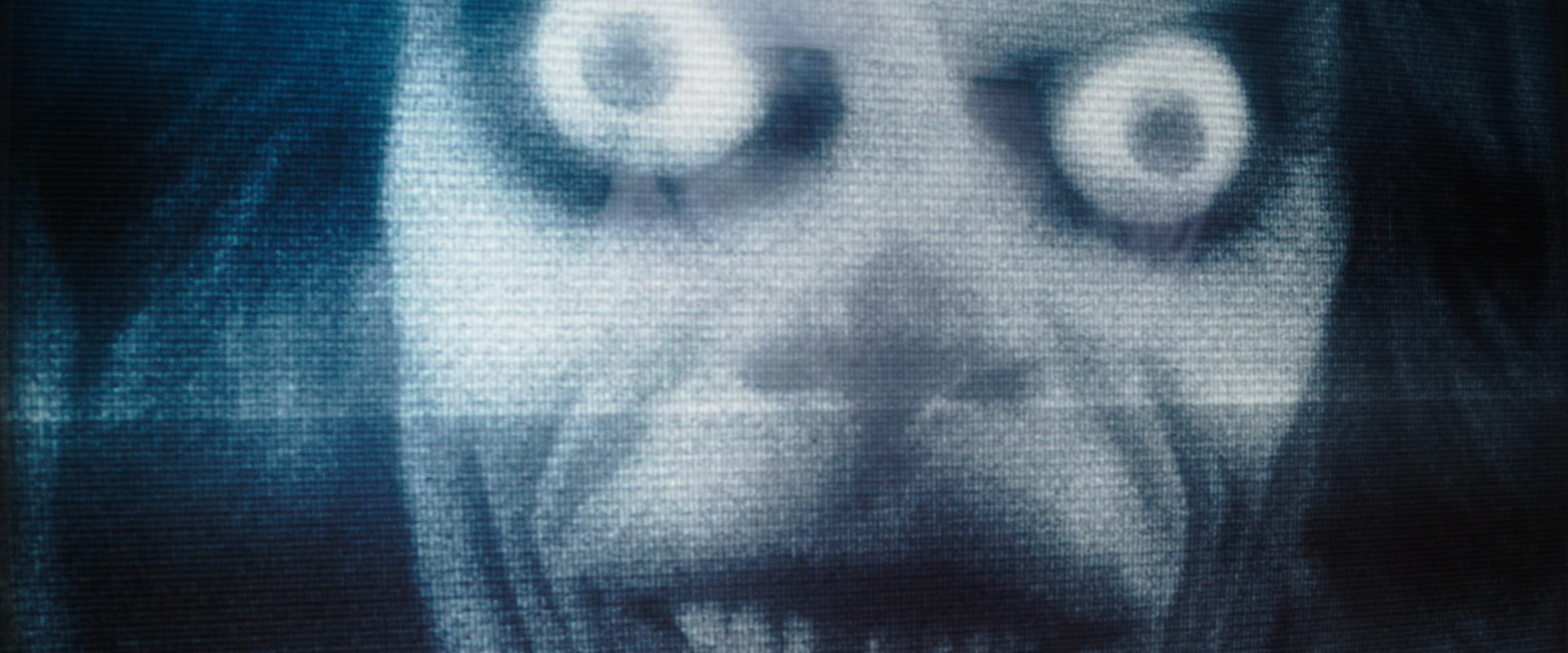
And the year's most interesting horror is by no means confined to Hollywood. South Korea has delivered Hope and Colony, Australia has produced Leviticus and Saccharine, New Zealand has the Māori gothic horror Mārama, while Japan's Exit 8 demonstrates just how much can be done with the seemingly minimalist premise of an indie video game.
So, what are the best horror films of 2026 so far?
1. Obsession
IMDb: 7.8/10
Letterboxd: 4.1/5
Years before Obsession, Curry Barker was making sketches and shorts for YouTube. In 2024, he released his $800 found-footage feature Milk & Serial on the platform. A year later, Obsession premiered at the Toronto International Film Festival, gradually built momentum on the festival circuit and eventually found major distribution.
The premise initially sounds like a warped romantic fairy tale. Lonely Bear is given the chance to make one wish and asks for Nikki, whom he has long loved, to finally return his feelings. The wish works, except that the affection he wanted soon becomes a pathological dependence from which there is no simple escape.
Barker takes a familiar be-careful-what-you-wish-for premise and uses it to explore obsession, entitlement to another person's feelings and the difference between loving and possessing someone. The romance gradually turns into psychological and then physically brutal horror, making Obsession one of the year's most striking genre discoveries.
2. Teenage Sex and Death at Camp Miasma
IMDb: 7.2/10
Letterboxd: 3.9/5
Jane Schoenbrun's film is a meta-slasher in the tradition of Scream, simultaneously embracing and dismantling the conventions of the genre. Its characters understand the clichés, rules and familiar patterns of classic slashers and openly discuss them.
Hannah Einbinder plays Kris, a young filmmaker attempting to revive an old series of cheap slasher movies set at Camp Miasma. Her search for material leads her to Billy Presley, the reclusive star of the original film played by Gillian Anderson, and the distinction between cinematic fantasy, fascination and actual danger gradually begins to disappear.
The result works both as a love letter to the slasher and as its deconstruction, mixing black humour, satire, romance and a very personal story about identity and our relationship with the art that helped shape us.
3. 28 Years Later: The Bone Temple
IMDb: 7.2/10
Letterboxd: 3.8/5
After Danny Boyle returned audiences to a Britain that had lived with the Rage Virus for almost three decades, Nia DaCosta takes over the franchise without simply attempting to imitate his direction.
Alex Garland's screenplay continues the stories of Dr Kelson and Spike. Kelson is moving closer to a discovery that could transform our understanding of the infected, while Spike becomes entangled with Jimmy Crystal's disturbing community, where ordinary people once again prove capable of being every bit as dangerous as the virus itself.
The Bone Temple places even greater emphasis on ritual, group psychology and the strange culture that has grown from the ruins of the old Britain. It remains faithful to one of the franchise's central ideas: the infection may have caused the catastrophe, but people are perfectly capable of inventing its most horrifying consequences themselves.
4. Leviticus
IMDb: 6.4/10
Letterboxd: 3.7/5
Australian horror Leviticus is built around an unusually simple and effective idea. Naim and Ryan are two teenage boys living in a conservative religious community and hiding their feelings for one another. After an attempt to "purify" them of their forbidden desire, a supernatural entity appears that can take the form of the person its victim desires most.
For the two boys, this means literally seeing the person they love standing in front of them without knowing whether they are looking at each other or at something else entirely.
First-time feature director Adrian Chiarella turns the monster into a physical manifestation of fear, shame and violence created when natural feelings are treated as sinful. The romantic relationship is not merely an excuse for the horror but its emotional foundation, allowing Leviticus to function simultaneously as supernatural horror and a painful coming-of-age story.
5. Hope
IMDb: 6.9/10
Letterboxd: 3.3/5
Ten years after The Wailing, Na Hong-jin returned with something considerably larger in scale. Hope is a two-and-a-half-hour South Korean epic combining science-fiction action, mystery and monster horror.
The story centres on a remote settlement where local police officers and hunters attempt to protect residents after the appearance of a mysterious creature. What initially looks like a hunt for an unknown animal gradually develops into something much larger, as different characters try to kill, understand or exploit something whose true nature none of them fully comprehends.
With a reported budget of 70 billion won, around US$46 million, Hope became the most expensive production in South Korean cinema history.
6. Backrooms
IMDb: 6.8/10
Letterboxd: 3.3/5
Few films illustrate the changing origins of modern horror franchises better than Backrooms. In 2022, the then-school-age Kane Parsons uploaded a short found-footage film to YouTube about endless liminal spaces. Four years later, his online project had become an A24 feature.
In the film, a wall in the basement of a furniture shop leads to another dimension, revealing corridors and rooms that physically should not exist. Chiwetel Ejiofor plays Clark, the architect and shop owner at the centre of the story, while Renate Reinsve plays his psychotherapist Mary.
Parsons wisely preserves the fundamental appeal of the original project. Empty corridors, impossible geometry, fluorescent lighting, monotonous sound and the feeling that something might be waiting beyond the next corner often prove more frightening than the monsters themselves. Much of the environment was also constructed practically, giving these impossible spaces precisely the physical presence they need.
7. Hokum
IMDb: 6.7/10
Letterboxd: 3.3/5
After Oddity, Damian McCarthy once again demonstrates that effective horror does not necessarily require an elaborate concept. Adam Scott plays writer Ohm Bauman, who travels to a remote Irish village after seeing the ghost of his long-dead mother.
He checks into the Bilberry Woods hotel to scatter his parents' ashes where they once spent their honeymoon, only to become increasingly absorbed in local stories about a witch supposedly connected to a locked honeymoon suite.
An old hotel, local folklore, a cursed place and a protagonist carrying buried trauma are hardly new ingredients, but McCarthy understands that atmosphere, space and the anticipation of danger matter more than an unnecessarily complicated mythology. Adam Scott, meanwhile, gets the opportunity to play someone funny, unpleasant and vulnerable at the same time.
8. Send Help
IMDb: 6.7/10
Letterboxd: 3.3/5
After years spent working with major franchises, Sam Raimi finally returned to original genre cinema. Send Help begins as a survival thriller after a plane crash leaves only two colleagues alive: overlooked employee Linda and her overconfident boss Bradley.
The power dynamic they knew at work quickly collapses. Linda turns out to be far better prepared to survive, while the man who once controlled her career suddenly depends on her for food, shelter and survival.
Raimi gradually transforms this reversal into a vicious black comedy about control, resentment and everything corporate politeness normally keeps hidden. Rachel McAdams and Dylan O'Brien carry much of the film, while Raimi's familiar enthusiasm for physical suffering and increasingly absurd situations remains very much intact.
9. Buffet Infinity
IMDb: 6.2/10
Letterboxd: 3.5/5
Simon Glassman's Buffet Infinity largely abandons conventional narrative and tells its story through a succession of deliberately cheap-looking Canadian television commercials.
At first, the adverts simply introduce the small businesses of Westridge County, Alberta, and a new restaurant called Buffet Infinity. Then the chain begins expanding at an unnatural rate, consuming competitors, physical space and eventually reality itself.
Presented through the visual language of 1990s local television and analogue horror, the film turns into a satire of consumerism, advertising, monopolisation and corporate expansion. Its fragmented format certainly will not work for everyone, but that same strangeness makes it one of the year's more unusual horror experiments.
10. Colony
IMDb: 6.5/10
Letterboxd: 3.3/5
Yeon Sang-ho, the director of Train to Busan, returns to zombie horror with a somewhat different type of outbreak.
Professor Kwon Se-jeong is attending a biotechnology conference when an experimental pathogen escapes and the authorities seal off the entire complex. The infected do not simply become conventional fast-moving zombies: they continue adapting, coordinate their behaviour and increasingly begin to function like parts of a single organism.
The result combines the familiar outbreak formula with biotechnology and uncontrolled biological evolution. It may not reach the heights of Train to Busan, but it is an energetic return to the genre from a filmmaker who helped redefine modern zombie cinema.
The Top 20 Horror Films of 2026 So Far
The next ten places in our current ranking are:
11. Ready or Not 2: Here I Come
12. Exit 8
13. Mārama
14. Evil Dead Burn
15. They Will Kill You
16. Iron Lung
17. Saccharine
18. Undertone
19. Cold Storage
20. Faces of Death
This is only the first part of a much larger ranking. The full Cinemapatrol collection currently includes 50 horror films released in 2026, with ratings, cast and crew information and detailed commentary on individual films.
The list will continue to change as new films arrive and audience ratings fluctuate. There are still several months of releases ahead, including Clayface in October and Robert Eggers's Werwulf at Christmas, so the final picture of horror in 2026 is far from settled.