
A manufacturing plant does not purchase everything at once or from one supplier. It may receive steel, packaging materials, machine components and chemicals from different vendors throughout the month. Some deliveries arrive in full, others are split across multiple shipments, and certain materials may be rejected after inspection.
Each purchase creates records that must eventually match the supplier's invoice. When these records are spread across procurement, warehouse and accounting systems, resolving differences can take time.
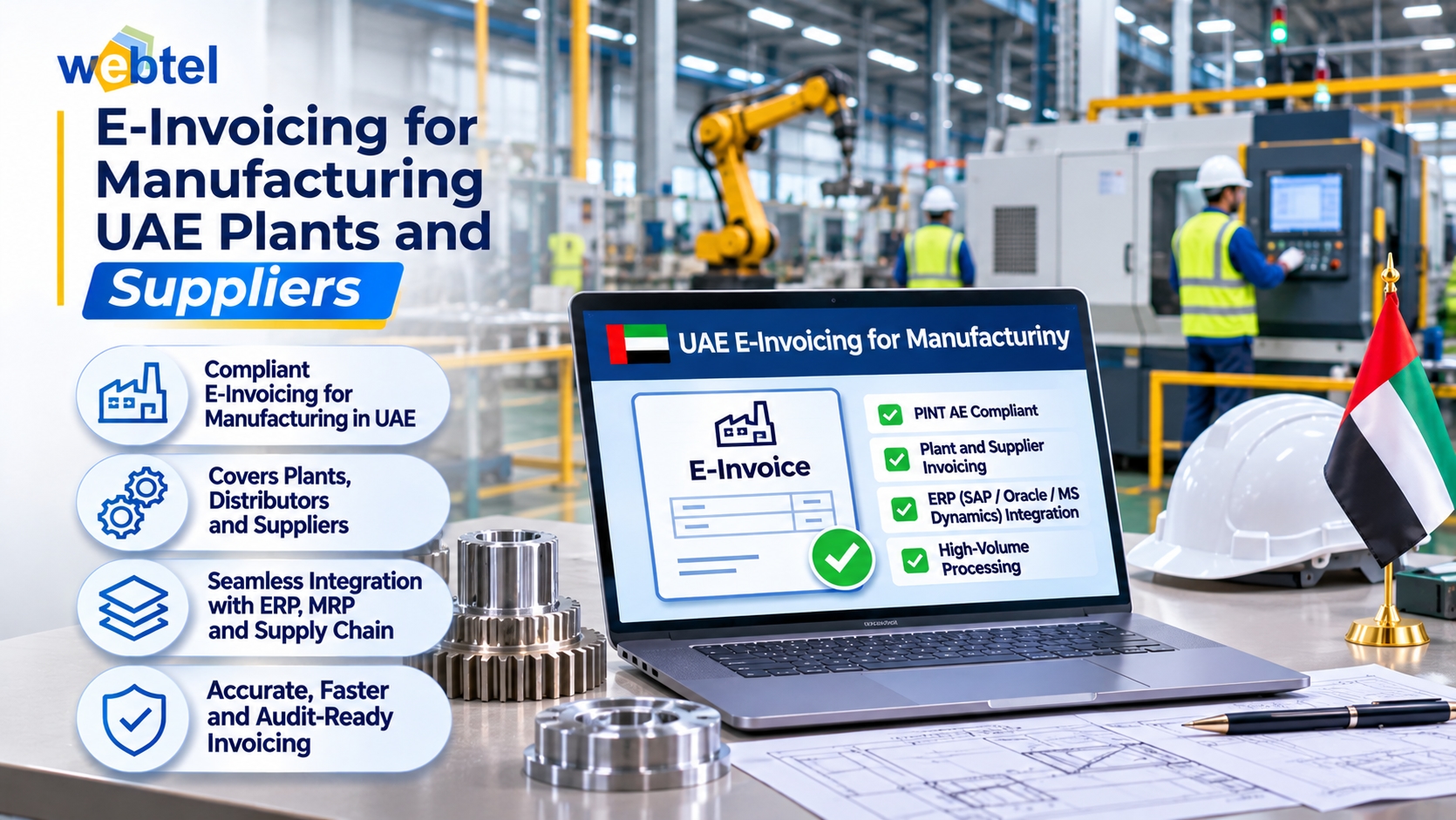
For businesses preparing for e-invoicing for manufacturing uae, the challenge is understanding how supplier transactions and customer billing move through the factory's existing processes.
Manufacturing Invoices Begin Before Production
A manufacturing invoice is often connected to an activity that takes place well before the accounts team receives the document.
Consider a factory purchasing raw materials for a production order. The process may involve:
The procurement team raises a purchase order with agreed quantities and prices.
The supplier dispatches the materials.
The warehouse receives and records the delivery.
The quality team inspects the materials.
The supplier sends an invoice.
Accounts payable checks the invoice against the purchase and receipt records.
The invoice cannot always be approved simply because the supplier has submitted it. The business must confirm that the materials were ordered, received and billed correctly.
This is particularly relevant when a supplier sends an invoice for 1,000 units but the warehouse has recorded only 900 units as received. The difference may relate to a partial delivery, a pending shipment or an incorrect invoice.
The e-invoicing process should preserve the invoice information while allowing the manufacturer to complete its internal checks.
Purchase Orders, Goods Receipts and Supplier Invoices
Manufacturers commonly use purchase orders and goods receipt records to control supplier payments. These documents serve different purposes.
Record | Purpose |
|---|---|
Purchase Order (PO) | Records the materials or services ordered, agreed quantities and prices |
Goods Receipt Note (GRN) | Records the quantity received by the warehouse |
Supplier Invoice | Records the amount the supplier is charging |
Credit Note | Records a relevant reduction or correction to the original invoice |
The accounts team needs to compare these records before approving payment.
For example, a purchase order may cover 500 machine components at an agreed unit price. The supplier delivers 300 components first and sends an invoice for that delivery. The remaining 200 arrive later.
The accounting process should identify whether the invoice relates to the partial delivery or the complete order. Treating every invoice as if it covers the full purchase order can create incorrect quantities and payment records.
Manufacturers should also decide how they handle price differences, additional freight charges and other costs that appear on supplier invoices but were not included in the original purchase order.
Production Changes Can Affect Invoice Records
Manufacturing requirements change. A production schedule may be revised, a material specification may be updated, or a supplier may deliver a substitute component after receiving approval.
These changes can affect the original purchasing arrangement.
For instance, a factory orders one grade of raw material but later approves a different grade because of availability. The supplier invoice may reflect the revised material and price, while the original purchase order still contains the previous details.
If the change is not recorded properly, the invoice may fail the manufacturer's internal matching process.
A controlled purchasing workflow should capture:
Approved changes to material specifications.
Revised quantities and delivery schedules.
Updated supplier prices.
Additional transportation or handling charges.
Rejected materials and replacement deliveries.
Related supplier credit notes or revised invoices.
The aim is to ensure that the invoice reflects the actual transaction and that any difference from the original order has a documented reason.
Customer Invoices Also Need Production and Delivery References
Manufacturers do not only receive supplier invoices. They also issue invoices to distributors, wholesalers, retailers and other business customers.
A customer order may involve several production batches or partial deliveries. The manufacturer needs to maintain a clear relationship between the order, dispatch records and the invoice.
For example, a factory receives an order for 10,000 finished products. It manufactures the goods in two batches and dispatches them on separate dates. Depending on the agreed commercial arrangement and applicable invoicing rules, the billing process may need to account for these separate deliveries or billing events.
The relevant records should identify:
The correct business customer.
The products or services supplied.
Quantities and applicable prices.
Delivery or order references.
Relevant tax information.
Any subsequent adjustment to the original transaction.
This becomes especially important for manufacturers supplying multiple distributors under different pricing agreements. Customer-specific rates, discounts and delivery terms should be reflected accurately in the invoice data.
How E-Invoicing Fits Into Manufacturing Systems
A manufacturing business may already use an ERP system to manage procurement, inventory, production and accounting. Other applications may handle warehouse operations, supplier communication or quality inspections.
The important task is to identify which system owns each piece of invoice information and how that information reaches the e-invoicing process.
A typical system environment may include:
System | Information managed |
|---|---|
ERP or accounting system | Supplier accounts, customer records, purchase orders and financial entries |
Inventory management | Stock movements, material quantities and warehouse receipts |
Production planning | Production orders, material requirements and batch records |
Quality management | Inspection results, rejected materials and approved substitutions |
Supplier portal | Purchase confirmations, delivery updates and invoice submissions |
The business should map how these records are exchanged before deciding on the integration approach. This also helps identify duplicate data entry and manual processes that may affect invoice accuracy.
Automated Invoice Reconciliation for Manufacturing Businesses
Manufacturers processing invoices from multiple suppliers need a consistent way to identify differences between ordered, received and billed quantities.
This is where automated invoice reconciliation becomes relevant.
A reconciliation process can compare invoice details against purchasing and receipt records, helping accounts teams identify discrepancies that require attention.
Consider three situations:
Quantity mismatch: The supplier invoice shows 500 units, but the warehouse has recorded 450.
Price mismatch: The invoice uses a different unit price from the approved purchase order.
Duplicate invoice: The same supplier invoice reference appears more than once in the accounting records.
These differences should be flagged for review rather than automatically treated as valid or invalid without checking the underlying transaction.
Reconciliation is an internal financial control. It should remain distinct from the formal validation and exchange of an e-invoice through the UAE's Accredited Service Provider (ASP) framework.
A Manufacturing E-Invoicing Readiness Checklist
Before implementation, manufacturers can review a sample of supplier and customer transactions.
Review supplier records: Check legal names, tax information and supplier account details.
Map purchase workflows: Identify how purchase orders, deliveries and supplier invoices are connected.
Check goods receipt processes: Review how partial deliveries and rejected materials are recorded.
Review customer billing: Trace invoices from customer orders through production and dispatch.
Document adjustments: Define how price changes, cancellations and credit notes are handled.
Assess system connections: Identify where invoice data originates and how it reaches the ASP.
Test different scenarios: Include partial deliveries, price differences, duplicate invoices and customer credit notes.
Testing should include real operating scenarios from procurement and sales rather than focusing only on a standard invoice with no adjustments.
Prepare Manufacturing Operations for UAE E-Invoicing
For manufacturing businesses, invoice accuracy depends on records created across purchasing, warehouse operations, production and sales. A supplier invoice may be correct on its own but still require investigation if the quantity received does not match the amount billed.
Manufacturers should review these processes before implementing the UAE framework. Clear supplier records, traceable purchase transactions and consistent customer billing information provide a better foundation for structured invoice exchange.
By addressing these areas early, factory operators can prepare their invoicing processes while keeping procurement and production activities organised.




