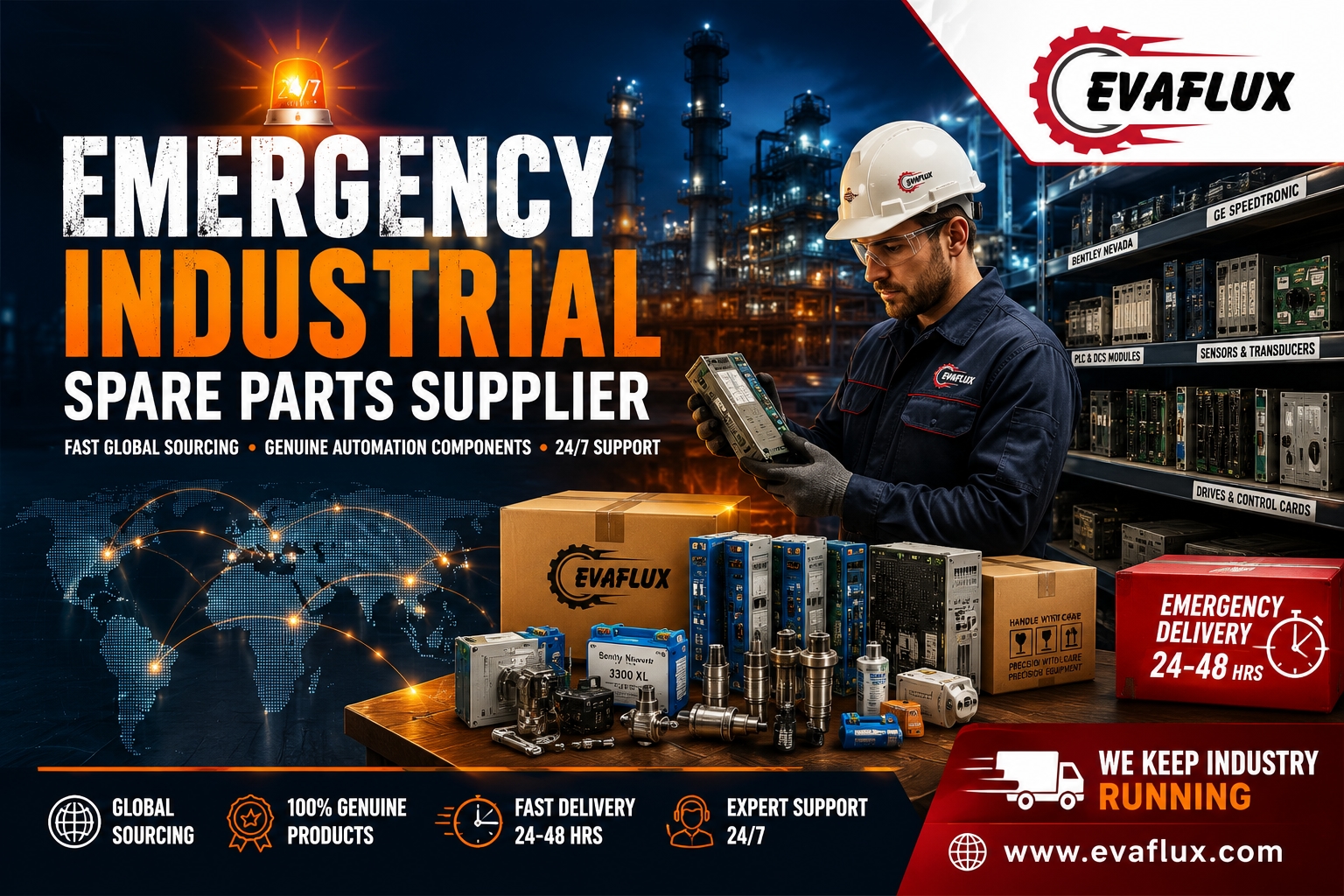
When a critical control component fails without warning, the cost isn't measured in the price of the part — it's measured in every hour a production line sits idle. For plants running continuous processes, an unplanned shutdown can mean lost output, missed delivery commitments, and, in regulated industries, compliance exposure. This is exactly why having a reliable emergency industrial spare parts supplier on call matters as much as routine maintenance planning.
What Makes a Spare Parts Supplier "Emergency-Ready"
Not every supplier is built to respond when time is the deciding factor. An emergency-capable partner needs three things in place before the call ever comes in: available stock, fast verification, and a logistics network that doesn't add unnecessary delay.
At Evaflux, this means maintaining ready inventory across PLC modules, DCS cards, power supplies, sensors, and control boards from major automation brands — rather than sourcing parts only after an order is placed. When a facility calls with a failed component, the difference between a same-day dispatch and a week-long wait usually comes down to whether the part was already on the shelf.
Why Genuine Parts Matter Even Under Time Pressure
Urgency can tempt teams to accept the first available substitute, but installing an incompatible or unverified part often creates a second failure on top of the first. Genuine components, tested against original specifications, reduce the risk of installation errors, firmware mismatches, or repeat downtime shortly after the "fix."
A dependable emergency supplier verifies part authenticity and compatibility even when working against the clock, so the replacement restores the system to its original performance rather than introducing a new point of failure.
Industries That Rely on Emergency Parts Support
Emergency sourcing is most critical in sectors where downtime carries direct financial or safety consequences:
Power generation — turbine control and excitation system failures can affect grid supply
Oil & gas — DCS and safety system components tied to continuous processing
Manufacturing — PLC and relay failures that halt entire production lines
Water treatment — SCADA and sensor faults affecting regulatory compliance
How to Prepare Before an Emergency Happens
Facilities that handle emergencies well usually did some groundwork in advance:
Keep a documented list of critical spare parts and their exact part numbers
Identify a supplier with confirmed stock availability, not just a catalog listing
Establish contact procedures in advance, rather than searching for a vendor mid-crisis
Reviewing Evaflux's full product range ahead of time — and understanding who Evaflux is and how the company operates — helps procurement and maintenance teams know exactly who to call before an emergency, not during one.
Getting Support When It Counts
When a system goes down, speed and accuracy both matter. You can browse available components directly through the Evaflux shop, or reach the technical team through the contact page to confirm stock and get a component moving fast.
Conclusion
Choosing an emergency industrial spare parts supplier isn't a decision to make after a failure — it's a relationship worth establishing beforehand. Verified stock, genuine components, and a responsive team are what actually shorten downtime when it counts.