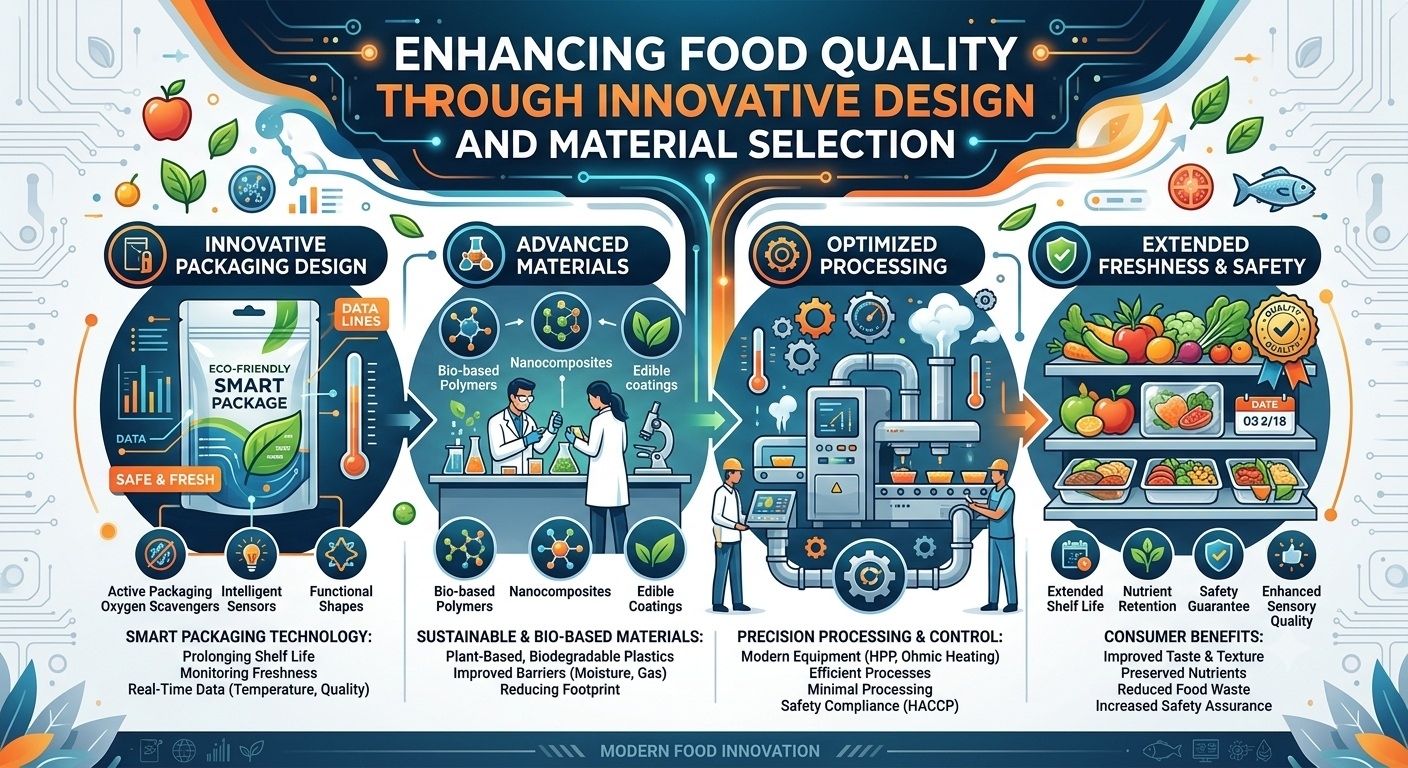
Food quality depends on more than ingredients and cooking skills. The way food is packed, stored, handled, and delivered can also affect freshness, taste, texture, appearance, and customer satisfaction.
This is why packaging design and material selection are so important in the food industry. A good package should protect the product from damage, moisture, air, grease, heat, and outside contact. It should also make the food easy to carry and pleasant to open.
Modern food businesses now need packaging that supports product quality from the kitchen to the customer. By using better materials and smarter designs, brands can reduce waste, protect food, and create a stronger buying experience.
Why Packaging Has a Direct Impact on Food Quality
Food can change quickly after preparation.
Hot food may release steam. Fried food can lose its crisp texture. Bread may become dry. Sauces can leak. Chilled items may lose quality if they are handled poorly.
Packaging helps control some of these risks.
The right pack creates a protective layer around the food. It can reduce crushing, unwanted contact, leaks, and exposure to outside conditions.
However, one packaging style does not suit every product.
A fresh salad needs a different solution from a hot burger. A frozen meal has different needs from a bakery item. Good packaging decisions should always begin with the actual food product.
Choose Materials Based on Real Product Needs
Material selection should never be based only on appearance.
The first question should be simple: what does the food need?
Common food packaging materials include:
Paperboard
Kraft board
Corrugated board
Grease-resistant paper
Coated card
Food-contact plastics where suitable
Paper-based inserts
Each option has strengths and limits.
Paperboard can provide a clean printed surface. Kraft materials may offer a natural look and useful strength. Corrugated board can support heavier products during transport.
The correct choice depends on weight, moisture, temperature, storage time, and delivery conditions.
Strong Structure Helps Prevent Damage
Food quality can fall before the customer even opens the package.
A weak box may bend during delivery. A poor base may collapse under weight. A loose lid may allow the product to move.
Structural design can reduce these problems.
For example, stronger corners can improve stability. Secure tabs can keep the pack closed. A suitable base can support heavier meals.
The box should match the size of the food as closely as possible. Too much space can allow movement. A pack that is too tight may crush the product.
Careful sizing is one of the simplest ways to improve presentation and protection.
Better Burger Packaging Supports Fresh Presentation
Burgers can be difficult to pack well because they combine heat, moisture, grease, sauces, bread, and soft fillings.
Well-designed Custom burger boxes can be made with suitable dimensions, secure closures, and material choices that better match the burger being served.
A tall burger may need extra internal height. A heavily filled burger may need stronger side walls. A premium product may benefit from a design that keeps the bun and fillings in a neater position.
The goal is to protect the product without making the packaging difficult to open.
Ventilation Can Help Manage Steam
Hot food often creates steam inside closed packaging.
If the moisture has nowhere to escape, fried items may become soft. Bread can become wet. Condensation may collect inside the lid.
Small ventilation features can help manage this problem.
These may include carefully placed holes, slots, or breathable areas.
However, ventilation should be balanced.
Too much airflow can cool food quickly or cause it to dry out. Too little may trap excess steam.
Businesses should test packaging with the real food product rather than relying only on visual design.
Grease Resistance Supports Cleaner Handling
Grease can weaken unsuitable paper-based packaging.
Oil may soak through the surface, create stains, and reduce structural strength. This can make the pack unpleasant to hold and may harm the customer’s view of the product.
Suitable grease-resistant barriers can improve performance.
The exact solution should depend on the food type. A lightly toasted sandwich will not create the same challenge as a fried burger or heavily sauced meal.
Good material selection helps the packaging stay cleaner and more stable for longer.
Wholesale Decisions Should Still Focus on Performance
Businesses often buy burger boxes wholesale to control costs, maintain stock levels, and support larger order volumes.
However, buying in bulk should not mean choosing the cheapest option without testing it.
A low-cost box may become expensive if it causes leaks, crushing, customer complaints, or food waste.
Before placing a large order, businesses should review:
Board strength
Box dimensions
Closure quality
Grease resistance
Ventilation needs
Print durability
Storage space
This practical approach helps reduce costly mistakes.
Temperature Changes Must Be Considered
Food packaging may face different temperatures during its journey.
A hot meal may be packed immediately after cooking. A chilled item may remain in a fridge. Frozen products may face low temperatures for long periods.
Materials can behave differently under these conditions.
Some boards may soften when exposed to moisture. Some coatings may not suit high heat. Certain adhesives or closure systems may perform poorly in cold storage.
Packaging should therefore be selected according to real use conditions.
Businesses should think about the full journey from packing to eating.
Smart Inserts Can Protect Delicate Foods
Some foods need extra internal support.
Cupcakes may tip over. Desserts can slide. Sauces may move into other parts of a meal. Multiple items can knock against each other during transport.
Inserts and dividers can help.
These features may:
Hold products in place.
Separate different foods
Reduce crushing
Improve presentation
Support portion control
The insert should fit properly and remain easy to use.
Poorly designed internal parts can make packing slower or create extra waste. Good inserts should solve a real problem.
Clear Windows Can Improve Buying Confidence
Customers often like to see food before buying it.
A clear window can make a product more appealing, especially for bakery items, sandwiches, salads, snacks, and gift foods.
Product visibility can improve confidence because customers can inspect colour, shape, portion size, and presentation.
However, the window material and position must suit the food.
It should not weaken the structure or create unnecessary risk. It should also remain clear enough for the product to be seen properly.
A fogged or badly placed window may have little value.
Good Design Can Help Maintain Shape and Texture
Food quality is not only about safety. Texture and appearance also matter.
A burger that arrives crushed may still be edible, but the customer experience is weaker. A cake with damaged decoration loses visual appeal. Fried food that becomes soft may feel disappointing.
Packaging design should therefore consider the physical qualities customers expect.
This may involve:
Extra headroom
Stronger side walls
Better ventilation
Internal support
Secure lids
Separate compartments
Small design changes can make a large difference to the final result.
Sustainable Materials Need Careful Evaluation
Many food businesses want to reduce waste and use more responsible packaging.
This can be a positive step, but the material must still perform well.
A package that fails and causes food to be thrown away may not be a good solution.
Businesses should consider:
Material efficiency
Recyclability where suitable
Product protection
Food contact suitability
Transport performance
Local waste systems
Environmental claims should also be honest.
Brands should avoid vague language that cannot be supported. Clear facts are more trustworthy than broad claims.
Simple Opening and Closing Improves Use
Packaging should be easy for staff and customers.
Restaurant teams often work quickly. A box with a difficult locking system can slow service and lead to poor closing.
Customers also want packaging that opens without causing spills.
A good design should be:
Easy to assemble
Easy to fill
Easy to close
Easy to carry
Easy to open
Convenience is part of food quality because poor handling can damage the product.
Printing Can Support Correct Handling
Printed information can help both staff and customers.
A pack may include:
Storage advice
Reheating guidance
Allergen information
Product labels
Handling instructions
Use-by details
Clear printing can reduce confusion.
Important text should be easy to read. Decorative graphics should not hide essential details.
Good packaging design brings information and visual appeal together.
Testing Should Happen Before Large Production
One of the best ways to improve packaging performance is to test it under real conditions.
Businesses should pack the actual food and review what happens over time.
Useful checks may include:
Does the food move?
Does steam collect?
Does grease soak through?
Does the lid stay closed?
Does the box remain strong?
Is the food still attractive after delivery?
Is the pack easy to open?
A simple delivery trial can reveal problems that are not visible in a flat design or digital mock-up.
Testing also supports better buying decisions.
Better Packaging Can Help Reduce Food Waste
Poor packaging can cause avoidable waste.
Food may be thrown away because it is crushed, leaked, dried out, or mixed with other items.
Better design can reduce some of these losses.
Correct sizing limits movement. Strong materials reduce damage. Suitable barriers help manage grease and moisture.
Reducing waste can support both business efficiency and customer satisfaction.
Customer Feedback Can Guide Better Choices
Businesses should listen to people who use the packaging.
Kitchen staff may notice that a box is slow to assemble. Delivery drivers may report that packs slide easily. Customers may say that food arrives soft or difficult to open.
This feedback is valuable.
Good packaging development should not stop after the first order.
Brands can improve future versions by reviewing:
Complaints
Returns
Reviews
Staff comments
Delivery problems
Real experience often reveals useful design changes.
Final Thoughts
Enhancing food quality through innovative design and material selection requires careful thinking.
The right packaging can help control moisture, reduce movement, resist grease, protect shape, and support a cleaner presentation. Strong materials and practical structures can also improve delivery performance.
However, the best solution depends on the food itself.
Businesses should consider temperature, weight, texture, grease, steam, storage time, and transport conditions before choosing a pack.
Testing is equally important. A design may look attractive but still fail in real use.
When food brands combine suitable materials with thoughtful design, they can protect product quality from preparation to delivery. This can reduce waste, improve customer satisfaction, and build stronger trust.
Modern packaging should not be treated as a simple container. It is an important part of the food experience and can play a major role in keeping products fresh, attractive, stable, and enjoyable.