
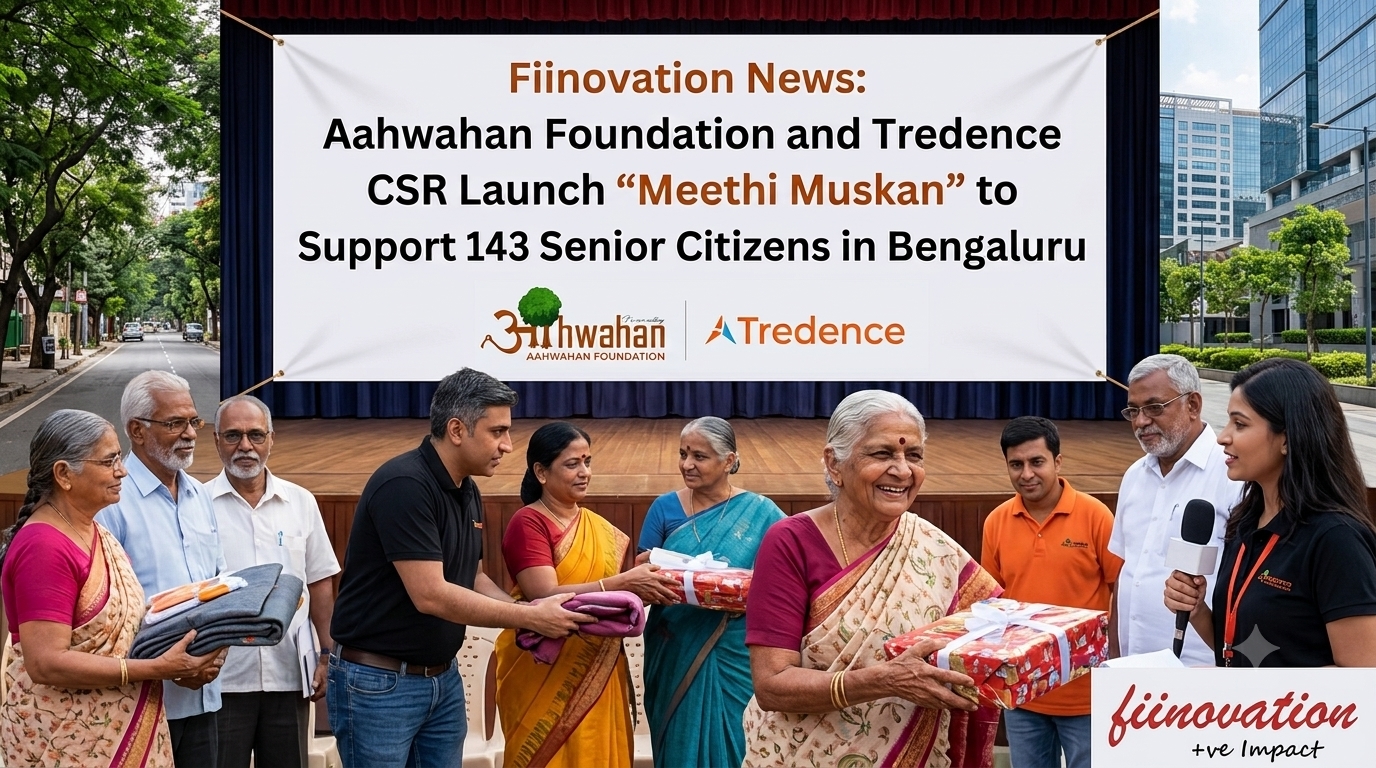
Senior citizens often require more than financial assistance to live healthy, dignified, and socially connected lives. Recognizing the importance of elderly care and community support, Aahwahan Foundation and Tredence CSR have come together to launch Meethi Muskan, a social impact initiative designed to support 143 senior citizens in Bengaluru. The program highlights how corporate social responsibility (CSR) partnerships can address the evolving needs of ageing communities while promoting dignity, wellbeing, and inclusion.
The initiative reflects the growing importance of structured CSR programs that focus on vulnerable and underserved sections of society. Through Meethi Muskan, Aahwahan Foundation and Tredence CSR are working towards creating meaningful support systems for senior citizens, particularly those who may experience challenges related to social isolation, healthcare access, nutrition, and everyday wellbeing.
Meethi Muskan Focuses on Senior Citizen Welfare
The launch of Meethi Muskan represents an effort to strengthen community-based support for elderly people in Bengaluru. With 143 senior citizens covered under the initiative, the program brings attention to the need for comprehensive senior citizen welfare programs that go beyond conventional forms of assistance.
Ageing can bring several social and economic challenges. Senior citizens may require regular healthcare support, nutritional assistance, emotional companionship, and access to community resources. Programs such as Meethi Muskan can contribute to improving their quality of life by connecting social responsibility efforts with practical community needs.
The collaboration between Aahwahan Foundation and Tredence CSR demonstrates the role of partnerships in developing targeted CSR interventions. Non-profit organizations bring community-level understanding and implementation experience, while corporate CSR programs can provide resources and structured support. Together, these partnerships can help create initiatives with a stronger focus on measurable social outcomes.
A Collaborative Approach to CSR and Social Impact
Corporate social responsibility in India has increasingly moved towards programs that seek to generate sustainable and measurable social impact. Rather than focusing only on short-term support, CSR initiatives are increasingly being designed around specific community needs and beneficiary groups.
Meethi Muskan is an example of this approach, with a clearly identified beneficiary group of 143 senior citizens. Such targeted interventions can make it easier to understand community requirements, implement relevant activities, and evaluate outcomes over time.
The partnership also highlights the importance of collaboration between corporates and civil society organizations. NGOs and foundations working directly with communities can help identify local challenges and develop suitable interventions. Corporate CSR partners can support these programs through funding, expertise, and organizational resources.
For senior citizen welfare, this collaborative model can be particularly relevant because elderly communities may have diverse needs. A successful program requires sensitivity towards health, dignity, social participation, and emotional wellbeing.
Importance of Supporting Senior Citizens
India's ageing population makes elderly welfare an increasingly important area for social development. Senior citizens can face challenges such as limited mobility, reduced income, healthcare requirements, and social isolation. Community-focused CSR initiatives can help address some of these concerns while creating stronger social support networks.
Supporting senior citizens is also closely connected with the broader principles of inclusive development. A socially responsible society must ensure that vulnerable groups are not left behind as communities and economies develop.
Through initiatives such as Meethi Muskan, CSR programs can contribute to creating environments where elderly people feel valued and supported. Activities that encourage interaction, care, access to essential resources, and community participation can have an important role in promoting senior citizen wellbeing.
Role of CSR in Community Development
CSR has become an important mechanism through which companies can contribute to social development in India. Education, healthcare, livelihood development, sanitation, women empowerment, environmental sustainability, and elderly care are among the areas where CSR interventions can generate meaningful community benefits.
The Meethi Muskan initiative adds senior citizen welfare to this wider CSR landscape. By supporting 143 beneficiaries in Bengaluru, the programm demonstrates the potential of focused interventions that respond to the needs of a defined community group.
Effective CSR programs should ideally combine beneficiary identification, needs assessment, program implementation, monitoring, and impact evaluation. These elements can help ensure that CSR investments translate into meaningful outcomes for communities.
For CSR stakeholders, initiatives such as Meethi Muskan also underline the importance of selecting projects based on genuine community needs. A strong CSR strategy is not only about allocating funds but also about understanding beneficiaries and creating programs that can deliver relevant and sustainable benefits.
Bengaluru as a Hub For Social Impact Initiatives
Bengaluru is widely recognized as one of India's major technology and corporate centeres. The city's diverse population and growing urban ecosystem also create opportunities for corporate and nonprofit organizations to collaborate on social development programs.
CSR initiatives in Bengaluru can address a broad range of community challenges, including healthcare, education, livelihood development, environmental sustainability, and elderly care. The Meethi Muskan programme adds another dimension by focusing specifically on senior citizens.
Such initiatives can strengthen the connection between corporate resources and community needs. They also demonstrate how CSR partnerships can contribute to inclusive urban development while supporting vulnerable populations.
Building More Meaningful CSR Partnerships
The collaboration between Aahwahan Foundation and Tredence CSR provides an example of how partnerships can support targeted social impact programs. For CSR initiatives to remain effective, partnerships should be based on clear objectives, transparent implementation, beneficiary-focused planning, and appropriate impact measurement.
The experience of programs such as Meethi Muskan can also encourage other organizations to explore CSR opportunities in elderly care and community wellbeing. With the right planning and implementation, corporate social responsibility can become a valuable tool for strengthening support systems for senior citizens.
Fiinovation News and India's Evolving CSR Landscape
Fiinovation News continues to highlight important developments in India's corporate social responsibility ecosystem, including CSR projects , corporate-NGO partnerships, social impact programs, sustainability initiatives, and community development efforts.
The launch of Meethi Muskan by Aahwahan Foundation and Tredence CSR is an important development from the perspective of senior citizen welfare and community-focused CSR. The initiative involving 143 senior citizens in Bengaluru demonstrates how focused partnerships can bring attention and resources to specific social needs.
As India's CSR landscape continues to evolve, initiatives centered on inclusion, dignity, healthcare, wellbeing, and community participation will remain important components of responsible social development. Meethi Muskan illustrates the potential of collaborative CSR to support senior citizens while strengthening the broader culture of community care.