
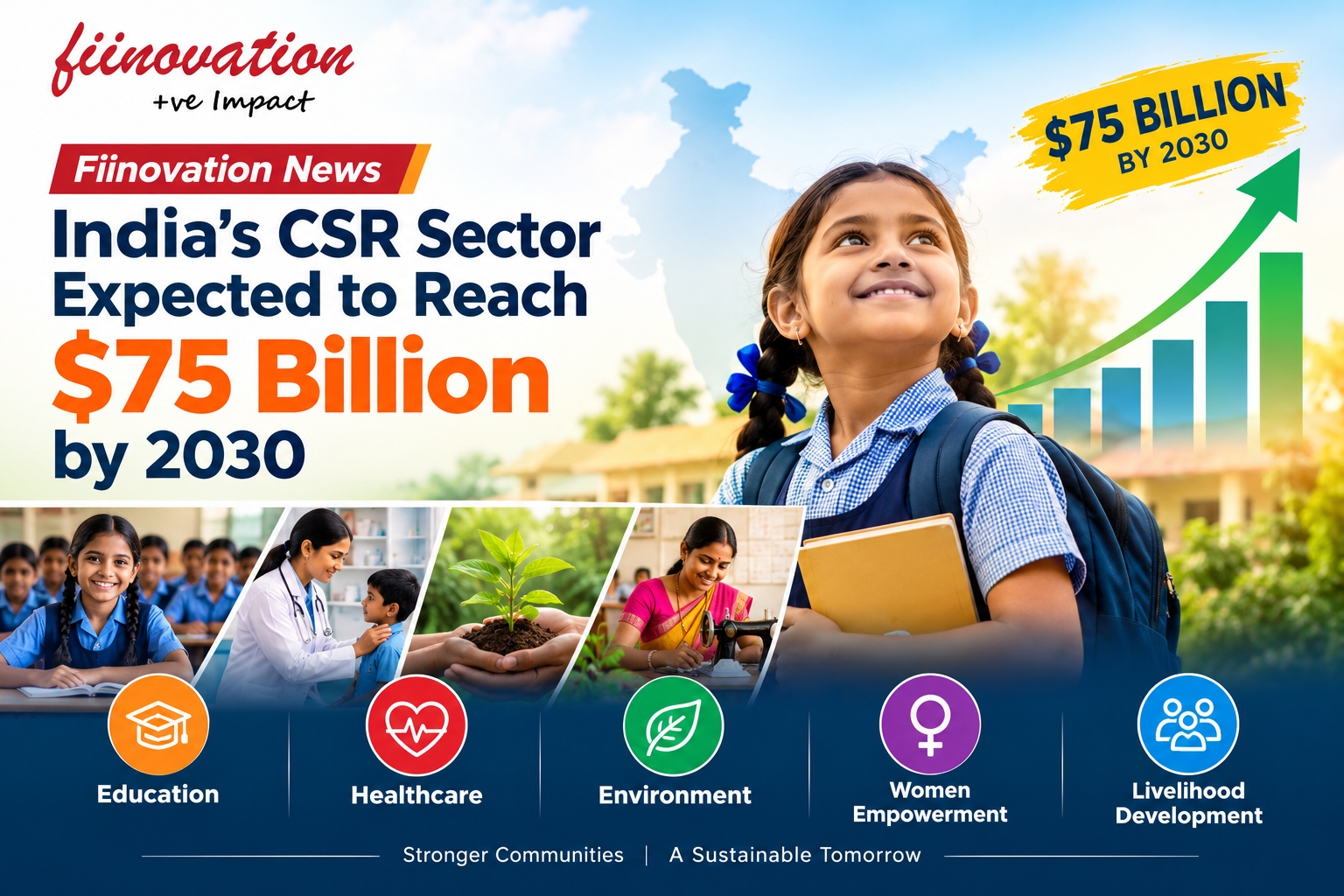
India’s Corporate Social Responsibility (CSR) sector is expected to witness significant growth in the coming years, driven by increasing corporate investments, rising sustainability awareness, and a growing focus on measurable social impact. As businesses increasingly recognize their responsibility towards society and the environment, Corporate Social Responsibility is becoming an important part of corporate strategy. The projected growth of India’s CSR sector to $75 billion by 2030 highlights the growing importance of sustainable development, responsible business practices, and strategic social investments.
According to this projection, the coming years could bring new opportunities for companies, non-governmental organizations (NGOs), CSR consultants , and social development organizations working to address India’s key social challenges. From education and healthcare to environmental protection, women’s empowerment, and livelihood development, CSR initiatives can play an important role in supporting inclusive and sustainable growth.
Fiinovation News highlights the evolving CSR landscape in India and explores how corporate funding, effective project management, and impact assessment can contribute to long-term social development.
Understanding the Growth of India’s CSR Sector
India has established a distinctive CSR framework through the Companies Act, 2013. Under Section 135, eligible companies are required to spend at least 2% of their average net profits from the preceding three financial years on qualifying CSR activities , subject to applicable legal provisions. This framework has helped establish CSR as a structured component of corporate responsibility.
Over the years, CSR initiatives have expanded across several development sectors. Companies are increasingly supporting projects that address local community needs while contributing to national development priorities. These initiatives include improving access to education, strengthening healthcare facilities, promoting environmental sustainability, supporting rural communities, and creating livelihood opportunities.
The projected $75 billion market size by 2030 reflects the anticipated scale of opportunity associated with CSR and related social-impact activities. However, the figure should be understood as a projection rather than a guaranteed outcome, and its exact scope depends on the underlying market estimate.
As corporate participation grows, organizations will need effective strategies to identify development priorities, allocate resources responsibly, and evaluate the outcomes of their investments.
Key Factors Driving CSR Growth in India
Several factors may contribute to the continued expansion of India’s CSR sector.
1. Increasing Corporate Investment in Social Development
Companies are increasingly recognizing the value of investing in communities where they operate. CSR initiatives can help address social challenges, strengthen community relationships, and support sustainable development.
Businesses are also paying greater attention to how their CSR programs align with their organizational values, sustainability objectives, and long-term social commitments. This shift is encouraging a more strategic approach to corporate social responsibility.
2. Growing Focus on Education and Healthcare
Education and healthcare remain important areas for CSR investment in India. Corporate-funded programs can support school infrastructure, digital learning, scholarships, healthcare facilities, medical awareness campaigns, and access to essential services.
Well-designed projects can help address gaps in underserved communities and create opportunities for people to improve their quality of life. To achieve meaningful results, organizations must identify beneficiaries carefully and establish measurable project objectives.
3. Environmental Sustainability and Climate Action
Environmental sustainability is becoming an important consideration for companies across industries. CSR programs increasingly address water conservation, waste management, renewable energy awareness, biodiversity protection, and community-based environmental initiatives.
These activities can help organizations contribute to environmental protection while encouraging communities to adopt more sustainable practices.
4. Stronger Demand for Transparency and Accountability
As CSR spending grows, companies are placing greater emphasis on transparency, governance, and measurable outcomes. Corporate donors want to understand how their funds are used and whether supported programs are delivering the intended benefits.
This creates a need for proper documentation, financial accountability, project monitoring, and independent impact assessment. Transparent reporting can also strengthen confidence among corporate partners, implementing agencies, and beneficiaries.
The Role of CSR Consultants in India
The expansion of the CSR sector creates opportunities for professional CSR consulting firms that help companies plan, implement, monitor, and evaluate social development initiatives.
Fiinovation, a CSR consulting organization in India, works in the broader CSR ecosystem, where effective planning, corporate–NGO partnerships, and project management are important considerations for social impact.
CSR consultants can help companies identify suitable development priorities, assess community needs, evaluate potential implementing partners, and establish appropriate monitoring frameworks. Their work can also support alignment between CSR proposals, corporate objectives, and applicable regulatory requirements.
For NGOs and other eligible implementing organizations, professional guidance can help improve project proposals, strengthen documentation, and communicate development needs more effectively to prospective corporate partners.
However, successful CSR implementation depends on more than funding alone. Projects require clear objectives, realistic budgets, capable implementation teams, transparent reporting, and regular evaluation to ensure that resources are used responsibly.
Emerging CSR Opportunities in 2026 and Beyond
As India’s CSR ecosystem evolves, several areas may receive increasing attention from companies and development organizations.
Education and skill development : Programs focused on digital literacy, vocational training, employability, and improved educational infrastructure can help young people access better opportunities.
Healthcare and community well-being : Initiatives supporting preventive healthcare, medical infrastructure, health awareness, and underserved populations can contribute to stronger community health outcomes.
Women’s empowerment : CSR-funded livelihood programs, entrepreneurship support, vocational training, and financial literacy initiatives can help women participate more actively in economic development.
Environmental protection : Water conservation, waste management, biodiversity protection, and community-based sustainability projects offer opportunities to connect social development with environmental responsibility.
Technology and data-driven CSR : Digital tools can improve project monitoring, beneficiary tracking, reporting, and the analysis of social outcomes. When used responsibly, data analytics can help organizations identify implementation gaps and make better-informed decisions.
These areas demonstrate why CSR strategies should be based on local needs, project feasibility, and measurable outcomes rather than trends alone.
Why Impact Assessment Matters for CSR Projects
As CSR investment expands, measuring the effectiveness of social programs becomes increasingly important. Impact assessment helps organizations understand whether projects are achieving their intended objectives and producing meaningful changes for beneficiaries.
A structured assessment may examine the relevance of a project, its implementation quality, the number and profile of beneficiaries reached, the outcomes achieved, and the sustainability of the results.
For example, an education project should not be evaluated solely on the number of classrooms constructed. It may also require an examination of student attendance, access to learning resources, educational participation, and improvements in learning outcomes.
Similarly, a healthcare initiative may need to assess service accessibility, community participation, and improvements in awareness or service delivery.
Reliable monitoring and evaluation help companies identify successful approaches, improve program design, and make future CSR investments more effective. They also support transparent communication with stakeholders.
Challenges Facing India’s CSR Ecosystem
Despite the sector’s growth potential, several challenges require attention. These include identifying credible implementing partners, ensuring that projects address genuine community needs, maintaining transparent financial records, and measuring long-term outcomes.
Some projects may struggle because of limited implementation capacity, inadequate baseline information, or insufficient monitoring. In other cases, development activities may be designed without enough consultation with intended beneficiaries.
Addressing these challenges requires stronger collaboration between companies, NGOs, CSR consultants , government institutions, and local communities. Clear project planning, robust due diligence, regular monitoring, and independent evaluation can help improve accountability and project performance.
Conclusion : The Future of CSR in India
The projection that India’s CSR sector could reach $75 billion by 2030 highlights the growing attention being given to corporate responsibility, social investment, and sustainable development. While the actual scale of future growth will depend on economic conditions, corporate priorities, and the definition of the market being measured, the opportunities for improving social outcomes remain significant.
Companies can contribute to this progress by investing in well-planned programs, selecting capable implementing partners, and measuring the impact of their initiatives. NGOs and development organizations can strengthen their readiness through transparent governance, effective project proposals, and reliable reporting practices.
Through Fiinovation News , readers can follow developments in corporate social responsibility, CSR funding, sustainability, NGO partnerships, and social-impact assessment. As India’s CSR ecosystem continues to evolve, collaboration, accountability, and evidence-based decision-making will remain essential to transforming corporate investment into meaningful and lasting social change.



