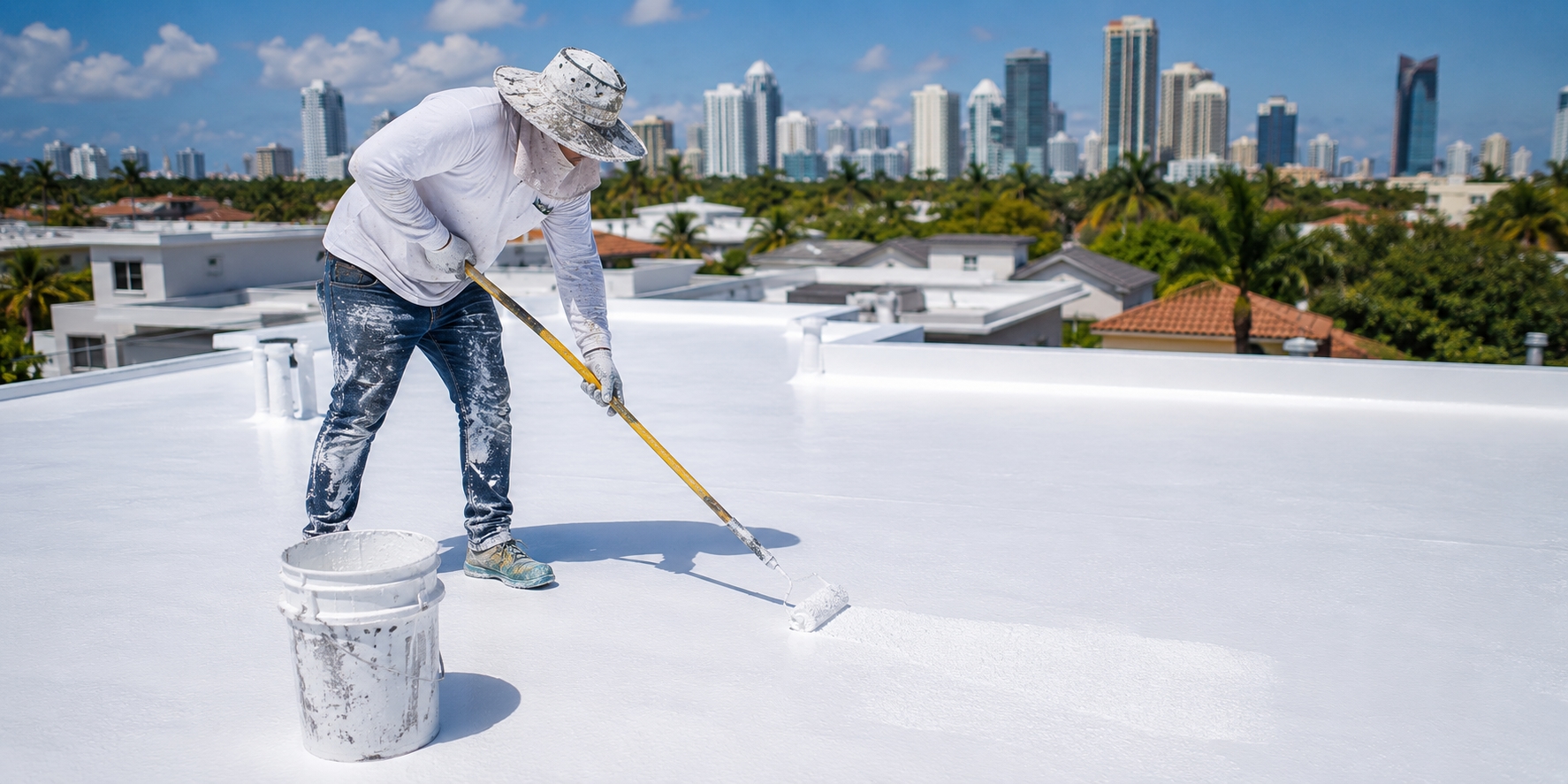
GCC cool roof coatings are becoming an important component of energy-efficient construction across Gulf countries. These reflective materials help buildings absorb less solar heat, maintain lower roof temperatures, and reduce the pressure placed on air-conditioning systems. Their relevance is particularly strong in Saudi Arabia, the UAE, Qatar, Kuwait, Oman, and Bahrain, where prolonged heat and intense sunlight increase building cooling requirements. As regional cities expand, cool roof coatings are increasingly being considered for commercial complexes, residential properties, warehouses, hotels, and industrial facilities.
Why Reflective Roofing Matters in the Gulf
Buildings across the Gulf operate under demanding climatic conditions. Roof surfaces are continuously exposed to ultraviolet radiation, high daytime temperatures, dust, humidity, and repeated thermal movement. Conventional dark roofing materials absorb a large portion of incoming sunlight, allowing heat to pass through the building envelope and raising indoor temperatures.
Cool roof coatings are designed with high solar reflectance and thermal emittance. These properties allow coated roofs to reflect sunlight and release absorbed heat more effectively. The resulting reduction in roof temperature may improve occupant comfort, lower cooling requirements, and protect roofing materials from premature weathering. Coatings can also be applied during renovation projects, allowing property owners to enhance thermal performance without replacing the complete roof structure.
Strong Expansion Supported by Construction Activity
According to MarkNtel Advisors, the GCC cool roof coatings sector was valued at approximately USD 1.01 billion in 2025. Its value is projected to increase from USD 1.29 billion in 2026 to USD 3.11 billion by 2032, representing an estimated compound annual rate of 15.80% during 2026–2032. This expansion reflects rising cooling costs, sustainability policies, infrastructure investment, and greater awareness of energy-efficient building materials.
Commercial buildings account for approximately 47% of regional demand. Shopping centres, hotels, offices, warehouses, logistics facilities, and mixed-use developments often contain large, low-sloped roof areas exposed to direct sunlight. Applying reflective coatings to these surfaces may reduce heat transfer while supporting lower operating expenses. Residential and industrial adoption is also expected to increase as developers place greater emphasis on building-envelope performance and long-term maintenance.
Practical Benefits Across Building Applications
Cool roof coatings can provide both thermal and protective functions. In residential buildings, they may help maintain more stable indoor temperatures during extremely hot periods. In hotels and offices, lower roof temperatures can reduce pressure on central cooling systems. Warehouses and manufacturing facilities may benefit from improved working conditions, particularly where large roof areas amplify heat accumulation.
Acrylic coatings represent approximately 37% of demand by type. Their position is supported by their reflectivity, ultraviolet resistance, flexibility, waterproofing characteristics, and compatibility with common roofing substrates. Water-based acrylic formulations are also relatively easy to apply and can be used on concrete, metal, membrane, and modified bitumen surfaces. Silicone and polyurethane systems remain relevant where moisture resistance, durability, or specialised performance is required.
According to The U.S. Department of Energy, reflective roofing materials transmit less heat into buildings and can consequently reduce the need for air conditioning by lowering interior temperatures.
Saudi Arabia Anchors Regional Adoption
Saudi Arabia accounts for approximately 48% of GCC demand, supported by extensive development in tourism, hospitality, housing, logistics, and commercial real estate. Projects connected with Vision 2030 are expanding the country’s building stock and creating substantial new roofing areas. Riyadh, Jeddah, and other urban centres are experiencing continued construction activity, increasing the need for roofing solutions suited to extreme heat.
The UAE also provides a favourable environment for reflective coatings. Green-building requirements, carbon-reduction objectives, and rating frameworks such as Al Sa’fat encourage developers to improve thermal performance. Demand is expected across villas, hotels, retail properties, institutional facilities, and commercial developments. Qatar, Kuwait, Oman, and Bahrain may also experience wider adoption as energy conservation becomes more closely integrated into building design and refurbishment decisions.
According to The International Energy Agency, cooling and desalination are expected to account for a substantial share of additional electricity demand across the Middle East and North Africa through 2035.
Technical and Commercial Barriers
Despite their advantages, cool roof coatings require careful specification and application. Surface contamination, moisture, cracks, weak adhesion, and poor preparation can reduce coating effectiveness. Products must also withstand ultraviolet exposure, temperature changes, dust accumulation, and occasional standing water. Regular inspection and cleaning may be needed because accumulated dirt can gradually reduce solar reflectance.
Initial installation costs and differences in product quality may influence purchasing decisions. Smaller suppliers also face expenses associated with low-emission formulation, laboratory testing, environmental verification, and third-party certification. At the same time, stricter emissions requirements are encouraging demand for low-VOC and independently verified products. Solutions that combine reflectivity, waterproofing, durability, and regulatory compliance may receive greater consideration in future construction specifications.
According to The U.S. Environmental Protection Agency, cool roofs can reduce heat transfer into buildings, lower air-conditioning energy use, and contribute to urban heat-island mitigation.
Established Suppliers Strengthen Product Availability
The competitive environment includes international and regional manufacturers offering reflective and protective roofing systems. Companies identified in the report include Sika AG, Jotun A/S, The Sherwin-Williams Company, PPG Industries, Akzo Nobel N.V., Hempel A/S, Jazeera Paints Company, National Paints Factories Co. Ltd., RPM International Inc., Bitumat Company Limited, Terraco UAE Ltd., and Star Shield Paints Industries L.L.C.
Competition is influenced by technical performance, climate suitability, distribution coverage, contractor relationships, pricing, certification, and after-sales support. Local manufacturing and regional supply networks may become increasingly important as major projects require reliable product availability and shorter delivery times. Suppliers are also developing coatings that can complement rooftop solar installations, creating roof systems that support passive cooling and renewable power generation simultaneously.
GCC cool roof coatings are expected to become more widely integrated into sustainable construction and renovation practices. Their ability to reduce solar heat absorption, protect roofing surfaces, and support more efficient cooling makes them relevant to the Gulf’s expanding built environment. Continued adoption will depend on correct material selection, professional application, maintenance, regulatory development, and measurable lifecycle performance. As cities pursue lower-emission buildings and improved climate resilience, reflective roofing could remain a practical element of regional energy-efficiency strategies.