
Prime editing was supposed to be the precise one. Instead of cutting both DNA strands and hoping the cell repairs things correctly, it rewrites short stretches directly. Elegant in principle. In broad-leaved plants, however, low efficiency and results that vary from one target site to the next have held it back — which is a polite way of saying it often didn't work well enough to be useful.
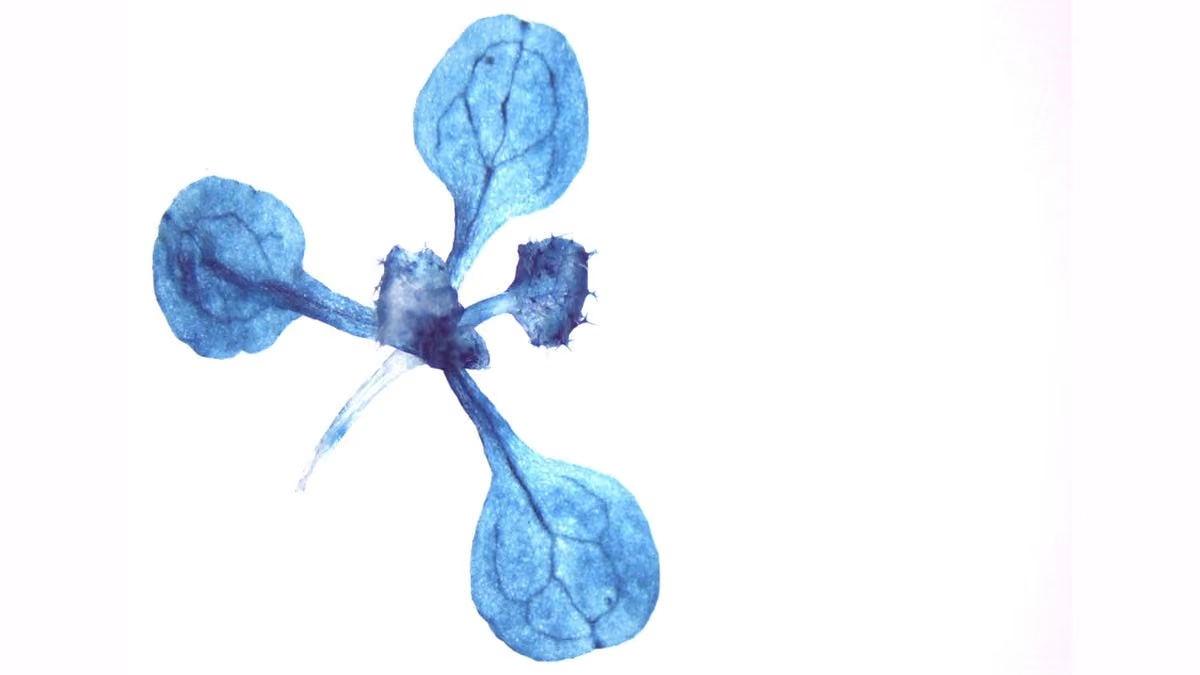
A research group at the Chinese Academy of Sciences reports a system that makes precise DNA changes several times more often in tomato, soybean and oilseed rape than the standard method does.
The system, called SmartPE, is described in a Letter published Oct. 28, 2026, in *Nature Plants* by Yijing Liu, Caixia Gao and colleagues at the Institute of Genetics and Developmental Biology in Beijing.
What is different
SmartPE uses two guide RNAs — the short strands that steer the editor to its target — where standard prime editing uses one. It builds deliberate mismatches into each guide’s template, adds sequences that increase how much editor a plant cell makes, and uses modified versions of the enzyme that copies the new sequence into DNA.
That is three changes at once. Whether all three are necessary, or whether one is doing the heavy lifting, the paper does not say in the summary provided. What it does say is the result.
The numbers
Stripped of their walls, crop cells showed editing rates 8.2 to 38.2 times those of standard prime editing in tomato. In soybean and oilseed rape, the rates were more than 10-fold higher at most of the target sites tested.
SmartPE edited both copies of a gene called SlOR2 in 7.3% of laboratory-grown tomato root lines. Standard prime editing produced no two-copy edits there at all, reaching 1.0% for single-copy edits, along with several roots whose cells were not all edited the same way.
In whole plants raised from edited cells, the system inserted a short protein tag into Arabidopsis, a laboratory plant, and short added sequences into tomato, at efficiencies of up to 32.3%. That is a ceiling for those experiments, not a typical rate. Worth keeping in mind before the headlines announce that gene editing is solved.
The caveats, stated plainly
Some of the authors are at Qi Biodesign, a Beijing company. The paper states that Gao and Liu have filed patent applications based on the results.
The sequencing data behind the paper are deposited in the NCBI BioProject database under accession number PRJNA1337775.
So: a genuine improvement in efficiency, demonstrated in three crops, with a mechanism that combines several modifications at once. The efficiency ceiling in whole plants is 32.3% in the experiments described. The two-copy edit rate in tomato root lines is 7.3%. These are not numbers that suggest the technology is ready to redesign agriculture by Friday.
They are numbers that suggest prime editing in broad-leaved plants has moved from "mostly frustrating" to "worth pursuing." That is progress. It is not a revolution, despite what the press release will probably say.




