
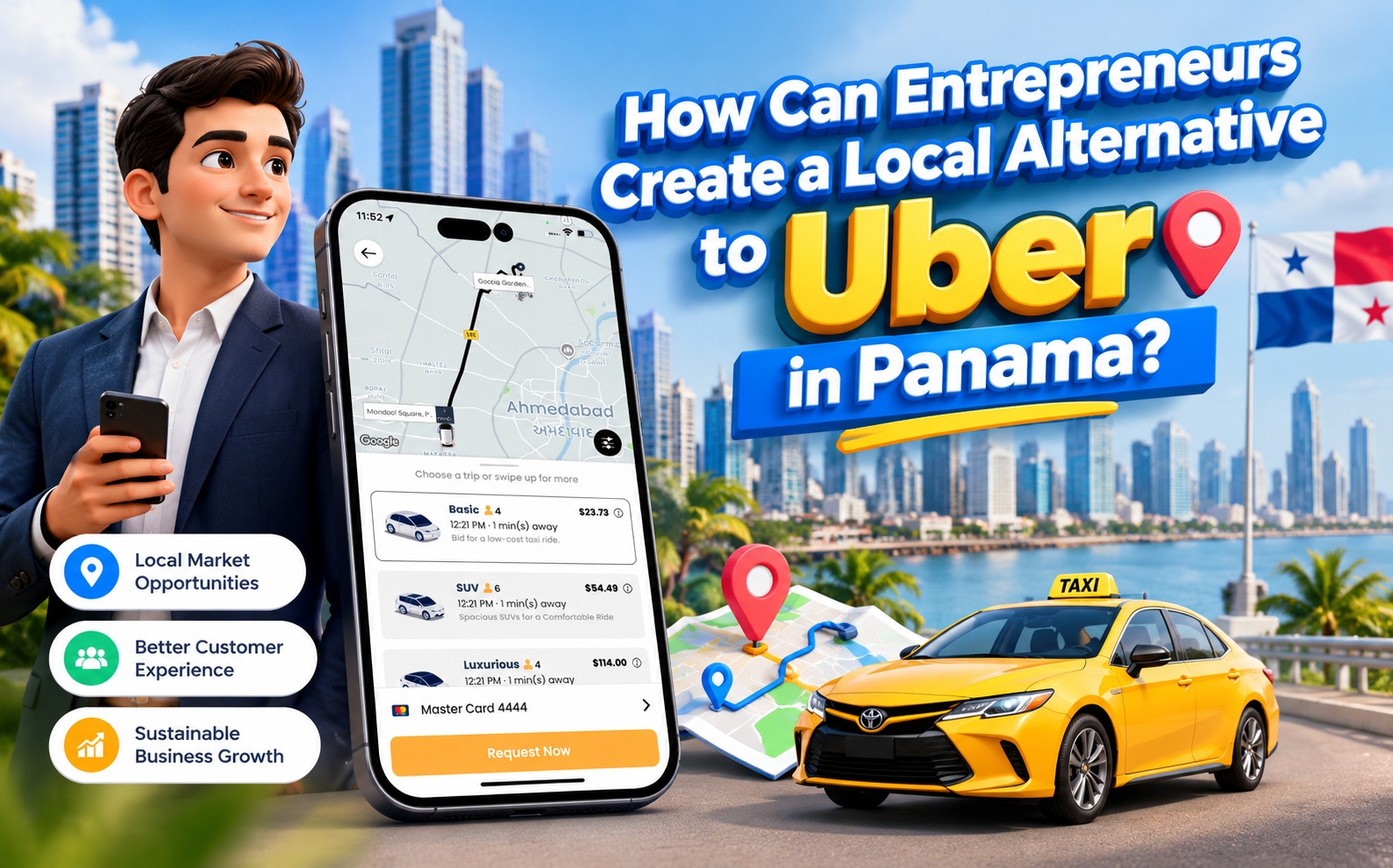
The way people book transportation is changing, creating new opportunities for entrepreneurs who want to build technology-driven businesses. In Panama, where urban mobility, tourism, and business travel create demand for convenient transportation, a locally focused ride-hailing platform could offer an interesting opportunity for startups and established transportation companies.
But launching a successful alternative to Uber requires more than putting a booking app on the market. Business owners need to understand what local customers expect, how drivers can benefit from joining a new platform, and what makes their service worth choosing over existing options.
For entrepreneurs exploring this opportunity, the goal should be to build a reliable transportation business supported by the right technology. With a clear business model, a practical launch strategy, and a customer-focused approach, it is possible to develop a local ride-hailing brand designed around Panama's market needs.
Identify the Right Market Opportunity in Panama
Every successful transportation business begins with a clear understanding of its customers. Before investing in app development, entrepreneurs should explore how residents, tourists, and business travelers arrange their journeys and where existing services may leave room for improvement.
Panama City, for example, brings together commercial districts, residential communities, hotels, and popular visitor destinations. These different environments may create opportunities for convenient daily rides, airport transfers, scheduled pickups, and corporate transportation.
Rather than trying to serve everyone from day one, identify a specific customer group and build the service around its needs.
Start by researching local travel patterns, interviewing potential customers, reviewing competing services, and speaking with drivers about their operational challenges. This information can help you identify a realistic starting point and avoid investing in features that your target audience may not need.
The business opportunity lies in solving a real transportation problem—not simply replicating an existing app.
Define Why Customers Should Choose Your Platform
One of the biggest challenges for a new ride-hailing business is convincing people to try an unfamiliar service. Customers already have established habits, so your platform needs to offer a clear and practical reason to make the switch.
For entrepreneurs in Panama, differentiation could come from transparent pricing, responsive customer support, dependable pickups, or services designed for a specific local audience.
Consider the following opportunities:
A more personalized experience: Offer accessible customer support and booking assistance tailored to local needs.
Transparent fares: Help passengers understand estimated trip costs before confirming a booking.
Driver-focused policies: Develop fair commission structures and clear payout processes that encourage drivers to stay active.
Flexible transportation options: Explore scheduled rides, airport transfers, and business travel bookings.
Localized communication: Prioritize Spanish-language support and consider English-language assistance for international visitors.
Not every feature will be equally valuable to every business. The most effective strategy is to identify what your target customers value most and make that the foundation of your brand.
Select a Business Model That Supports Long-Term Growth
A strong business model helps entrepreneurs turn ride bookings into a sustainable source of revenue. Before launching, decide how the platform will earn money, what drivers will pay, and how pricing will remain competitive.
A commission-based model is a common starting point. The platform earns a percentage of completed bookings, while drivers receive the remaining amount after applicable charges. Revenue therefore grows with completed rides, although profitability depends on operating expenses and booking volume.
Another option is a driver subscription model, in which eligible drivers pay a fixed fee to access platform services. This can offer predictable revenue, but entrepreneurs must ensure the subscription remains attractive to drivers with different booking volumes.
Businesses can also explore corporate transportation partnerships. Hotels, offices, travel agencies, and event organizers may require recurring transportation services, creating opportunities for scheduled bookings and business accounts.
Whichever model you choose, keep pricing understandable and evaluate its impact on both customer demand and driver earnings. A business that attracts passengers but cannot retain drivers—or recruits drivers without generating enough bookings—will struggle to grow.
Build Your Ride-Hailing Business With the Right Technology
Technology determines how easily customers book rides, how efficiently drivers manage requests, and how effectively the business handles daily operations.
Entrepreneurs can develop an application from scratch or evaluate a ready-made Uber clone app solution that can be customized for their business. A white-label platform may provide a foundation for launching under your own brand, potentially reducing the time required to establish core booking workflows.
The right choice depends on your budget, technical requirements, customization needs, and long-term growth plans. Before selecting a solution, evaluate its scalability, security, integration capabilities, maintenance arrangements, and ownership terms.
A complete ride-hailing platform generally includes three connected components.
Passenger App: Make Booking Simple and Convenient
Passengers should be able to book a ride without unnecessary steps. Core features include account registration, pickup and destination selection, fare estimates, real-time driver tracking, booking notifications, trip history, ratings, and customer support.
Payment options should reflect the preferences of your target market and the capabilities of available payment providers.
A smooth booking experience can encourage customers to return, particularly when combined with reliable pickups and clear communication.
Driver App: Support Everyday Operations
Drivers need tools that make accepting and completing trips straightforward. The driver app should support registration, document submission, verification workflows, ride requests, navigation, trip history, earnings summaries, and payout information.
Availability controls and timely notifications can also help drivers manage their schedules more effectively.
For business owners, a well-designed driver app is not simply a technical requirement. It is an important part of attracting transportation providers and maintaining consistent service quality.
Admin Panel: Keep the Business Under Control
The admin panel gives the business team visibility into bookings, users, drivers, payments, commissions, and customer complaints.
It should also provide reporting tools that help management understand booking patterns, cancellation rates, driver activity, and revenue performance.
With these connected systems, entrepreneurs can manage daily operations more efficiently and make informed decisions as the business grows.
Adapt the Platform to Panama's Market
A ride-hailing solution should reflect the market in which it operates. For a Panama-focused business, localization includes more than translating interface text.
Spanish should be a priority, while English support may be useful for businesses serving tourists and international travelers. The platform should also display prices clearly in the applicable currency, accounting for Panama's use of the balboa and US dollar.
Mapping and navigation should support accurate pickup locations, practical route guidance, and clear instructions for busy commercial areas, hotels, and transportation hubs.
Entrepreneurs should evaluate payment providers based on local availability, transaction fees, settlement arrangements, and integration requirements. Cash payments may also be considered where appropriate.
Customer support deserves equal attention. Passengers need straightforward ways to report issues, request assistance, understand cancellation policies, and resolve payment disputes.
The more naturally the platform fits local expectations, the easier it becomes to build trust in a new brand.
Address Legal and Operational Requirements Before Launch
A promising business idea needs a compliant operating structure. Entrepreneurs should investigate the rules governing app-based passenger transportation in Panama before accepting bookings or recruiting drivers for commercial trips.
Requirements can vary depending on the transportation category, vehicle type, operating model, and service area. Business owners should confirm applicable permits, driver eligibility, vehicle requirements, insurance obligations, tax responsibilities, and consumer protection rules.
It is also important to establish appropriate procedures for handling personal information, verifying driver documents, responding to safety concerns, and managing complaints.
Consult Panama's Autoridad del Tránsito y Transporte Terrestre (ATTT) and qualified local legal professionals to determine which requirements apply to your proposed service.
Treat compliance as part of the initial business plan, not as an afterthought. A well-prepared operating model helps reduce avoidable disruption and gives customers and business partners greater confidence in the service.
Build a Strong Driver Network Before Expanding
Passengers are unlikely to continue using a ride-hailing app if drivers are difficult to find or pickup times are consistently long. For this reason, driver recruitment should begin before the public launch.
Start with a defined service area and recruit eligible drivers who can reliably serve that location. Explain the platform's commission structure, payment process, onboarding requirements, and support arrangements from the beginning.
Referral programs, partnerships with eligible transportation operators, and direct community outreach can help attract drivers. However, recruitment incentives should be financially sustainable and should not replace proper verification.
Once bookings begin, monitor driver availability, waiting times, completed trips, cancellations, and feedback. These indicators help identify where the business needs more drivers or improved operational processes.
Building a concentrated and dependable driver network is often more valuable during the early stages than expanding across multiple locations too quickly.
Attract Customers Through Targeted B2B and Local Marketing
A new ride-hailing brand needs a clear strategy for reaching passengers and establishing business relationships. Instead of spending heavily on broad advertising immediately, entrepreneurs can begin with targeted campaigns designed around their initial service area.
Local SEO can help potential customers discover the service when searching for transportation options. A professional website should explain the service areas, booking process, pricing policies, and customer support options.
Social media can introduce the brand, promote launch offers, and support driver recruitment. Referral campaigns may encourage satisfied customers to invite friends and colleagues.
B2B partnerships offer another route to growth. Hotels, travel agencies, corporate offices, and event organizers may need dependable transportation for guests, employees, or clients. Approaching these businesses with a clear service proposition can help generate recurring bookings.
Focus your marketing on specific customer benefits, such as convenient booking, transparent pricing, or dependable support. Avoid unsupported claims about guaranteed savings or superiority over established competitors.
Plan Your Budget Around Real Business Requirements
The cost of launching a ride-hailing platform depends on the development approach, feature set, integrations, security requirements, and operational scale.
Building a custom application may offer greater control over functionality, while a configurable white-label solution may provide a faster starting point. However, neither option removes the need to budget for the broader business.
Your financial plan should account for software development or licensing, hosting, maps, payment processing, maintenance, legal advice, driver onboarding, marketing, customer support, and applicable insurance expenses.
Evaluate profitability using actual business drivers rather than app downloads or registrations alone.
For example, track completed rides, average booking value, platform revenue per trip, customer acquisition costs, repeat bookings, driver retention, and contribution margin after variable expenses.
A small pilot can help validate your assumptions before committing to a larger rollout. This approach allows you to learn from actual customer behavior and adjust the business model before expanding.
Launch in Stages and Scale With Confidence
A phased launch gives entrepreneurs greater control over service quality, expenses, and customer feedback.
Begin by validating the market and confirming the regulatory requirements. Next, prepare the application, recruit eligible drivers, test booking and payment workflows, and establish customer support procedures.
Launch with a manageable group of drivers and passengers in a defined area. Monitor the service closely, paying attention to pickup times, cancellations, customer complaints, completed bookings, and repeat usage.
Use these insights to improve the experience before extending service coverage or introducing additional ride categories.
Once the core business demonstrates consistent demand and reliable operations, consider expanding into airport transfers, corporate accounts, scheduled rides, or other services supported by local research.
Growth should follow evidence of customer demand and operational readiness—not just the desire to enter more locations.
Conclusion
Creating a local alternative to Uber in Panama can be an opportunity for entrepreneurs who understand their market, establish a sustainable operating model, and invest in technology that solves genuine transportation problems.
The most important decisions happen before launch: choosing the right audience, defining a clear competitive advantage, building a reliable driver network, addressing local requirements, and planning for long-term profitability.
A customizable Uber clone app solution can provide a technological foundation, but the business's success will depend on how well the platform serves passengers, supports drivers, and adapts to local conditions.
Start with a focused market, measure performance carefully, and expand when the business is ready. With a practical strategy and a commitment to dependable service, entrepreneurs can work toward building a recognizable ride-hailing brand in Panama.
Frequently Asked Questions
1. How can entrepreneurs start a ride-hailing business in Panama?
Begin with market research, a defined service area, a suitable business model, regulatory guidance, and a reliable driver network. Choose an app development approach that fits your budget and operational needs, then validate the service through a controlled launch.
2. What features are essential for a local alternative to Uber?
The platform should include passenger booking, GPS tracking, fare estimates, driver management, suitable payment options, trip history, notifications, customer support, and an admin panel for monitoring operations.
3. Can a white-label Uber clone app be customized for Panama?
A suitable white-label solution may be customized with your brand identity, supported languages, pricing rules, payment integrations, and operational workflows. Confirm the provider's capabilities and ensure the resulting service meets applicable local requirements.
4. How can a new ride-hailing business attract customers and drivers?
Entrepreneurs can combine targeted local marketing, referral programs, transparent pricing, responsive support, and partnerships with eligible transportation operators. A reliable experience for both passengers and drivers is essential for encouraging repeat usage and sustainable growth.