
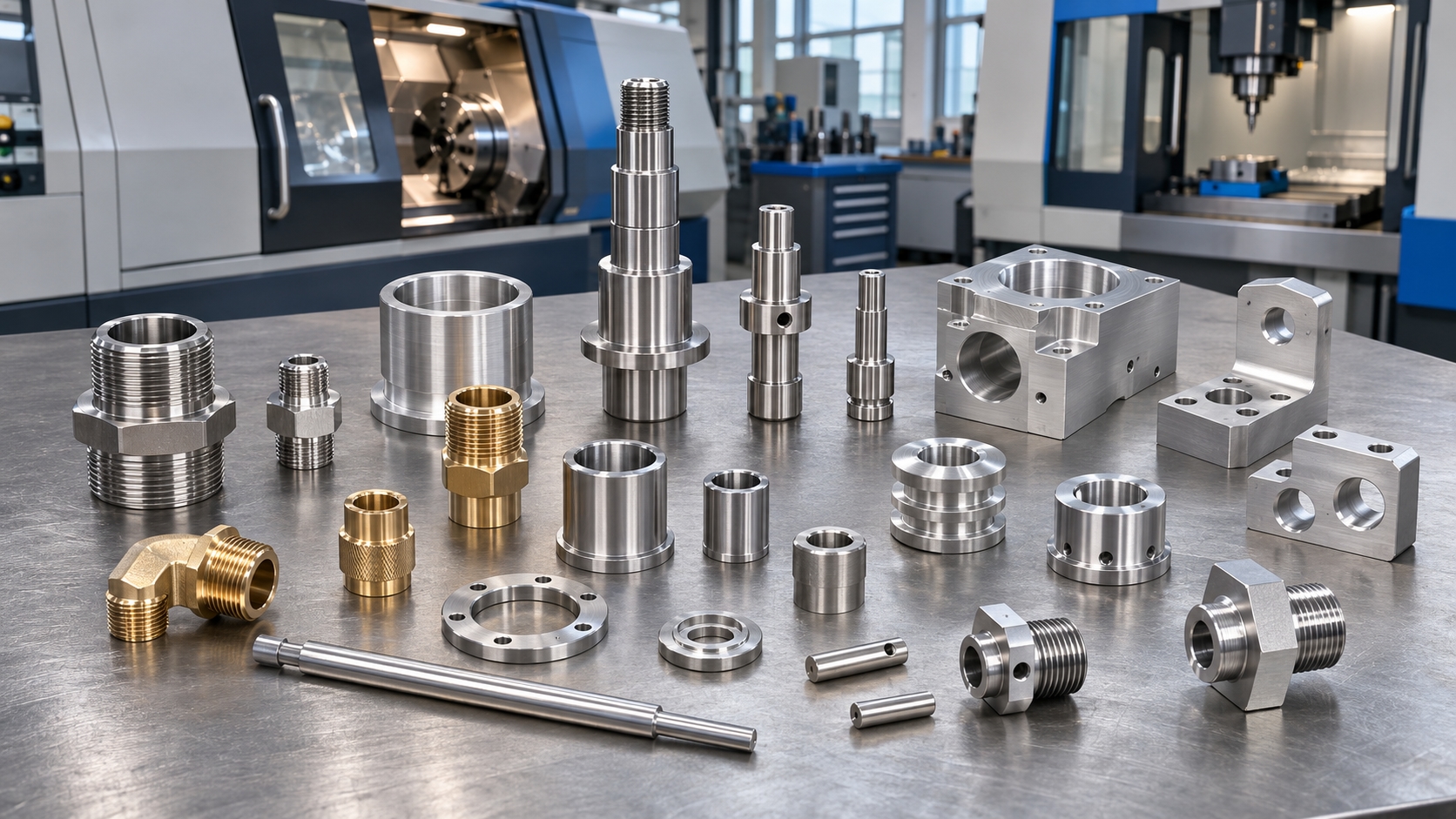
Modern manufacturing depends on accuracy, consistency, and reliable component performance. From automotive assemblies to industrial machinery, even a small dimensional error can affect the efficiency and safety of an entire system. This is where CNC Machined Components play an important role. Produced using computer-controlled machining technology, these components help manufacturers achieve precise dimensions, repeatable production quality, and complex geometries.
As industries increasingly adopt automation and advanced engineering practices, the demand for precision-machined parts continues to grow. Choosing the right manufacturing partner is therefore essential for businesses looking for dependable components and long-term production efficiency.
Understanding CNC Machined Components
CNC (Computer Numerical Control) machining is a manufacturing process in which programmed instructions control cutting tools and machinery to remove material from a workpiece. The process transforms raw materials into accurately finished components according to specified engineering drawings.
Unlike conventional manual machining, CNC technology offers greater repeatability and control over production parameters. It can manufacture simple parts as well as intricate components requiring close dimensional tolerances.
Common examples include shafts, pins, bushings, spacers, connectors, threaded components, brackets, and custom-engineered parts. These products are widely used wherever accurate fitting and dependable mechanical performance are necessary.
Why Precision Matters in CNC Machining
Precision is not simply about producing components with accurate measurements. It also involves ensuring that parts fit correctly, perform consistently, and meet application-specific requirements.
Some important advantages include:
1. Consistent Production Quality
Computer-controlled operations help maintain dimensional consistency across production batches. This is particularly valuable for OEMs and industrial manufacturers that require identical components for repeated assemblies.
2. Complex Component Manufacturing
CNC milling and turning can produce intricate shapes, slots, holes, threads, and other engineered features that may be difficult to achieve through conventional machining.
3. Reduced Material Waste
Accurate machining programs and controlled cutting operations help optimize material usage, reducing unnecessary waste during production.
4. Improved Operational Efficiency
Automated machining reduces dependence on repetitive manual operations and supports efficient production planning, particularly for medium- and high-volume requirements.
5. Reliable Component Performance
Properly manufactured components support accurate assembly, smoother mechanical movement, and dependable performance in demanding industrial environments.
Common CNC Machining Processes
Different machining techniques are selected according to component geometry, material, production volume, and technical specifications.
CNC Turning
CNC turning is commonly used to manufacture cylindrical components such as shafts, pins, bushings, and threaded parts. The workpiece rotates while a cutting tool removes material to achieve the required dimensions.
CNC Milling
CNC milling uses rotating cutting tools to remove material from a stationary or securely positioned workpiece. It is suitable for producing flat surfaces, pockets, grooves, slots, and complex profiles.
CNC Drilling
This process creates accurately positioned holes in components. Depending on the design, holes may be through-holes or blind holes.
CNC Grinding and Finishing
Grinding and finishing operations improve dimensional accuracy and surface quality where the application requires specific tolerances or smoother finishes.
Choosing the Right Materials for CNC Machined Components
Material selection directly affects component strength, durability, corrosion resistance, machinability, and overall performance.
Commonly used materials include:
Stainless Steel: Suitable for applications requiring corrosion resistance and mechanical strength.
Aluminium: Lightweight and machinable, making it useful for automotive and engineering applications.
Brass: Offers good machinability and is commonly used for fittings and connectors.
Carbon Steel: Provides strength and versatility for industrial components.
Engineering Plastics: Used where lightweight construction, insulation, or specific chemical properties are required.
The right material should always be selected according to operating conditions, load requirements, environmental exposure, and engineering specifications.
How to Select Reliable CNC Machined Components Manufacturers
Selecting a manufacturing partner requires more than comparing quotations. Businesses should evaluate technical capabilities, production consistency, inspection procedures, and communication.
When comparing CNC Machined Components Manufacturers, consider these factors:
Manufacturing Capabilities: Check whether the manufacturer has suitable CNC turning, milling, drilling, and finishing facilities.
Material Expertise: Confirm experience with the materials required for your application.
Quality Control: Ask about dimensional inspection, measuring instruments, and documented quality procedures.
Customization: Ensure the manufacturer can work with engineering drawings, samples, and application-specific requirements.
Production Capacity: Evaluate whether the supplier can handle your required quantities and delivery schedules.
Technical Support: Choose a partner that communicates clearly about specifications, tolerances, and manufacturing feasibility.
A dependable supplier should understand the application rather than simply manufacture a component according to a drawing.
EASCO: Supporting Precision Component Requirements
EASCO Fasteners Pvt. Ltd. offers manufacturing solutions for industrial fastening and precision component requirements. Its CNC machined components offering caters to businesses looking for accurately manufactured parts for different engineering applications.
For OEMs, industrial manufacturers, and procurement teams, working with a manufacturing partner that understands material selection, dimensional requirements, and quality expectations can simplify sourcing and production planning.
Businesses interested in custom requirements can explore EASCO's CNC Machined Components range and discuss their technical specifications directly with the company.
Frequently Asked Questions (FAQs)
1. What are CNC Machined Components?
CNC Machined Components are parts manufactured using computer-controlled machines that remove material from metal or plastic workpieces to achieve specific shapes, dimensions, and finishes.
2. Which industries use CNC machined parts?
Automotive, aerospace, electronics, medical equipment, industrial machinery, construction, and electrical manufacturing industries commonly use CNC-machined parts.
3. What materials are suitable for CNC machining?
Stainless steel, aluminium, brass, carbon steel, and engineering plastics are commonly used. The appropriate choice depends on the component's intended application and performance requirements.
4. How do I choose the best CNC Machined Components Manufacturers?
Evaluate their machinery, material expertise, quality inspection processes, customization capabilities, production capacity, and ability to meet your engineering specifications.
5. Can CNC machining produce customized components?
Yes. CNC machining can produce customized components based on engineering drawings, CAD files, samples, and specified dimensional requirements.
Conclusion
CNC machining has become an essential part of modern industrial production because it combines precision, repeatability, and manufacturing flexibility. From selecting suitable materials to maintaining dimensional accuracy, every stage contributes to the final component's performance.
For businesses sourcing precision-engineered parts, choosing experienced CNC Machined Components Manufacturers is an important step towards maintaining product quality and operational efficiency. Exploring EASCO's CNC machining solutions can be a useful starting point for businesses seeking dependable manufacturing support.



