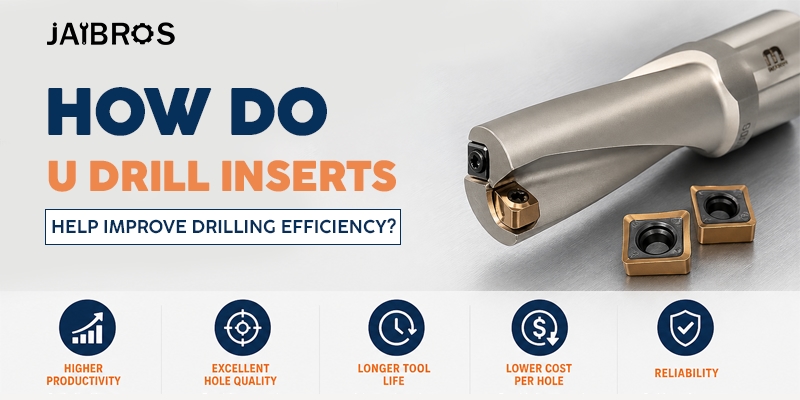
Drilling is an important operation in CNC machining because it creates accurate holes in metal components. In manufacturing, poor drilling performance can lead to longer cycle times, rough hole surfaces, tool wear, and unnecessary production delays. Choosing the right cutting tool and insert is essential for maintaining consistent results.
A u drill is an indexable drilling tool that uses replaceable cutting inserts instead of relying on a single solid cutting edge. This design can help improve productivity, simplify tool maintenance, and reduce the time needed for insert replacement. However, the results depend on selecting suitable inserts, using correct cutting parameters, and maintaining the machine properly.
Understanding how drilling inserts work helps machinists make better decisions about tool selection, hole quality, and production efficiency.
What Are U Drill Inserts?
Drilling inserts are replaceable cutting tips fitted into specially designed drill bodies. They are commonly manufactured from carbide and may have different geometries, coatings, and grades for specific workpiece materials.
During machining, the insert removes material as the drill rotates and advances into the workpiece. Once the cutting edge becomes worn or damaged, the insert can be indexed to another usable edge or replaced, depending on its design.
Many indexable drilling systems use central and peripheral inserts. These inserts perform different cutting roles, so their geometry and position must match the drill body and manufacturer's specifications.
How Do These Inserts Improve Drilling Efficiency?
1. Reduce Tool Replacement Time
One major benefit of replaceable inserts is easier maintenance. When a cutting edge becomes worn, the machinist usually needs to replace or index the insert rather than replace the complete drill assembly.
This can reduce tool-change interruptions and help the machine return to production sooner. Correct insert installation is essential because a poorly seated insert can affect cutting performance and may cause damage.
2. Support Higher Material Removal Rates
Suitable insert geometry and cutting grades can allow a drilling operation to run at efficient cutting speeds and feed rates. This helps remove material more quickly when compared with an unsuitable tool or conservative machining setup.
However, higher speed does not automatically mean better performance. Cutting conditions must match the workpiece material, drill diameter, hole depth, machine rigidity, and insert manufacturer's recommendations.
3. Improve Hole Quality and Consistency
Correctly selected inserts help produce consistent hole dimensions and surface finishes. Their cutting geometry influences how the material is removed and how cutting forces act on the tool.
For reliable results, machinists should also check spindle condition, tool alignment, workpiece clamping, and insert seating. Worn cutting edges or incorrect operating parameters can lead to oversized holes, poor finishes, or dimensional variation.
4. Help Control Machining Costs
Replaceable carbide inserts can help reduce the need to discard an entire drill when only its cutting edge has worn out. This makes it possible to manage tool consumption more efficiently.
The actual cost per hole depends on insert life, tool-body cost, machining time, workpiece material, and the number of usable cutting edges. Tracking insert consumption and production output helps identify whether a particular setup is delivering good value.
5. Improve Chip Evacuation
During drilling, chips must move away from the cutting zone to prevent clogging and excessive heat. Poor chip evacuation can damage cutting edges, affect hole quality, and interrupt production.
Insert geometry, chipbreaker design, coolant delivery, and drilling depth all influence chip control. Machinists should inspect the chips produced during operation. Long, tangled chips or compacted material may indicate that cutting conditions need adjustment.
6. Increase Production Consistency
Using a suitable insert grade and maintaining consistent machining conditions can help produce repeatable results across multiple components. This is especially useful in batch production, where similar holes must be machined repeatedly.
An indexable u drill insert system can simplify maintenance because worn cutting edges can be changed without replacing the complete tool. However, repeatability also depends on correct tool installation, machine condition, and inspection procedures.
How to Choose the Right Drilling Insert
Choosing the correct insert is important for achieving good tool life and efficient machining. Consider the following factors before selecting an insert:
Workpiece material: Identify whether you are drilling steel, stainless steel, cast iron, or another material.
Insert geometry: Select a cutting geometry designed for the material and drilling operation.
Carbide grade: Choose a grade recommended for the required cutting conditions and workpiece material.
Coating: Consider the coating recommended by the manufacturer for heat resistance, wear resistance, and cutting performance.
Compatibility: Confirm that the insert code and dimensions match the drill body.
Cutting parameters: Follow the recommended cutting speed, feed rate, and coolant requirements.
A suitable insert should be selected according to the complete machining setup rather than its appearance or size alone.
Understanding the U Drill Size Chart
A u drill size chart helps machinists identify the nominal drill diameter and compare available tool configurations. It is useful when planning a drilling operation or replacing an existing tool.
However, diameter is only one part of tool selection. The drill's length-to-diameter ratio, shank size, insert compatibility, and maximum recommended drilling depth also matter.
For example, a 20 mm drill diameter does not automatically mean every drill with that diameter has the same drilling depth or shank requirements. Always check the manufacturer's specifications before choosing a tool.
Common Mistakes That Reduce Drilling Efficiency
Several mistakes can reduce insert life and affect production quality:
Using an insert that is unsuitable for the workpiece material.
Applying cutting speeds or feed rates outside recommended limits.
Ignoring worn, chipped, or incorrectly seated inserts.
Allowing chips to accumulate inside the hole.
Using insufficient or incorrectly directed coolant where required.
Selecting a tool with an unsuitable length-to-diameter ratio.
Failing to check runout, alignment, and workpiece clamping.
Regular inspection and accurate machining records help identify the causes of recurring problems. Change one operating factor at a time when troubleshooting, wherever practical, so its effect can be evaluated.
Best Practices for Longer Insert Life
To maintain consistent drilling performance, clean the insert pocket before installing a replacement and tighten the insert according to the manufacturer's instructions. Inspect the cutting edges regularly and replace damaged inserts before they affect the workpiece or tool body.
Use the recommended cutting parameters and coolant arrangement for the selected insert. Monitor hole dimensions, surface finish, chip shape, and cutting sound during production. These observations help identify wear or unstable cutting conditions early.
For tool selection, review the available U drill sizes and configurations and verify compatibility with the required drilling application.
Conclusion
Replaceable drilling inserts can improve productivity by reducing tool replacement time, supporting efficient material removal, helping maintain hole quality, and simplifying tool maintenance. Their benefits depend on selecting the correct geometry and carbide grade, using suitable cutting parameters, and maintaining proper chip evacuation.
A systematic approach to tool selection and inspection helps manufacturers control machining costs while maintaining consistent production quality. Understanding insert compatibility and checking the manufacturer's technical recommendations are essential steps toward reliable drilling performance.For reliable CNC drilling tools and machining accessories, Jaibros offers a wide range of industrial products to support different machining requirements. Explore Jaibros to find suitable tools for your workshop and make informed choices for your drilling applications.
Frequently Asked Questions
1. What is a u drill insert used for?
A replaceable drilling insert is used to cut material during CNC drilling operations. It fits into a compatible drill body and provides the cutting edge required to produce a hole. When the cutting edge wears or becomes damaged, it can be indexed if another usable edge is available or replaced with a new insert. Correct compatibility is essential for safe operation.
2. How do drilling inserts improve machining productivity?
Drilling inserts can reduce downtime because machinists can replace or index the cutting edge without changing the complete drill assembly. Suitable insert geometry and grades can also support efficient cutting and consistent hole quality. Actual productivity improvements depend on workpiece material, machine rigidity, cutting parameters, insert life, and chip evacuation.
3. How do I select the correct u drill size?
Start by identifying the required hole diameter and drilling depth. Then check the tool's length-to-diameter ratio, shank dimensions, machine compatibility, and insert requirements. A size chart can help compare available configurations, but the manufacturer's technical specifications should determine the final selection. Also consider workpiece material, coolant availability, and machine stability.
4. What causes drilling insert wear or breakage?
Common causes include incorrect cutting parameters, unsuitable insert grades, poor chip evacuation, excessive tool runout, unstable workpiece clamping, and incorrect insert installation. Interrupted cutting or unexpected hard spots in the workpiece can also damage an edge. Inspect the wear pattern and operating conditions to identify the cause before changing the insert or adjusting machining settings.
5. Can carbide inserts be used for different metals?
Yes, carbide inserts are available in different grades and geometries for materials such as steel, stainless steel, and cast iron. However, one insert grade is not necessarily suitable for every material or operating condition. Check the manufacturer's recommendations for the workpiece material, cutting speed, feed rate, and coolant requirements before starting production.