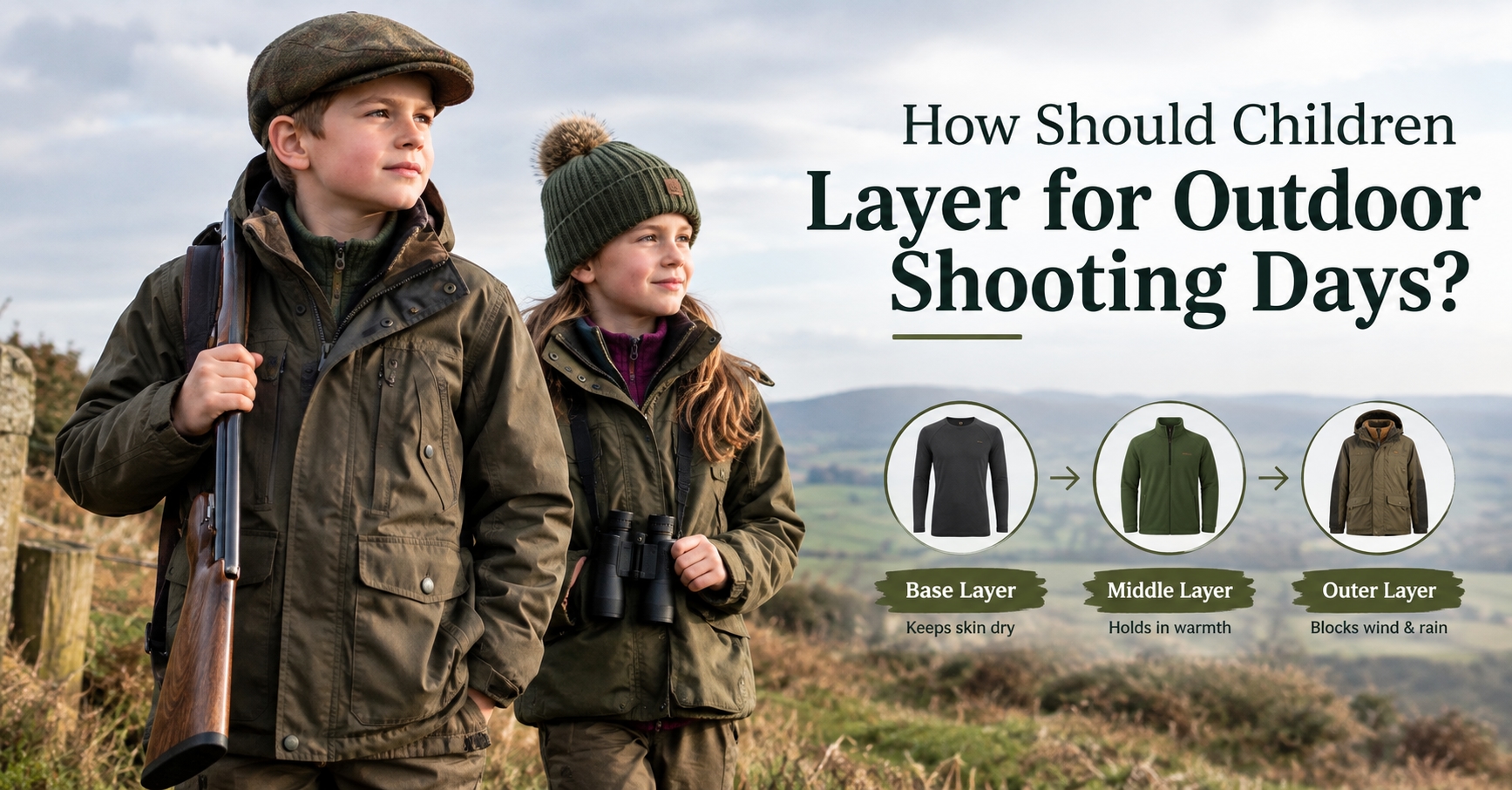
Outdoor shooting days in the UK can be rewarding, but they also bring changeable weather, long periods of stillness, and the need for comfort, safety, and practicality. For children, the right clothing layers make a noticeable difference to how well they cope with cold mornings, damp grass, breeze, and the occasional burst of sunshine. The aim is not to overcomplicate things. It is to keep children warm, dry, and able to move freely without feeling bulky or restricted.
Parents and guardians often look for children's shooting clothes that can be layered sensibly, because the right combination helps children stay focused and comfortable throughout the day. Good layering also makes it easier to adapt as conditions change, which is especially useful on British estates, in woodland, or on open ground where the temperature can shift quickly.
In simple terms, children should dress in three main layers: a moisture-wicking base layer, an insulating middle layer, and a weather-resistant outer layer. Each one has a specific role, and together they create a practical system that can be adjusted as needed.
Key points
Start with a base layer that moves moisture away from the skin.
Add an insulating layer to trap warmth without restricting movement.
Use a breathable outer layer to protect against wind and light rain.
Choose clothing that fits well, allowing room for movement and extra layers.
Pay attention to socks, gloves, hats, and footwear, as these affect comfort greatly.
Adjust layers during the day rather than dressing children too heavily at the start.
Why layering matters for children outdoors
Children lose heat more quickly than adults, particularly when they are sitting still for periods of time. On a shooting day, there may be waiting, walking, standing, and changing conditions. A child who starts the morning warm may feel cold later if they are underdressed, while one who is too heavily dressed may become sweaty and uncomfortable, which can lead to chilling once activity slows down.
Layering solves this by creating flexibility. Instead of relying on one thick coat, several thinner layers allow better temperature control. If the sun comes out, a layer can be removed. If wind picks up, it can be put back on. This approach is far more practical than depending on one heavy garment alone.
The base layer: keeping skin dry
What a base layer should do
The base layer sits directly against the skin, so its job is to manage moisture. Cotton is usually not the best choice because it holds dampness, which can make a child feel cold and clammy. A better option is a synthetic performance fabric or merino wool, both of which help move moisture away from the body.
For children, comfort is just as important as technical performance. The base layer should feel soft, not scratchy, and it should fit closely without being tight. Long-sleeved tops and leggings work well in cooler weather, while lighter base layers may be enough in milder conditions.
Best features to look for
Breathable fabric
Quick-drying material
Flat seams to reduce rubbing
Close fit without compression
Easy movement around shoulders, knees, and elbows
The middle layer: holding in warmth
The middle layer is the insulating part of the system. Its purpose is to trap body heat while still allowing moisture to escape. Fleece is a common choice because it is warm, lightweight, and easy to layer. A lightweight insulated jacket or gilet can also work well, depending on the weather and the amount of movement expected.
Children should not feel wrapped up so much that they struggle to shoulder a small bag, step over uneven ground, or crouch down comfortably. The best middle layer adds warmth without bulk. If the day is very cold, two thinner middle layers may work better than one thick one, because they are easier to adapt.
Practical middle layer choices
Light fleece top for mild to cool conditions
Thicker fleece for colder mornings
Insulated gilet for added core warmth without limiting arms
Thin jumper under a jacket if the weather is steady and dry
The outer layer: protection from wind and rain
British weather is rarely predictable, so the outer layer matters a great deal. It should protect children from wind, drizzle, and damp vegetation while still allowing the body to breathe. A waterproof or water-resistant jacket with a quiet fabric finish is usually best, especially where movement through cover is involved.
Noise can matter on shooting days, so a rustly, stiff coat is not ideal. A good outer layer should allow enough room for the layers underneath, while also keeping the child protected from the elements. Adjustable cuffs, a zipped front, and a hood can all be useful. For trousers, water-resistant or quick-drying options help when grass is wet or ground conditions are muddy.
What to check in an outer layer
Wind resistance
Waterproof or water-repellent finish
Breathability
Quiet fabric movement
Room for layering underneath
How to avoid overdressing children
One of the most common mistakes is dressing a child too warmly at the start of the day. It is natural to want to keep them comfortable, but too much insulation can cause sweating during walking or active moments. Once sweat cools, the child may feel colder than before.
A better approach is to begin slightly cool, then add layers as needed. Children can always put on a fleece or jacket when they stop moving, but it is harder to manage overheating once it has begun. A quick check after the first 15 to 20 minutes outdoors often helps. If the child feels warm and dry, the outfit is probably balanced well.
Footwear, socks, and small details that make a big difference
Layering is not only about tops and jackets. Feet are often the first place children feel cold, especially on wet ground. Warm, moisture-managing socks are essential, and in some cases a thin inner sock with a warmer outer sock can be useful, provided boots still fit properly. Footwear should be supportive, waterproof if possible, and broken in before a full day outdoors.
Gloves, hats, and neck warmers are also worth considering. A lot of body heat is lost through the head and hands, so these smaller items can improve comfort significantly. A warm hat that fits under a hood is often more useful than a thick scarf. Neck warmers can be tidier and safer than loose fabric.
Useful accessories
Wool or thermal socks
Waterproof boots with good grip
Light gloves for dexterity
Warm hat or beanie
Neck gaiter or snood
Choosing the right fit for movement and safety
Children need to move, crouch, walk, and possibly climb in a controlled and careful way. Clothing that is too tight can be uncomfortable and distracting, while clothing that is too loose may catch on branches or get in the way. The best fit gives enough room for layers underneath without hanging awkwardly.
It is also sensible to avoid oversized sleeves or long hems that drag. Trousers should allow bending at the knee, and jackets should sit well when the child raises their arms. When trying on clothing, it helps to ask the child to move around, sit down, and reach forward. That gives a better idea of how the outfit will perform in real conditions.
Planning for changing weather during the day
A well-layered child can adapt more easily as the day progresses. Morning frost may give way to mild afternoon sun, or a dry start may become damp by lunchtime. Packing an extra mid-layer, dry socks, or a spare hat can be a sensible precaution. Even if not used, these items provide reassurance and flexibility.
A small rucksack or kit bag can help carry spare clothing, but it should be light and manageable. Children should not be weighed down by unnecessary items. The goal is preparedness without clutter.
Comfort and confidence matter too
Children are more likely to enjoy the day if they feel comfortable in what they are wearing. That means fabrics should feel pleasant, seams should not rub, and nothing should feel too stiff or heavy. If a child is distracted by cold hands or an itchy collar, their focus is likely to wander.
It is also useful to involve children in the process where possible. Letting them understand why layers matter can help them take more notice of how they feel. If they know they can ask to remove or add a layer, they are more likely to stay comfortable throughout the day.
Conclusion
Children should layer for outdoor shooting days with comfort, warmth, and flexibility in mind. A good system starts with a dry base, adds a warm middle, and finishes with a protective outer layer. Alongside this, properly chosen socks, boots, gloves, and hats make a real difference to how a child experiences the day.
The most effective approach is practical rather than excessive. Dress children so they can move freely, stay dry, and adjust to changing weather. With sensible layering, they are far more likely to remain settled, comfortable, and ready for the day outdoors.
FAQ
What is the best base layer for children on cold outdoor days?
A moisture-wicking base layer made from synthetic fabric or merino wool is usually best. It helps keep the skin dry and reduces the risk of getting chilled.
Should children wear cotton layers?
Cotton is generally not ideal for cold or damp conditions because it holds moisture. It can feel comfortable at first, but once wet it can make a child cold quickly.
How many layers should a child wear?
Most children do well with three layers: a base layer, an insulating layer, and an outer layer. On milder days, one of these may be lighter or removed.
Is a thick coat better than multiple layers?
Not usually. Multiple layers are more adaptable and allow better temperature control. A thick coat can be useful in very cold weather, but it is less flexible.
What should children wear on their feet?
Waterproof or supportive boots with warm, moisture-managing socks are a sensible choice. The socks should keep feet dry without making the boots too tight.
How can I tell if my child is too warm?
Signs include sweating, flushed cheeks, and complaints of feeling hot or uncomfortable. If this happens, remove a layer before they become damp.




