Email archives should be able to convert to any format in the background. If you have ever tried exporting MBOX mailboxes to Outlook-compatible files and have found the process frozen halfway, spinning forever, or throwing cryptic system errors, you are not alone.
Cross-platform email migrations are often hampered by bottlenecks such as MBOX file export hang-ups and Outlook access issues. An interrupted conversion is a waste of precious time, whether you're migrating from Mozilla Thunderbird to Microsoft Outlook, legal discovery backups, or extracting single messages for compliance.
The article tells us why the errors occur during MBOX to MSG conversion and how dedicated automated tools like WholeClear MBOX to MSG Converter can bypass the common file format locks.
Understanding the Structural Varieties: MBOX vs MSG
Now, if you want to fix conversion freezes, knowing how these file structures store data helps:
MBOX (.mbox): One text file. It stores a complete mailbox – hundreds or thousands of individual email messages, header structures, and inline attachments – all in one database file. The format is native to email clients like Mozilla Thunderbird, Apple Mail, Eudora, PocoMail, and Postbox.
MSG (.msg): A proprietary format of a single Microsoft Outlook message. Each .msg file is a single email message with metadata headers (To, From, CC, Date), body formatting (HTML/Plain Text), and attached files.
Converting MBOX to MSG means you are working with a multi-gigabyte data store and need to correctly parse every MIME message boundary within it and reconstruct every email as a stand-alone, Outlook-readable .msg file.
Why MBOX to MSG Conversion Fails?
Technical problems can occur with manual conversion of large mailboxes or with simple conversion scripts, leading to migration errors or crashes.
Large mailbox files and RAM bottlenecks: MBOX files can be hundreds of gigabytes in size. Basic converters attempt to load the whole file into active system memory (RAM) and cause “Application Not Responding” crashes.
Nested & Heavy Attachments: Complex MIME boundaries, multi-part attachments, and inline embedded graphics can break simple extraction scripts, hanging the export stream halfway through.
Non-standard header formatting: Legacy email clients (Apple Mail, Entourage, Eudora, etc) produce slightly different versions of MBOX headers. Simple converters will just fail or crash on unexpected header attributes.
Outlook installation dependencies: Most of the legacy converters depend on the Microsoft Outlook MAPI runtime environment to create .msg files. If Outlook is missing, not configured correctly, or doesn't match (32-bit vs 64-bit), the process will stop.
The Manual Workaround and the Hidden Snags
The Standard Manual Steps.
The traditional manual approach is a multi-step bridge between Thunderbird and Microsoft Outlook:
Open Mozilla Thunderbird and import the MBOX file you want using an add-on such as ImportExportTools NG.
Choose the imported emails and save them as .eml files in a local folder.
Open Microsoft Outlook.
Drag and drop the EML files to an Outlook folder.
Export individual messages to MSG format manually.
Why manual methods often don't work:
Requires dual client setup: Both Thunderbird and Microsoft Outlook must be fully configured and working.
Risk of losing formatting: You could change the original e-mail headers, lose inline graphics, or break special attributes such as the original timestamps and BCC fields when you drag and drop manually.
Time-consuming & Non-Scalable: Manual drag-and-drop of thousands of messages, hours of repetitive work and can easily freeze the browser/application.
Automatic Solution: WholeClear MBOX to MSG Converter Program
In manual migration, if it fails or gets stuck, you can avoid email client dependency and work on files directly using a utility such as WholeClear MBOX to MSG Converter.
1. Download & Run:
Download WholeClear MBOX to MSG Converter on your system and run it.
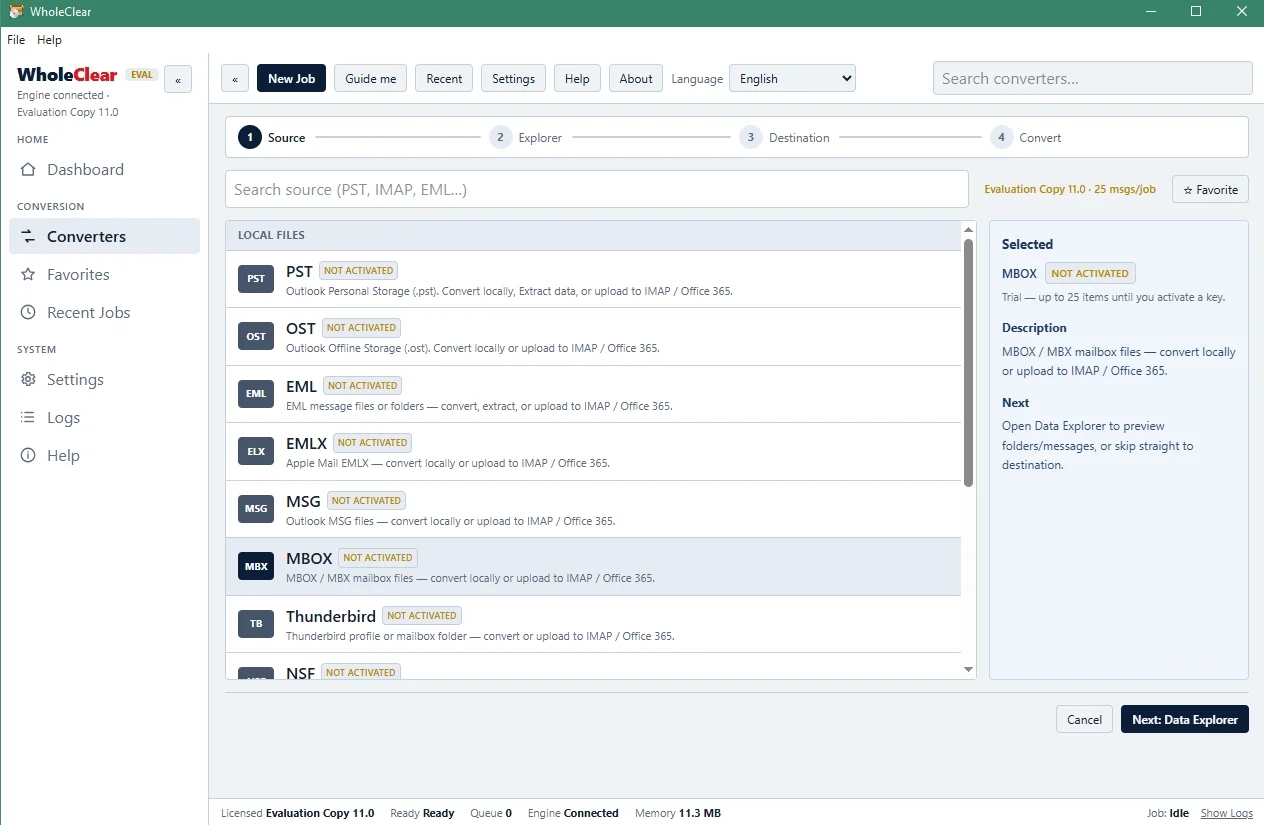
2. Choose File or Folder Mode
Select File Mode to import a single .mbox file. Select Folder Mode to import a folder of multiple MBOX files.
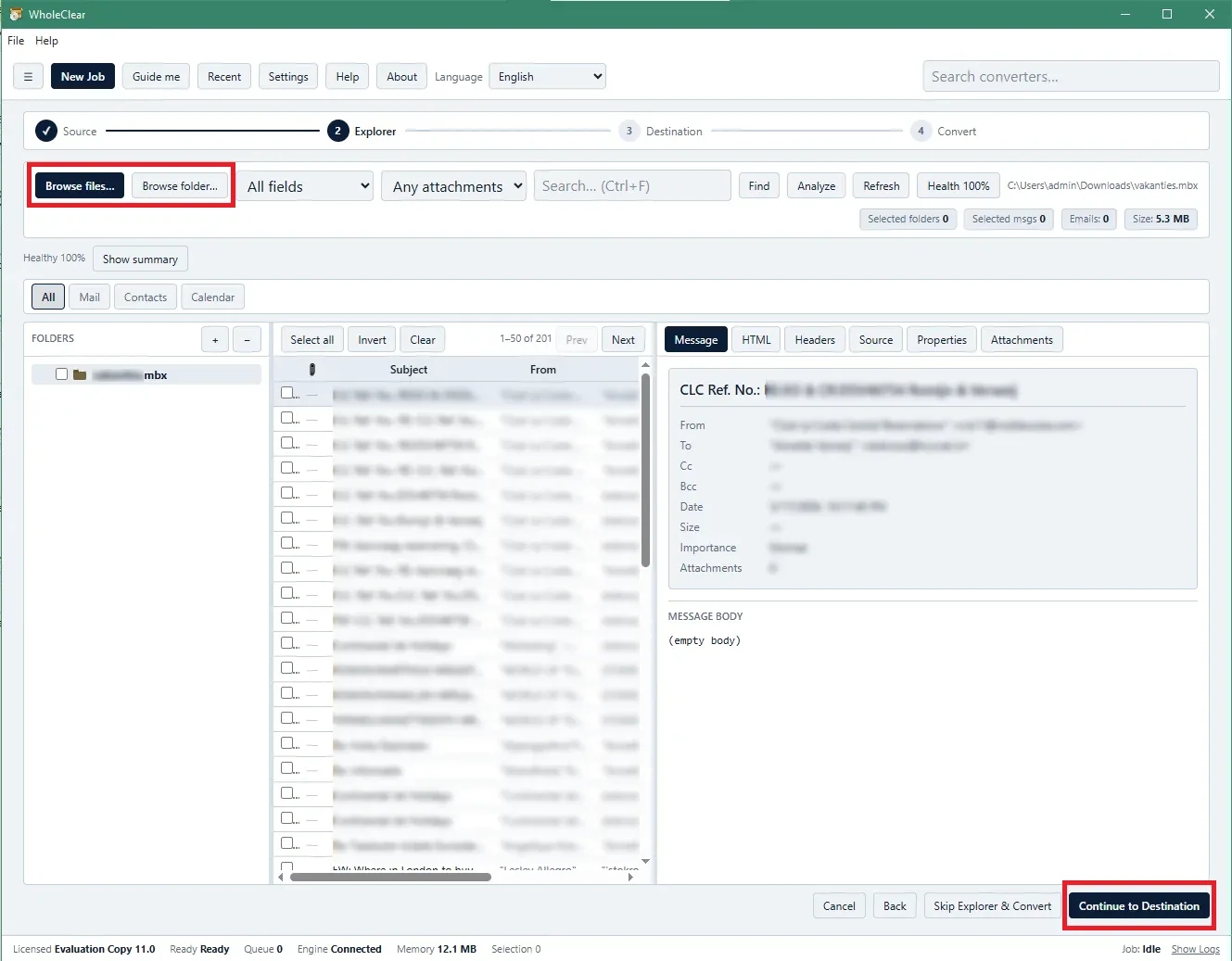
3. Scan & Look
Click Browse to select your source file(s). The folder is automatically scanned for its structure and loaded into the software.
4. Check the Mailbox Content
Preview your messages, headers, and folder structure with the integrated preview pane
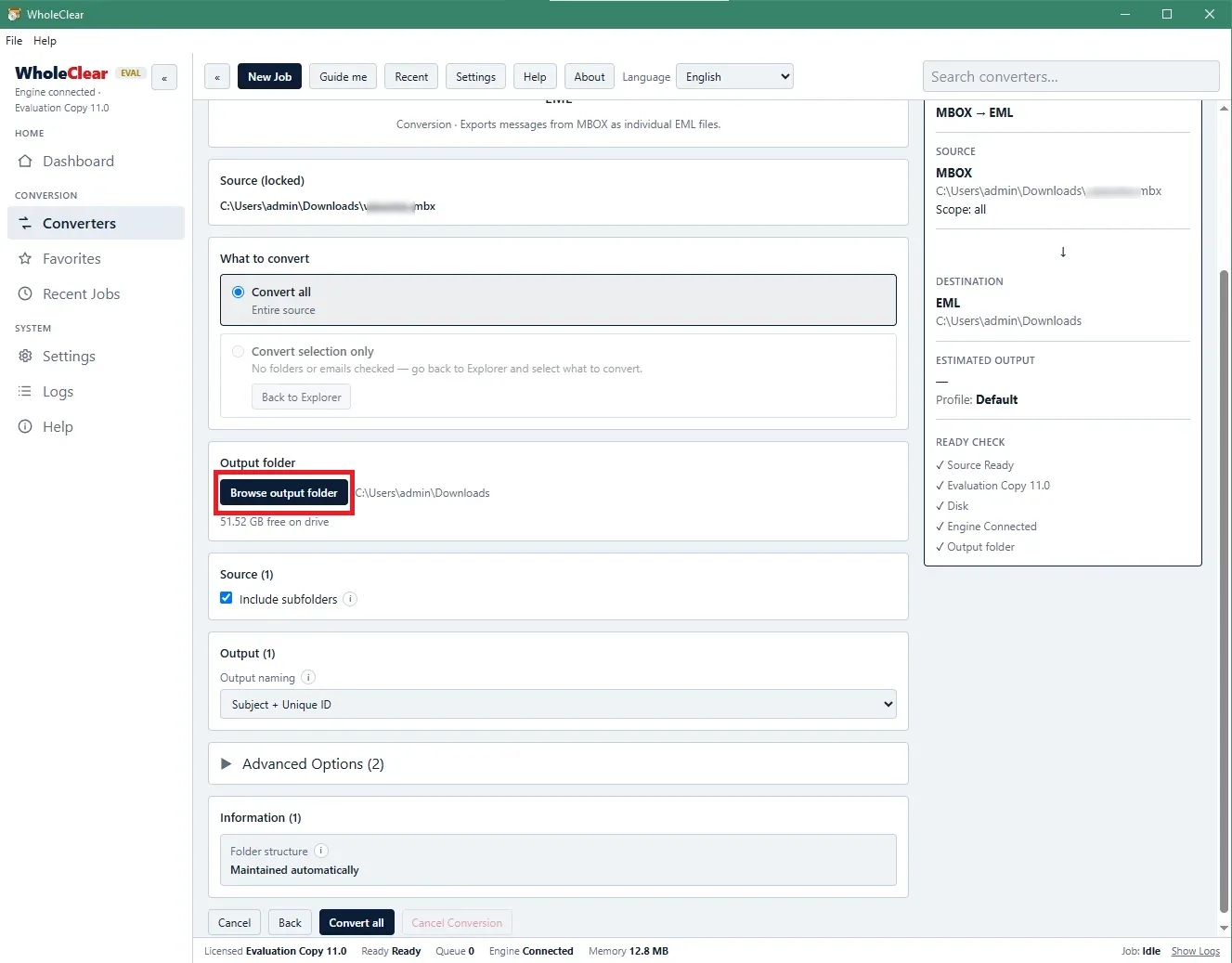
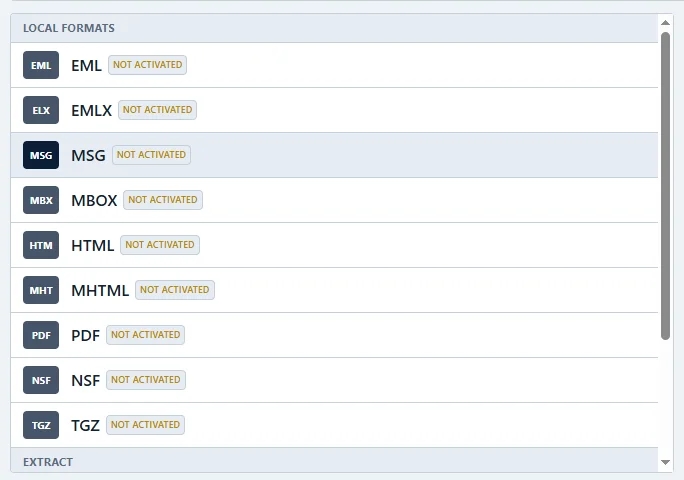
5. Choose Output Path & Convert
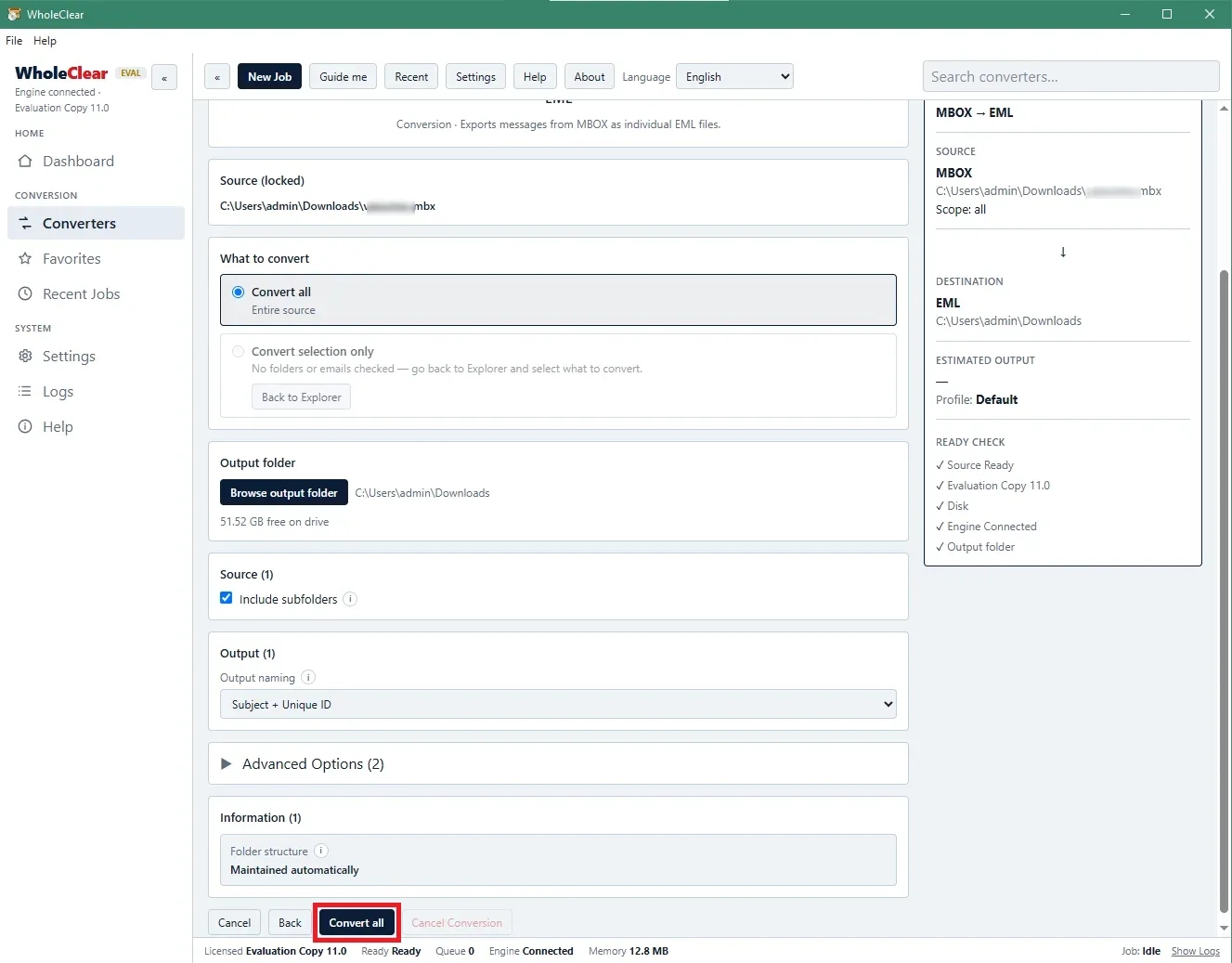
Choose your destination folder and click on Convert Now to get Outlook-compatible.msg files, even without having Microsoft Outlook installed.
Key Features & Product Analysis
Feature | Advantage |
Direct MBOX to MSG Processing | The MBOX files are simply converted to Outlook .msg files without using MS Outlook. |
Batch Conversion | Converts many MBOX files at once through batch processing, which reduces the time for conversion. |
Folder Hierarchy Preservation | Maintains the same structure of the folders contained in MBOX files and the subfolders of these. |
Header & Attachment Preservation | Maintains all email properties including To, From, CC, BCC, Dates, formatting, and attachments. |
30+ Client Compatibility | It supports MBOX files from various applications including Thunderbird, Apple Mail, Eudora, Entourage, PocoMail, etc. |
No File Size Limit | Designed for handling huge multi-gigabyte MBOX files without any issues with system memory. |
Cross-Platform Availability | Compatible across Windows, macOS, and Linux operating systems. |
Advantages & Disadvantages of Software
Advantages
No Outlook Dependency: Files are converted directly; no need to install Microsoft Outlook or MAPI runtime.
Smooth Large File Processing: The direct file parsing design prevents application freezes during large email archive processing.
Data Preservation: Folder structure, inline images, and metadata properties are preserved.
Key Considerations:
Demo Version Restrictions: To approximate the software's efficiency, the free trial version converts 25 items per MBOX file. To convert several batch projects, the licensed version of the application is required.
Healthy Source Files Needed: The tool is meant to work with normal and healthy MBOX archives, and it is not a specialized data-recovery solution for badly corrupted files.
Conclusion & Future Work
The common reasons for conversion hangs during MBOX to MSG migration are memory overloads, large file sizes, or dependency on third-party email client runtimes. For large-scale migrations, you should use direct file parsing tools. Manual drag-and-drop workarounds can migrate a handful of messages.
WholeClear MBOX to MSG Converter does not require any external software. It keeps the formatting of emails and attachments. It doesn't lock the system up.
Download the free trial edition and check processing speed and convert your first batch of emails. If your current conversion process freezes or slows down.
Frequently asked questions (FAQ’s)
Q1. Why does MBOX file conversion get stuck at a certain percentage?
The freeze usually happens when conversion utilities don't have enough system memory while parsing large attachments or when they encounter non-standard MIME headers created by older email clients. Stand-alone converters also avoid these run-time bottlenecks.
Q2: Do we need to have Microsoft Outlook installed on the computer for conversion?
No, WholeClear MBOX to MSG Converter is a stand-alone tool that produces native Outlook .msg files without the need for Outlook or MAPI.
Q3: Will the email attachments be lost after MBOX to MSG conversion?
Yes. The conversion engine parses messages with original inline images, attached embedded documents, and formatting structures.
Q4: Is there any option to convert multiple MBOX files together?
Yes. Folder Mode. If you want to load a folder that has many MBOX files and convert them to MSG format at a time.