
India Ayurvedic Products Market Outlook
The market is growing rapidly as consumers move toward natural, chemical-free wellness and preventive healthcare. Rising health consciousness, wider acceptance of traditional medicine, and expanding e-commerce are carrying ayurveda from specialist remedies into everyday wellness and personal care.
As heritage brands and new direct-to-consumer labels compete, the industry is becoming more organized, digital, and innovation-led. The ayurvedic products market size in India is also supported by government backing through the Ministry of AYUSH and by growing global interest in proven traditional treatments.
Market Snapshot
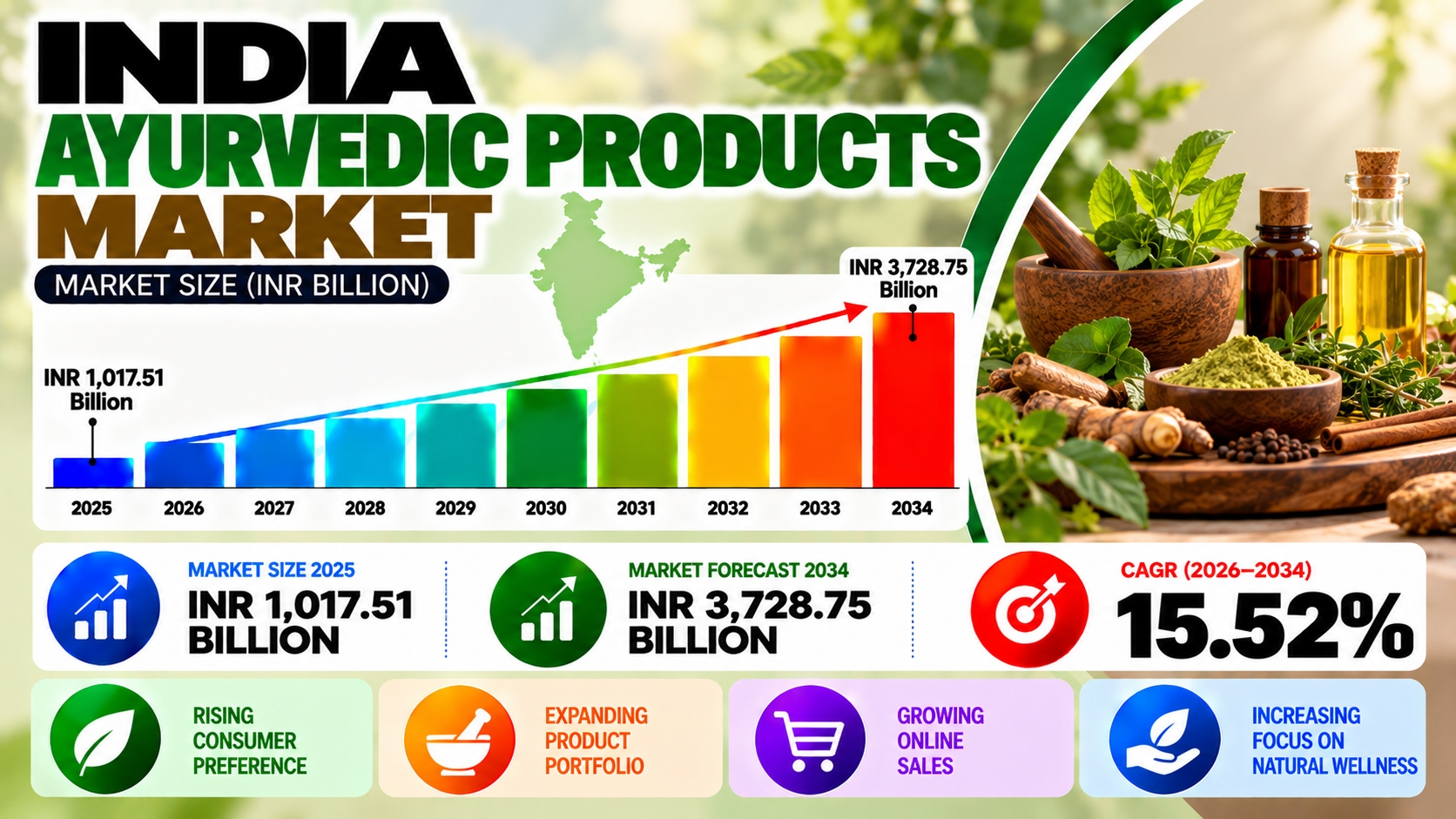
Market Size (2025): INR 1,017.51 Billion
Forecast Market Size (2034): INR 3,728.75 Billion
CAGR (2026-2034): 15.52%
Leading Product Type: Healthcare Products (58% share)
Leading Structure: Organized (70% share)
Leading Region: North India (35% share)
Key Growth Drivers: Natural wellness preference, AYUSH support, e-commerce, lifestyle disease concerns
Executive Summary
The ayurveda market size in India is projected to grow from INR 1,017.51 Billion in 2025 to INR 3,728.75 Billion by 2034 at a CAGR of 15.52%. Healthcare products, which include ayurvedic medicines, nutraceuticals, and dietary supplements, hold a 58% share on the strength of immunity-boosting and preventive formulations. The organized sector leads with 70%, helped by brand presence, certifications, modern manufacturing, and wide distribution.
Lifestyle conditions such as diabetes, obesity, and hypertension are pushing consumers toward preventive solutions. Government support is also visible: the Union Budget 2025-26 raised the Ministry of AYUSH allocation to INR 3,992.90 Crore from INR 3,497.64 Crore (revised estimates) in 2024-25. Players including Dabur, Emami, Himalaya Wellness Company, Patanjali Ayurved, and Charak Pharma are competing through portfolio expansion, research, and nationwide distribution.
Evaluate Market Opportunity with the Business Sample Report
India Ayurvedic Products Market Key Drivers
Rising Preference for Natural and Preventive Healthcare:
Concerns about side effects of synthetic medicines and chemical-based personal care are steering consumers toward plant-based options. According to the first all-India NSSO Survey on AYUSH (2022-23), about 95% of Indians aged 15 and above are aware of AYUSH systems, and around 53% of urban and 46% of rural individuals used AYUSH for prevention or treatment of ailments.
Strong Government Support:
The Ministry of AYUSH has built an enabling ecosystem across research funding, quality standardization, and international promotion. Good Manufacturing Practices certification and pharmacopoeial standards strengthen product authenticity and export competitiveness.
Digital Transformation and E-Commerce:
Direct-to-consumer brands, dedicated ayurveda storefronts, and personalized dosha-assessment apps are bringing ayurvedic products to younger and previously underserved consumers, while authentication tools build trust online.
Lifestyle Disease Burden:
Growing concern over stress, digestive disorders, and metabolic imbalance is increasing demand for preventive ayurvedic formulations across age groups.
India Ayurvedic Products Market Emerging Trends
Technology Meets Traditional Practice:
AI and machine learning are enabling personalized recommendations based on body constitution. In July 2025, the World Health Organization released a technical brief acknowledging India’s efforts to integrate AI with AYUSH systems, including Prakriti-based predictive diagnostics and the Ayurgenomics project.
Sustainable and Clean-Label Development:
Brands are adopting farm-to-shelf traceability, biodegradable packaging, and digital authentication. According to APEDA, as of 2024, India has 7.3 million hectares under organic certification, including aromatic and medicinal plants.
Mainstream Wellness and Personal Care Adoption:
Younger consumers are choosing herbal supplements, skincare, and haircare that blend traditional formulas with modern formats such as effervescent tablets, gummies, and serums.
Growing Export Potential:
Global demand for proven traditional treatments is opening overseas opportunities, with herbal supplements, ayurvedic medicines, and skin and hair care lines widely counted among the top ayurvedic products exported from India.
Explore the Full Report with Charts, Table of Contents, and List of Figures
India Ayurvedic Products Market Challenges
Despite robust momentum, the market faces persistent structural headwinds:
Standardization and quality control vary across a fragmented manufacturing base, and small enterprises often lack resources for comprehensive testing, which can undermine category credibility
Limited clinical evidence and scientific documentation for therapeutic claims restrain acceptance in mainstream healthcare and complicate regulatory claims
Supply chain vulnerabilities in quality-certified herbal raw materials, driven by variable agricultural conditions, sustainable harvesting limits, and insufficient medicinal plant cultivation infrastructure, affect production consistency
India Ayurvedic Products Market Segment Insights
By Product Type
Healthcare Products: 58% (ayurvedic medicines, nutraceuticals, and dietary supplements)
Personal Care Products: skin care, oral care, and hair care and fragrances
By Organized/Unorganized
Organized: 70% (quality certification, GMP compliance, modern retail and online distribution)
Unorganized
Regional Insights
North India: Share (2025): 35%; Haridwar and Uttarakhand manufacturing hubs, traditional consumption, strong retail networks
West and Central India
South India
East India
Competitive Landscape
The market is moderately consolidated, with heritage brands leading and new-age direct-to-consumer brands disrupting. Leaders have diversified across healthcare, personal care, and wellness, and competition is shifting toward digital transformation, premium products, and distribution in tier-two and tier-three markets. M&A activity is accelerating consolidation.
Amrutanjan Health Care Ltd
Biotique (Bio Veda Action Research Co.)
Charak Pharma Pvt Ltd
Dabur Ltd.
Emami Ltd.
Herbal Hills Wellness
Himalaya Wellness Company
Maharishi Ayurveda
Patanjali Ayurved Limited
Shahnaz Husain Group
Viccolabs
Government Initiatives Supporting the Market
Ministry of AYUSH Funding: The Union Budget 2025-26 raised the allocation to INR 3,992.90 Crore, supporting evidence-based traditional medicine development
WHO Global Centre for Traditional Medicine, Gujarat: Positions India as a global leader in traditional medicine
Good Manufacturing Practices and Pharmacopoeial Standards: Improve product authenticity and export readiness
AYUSH Wings in Hospitals: Integrate ayurveda into public healthcare through dedicated departments and wellness centers
Investment Opportunities
High-Growth Segments: Healthcare products and ayurvedic nutraceuticals are well positioned, given the 58% share and demand for immunity and preventive care. Fusion formats such as gummies and effervescent tablets widen the consumer base.
Geographic Expansion: Tier-two and tier-three markets, reached through exclusive stores and e-commerce, offer room for growth in authentic wellness products.
Technology and Authentication: QR code authentication, blockchain traceability, and AI-based personal recommendations strengthen trust and brand loyalty.
Discuss Your Requirements With an Analyst and Get Your Customized Market Report
Frequently Asked Questions (FAQ)
How big is the India ayurvedic products market?
The India ayurvedic products market size was valued at INR 1,017.51 Billion in 2025.
What is the projected growth rate?
The market is expected to grow at a CAGR of 15.52% during 2026-2034, reaching INR 3,728.75 Billion by 2034.
Which product type leads?
Healthcare products lead with a 58% share in 2025, driven by demand for ayurvedic medicines, herbal supplements, and immunity-boosting formulations.
Which region dominates?
North India leads with a 35% share in 2025, supported by population density, manufacturing hubs in Uttar Pradesh and Uttarakhand, and traditional consumption.
What are the major challenges?
Challenges include inconsistent quality standardization, limited clinical evidence for therapeutic claims, raw material supply vulnerabilities, and regulatory complexities.
Conclusion
India’s ayurvedic products market is entering a high-growth phase, supported by consumer preference for natural wellness, institutional backing through AYUSH, and fast-moving digital retail. Growing global interest in traditional medicine adds an export dimension.
Brands that invest in standardization, scientific validation, traceable sourcing, and omnichannel reach will capture the largest share of value as the market scales toward 2034.
Source: IMARC Group