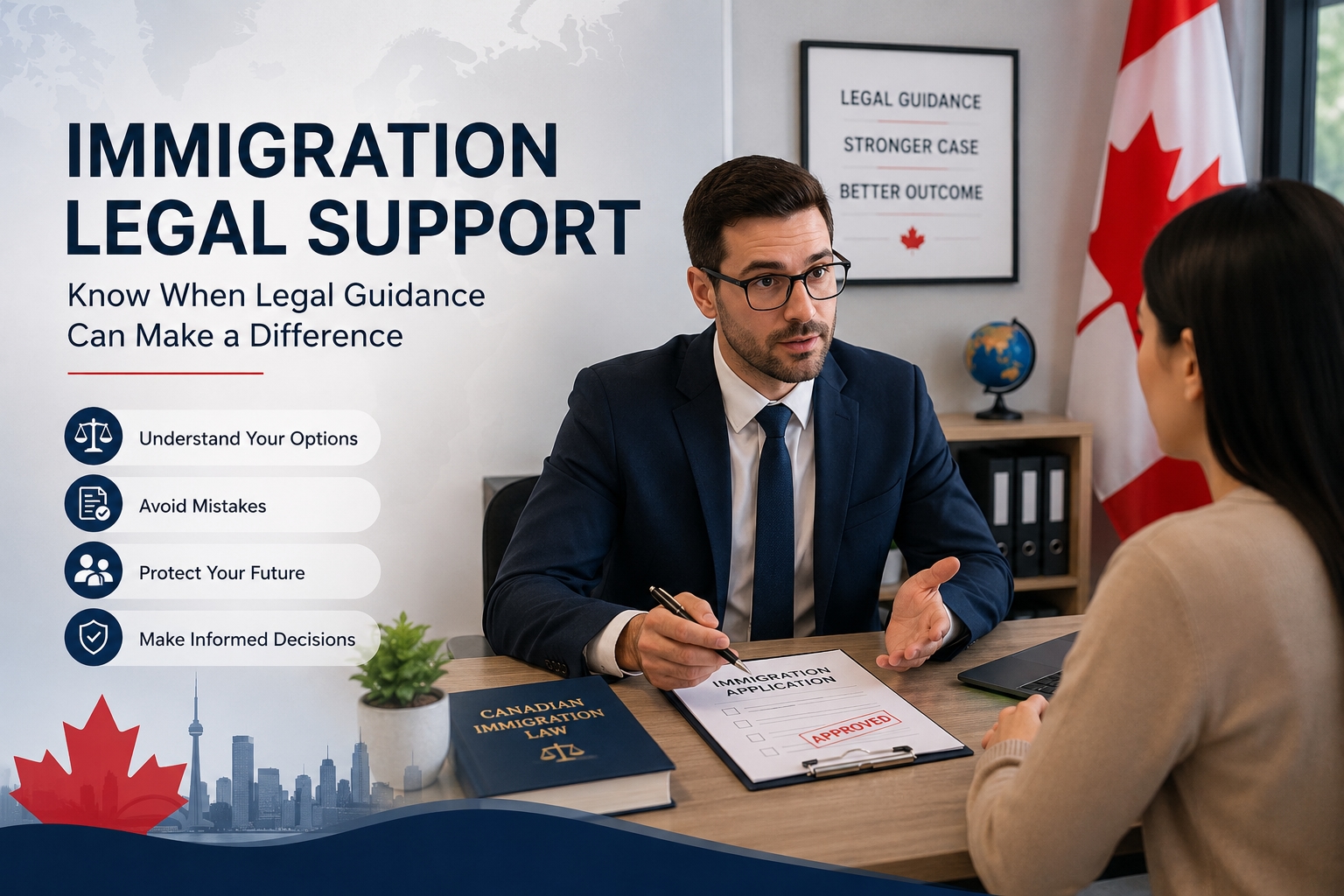
Canadian immigration involves legal requirements, supporting documents, deadlines, and decisions made according to specific immigration rules. While many people can complete straightforward applications themselves, some situations are more complicated and may require professional guidance.
A Canadian immigration lawyer can help applicants understand their legal position, prepare appropriate documents, respond to concerns, and determine what options may be available. Knowing when legal assistance is useful can help applicants avoid unnecessary mistakes and make more informed decisions.
Who Can Provide Legal Help for Canadian Immigration?
Not everyone can legally provide paid immigration advice in Canada. Applicants should make sure they are dealing with an authorized representative before sharing personal documents or paying for services.
Authorized representatives can include:
Lawyers who are members in good standing of a Canadian provincial or territorial law society
Regulated Canadian Immigration Consultants who are members of the College of Immigration and Citizenship Consultants
Certain paralegals in Ontario, within the scope permitted by their regulator
A Canadian immigration lawyer in Canada can provide legal advice and representation on immigration matters within their area of practice. Lawyers may also handle certain court proceedings, including judicial review matters before the Federal Court.
Applicants should be cautious about people who offer immigration services without proper authorization. Choosing an authorized professional provides greater accountability and access to regulated legal or professional services.
What Does an Immigration Lawyer Do?
An immigration lawyer does more than complete application forms. Their role can involve understanding the applicant's circumstances, reviewing the relevant law, and determining how the information should be presented.
Depending on the matter, an immigration lawyer may help with:
Assessing eligibility
Reviewing immigration history
Preparing applications and supporting documents
Explaining Canadian immigration law
Preparing legal submissions
Responding to concerns raised by immigration authorities
Advising clients after a refusal or negative decision
Explaining possible legal options
The type of assistance required depends on the application. A straightforward case may need limited professional involvement, while a complicated matter may benefit from detailed legal review.
When Should You Consider Hiring an Immigration Lawyer?
There is no requirement to hire a lawyer for every immigration application. However, professional advice can be particularly useful when an application involves complications or when an applicant is unsure about their legal options.
1. Your Application Has Been Refused
Receiving a refusal can be frustrating, but submitting another application without understanding the reason for the decision may not resolve the issue. The first step is to review the refusal and understand what led to the decision. Depending on the type of application and decision, the problem could relate to eligibility, documentation, insufficient evidence, or concerns about the information provided.
An immigration lawyer for visa refusal matters can review the decision and explain what options may be available. These could include submitting a new application, requesting reconsideration, appealing a decision where an appeal right exists, or seeking judicial review where appropriate.
The correct approach depends on the facts and the type of immigration decision.
2. You May Be Inadmissible to Canada
Inadmissibility can prevent a person from entering or remaining in Canada. Canadian immigration rules recognize several grounds of inadmissibility, including certain criminal, security, medical, financial, and misrepresentation concerns.
A previous conviction does not automatically mean that every person will be treated in exactly the same way. The nature of the offence, when it occurred, the sentence, and other circumstances can affect the assessment.
Similarly, concerns about misrepresentation should be taken seriously because providing false information or failing to disclose important information can have serious consequences. A lawyer can review the circumstances and explain whether an available legal option, such as criminal rehabilitation or a Temporary Resident Permit, may apply.
3. You Have a Complicated Immigration History
Some applicants have previously applied for visas, permits, permanent residence, or citizenship. Others may have experienced refusals, changes in status, long periods outside Canada, or other issues that need to be explained.
When an application involves several past immigration matters, consistency becomes important. A lawyer can review the available records and help identify information that may need clarification. This can be useful when previous applications or decisions could affect the current matter.Professional advice may also help an applicant understand which documents are relevant and how to address potential concerns before submitting an application.
4. You Are Applying on Humanitarian and Compassionate Grounds
Humanitarian and Compassionate, commonly called H&C, applications involve specific legal considerations and are not simply another option for anyone who does not qualify under a regular immigration program.
Applicants need to present relevant circumstances and supporting evidence that explain why H&C consideration may be appropriate. These applications can involve personal factors such as establishment in Canada, family circumstances, hardship, and the best interests of affected children, depending on the individual case.
A lawyer can help organize the evidence and prepare submissions that connect the facts of the case with the applicable legal considerations. Because H&C decisions are discretionary, legal assistance cannot guarantee a positive outcome. It can, however, help an applicant understand the requirements and present the case in a clear and organized way.
5. You Need to Appeal or Challenge an Immigration Decision
Not every immigration refusal can be challenged in the same way. Some decisions may carry a right of appeal, while others may potentially be reviewed by the Federal Court through judicial review.
The available process depends on the type of decision and the circumstances of the case. There can also be strict deadlines for taking legal action. Waiting too long to seek advice may affect the options available. An immigration lawyer can review the decision, explain the possible remedies, and advise whether an appeal, judicial review, reconsideration, or another application may be appropriate.
6. You Have a Refugee or Asylum Matter
Refugee protection claims can involve detailed evidence, personal testimony, country-condition information, and legal questions about whether a person meets the applicable protection criteria.
These matters can be difficult to handle without understanding the process. A lawyer may help prepare the claim, review supporting evidence, prepare the claimant for a hearing, and explain what information is important to the case. Because refugee matters can have serious consequences, professional legal advice may be especially valuable when the claim involves complicated facts or documentary evidence.
7. You Need Help With a PRTD
A Permanent Resident Travel Document, or PRTD, may be required by a Canadian permanent resident outside Canada who does not have a valid PR card and needs to return to Canada by commercial transportation.
PRTD matters can become more complicated when there are questions about whether the permanent resident has met the residency obligation. For example, someone who has spent significant periods outside Canada may have concerns about how their travel history will affect the application.
An immigration lawyer for PRTD matters can review the person's circumstances, travel history, and supporting evidence and explain the relevant requirements. A lawyer is not mandatory for every PRTD application. However, professional advice may be useful when residency obligations or other complications are involved.
Why Can Legal Guidance Be Helpful?
Immigration applications depend on more than completing forms correctly. The information provided needs to be accurate, consistent, and supported by appropriate evidence.
A lawyer can review an application before submission and identify areas that may require additional explanation.
This can include checking:
Whether the applicant appears to meet the relevant requirements
Whether supporting documents are complete
Whether information is consistent across the application
Whether previous immigration issues need to be disclosed or explained
Whether additional evidence may be helpful
For someone seeking immigration legal help in Canada, this type of review can provide a clearer understanding of the application before it is submitted.
Legal guidance can also be useful when an applicant receives a request or concern from immigration authorities. Understanding what is being asked and how to respond can be important, particularly when the issue involves legal consequences.
How Do You Choose the Right Immigration Lawyer?
If you decide to hire a lawyer, start by confirming that they are authorized to provide legal services in Canada.
It is also useful to ask about their experience with cases similar to yours. Immigration law covers many different areas, so experience with the specific issue can be relevant.
You may want to consider:
The lawyer's professional credentials
Experience with your type of immigration matter
The services included in the agreement
Legal fees and payment arrangements
How communication will be handled
What you should expect during the process
Do not choose a representative solely because they promise a successful result. No lawyer can guarantee that an immigration application, appeal, or judicial review will be approved.
Getting the Right Immigration Legal Support
Every immigration case is different. Someone submitting a straightforward application may not need professional representation, while a person dealing with a refusal, inadmissibility concern, complicated history, H&C application, refugee claim, appeal, judicial review, or PRTD issue may benefit from legal advice. Understanding the benefits of hiring a Canadian Immigration Lawyer can help applicants determine whether professional guidance is appropriate for their specific situation.
An immigration lawyer in Canada can do more than handle paperwork. They can explain the legal requirements, identify potential issues, and guide applicants through the immigration process.
For individuals looking for Canadian immigration legal services, Fateh Law Corporation can be one option to consider when researching professional immigration assistance. Applicants should review the firm's services and qualifications and discuss their circumstances before deciding what type of legal support they need.
In Conclusion
You do not necessarily need a lawyer for every Canadian immigration application. However, professional assistance can become important when your case involves a refusal, inadmissibility, complicated immigration history, humanitarian considerations, refugee protection, an appeal, judicial review, or concerns about permanent resident status.
Navratan Singh Fateh is a Canadian Barrister & Solicitor and Advocate in India who provides legal assistance in Canadian immigration matters.
Understanding the issue before taking the next step can help you avoid repeating mistakes or choosing an option that may not fit your circumstances.
When Canadian immigration law becomes difficult to navigate, speaking with an authorized professional can help you understand your rights, responsibilities, and available options.
Frequently Asked Questions
1. Do I need a lawyer for every Canadian immigration application?
No. Straightforward applications may not require a lawyer, but legal guidance can be helpful when a case involves complications, refusals, inadmissibility, or other legal concerns.
2. When should I hire a Canadian immigration lawyer?
Consider hiring one if you have a visa refusal, inadmissibility issue, complicated immigration history, H&C matter, refugee claim, appeal, judicial review, or PRTD issue.
3. Can an immigration lawyer help after a visa refusal?
Yes. A lawyer can review the refusal, explain the reasons for the decision, and advise whether a new application, reconsideration, appeal, or judicial review may be appropriate.
4. Can an immigration lawyer help with inadmissibility issues?
Yes. A lawyer can review the circumstances and explain whether options such as criminal rehabilitation or a Temporary Resident Permit may apply.
5. How do I choose the right Canadian immigration lawyer?
Check the lawyer's professional credentials, experience with similar cases, services offered, fees, communication process, and overall approach to your matter.