
Peyronie’s disease is a chronic medical condition that affects the structure and function of the penis. It occurs when fibrous scar tissue, commonly called plaque, develops beneath the skin of the penis. This scar tissue interferes with the normal flexibility of penile tissue and causes the penis to bend or curve abnormally during erection. The condition can lead to pain, erectile dysfunction, emotional stress, and difficulty during sexual intercourse.
Although Peyronie’s disease is not life-threatening or cancerous, it can have a serious impact on a man’s physical health, emotional well-being, self-confidence, and intimate relationships. Many men avoid discussing the condition because of embarrassment or fear, which often delays diagnosis and treatment.
Medical experts estimate that Peyronie’s disease affects approximately 1 in 10 men, although the actual number may be much higher because many cases go unreported. The condition is most common in middle-aged and older men, but younger men can also develop it.
Over the years, awareness about Peyronie’s disease has increased, and modern medicine now offers several effective treatment options. Early diagnosis and proper management can significantly improve symptoms and quality of life.
This detailed article explains everything about Peyronie’s disease, including its causes, symptoms, risk factors, diagnosis, stages, complications, treatment methods, prevention strategies, psychological effects, and long-term outlook.
What Is Peyronie’s Disease?
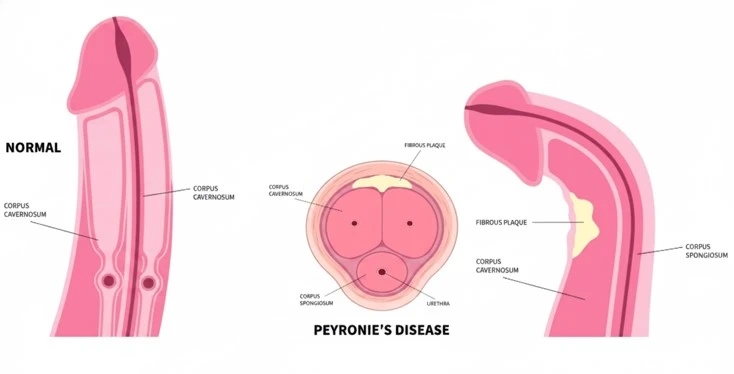
Peyronie’s disease is a connective tissue disorder involving the penis. The condition develops when fibrous scar tissue forms in the tunica albuginea, the tough elastic membrane surrounding the erectile tissues.
Normally, during sexual arousal, blood flows into the penis and the erectile tissues expand evenly, creating a straight erection. In Peyronie’s disease, the scarred area loses elasticity and cannot stretch properly. As a result, the penis bends or curves toward the side containing the scar tissue.
The curvature can vary from mild to severe. Some men experience only a slight bend with no major discomfort, while others may develop severe deformities that interfere with sexual function.
Peyronie’s disease can also cause:
Painful erections
Erectile dysfunction
Shortening of the penis
Narrowing or indentation of the shaft
Emotional and psychological distress
The plaque associated with Peyronie’s disease is benign, meaning it is not cancerous.
Historical Background
Peyronie’s disease is named after François Gigot de la Peyronie, a French surgeon who first described the condition in 1743. Since then, medical understanding of the disease has improved significantly.
Researchers now recognize Peyronie’s disease as a disorder involving abnormal wound healing and excessive scar formation.
Anatomy of the Penis
To better understand Peyronie’s disease, it is helpful to understand the anatomy of the penis.
The penis contains:
Corpora Cavernosa
These are two cylindrical chambers made of spongy erectile tissue. They fill with blood during erection.
Corpus Spongiosum
This tissue surrounds the urethra and helps maintain urine and semen flow.
Tunica Albuginea
The tunica albuginea is a tough fibrous layer that surrounds the corpora cavernosa. It provides structural support and helps maintain erections.
Blood Vessels and Nerves
Blood vessels deliver blood during erection, while nerves control sensation and sexual response.
In Peyronie’s disease, scar tissue forms within the tunica albuginea, preventing normal expansion during erection.
Causes of Peyronie’s Disease
The exact cause of Peyronie’s disease is not fully understood, but researchers believe it usually develops due to repeated injury combined with abnormal healing.
1. Penile Trauma or Injury
Minor trauma is considered the most common cause.
Possible causes of injury include:
Vigorous sexual activity
Sports injuries
Accidents
Sudden bending of the erect penis
Surgical procedures
In many cases, the injury may be so minor that the individual does not remember it happening.
2. Abnormal Wound Healing
After injury, the body normally repairs damaged tissue. However, in Peyronie’s disease, excessive collagen fibers accumulate and form dense scar tissue.
This abnormal healing process leads to plaque formation.
3. Genetic Factors
Men with a family history of Peyronie’s disease are more likely to develop the condition.
Certain genetic factors may increase susceptibility to abnormal scar formation.
4. Autoimmune Response
Some researchers believe the immune system may mistakenly attack healthy tissue after injury, leading to chronic inflammation and scarring.
5. Aging
As men age:
Tissue elasticity decreases
Healing becomes slower
Connective tissues become more vulnerable
This increases the risk of plaque formation.
Risk Factors for Peyronie’s Disease
Several factors may increase the likelihood of developing Peyronie’s disease.
Age Over 40
The condition is most common in middle-aged and older men.
Diabetes
Diabetes damages blood vessels and impairs healing.
Smoking
Smoking reduces blood circulation and increases inflammation.
High Blood Pressure
Poor vascular health contributes to tissue damage.
Erectile Dysfunction
Men with erectile dysfunction may experience greater risk of penile injury during intercourse.
Connective Tissue Disorders
Conditions such as Dupuytren’s contracture are strongly associated with Peyronie’s disease.
Prostate Surgery
Some men develop Peyronie’s disease after prostate cancer surgery.
Family History
Genetics may play an important role.
Symptoms of Peyronie’s Disease
Symptoms can develop gradually or suddenly. The severity varies widely among patients.
1. Penile Curvature
The most common symptom is bending of the penis during erection.
The curve may be:
Upward
Downward
Sideways
Some men develop multiple curves.
2. Pain During Erections
Pain is common during the early stages of the disease.
The pain may occur:
During erection
During intercourse
Occasionally even when flaccid
3. Scar Tissue or Plaque
Plaque can sometimes be felt as:
Hard lumps
Thick bands
Flat hardened areas beneath the skin
4. Erectile Dysfunction
Many men have difficulty:
Achieving erections
Maintaining erections
Maintaining firmness during intercourse
5. Penile Shortening
Scar tissue can reduce penile length over time.
6. Hourglass Deformity
Some men develop narrowing of the shaft, creating an hourglass appearance.
7. Emotional and Psychological Symptoms
The condition can lead to:
Depression
Anxiety
Embarrassment
Reduced self-esteem
Fear of intimacy
Stages of Peyronie’s Disease
Peyronie’s disease generally develops in two stages.
Acute Phase
The acute phase may last 6 to 18 months.
Characteristics include:
Active inflammation
Painful erections
Developing scar tissue
Worsening curvature
This is the stage where the condition changes most rapidly.
Chronic Phase
During the chronic phase:
Curvature stabilizes
Pain usually decreases
Scar tissue becomes permanent
Erectile dysfunction may continue
Surgery is generally recommended only after the chronic phase begins.
Psychological and Emotional Impact
Peyronie’s disease affects emotional health as much as physical health.
Many men experience:
Shame
Anxiety
Stress
Relationship problems
Sexual insecurity
Depression
The inability to engage comfortably in sexual activity can significantly affect confidence and emotional well-being.
Partners may also feel emotionally affected.
Counseling and psychological support can help patients and couples cope with the condition.
Diagnosis of Peyronie’s Disease
A urologist usually diagnoses Peyronie’s disease.
Medical History
The doctor asks about:
Symptoms
Pain severity
Curvature changes
Erectile function
Sexual difficulties
Previous penile injuries
Physical Examination
The penis is examined for:
Plaque
Curvature
Shortening
Areas of hardness
Ultrasound Imaging
Ultrasound helps evaluate:
Plaque size
Blood flow
Calcification
Erectile tissue health
It is one of the most important diagnostic tools.
Erection Assessment
Doctors may request photographs of the erect penis or use medication to create an erection for accurate measurement.
Treatment Options for Peyronie’s Disease
Treatment depends on:
Severity of curvature
Erectile function
Pain level
Disease stage
Patient goals
Not every patient requires treatment.
Mild cases without pain or sexual dysfunction may simply be monitored.
Non-Surgical Treatments
1. Oral Medications
Oral medications are often used in early or mild cases.
Vitamin E
Vitamin E is an antioxidant that may reduce inflammation.
Pentoxifylline
Pentoxifylline may prevent scar tissue calcification and improve blood flow.
Potassium Aminobenzoate
This medication may reduce plaque size.
Tamoxifen
Tamoxifen has been studied for reducing pain and fibrosis.
Results from oral medications alone are often limited.
2. Injectable Treatments
Injecting medication directly into the plaque is more effective than oral therapy.
Collagenase Clostridium Histolyticum
This FDA-approved treatment breaks down collagen within the plaque.
Benefits include:
Reduced curvature
Improved penile flexibility
Better sexual function
Treatment is usually combined with penile modeling exercises.
Verapamil Injections
Verapamil may reduce collagen production and improve tissue flexibility.
Interferon Alpha-2b
Interferon may reduce inflammation and scar tissue buildup.
3. Penile Traction Therapy
Traction devices gently stretch the penis over time.
Potential benefits include:
Reduced curvature
Increased length
Improved elasticity
Patients often need to wear the device for several hours daily.
4. Vacuum Erection Devices
These devices improve blood flow and may help reduce shortening.
5. Shockwave Therapy
Low-intensity shockwave therapy may help relieve pain.
However, it has limited effect on curvature.
Surgical Treatment Options
Surgery is usually recommended when:
Curvature is severe
Sexual intercourse becomes difficult
The disease is stable
Non-surgical treatment fails
1. Plication Surgery
This technique shortens the longer side of the penis to straighten the curve.
Advantages
High success rate
Short recovery period
Lower risk of erectile dysfunction
Disadvantages
Penile shortening may occur
2. Plaque Incision or Excision with Grafting
The surgeon cuts or removes plaque and places graft material.
Advantages
Suitable for severe deformities
Better preservation of length
Risks
Erectile dysfunction
Reduced sensation
3. Penile Implants
Penile implants are ideal for men with both Peyronie’s disease and severe erectile dysfunction.
Implants restore rigidity and may also straighten the penis.
Recovery After Treatment
Recovery varies depending on treatment type.
Non-Surgical Recovery
Patients usually resume normal activities quickly.
Surgical Recovery
Recovery may involve:
Swelling
Bruising
Temporary discomfort
Activity restrictions
Doctors usually recommend avoiding sexual activity for several weeks.
Follow-up appointments are important for monitoring healing.
Complications of Peyronie’s Disease
Without proper treatment, complications may include:
Severe Erectile Dysfunction
Scar tissue may interfere with blood flow.
Inability to Have Intercourse
Severe curvature can make intercourse impossible.
Emotional Distress
Anxiety and depression are common.
Relationship Problems
Sexual dysfunction may affect intimacy.
Penile Shortening
The penis may gradually lose length.
Peyronie’s Disease and Erectile Dysfunction
Many men with Peyronie’s disease also suffer from erectile dysfunction.
Causes include:
Reduced blood flow
Pain during erection
Psychological stress
Structural penile changes
Treatment options may include:
Oral erectile dysfunction medications
Penile injections
Vacuum devices
Penile implants
Managing both conditions together usually produces better outcomes.
Lifestyle Changes and Self-Care
Healthy lifestyle habits can improve overall penile health.
Quit Smoking
Smoking damages blood vessels and impairs healing.
Control Blood Sugar
Diabetes management supports tissue repair.
Maintain Healthy Blood Pressure
Good circulation is important for healing.
Exercise Regularly
Physical activity improves blood flow and cardiovascular health.
Eat a Balanced Diet
A nutritious diet supports healing and reduces inflammation.
Reduce Stress
Stress management improves emotional well-being.
Can Peyronie’s Disease Be Prevented?
There is no guaranteed prevention method, but risk can be reduced.
Prevention Tips
Avoid traumatic sexual positions
Use caution during vigorous intercourse
Maintain good vascular health
Stop smoking
Seek medical care early
Manage chronic diseases effectively
Early diagnosis often prevents worsening deformity.
Myths About Peyronie’s Disease
Myth 1: Peyronie’s Disease Is Rare
The condition is more common than many people believe.
Myth 2: It Is Caused by Sexually Transmitted Infections
Peyronie’s disease is not an STI.
Myth 3: Surgery Is Always Required
Many men improve with medications and non-surgical therapies.
Myth 4: Only Older Men Are Affected
Younger men can also develop the condition.
Myth 5: The Condition Always Gets Worse
In some cases, the disease stabilizes naturally.
When to See a Doctor
You should seek medical advice if you notice:
Penile curvature
Painful erections
Erectile dysfunction
Difficulty during intercourse
Hard lumps in the penis
Emotional distress related to sexual function
Early treatment improves the chances of successful management.
Future Research and Advances
Researchers continue exploring better treatments.
Promising future therapies include:
Stem cell therapy
Regenerative medicine
Gene-based treatments
Advanced anti-fibrotic drugs
Improved minimally invasive surgery
Future research may provide safer and more effective treatment options.
Living with Peyronie’s Disease
Many men successfully manage Peyronie’s disease and maintain healthy relationships.
Helpful coping strategies include:
Open communication with partners
Psychological counseling
Joining support groups
Following medical treatment plans
Maintaining realistic expectations
Emotional support is often an important part of recovery.
Conclusion
Peyronie’s disease is a condition involving the development of scar tissue inside the penis, leading to curvature, pain, erectile dysfunction, and emotional distress. Although the condition can significantly affect quality of life, effective treatments are available.
The disease often develops after repeated minor trauma combined with abnormal healing. Symptoms range from mild curvature to severe deformity and erectile problems.
Modern treatment options include medications, injections, traction therapy, vacuum devices, and surgery. Early diagnosis and personalized treatment improve the likelihood of successful outcomes.
Men experiencing symptoms should seek professional medical advice rather than suffer in silence. With proper care, emotional support, and modern treatment approaches, many men can regain confidence, sexual function, and overall well-being.
Understanding Peyronie’s disease is the first step toward proper management, treatment, and recovery.