
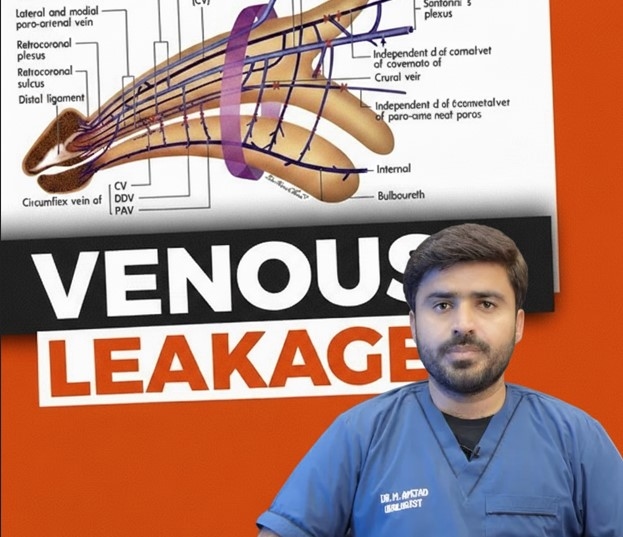
Venous leak, also known as venogenic erectile dysfunction, is a medical condition in which the veins of the penis fail to trap blood effectively during an erection. While blood may flow into the penis normally through the arteries, it escapes too quickly through the veins, making it difficult to achieve or maintain a firm erection. This condition can be physically frustrating and emotionally distressing, often affecting confidence, relationships, and overall quality of life.
Erectile dysfunction (ED) has many possible causes, including psychological stress, hormonal imbalances, nerve damage, and poor blood flow. Among these, venous leak represents a specific vascular problem involving faulty venous occlusion. Although it is less commonly discussed than arterial ED, venous leak is a significant and sometimes overlooked cause of persistent erection problems, especially in younger men.
This comprehensive article explores venous leak in detail, including its physiology, causes, symptoms, diagnostic methods, treatment options, lifestyle strategies, emotional impact, and emerging therapies.
Understanding Normal Erectile Physiology
To appreciate how venous leak occurs, it is important to understand how a normal erection works.
The penis contains three main cylindrical structures:
Two corpora cavernosa, which are responsible for most of the rigidity during erection
One corpus spongiosum, which surrounds the urethra and helps maintain urethral patency
The Erection Process
Sexual Stimulation: Erotic thoughts, touch, or visual cues stimulate nerve signals from the brain and spinal cord.
Nitric Oxide Release: These nerve signals trigger the release of nitric oxide in the penile tissue.
Smooth Muscle Relaxation: Nitric oxide causes the smooth muscles of the penile arteries and sinusoids to relax.
Increased Arterial Inflow: Relaxed arteries allow a surge of blood into the corpora cavernosa.
Venous Compression: As the erectile tissues swell, they compress the subtunical veins against the tough outer layer (tunica albuginea).
Blood Trapping: This compression limits venous outflow, trapping blood inside the penis and maintaining rigidity.
What Goes Wrong in Venous Leak
In venous leak, the mechanism that traps blood inside the penis fails. The veins are not compressed adequately, allowing blood to drain out prematurely. As a result, even with normal or near-normal arterial inflow, the erection cannot be sustained.
What Is Venous Leak?
Venous leak refers to a functional failure of the penile venous occlusive system. It is not always caused by a single leaking vein; rather, it often involves a broader problem with the tunica albuginea, smooth muscle tissue, or venous structure.
Venous leak can be:
Congenital (present from birth)
Acquired (developing later due to injury, disease, or aging)
Men with venous leak may experience erections that begin normally but fade quickly, particularly when changing position or attempting penetration.
Causes of Venous Leak
Venous leak can result from multiple factors that affect the structure or function of penile tissues.
1. Congenital Abnormalities
Some men are born with defects in the tunica albuginea or penile veins that prevent proper venous compression. These individuals may experience erectile difficulties from an early age.
2. Trauma and Injury
Injuries to the pelvis, penis, or perineum can damage the vascular structures responsible for trapping blood. Common causes include:
Pelvic fractures
Penile blunt trauma
Surgical procedures involving the prostate, bladder, or urethra
3. Degenerative Tissue Changes
With age, the elasticity of the tunica albuginea and smooth muscle fibers may decline. This loss of elasticity reduces the ability to compress veins effectively.
4. Diabetes Mellitus
Chronic high blood sugar damages blood vessels and nerves, impairing both arterial inflow and venous occlusion. Diabetes is a major risk factor for venous leak.
5. Atherosclerosis
Hardening and narrowing of the blood vessels disrupt normal blood flow dynamics and can contribute to venous dysfunction.
6. Peyronie’s Disease
This condition involves the formation of fibrous plaques in the tunica albuginea, causing penile curvature and deformity. These plaques interfere with proper venous compression.
7. Hormonal Imbalances
Low testosterone and other hormonal abnormalities can weaken erectile tissue integrity and reduce nitric oxide availability.
8. Lifestyle Factors
Smoking
Excessive alcohol consumption
Obesity
Sedentary lifestyle
These factors worsen vascular health and increase the risk of venous leak.
Symptoms of Venous Leak
The primary symptom of venous leak is difficulty maintaining an erection. However, the condition may present in several ways:
Erection that becomes soft quickly
Partial or weak erections
Loss of erection during penetration
Inability to sustain rigidity in different sexual positions
Reduced firmness despite strong arousal
Performance anxiety
Decreased sexual confidence
Because these symptoms overlap with other forms of erectile dysfunction, professional evaluation is essential for accurate diagnosis.
Diagnostic Methods
Diagnosing venous leak requires a combination of medical history, physical examination, and specialized testing.
1. Medical History and Physical Exam
The doctor will assess:
Onset and duration of symptoms
History of trauma or surgery
Presence of diabetes or cardiovascular disease
Medication use
Signs of Peyronie’s disease
2. Blood Tests
Laboratory tests may include:
Testosterone levels
Blood sugar levels
Lipid profile
Thyroid function
These tests help identify underlying systemic causes.
3. Penile Doppler Ultrasound
This is one of the most important tests for venous leak. After injecting a vasodilator into the penis, ultrasound is used to measure blood flow.
Findings suggestive of venous leak include:
Normal or high arterial inflow
Persistent diastolic flow
Inadequate rise in intracavernosal pressure
4. Dynamic Infusion Cavernosometry and Cavernosography (DICC)
This invasive test measures how much fluid is required to maintain an erection and may involve X-ray imaging to visualize leaking veins. It is less commonly used today but remains a gold standard in complex cases.
5. MRI or CT Imaging
Advanced imaging can identify structural abnormalities in penile tissues and blood vessels.
Treatment Options
Treatment depends on the severity of venous leak, underlying causes, patient age, and personal preferences.
1. Oral Medications (PDE5 Inhibitors)
Drugs such as sildenafil (Viagra), tadalafil (Cialis), and vardenafil (Levitra) improve blood flow and enhance nitric oxide effects.
Effectiveness: These medications are less effective in severe venous leak but may help in mild to moderate cases.
2. Vacuum Erection Devices (VED)
A vacuum device draws blood into the penis using negative pressure. A constriction ring is placed at the base to prevent blood from escaping.
Pros:
Non-invasive
Drug-free
Effective for many patients
Cons:
Reduced spontaneity
Possible discomfort
3. Intracavernosal Injections
Medications such as alprostadil are injected directly into the penis.
Advantages:
High success rates
Works independently of venous trapping
Disadvantages:
Pain or bruising
Risk of prolonged erection (priapism)
4. Intraurethral Therapy
Alprostadil suppositories inserted into the urethra are less invasive but may be less effective.
5. Venous Surgery
Surgical ligation of leaking veins aims to reduce venous outflow.
Limitations:
Variable long-term success
Risk of recurrence
6. Endovascular Embolization
This minimally invasive procedure blocks leaking veins using coils or sclerosing agents.
Benefits:
Less invasive than surgery
Faster recovery
Challenges:
Limited availability
Mixed outcomes
7. Penile Implants
For severe, treatment-resistant cases, penile prostheses offer a permanent solution.
Pros:
High satisfaction
Reliable erections
Cons:
Surgical risks
Irreversibility
Lifestyle and Supportive Strategies
Lifestyle changes can improve vascular health and support medical treatment.
Regular exercise
Balanced diet rich in fruits and vegetables
Weight management
Smoking cessation
Limiting alcohol
Stress reduction techniques
Psychological Impact and Counseling
Venous leak can take a serious emotional toll. Men may experience shame, frustration, anxiety, and depression. These emotions can worsen erectile dysfunction and interfere with treatment success.
Counseling benefits include:
Improved self-esteem
Reduced performance anxiety
Better communication with partners
Enhanced treatment adherence
Prognosis and Outlook
The outlook for venous leak varies. Mild cases may respond to medications or devices, while severe cases may require surgical or prosthetic solutions.
Early diagnosis and a personalized treatment plan greatly improve outcomes.
Emerging Therapies
Research is ongoing into new treatment approaches:
Stem cell therapy
Platelet-rich plasma (PRP)
Gene therapy
Advanced vascular imaging
These therapies show promise but remain largely experimental.
When to See a Doctor
Men should seek medical evaluation if erectile difficulties:
Persist for more than three months
Worsen over time
Are accompanied by pain or penile curvature
Occur alongside diabetes or heart disease
Conclusion
Venous leak is a complex but treatable cause of erectile dysfunction. It occurs when the penile veins fail to trap blood effectively, leading to difficulty maintaining erections. Although the condition can be emotionally distressing, a wide range of diagnostic tools and treatment options are available.
With early diagnosis, lifestyle changes, and appropriate medical or surgical intervention, many men with venous leak can regain sexual confidence and improve their quality of life. Ongoing research continues to expand future treatment possibilities, offering hope for even better outcomes.