
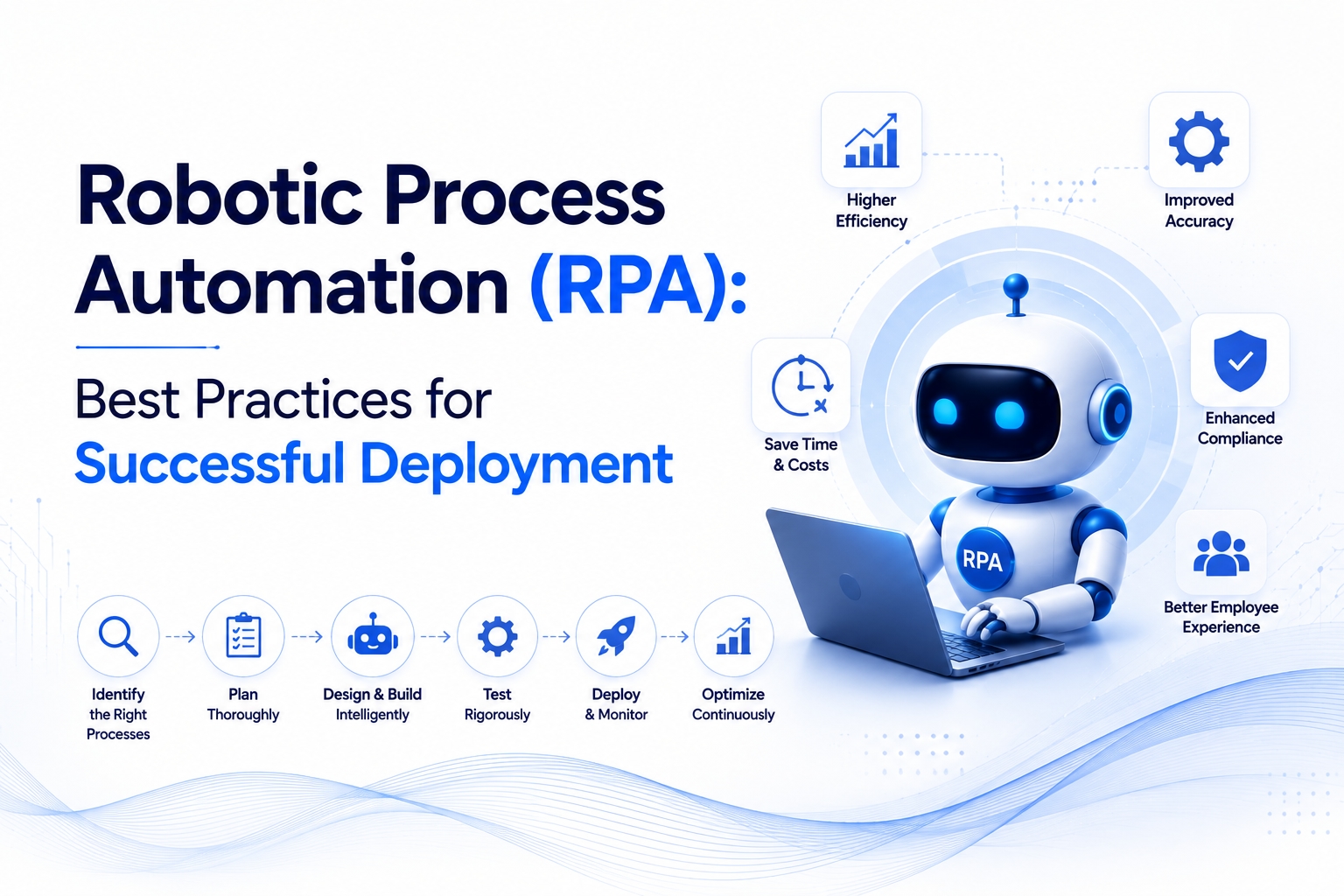
Businesses are adopting Robotic Process Automation (RPA) to transform operations and cut costs by eliminating repetitive tasks. However, the success of automation processes depends on the company's strategic planning and implementation approach.
Organizations should consider robotic process automation best practices to reap the benefits of automation.
Understanding Business Processes Before Automation
Many companies make the mistake of adopting automation without analyzing their current processes. As a result, they end up automating ineffective operations. Therefore, businesses should conduct a process discovery to identify the most suitable processes for automation.
The ideal processes for robotic process automation are repetitive, high-volume, rule-based, and with structured data.
Companies should also consider the process's impact on the business and how easy it is to document and design before automation. In addition, it is advisable to start with simple processes and move on to more complex ones. Many organizations partner with providers specializing in Robotic Process Automation development to identify and automate these processes effectively.
Define Business Goals and KPIs
Before adopting robotic process automation, it is essential to define the objectives that the organization wants to achieve with the technology.
The goals should be specific and measurable to help the business track the impact of automation bots on the processes. For instance, companies can measure automation's success using the following key performance indicators (KPIs):
Reduction in processing time
Cost savings
Reduction in errors
Increased employee productivity
ROI of the automation initiative
Improvement in customer satisfaction
In addition, it is advisable to set both short-term and long-term goals to help the business achieve continuous improvement in the automated processes.
Choose the Right Processes for RPA
It is essential to start with the easiest processes and move on to more complex ones when implementing robotic process automation. For instance, businesses can start with standardized processes such as invoice processing, employee onboarding, payroll processing, data migration, report generation, and updating customer records.
The next processes to automate are those with unstructured data, such as contracts and documents. Finally, the most challenging processes to automate are those that require judgment, artificial intelligence, and machine learning.
Therefore, it is advisable to start with a few processes and scale up the automation initiative once the organization has mastered the basics. Businesses looking to combine RPA with more advanced capabilities often work with an experienced AI development services provider to layer in intelligent decision-making.
Establish Robust Governance and Security Measures
Governance is crucial when deploying robotic process automation because it helps the organization achieve consistency and control over the bots. In addition, strong governance policies help the business maximize the benefits of automation while minimizing the risks associated with the technology.
The most critical governance practices when deploying RPA include establishing clear ownership of the bots, developing version control policies, change management processes, security, and audit policies. For instance, businesses should set stringent security policies to protect the bots, data, and systems from external threats and unauthorized access.
Since RPA bots typically access critical business systems, appropriate security measures such as role-based access control, credential management, and regular audits can help the organization minimize operational risks. Companies strengthening these safeguards frequently invest in broader AI development solutions to support monitoring, auditing, and compliance at scale.
Involve Business Stakeholders in the Process
Robotic process automation should not be treated as an IT project but rather as a business enabler. Therefore, it is essential to involve business stakeholders in every stage of the RPA deployment. In addition to providing valuable insights on the processes that need automating, the stakeholders can help the organization identify potential exceptions during automation.
Moreover, involving business owners in the RPA implementation can help the company ensure that the bots do not cause disruptions to the daily operations of the business.
Some of the key stakeholders that should be involved in robotic process automation include business owners, process owners, IT managers, compliance officers, and automation developers.
Ensure Bots Are Designed to Scale
Most companies fail to scale their automation initiatives because they design bots that only work for a specific department or process. Therefore, it is essential to develop scalable bots that can support the business's long-term objectives.
For instance, businesses should develop standardized automation practices, including design, documentation, components, and naming conventions, to ensure consistency across different processes and departments.
In addition, companies should invest in centralized monitoring and scheduling tools to help them scale their automation initiatives while minimizing operational costs. Organizations scaling their automation programs often rely on a trusted AI development services partner to help standardize and centralize these systems.
Test Bots Before Deployment
The most well-designed bots will still need testing prior to their deployment into the production environment. Testing allows an organization to be aware of any potential issues, challenges, or even bugs that were not considered at the design stage of the bot development process.
Consequently, it is recommended that an organization does different types of tests, such as functional testing, performance testing, and security testing, to make sure that bots meet the quality standards of the business. Moreover, testing bots in real-time business situations is also important for the same reasons.
Monitor and Optimize the Automated Processes
Robotic process automation should not be treated as a one-time project but rather as a continuous process that requires regular monitoring and optimization. Businesses should monitor the performance of their automated processes to ensure they are running smoothly and delivering the expected results.
For instance, the company should track the bots' utilization, errors, processing time, and business exceptions to identify the areas that need improvement. In addition, the organization should also monitor the impact of the automated processes on the overall business performance.
By analyzing the data, the business can optimize the automated processes and discover new opportunities for automation.
Train Employees on the Changes
Robotic process automation can be overwhelming, especially when it is implemented without the employees' input. Therefore, it is essential to educate and train the staff on how the new technology will benefit the business.
In addition, businesses should encourage their employees to become RPA developers and super-users to help them understand the value that automation can bring to the organization.
A well-structured change management process can help the business encourage employee engagement and cooperation when implementing robotic process automation. Some organizations choose to hire dedicated developer talent to build and maintain these systems in-house, while others rely on broader AI development solutions to keep pace with evolving automation needs.
Conclusion
Robotic process automation best practices enable businesses to maximize the benefits of automation while minimizing the risks and challenges that come with the technology. Companies should conduct a process discovery to identify the most suitable processes for automation and develop strategic goals that will help them track the impact of the automated processes.
In addition, businesses should invest in robust governance policies and involve business stakeholders in the RPA implementation to ensure bots support the company's objectives. Finally, companies should design scalable bots and monitor the performance of the automated processes to ensure they are operating at their best.