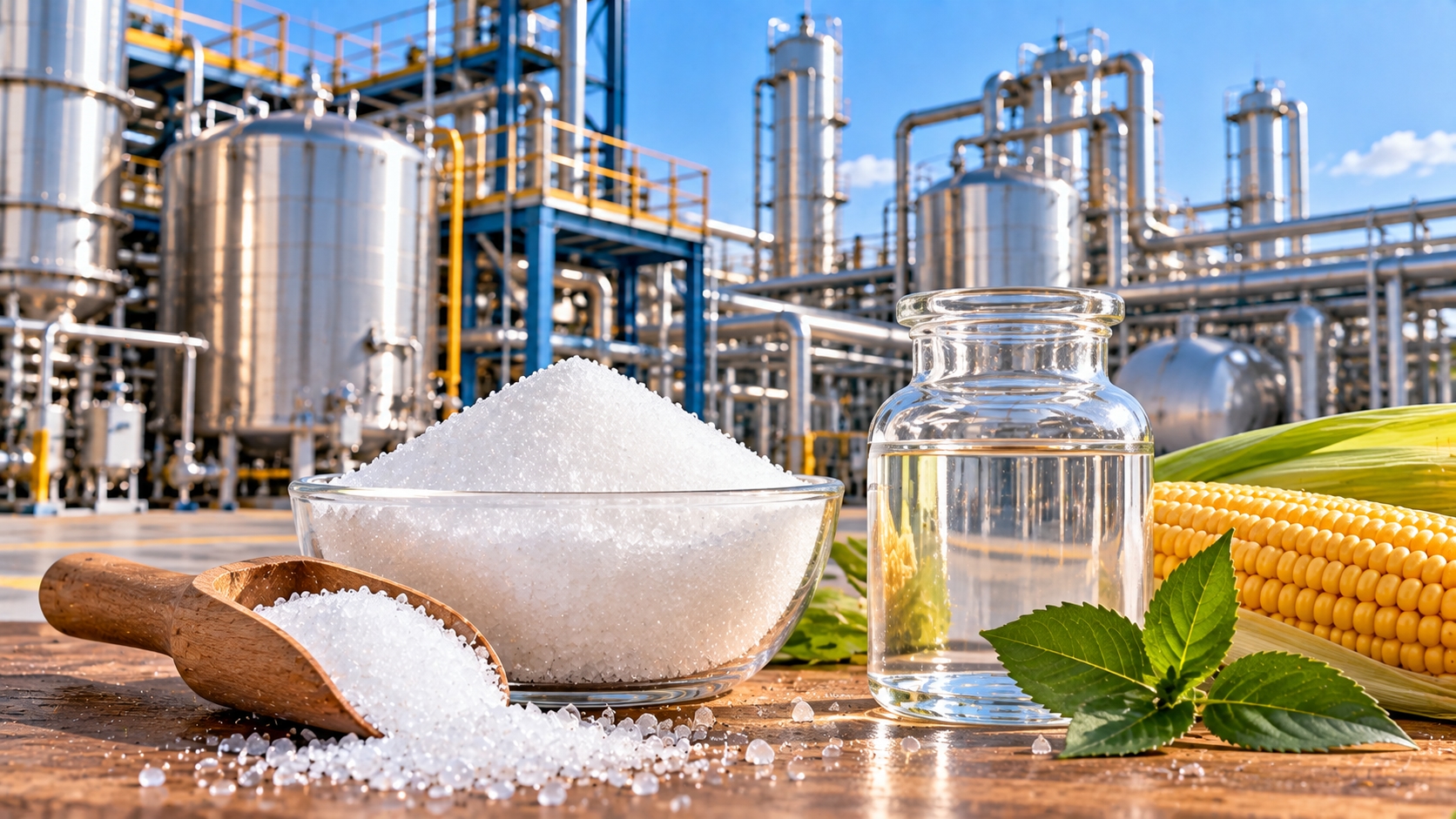
China's sorbitol is going for USD 762.90/MT on a FOB basis as of August 2026. India's sitting at USD 853.90/MT, same basis, same month. That's a USD 91 gap, and it's big enough that anyone buying sorbitol at volume should be paying attention.
Sorbitol doesn't get the same spotlight as bigger petrochemical commodities, but it quietly shows up everywhere. Food and beverage processing, pharmaceuticals, personal care, even toothpaste formulations lean on it. So when the price moves, a surprising number of industries feel it downstream.
Current Sorbitol Prices: China vs India
Product | Region | Incoterm Basis | Price | Last Updated |
|---|---|---|---|---|
Sorbitol | China | FOB | USD 762.90/MT | August 2026 |
Sorbitol | India | FOB | USD 853.90/MT | August 2026 |
Both quotes are FOB, which actually makes this comparison cleaner than most cross-country price checks. No freight or insurance baked into either number. Just the cost at the point of loading.
That USD 91 difference isn't a rounding error. A few things explain it:
China runs large-scale starch processing infrastructure that keeps sorbitol production costs down.
India's manufacturing base is smaller for this product, so economies of scale haven't caught up yet.
Raw material sourcing (mainly corn starch or cassava-derived glucose) differs in cost between the two countries.
Worth remembering too: these are August 2026 figures, not a running average. Sorbitol tracks corn and starch markets closely, and those shift with harvest cycles.
What's Behind the Price Gap
Why does China keep undercutting India on sorbitol? A few reasons stack up.
Feedstock access. China's corn processing industry is enormous, and sorbitol production leans heavily on glucose derived from corn starch. Scale brings cost advantages that smaller producers just can't match yet.
Production capacity. Chinese manufacturers have been in this business longer, with plants built for high-volume output. India's sorbitol sector is growing, sure, but it hasn't reached the same density of producers competing on price.
Export orientation. China treats sorbitol partly as an export commodity, which keeps pricing competitive to maintain overseas market share. India's output tends to serve domestic demand first, and that changes the pricing calculus entirely.
A Quick Q&A on What Buyers Are Asking
So is China just the obvious choice then?
Not necessarily. Lower FOB price doesn't mean lower total cost. Shipping distance, minimum order quantities, and quality consistency all factor in once you add freight and handle the logistics yourself.
What about India as a sourcing option?
Good fit if you're already sourcing other inputs from India and want to consolidate logistics. The higher unit price sometimes evens out once you account for reduced shipping complexity, especially for buyers in South Asia or the Middle East.
Does this price gap tell us anything about future capacity?
Possibly. A persistent spread like this usually signals where new investment makes sense. If Indian producers want to close the gap, scaling up processing capacity is the likely path.
What This Means for Procurement and Sourcing Teams
Food and beverage manufacturers working with tight margins should treat this spread as real leverage in supplier negotiations. A USD 91/MT difference adds up fast across container-sized orders.
Pharmaceutical buyers, where sorbitol purity standards run higher, might find the price gap less decisive. Quality certification and supplier track record often matter more than a few dollars per ton when the end product goes into medication or oral care formulations.
For personal care manufacturers, cost sensitivity varies by product line. Mass-market items benefit more from chasing the lower China rate. Premium formulations where margin isn't as tight have more room to absorb India's higher cost if the supplier relationship offers other advantages.
Looking Ahead: Q3 2026 Outlook
Expect this spread to hold through Q3 2026, barring a major shift in corn or starch pricing. China's structural cost advantage isn't going away overnight.
Watch corn harvest data out of both countries. Starch feedstock costs move first, and sorbitol prices tend to follow with a short lag. Currency movements matter too, since both quotes convert back to dollars for international buyers regardless of where production happens.
Buyers locking in Q3 contracts should pull fresh quotes rather than working off August figures alone. Sorbitol pricing, like most starch derivatives, doesn't stay still for long.
Conclusion
The sorbitol price trend for Q3 2026 points to a clear and fairly stable gap: China at USD 762.90/MT FOB, India at USD 853.90/MT FOB, both from August 2026. Scale, feedstock access, and export focus explain most of that difference. Buyers across food, pharma, and personal care sectors should factor this into sourcing decisions now, rather than assuming prices will converge anytime soon.
FAQ Section
What is the current sorbitol price trend in China and India?
China's sorbitol sits at USD 762.90/MT FOB as of August 2026, while India's runs USD 853.90/MT FOB. The USD 91 gap mostly comes down to China's larger-scale starch processing capacity and its stronger export focus.
Why is sorbitol cheaper in China than in India?
China benefits from massive corn processing infrastructure, which keeps feedstock costs low. Production has also scaled over many years, giving Chinese manufacturers a cost edge. India's sector is growing but hasn't reached the same production density yet.
What factors affect sorbitol pricing the most?
Corn and starch feedstock costs drive most of the movement, since sorbitol is typically derived from glucose. Production scale, export demand, and currency fluctuations also play a role. Harvest cycles in major corn-producing regions tend to set the pace.
How often do sorbitol prices change?
Sorbitol prices generally shift in line with corn and starch market cycles, which means monthly or seasonal movement is common. The August 2026 figures are a useful reference point, but buyers finalizing contracts should always verify current pricing beforehand.
What's the sorbitol price outlook for Q3 2026?
The China-India price gap should remain fairly steady through Q3 2026 unless corn feedstock costs shift sharply. Watching harvest data and currency trends in both regions gives buyers an early signal of where pricing might head next.