
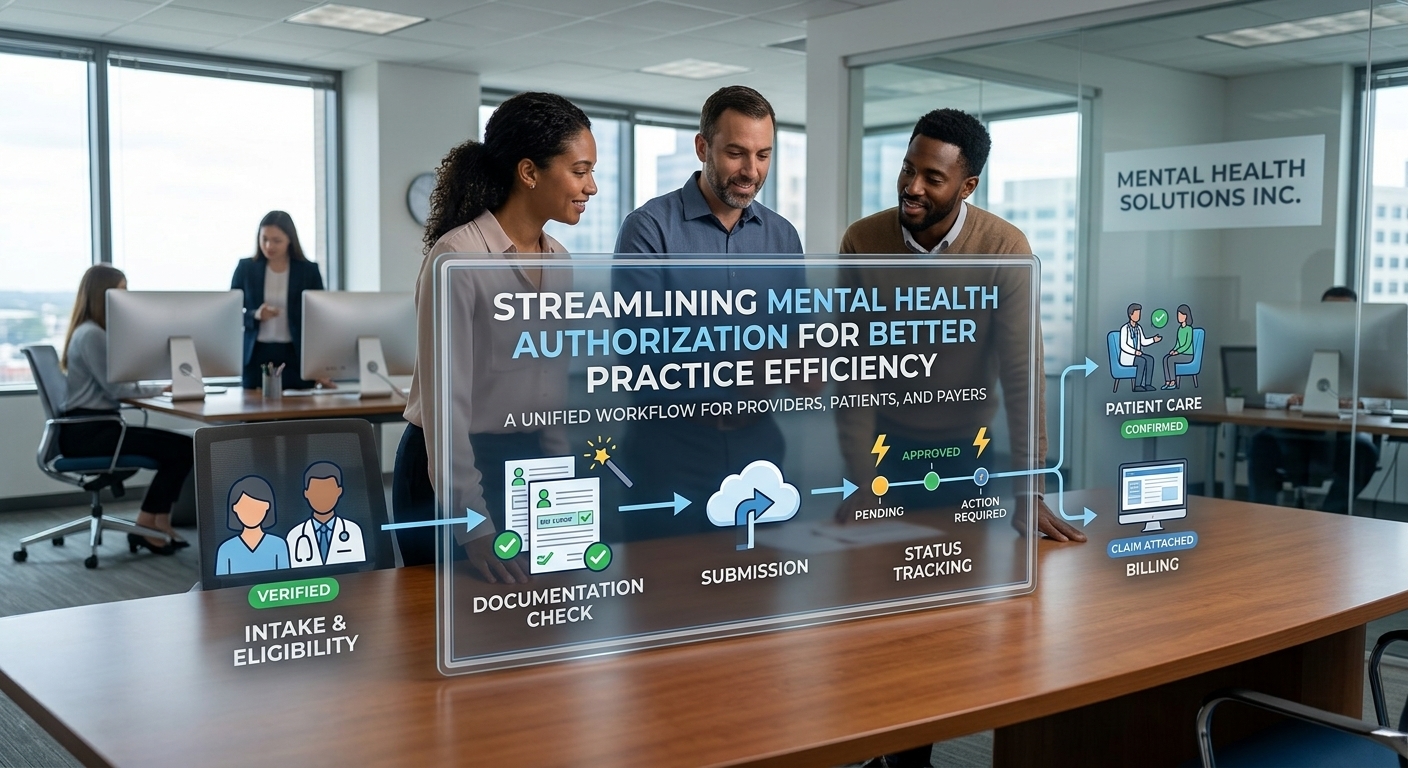
Mental health practices manage many responsibilities every day, from providing patient care to maintaining accurate documentation and handling insurance requirements. One area that can create significant administrative pressure is insurance authorization. When authorization requirements are not identified or completed properly, services may be delayed, claims may be denied, and staff members may need to spend additional time resolving preventable issues.
A structured authorization process can make practice management more efficient. By verifying insurance requirements early, collecting the necessary information, maintaining organized records, and monitoring authorization status, behavioral health practices can reduce administrative complications. A well-managed process also creates better coordination between providers, administrative staff, patients, and insurance companies.
Understanding the Role of Mental Health Authorization
Avenue Mental Health recognizes that authorization can be an important part of managing behavioral health services. Depending on the patient's insurance plan and the type of service being provided, a payer may require approval before treatment can continue or before certain services are eligible for reimbursement.
Authorization requirements can vary significantly between insurance companies and individual plans. Some services may require authorization before the first appointment, while others may require approval after a certain number of sessions or when treatment continues beyond a specified period.
Because requirements can change, practices should avoid relying on assumptions. Staff should verify the specific requirements associated with the patient's coverage and the services being provided.
Verify Insurance Requirements Early
One of the most effective ways to improve authorization management is to begin the process early. Waiting until an appointment is approaching can leave little time to resolve problems.
During the eligibility verification process, staff can determine whether authorization is required for the planned service. If authorization is necessary, the practice can begin collecting the appropriate information and submitting the request.
Early verification can reduce last-minute administrative pressure and give the practice more time to communicate with the payer.
It can also help patients understand whether their insurance plan has specific requirements that may affect their care.
Collect Complete Patient Information
Accurate patient information is essential when requesting authorization. Incorrect demographic or insurance details can result in delays or require the request to be corrected and resubmitted.
Staff should carefully collect information such as the patient's name, date of birth, insurance identification number, group number, provider information, and relevant contact details.
The practice should also confirm that the insurance information is current. Patients may change plans or coverage without immediately informing the provider.
A consistent registration and verification process can reduce errors before the authorization request is submitted.
Understand Service-Specific Requirements
Not every behavioral health service has the same authorization requirements. Requirements may differ based on the type of treatment, diagnosis, provider, setting, frequency of services, or insurance plan.
Administrative teams should therefore understand which services commonly require authorization and where payer-specific rules apply.
Maintaining an internal reference system can help staff identify requirements more efficiently. However, information should be reviewed regularly because payer policies may change.
Understanding service-specific requirements allows practices to take action before treatment is affected.
Improve Communication Between Clinical and Billing Teams
Authorization management often requires information from both clinical and administrative staff. Providers may need to supply clinical details while administrative teams communicate with insurance companies.
If communication between these teams is slow, authorization requests may be delayed.
Practices can establish clear procedures for requesting and sharing authorization-related information. For example, administrative staff can use a standardized checklist to identify the information needed from providers.
Clear communication reduces repeated requests and helps ensure that authorization submissions contain the necessary details.
Maintain Accurate Clinical Documentation
Clinical documentation can support authorization requests by explaining the patient's treatment needs and the services being requested.
Documentation should accurately reflect the patient's situation and the care being provided. Incomplete information may result in additional questions from the payer or delays in processing.
Providers should understand the documentation expectations associated with the services they provide.
Regular documentation reviews can help practices identify recurring issues. If the same type of information is frequently missing, the practice can update its internal procedures or provide additional training.
Create an Authorization Checklist
A standardized checklist can make the authorization process more consistent. Instead of relying on memory, staff members can follow the same steps for each authorization request.
A checklist may include:
Confirm patient demographics
Verify active insurance coverage
Identify authorization requirements
Confirm provider information
Determine the service being requested
Review supporting documentation
Submit the authorization request
Record the submission date
Track the authorization status
Document the approval or denial
Monitor authorization expiration
Using a checklist can reduce the risk of missing important steps.
Track Authorization Status
Submitting an authorization request is only one part of the process. Practices also need to monitor its status until a decision is received.
An organized tracking system can help staff identify pending requests and determine when follow-up may be necessary.
Important information to track can include the submission date, reference number, payer, requested service, authorization period, number of approved visits, and expiration date.
Keeping this information in one organized location makes follow-up easier and reduces the risk of overlooked requests.
Monitor Authorization Expiration Dates
Authorization approvals may have specific time limits. If an approval expires before additional services are authorized, the practice may encounter payment problems or interruptions in care.
Staff should monitor expiration dates and establish reminders for upcoming renewals.
Starting the renewal process early can provide enough time to gather updated information and communicate with the payer.
Automated reminders within practice management systems can be useful for tracking important dates.
Reduce Authorization-Related Claim Denials
Authorization problems are a common source of billing difficulties. A claim may be denied when the required authorization was not obtained, the authorization does not match the service, or the approved period has expired.
Practices can reduce these problems by connecting authorization management with the billing workflow.
Before claims are submitted, billing staff can verify that the service was provided during the approved authorization period and that the relevant authorization information is included when required.
This additional review can help identify problems before they result in rejected claims.
Use Mental Health Authorization Workflows
Effective Mental Health Authorization workflows can help practices manage payer requirements in a more organized manner. A clear workflow should define who is responsible for identifying authorization needs, gathering information, submitting requests, monitoring responses, and communicating updates.
When responsibilities are unclear, tasks may be duplicated or overlooked.
A well-designed workflow can assign specific responsibilities to appropriate team members. It can also establish timelines for completing each stage of the process.
This makes it easier for managers to monitor performance and identify bottlenecks.
Use Technology to Support Authorization Management
Technology can make authorization tracking more efficient. Electronic systems can help staff record authorization details, create reminders, store documentation, and monitor pending requests.
Automated notifications can alert staff when an authorization is approaching expiration or when a follow-up action is required.
Technology can also reduce reliance on spreadsheets and manual notes. However, practices should ensure that systems are configured appropriately and that staff understand how to use them.
Technology works best when it supports a clearly defined process rather than replacing one.
Train Staff on Payer Requirements
Insurance requirements can be complicated, and staff members need appropriate training to manage them effectively.
Training can cover eligibility verification, authorization procedures, documentation requirements, payer communication, and internal tracking processes.
Staff should also understand what to do when a request is delayed, denied, or returned for additional information.
Regular training helps employees respond more confidently to authorization-related problems.
Maintain Organized Authorization Records
Accurate recordkeeping is important for authorization management. Practices should maintain appropriate records of requests, payer communications, approvals, denials, reference numbers, and expiration dates.
Organized records make it easier to verify what happened during the authorization process.
If a payer questions a claim, staff can review the relevant records and determine whether authorization was obtained and whether the service was provided within the approved period.
Consistent documentation also supports communication between different members of the practice.
Improve Patient Communication
Patients should not be left uncertain about how insurance authorization may affect their services. When appropriate, practices can explain that certain treatments may require insurance approval.
Clear communication can help patients understand why additional information may be needed or why an authorization request is being submitted.
If authorization is delayed, staff should communicate the situation professionally and provide appropriate information about the next steps.
Transparent communication can reduce confusion and help patients feel more informed about the administrative side of their care.
Establish Follow-Up Procedures
Some authorization requests may require additional communication with insurance companies. Without a defined follow-up procedure, pending requests can remain unresolved.
Practices can establish specific timelines for checking the status of submitted requests.
For example, staff can maintain a list of pending authorizations and review it regularly. Requests that have remained unresolved beyond the expected processing period can then receive appropriate follow-up.
Consistent follow-up can reduce unnecessary delays.
Measure Authorization Performance
Practices can improve authorization management by monitoring relevant performance indicators.
Useful metrics may include:
Number of authorization requests submitted
Average processing time
Number of pending requests
Authorization approval rate
Authorization denial rate
Authorization-related claim denials
Number of expired authorizations
Time required for follow-up
Reviewing these metrics can help management identify patterns.
If authorization-related denials increase, the practice can examine whether requests are being submitted correctly or whether expiration dates are being monitored effectively.
Identify Common Authorization Problems
Every practice may encounter recurring authorization issues. The key is to identify them and determine their root causes.
For example, repeated delays may result from incomplete documentation. Another practice may experience problems because authorization expiration dates are not being monitored.
By categorizing problems, management can develop targeted solutions instead of repeatedly addressing the same issue.
Regular reviews can turn authorization management into a continuous improvement process.
Coordinate Authorization With Scheduling
Scheduling and authorization processes should work together. If a service requires prior approval, scheduling staff should be aware of the authorization status before confirming certain appointments when appropriate.
This coordination can prevent situations where a patient arrives for a service but the necessary authorization has not been completed.
A shared workflow between scheduling, clinical, and administrative teams can improve visibility and reduce communication gaps.
Review Internal Processes Regularly
Authorization procedures should be reviewed periodically to ensure they remain effective. Practices may discover that certain steps are unnecessary while other areas require additional controls.
Managers can review pending requests, denial patterns, processing times, and staff feedback to identify opportunities for improvement.
Process reviews can also help practices adapt when payer requirements or internal systems change.
A flexible approach allows the practice to respond more effectively to new administrative challenges.
Build a Proactive Authorization Strategy
A proactive authorization strategy focuses on preventing problems before they affect patient care or reimbursement.
This involves verifying requirements early, maintaining accurate patient information, preparing complete documentation, submitting requests on time, monitoring approval status, and tracking expiration dates.
It also requires strong communication between providers and administrative teams.
When authorization becomes part of the standard practice workflow, staff can manage it more consistently and reduce the likelihood of last-minute problems.
Strengthen Overall Practice Management
Authorization management is closely connected to the broader financial and administrative health of a behavioral health practice. Delayed or missing authorizations can affect claims, cash flow, scheduling, and staff productivity.
For this reason, practices should avoid treating authorization as an isolated administrative responsibility.
Integrating authorization with eligibility verification, documentation, coding, billing, and claims management creates a more coordinated system.
A connected workflow allows staff to identify potential problems earlier and take corrective action before they affect multiple stages of the revenue cycle.


