You've been trying all along. Time and again, month after month. And, amid the doctor's appointments, the ovulation monitoring, and the prayers that go unanswered, stress has somehow managed to sneak in and make itself comfortable. Many do not know that stress and infertility are closely linked. Constant stress activates a hormonal sequence in your body that, without you even realizing it, can mess up anything from the process of ovulation to the quality of the sperm. Is the great news that? Ayurveda has known about this mind-body connection for millennia, and still, in a very tangible way, can come up with a few solutions that will help you to heal from the inside of yourself.
The Hidden Link Between Stress and Your Fertility
Be honest with yourself here. We, as a society, have a tendency to glorify busyness. Long working hours, no sleep, never-ending to-do lists, etc. However, your body is silently suffering the consequences of all of this.
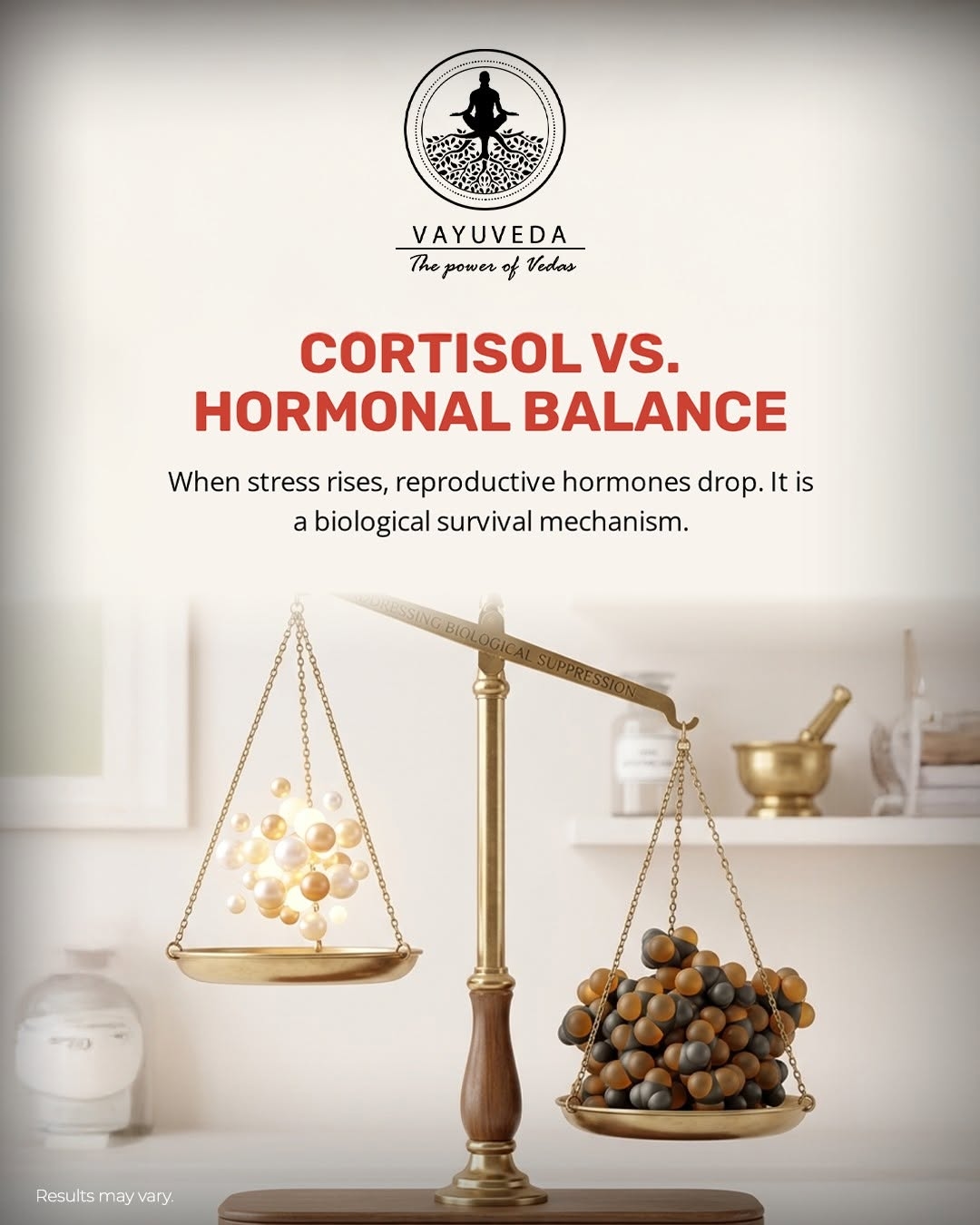
When you experience stress after stress without a break, the adrenal glands secrete cortisol, which is the main stress hormone of the human body. Getting stressed occasionally is not a big deal, and neither is a release of small amounts of cortisol. Nevertheless, when stress constantly occurs, fertility problems due to high-level cortisol hormone are inevitable. Elevated cortisol levels disrupt the changes in levels of key hormones of fertility, such as estrogen, progesterone, LH, and FSH in women, and testosterone in men.
So, what is the outcome? The menstrual cycle gets disrupted, ovulation may stop, sexual desire may decrease, and, of course, men may experience anxiety and a decrease in the number of sperm. The link between exhaustion and hormones is something that most fertility clinics won't reveal to you.
This doesn't only concern the body. The connection between emotional health and fertility is equally crucial. Feelings of worry, sadness, or being overwhelmed emotionally can greatly lower the odds of getting pregnant. You're not dreaming it. Your brain and womb are continuously communicating with each other.
How Ayurveda Sees Stress-Related Infertility
Ayurveda treats the complete individual and does not only focus on the symptoms. The arrival of stress in an individual can be seen as an assault on the Vata dosha, which plays a part in our ability to move, our nervous system, and how effectively we can reproduce. If Vata becomes disturbed, it can result in our hormones becoming unbalanced, reproductive tissues becoming dry, and menstrual cycles becoming chaotic.
According to the ancient texts, we have Shukra dhatu, which is the reproductive tissue of the body, to be the most refined and the last tissue to receive nourishment from the food we consume. If the body remains in survival mode, due to chronic stress or any other reason, it is unlikely that the Shukra dhatu will receive the nourishment it needs. For this reason, using Ayurveda to manage stress is not a high-end luxury item, but rather part of a fertility strategy.
Powerful Ayurvedic Tools to De-Stress and Restore Hormonal Balance
Ashwagandha: The Stress-Fertility Superstar
If there's one herb that has been around for ages, it is an adaptogen like Ashwagandha. By helping the body adapt to stressful situations instead of succumbing to them, Ashwagandha aids in lowering cortisol levels naturally as well as assisting with adrenal hormone balance or regulating stability and fertility in men and women. Males may experience increased sperm production as well as motility when using ashwagandha. While females typically will benefit from the effects of ashwagandha through improved function of the HPA axis (hypothalamus-pituitary-adrenal axis) and reducing stress hormones.
Basically, ashwagandha acts as a natural cortisol blocker that the body recognizes and accepts easily.
Yoga for Fertility: Moving Your Way to Balance
Yoga is not merely stretching. Certain yoga postures, such as Supta Baddha Konasana, Viparita Karani, and Balasana, enhance the blood flow to the reproductive area, relax the nervous system, and massage the reproductive organs. Fertility yoga also lowers anxiety, which is a direct aid to conception.
Conception Meditation: Silencing the Mind
The mind is more than we believe. Research now supports meditation to conceive. Even 10 to 15 minutes of daily mindfulness can significantly decrease cortisol, decrease mental health infertility triggers, and put the body in a parasympathetic state where healing and reproduction can occur.
Sleep: The Underestimated Fertility Tool
Ayurveda of sleep and fertility are inseparable. Ayurveda regards sleep as one of the three pillars of health. Sleep deprivation increases cortisol, interferes with melatonin, and disturbs ovulation. Goal: 7-8 hours of deep, regular sleep. Herbs such as Brahmi and Shankhpushpi can be used to help improve the quality of sleep.
Work-Life Balance: Fertility Decision
This could be the most difficult one. Work-life balance and fertility are not a choice when you are trying to conceive. Burnout is a warning to your body. Reproduction is the least priority in danger mode. Weakness is not boundaries. They are biology.
The Fertility Mindset: Emotional Healing as a Practice

Fertility awareness, according to Ayurvedic principles, indicates that the emotions we are in dictate what kinds of hormones we create. When we create the hormone of "fear," we contract our bodies; conversely, when we are at peace, we expand our bodies. Grief, unresolved trauma, and relationship stress all take their toll on the nervous system and will suppress our fertility hormones.
Almost all of the practices that help reduce anxiety and support a couple's path to parenthood, such as journal writing, being in nature, sound therapy, and self-massaging (Abhyanga), work on our emotional bodies. Rather than being alternatives to modern care, they are integral components of a complete approach to fertility.
During the last decade, there has been a definite increase in the number of patients who have experienced infertility caused by psychological stress or trauma returning to traditional medicine for their wellness-related needs.
A Word About Kulvansh
To us at Kulvansh, fertility is more than a health challenge; it's a heartfelt experience. We became who we are after witnessing how stress can shatter one's dreams. Our herbal recipes come from Ayurvedic knowledge and the recognition that a relaxed body is a bountiful body. We are not only about marketing dietary enhancers. We also provide the environment for your faith.
Disclaimer: Results may vary. This is a supportive supplement only and does not guarantee conception or treat infertility.
Conclusion: Your Peace Is Part of Your Plan
Your emphasis may have been solely placed on the physical aspect of fertility. Now is an appropriate moment to delve into what’s going on emotionally between you and your gender. Do not continue to push through the stress; instead, begin healing from it with the tools provided by Ayurveda. Your body already has found the solution; when you are finally prepared to take that next step forward toward healing, Kulvansh will walk alongside you.
Check out our selection of Ayurvedic products designed to improve conciliation through enhancing your well-being. Start re-establishing your trust in all aspects of who you are and how you create life today. You have every right to feel hopeful again and be excited about creating new life.
Frequently Asked Questions
Q1. Can stress really cause infertility?
Yes, chronic stress leads to higher cortisol levels, which then proceeds to disrupt reproductive hormones for both men and women.
Q2. How does Ashwagandha help with fertility?
The herb functions as a natural cortisol reducer, which helps maintain hormonal equilibrium while enhancing male sperm viability.
Q3. How long does it take for Ayurvedic herbs to show results for fertility?
Most users experience hormonal alterations after three months of regular product application, which lasts from two to three months.
Q4. Is yoga enough to improve fertility affected by stress?
Yoga presents essential benefits for stress-induced fertility problems. However, its effectiveness increases when combined with dietary practices and herbal treatments and methods for emotional health management.
Q5. Can men also benefit from stress-reducing Ayurvedic remedies?
Men can use Ayurvedic stress relief treatments because they provide advantages to users. Stress issues cause reductions in both testosterone and sperm production. Men can benefit from adaptogens such as Ashwagandha.
Q6. Is it safe to take Ayurvedic supplements while trying to conceive?
The product remains safe for use when users follow all recommended usage instructions. Users should seek guidance from certified Ayurvedic experts before they begin any supplement program.