When most people think of travel in East Africa, their minds instantly drift to Kenyan safaris or the white-sand beaches of Zanzibar. But if you are a traveler who craves the raw, the untouched, and the downright otherworldly, there is a hidden gem waiting for you at the Horn of Africa.
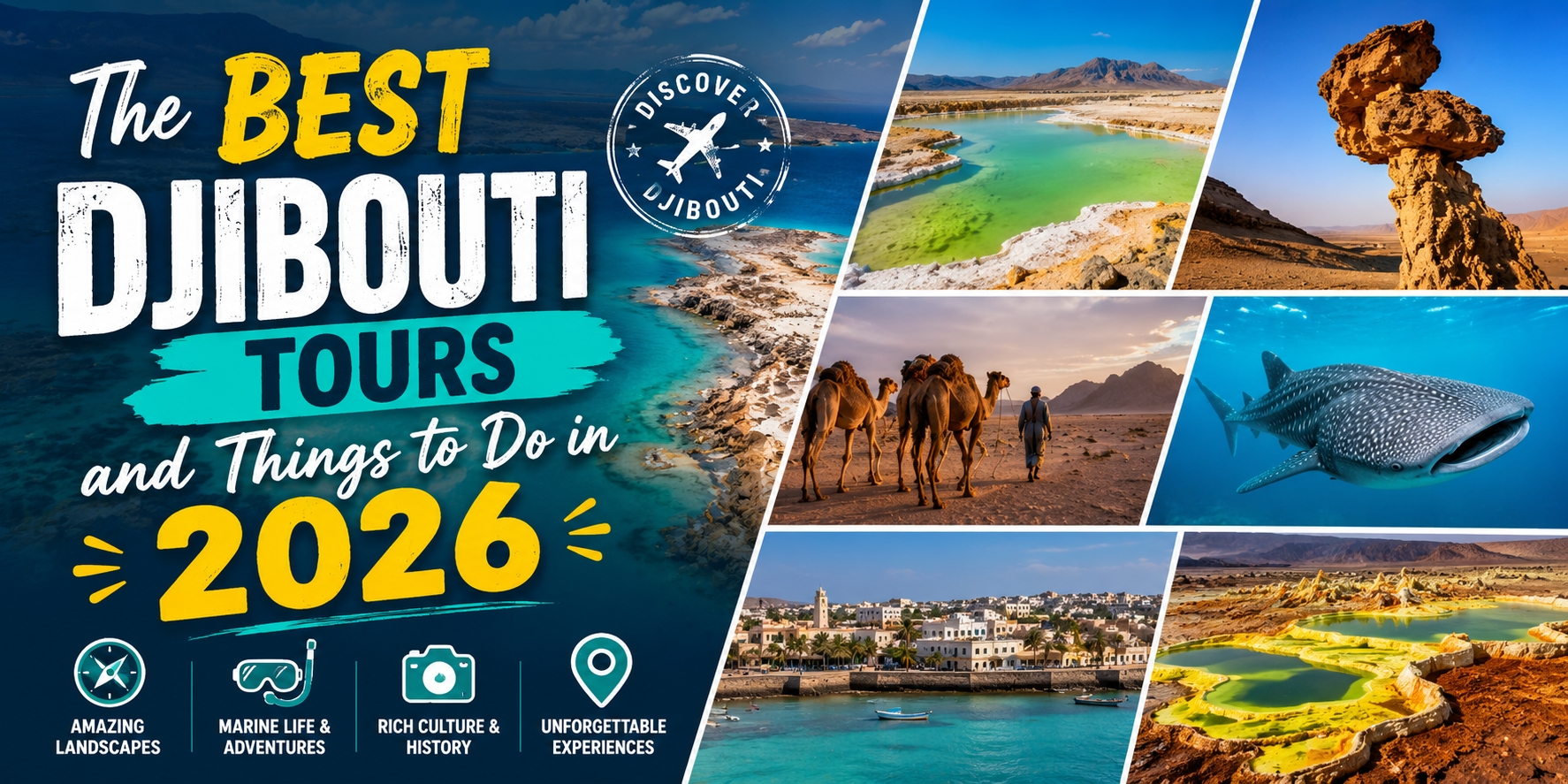
Djibouti is a small country that packs an unbelievably massive punch. From brilliant turquoise lakes ringed by glittering white salt to volcanic chimneys spitting steam into the desert air, Djibouti looks like a fantasy movie set brought to life.
If you are planning an unforgettable trip in 2026, here is your complete guide to the best Djibouti tours, top things to do, and crucial travel tips to help you pull off the adventure of a lifetime.
Is Djibouti worth visiting in 2026?
Absolutely. If you love off-the-beaten-path destinations where you won't find crowds of tourists blocking your view, Djibouti is one of the most exciting places on earth right now.
While it is a relatively small nation, its geographical diversity is mind-blowing. In a single week, you can hike through cool mountain forests, drive across vast clay deserts, walk inside deep volcanic craters, and snorkel alongside wild whale sharks. The country is politically stable and has been investing heavily in its tourism infrastructure, making 2026 the absolute perfect time to visit before the rest of the world catches on.
What is the lowest point in Africa, and how do you visit it?
The crown jewel of Djibouti’s natural wonders is Lake Assal. Sitting at a staggering 155 meters (509 feet) below sea level, this is the lowest point on the African continent and the second-lowest point on Earth after the Dead Sea.
Visiting Lake Assal is a sensory overload. The water is a brilliant, almost fluorescent turquoise shade, ringed by a thick, blindingly white crust of pure salt. Surrounding the entire scene are dark, dormant volcanic hills and old lava fields that make you feel like you’ve landed on another planet.
Pro Travel Tip: Wear sturdy, closed-toe shoes when you walk on the flats. The salt crystals can be incredibly sharp. You will also run into local Afar herders selling hand-carved salt crystals—buying these is a wonderful way to support the local economy directly.
Where is the best place to swim with whale sharks in Djibouti?
If you are visiting between November and February, you have a golden opportunity to swim alongside the largest fish in the ocean. During these months, the plankton-rich waters of the Gulf of Tadjoura and Arta Plage become a primary feeding ground for juvenile whale sharks.
Local eco-certified boat tours leave from Djibouti City or Arta daily. Because these tours are carefully managed, you get to jump into the water with snorkel gear and watch these gentle, spotted giants glide effortlessly through the deep blue sea.
Responsible Tourism: To protect these beautiful creatures, always maintain a respectful distance, never try to touch them, and make sure your tour operator follows strict wildlife conservation guidelines.
Can you really camp overnight at the otherworldly Lake Abbe?
Yes, and it is highly recommended. Located on the remote border between Djibouti and Ethiopia, Lake Abbe is famous for its unique geological formations: hundreds of limestone chimneys (some standing over 50 meters high) that vent hot steam and sulfur into the air. This landscape is so bizarre and apocalyptic that it was actually used as a filming location for the classic 1968 movie Planet of the Apes.
To experience the magic of Lake Abbe, you must book a 4x4 tour and stay overnight in a traditional Afar wilderness camp nearby.
The Highlight: Wake up just before dawn. As the sun rises, pink flamingos gather in the shallow waters, and the steam rising from the tufa towers glows in the golden morning light. It is an image you will never forget.
What makes Day Forest National Park so special?
Most of Djibouti is arid and dry, which makes the lush Day Forest National Park (Forêt du Day) a refreshing surprise. Tucked high up in the Goda Mountains, this park sits in a cooler, wetter microclimate that receives plenty of mist and rainfall.
Day Forest is home to ancient, gnarled giant junipers, wild olive trees, and beautiful hiking paths. It is also the very last stronghold of the critically endangered Djibouti francolin (Djibouti spurfowl), a rare bird found absolutely nowhere else on Earth. If you are a bird watcher or simply need a break from the coastal heat, a day trip up into these misty mountains is an absolute must.
What are the top things to do in Djibouti City?
While the wild landscapes get all the glory, the capital—Djibouti City—deserves at least a day or two of your time. Founded by the French in 1888, the city is a fascinating, multi-ethnic port town where African, Arab, Somali, and French cultures blend seamlessly.
Here are the best things to do in the city:
Explore Place Menelik: The historic heart of the city, lined with older European-style buildings, lively outdoor cafes, and local shops.
Visit the Hamoudi Mosque: A historic architectural landmark in the bustling market district.
Wander the Central Market: A sensory journey filled with spices, colorful fabrics, and fresh local produce.
Catch a Sunset at Khor Ambado Beach: Located just outside the city center, this sandy cove is a beloved spot for swimming, enjoying fresh seafood, and watching the sun dip below the ocean.
Can you relax on beaches and islands in Djibouti?
Absolutely. If you want to pair your rugged desert trekking with some tropical relaxation, head to the Moucha and Maskali Islands. Located just a 30-to-45-minute boat ride from the capital, these low-lying islands are surrounded by healthy coral reefs, calm turquoise lagoons, and soft sand.
They are perfect for a day trip focused on snorkeling, scuba diving, or simply sunbathing. Further north, near the historic town of Tadjoura, you can visit Plage de Sables Blancs (White Sands Beach), which features pristine white sand backed by dramatic black basalt rocks.
What does traditional Djiboutian food taste like, and what should you try?
Djiboutian cuisine is an incredibly flavorful fusion of Somali traditions, Yemeni cooking techniques, and French culinary flair. Because of the hot climate, meals are often accompanied by refreshing spiced teas and fresh juices.
Here are a few dishes you must try during your 2026 tour:
Skoudehkaris: The national dish of Djibouti. It is a deeply aromatic, spiced rice dish cooked with tender lamb, cardamom, cloves, and cinnamon.
Fah-Fah: A rich, slow-cooked soup made with goat or beef, root vegetables, and green chilies, usually scooped up with canjeero (a soft, spongy flatbread).
Mukbaza: A traditional fish dish heavily influenced by Yemeni cuisine. The fish is split open, spiced, baked over hot charcoal, and served with a sweet bread paste mixed with honey or dates.
How do you get around Djibouti for sightseeing?
Because Djibouti's best natural attractions are located in incredibly rugged, roadless terrains (like the volcanic fields around Lake Assal or the sandy tracks to Lake Abbe), you cannot rely on standard public transportation.
The most common and safest way to explore the country is by booking a guided tour package or renting a sturdy 4x4 vehicle with an experienced local driver. A local guide is invaluable—not only do they navigate the unmarked desert tracks perfectly, but they also connect you directly with local Afar and Issa nomadic communities along the route.
When is the best month to plan your trip to Djibouti?
Weather is the single most important factor when planning your Djibouti holiday. The country has a very hot desert climate, and summer temperatures can easily soar past 45°C (113°F) between May and September.
The best time to visit Djibouti is from November to March. During these cooler winter months, daytime temperatures are much more comfortable, hovering around 25°C to 30°C (77°F to 86°F). This is also the ideal window for hiking in the Goda Mountains, camping at Lake Abbe, and swimming with the whale sharks in the gulf.
What are the essential cultural do's and don'ts for travelers?
Djibouti is a peaceful, welcoming country, but it is also a deeply conservative, Muslim-majority nation. To ensure a smooth, respectful trip, keep these simple rules in mind:
Dress Modestly: Both men and women should keep their shoulders and knees covered when walking through public streets, markets, and rural villages. Swimwear is only appropriate at private hotel pools or beaches.
Ask Before Taking Photos: Always ask for permission before taking a photo of a local person. Many nomadic communities find unprompted photography intrusive.
Strict Photography Ban: Never take photos of military personnel, police checkpoints, government buildings, ports, or airports. It is strictly illegal and can lead to your camera gear being confiscated.
Use Your Right Hand: When shaking hands, giving money, or eating communal meals, always use your right hand, as the left hand is traditionally considered unclean.
Do I need a visa to visit Djibouti in 2026?
Yes, almost all international travelers require a visa to enter Djibouti. Fortunately, you no longer have to visit an embassy or wait in long, exhausting lines at the airport. Djibouti has shifted to a highly convenient electronic visa (eVisa) system that allows you to secure your travel authorization completely online before you pack your bags.
To understand the entry requirements, stay durations, and passport validity rules, you can review the official guide to the Djibouti Visa Policy. Getting this taken care of early ensures a stress-free entry so you can focus entirely on your upcoming desert adventures.
Why Choose Us for Your Travel Visa Needs?
Planning an expedition to East Africa involves coordinating many moving parts. Let us handle the complex paperwork so you can focus on building your dream itinerary. Here is why thousands of international explorers trust our platform every year:
Reliable Travel Visa Services: Our global approach has assisted numerous travelers in obtaining their Visa. We understand the changing international travel landscape inside and out.
Round-the-Clock Assistance: Reach out to us 24/7, and our experts will respond within 72 hours to answer your questions, resolve issues, and keep your application moving forward.
Experienced Visa Consultants: Receive expert guidance to ensure the acceptance of your application. We meticulously review your details to prevent common mistakes that lead to delays or rejections.
Efficient Visa Application Process: Apply for your Visa in minutes with our simplified form. We have stripped away the confusing bureaucratic jargon to make securing your travel documents fast, easy, and straightforward.
Pack Your Bags for Djibouti in 2026!
With its dramatic landscapes, rare marine life, and incredible cultural heritage, Djibouti is a destination that will stay in your heart long after you return home. Start planning your tour today, secure your eVisa, and get ready to stand at the lowest point of Africa!