
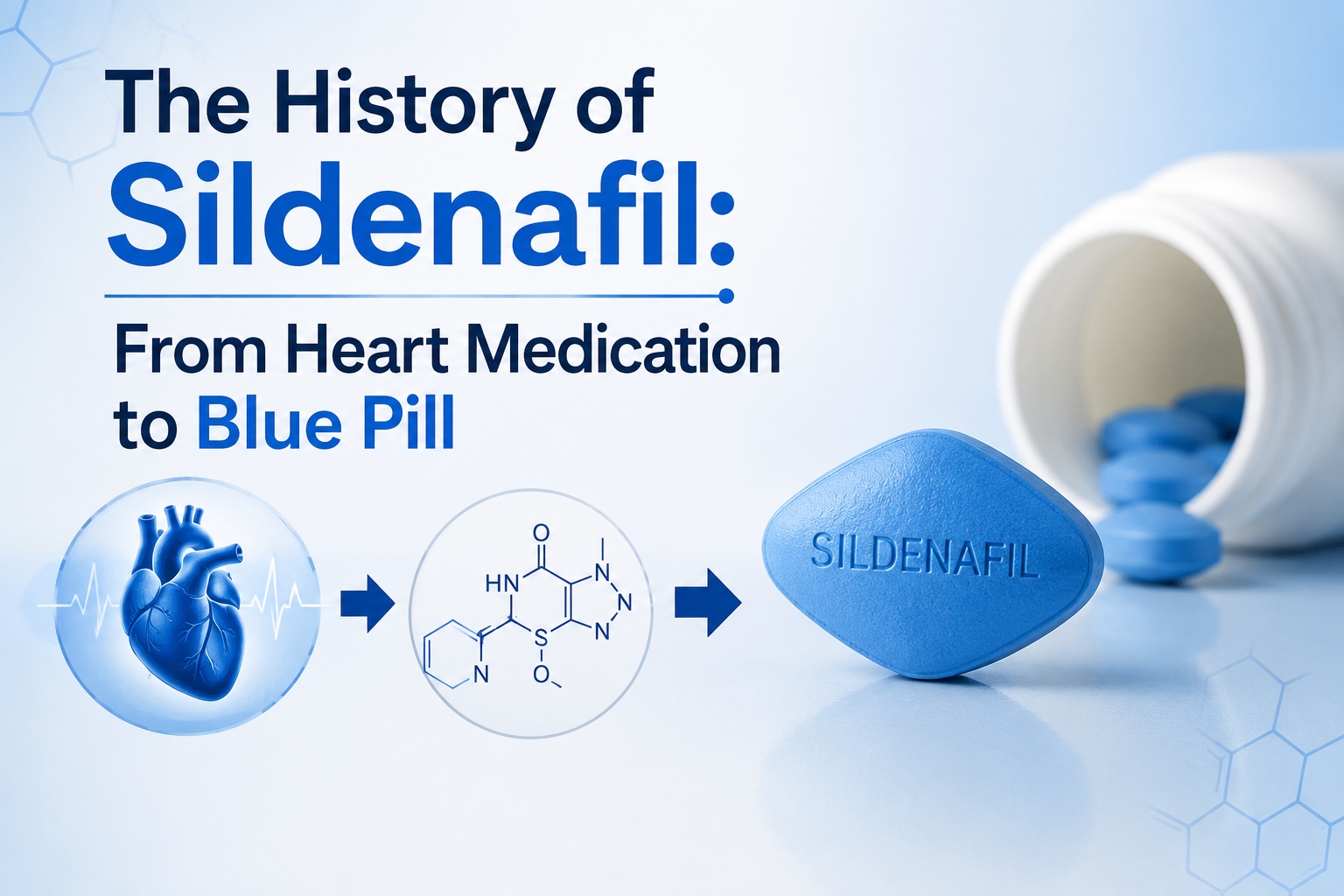
Some of the best stories in medicine start with a failure. Sildenafil is one of them. It's a compound that was supposed to treat chest pain and high blood pressure, missed that target almost entirely, and ended up becoming one of the most recognized drugs on the planet for a completely different reason. It's a good example of Science and Innovation at work, not as a straight line from idea to breakthrough, but as researchers paying attention when the results didn't match the plan. Here's how that actually happened, and why the story still matters to patients picking up a prescription today.
A Heart Drug That Didn't Do What It Was Supposed To
Rewind to the mid 1980s, at Pfizer's research site in Sandwich, England. The team there was working on cardiovascular drugs, trying to find compounds that would relax blood vessels and ease the strain on the heart for patients dealing with hypertension and angina pectoris, the chest pain that comes with reduced blood flow to the heart. Their focus landed on an enzyme family called phosphodiesterases, and one target in particular, phosphodiesterase type 5, or PDE5. Block it, the thinking went, and you relax vascular smooth muscle enough to genuinely help angina patients.
By 1989, the chemists had a working compound, originally just labeled UK 92,480. It acted on the nitric oxide and cyclic GMP pathway, the same signaling system the body uses to widen blood vessels. It looked promising on paper. In practice, it turned out to be something else entirely.
The Trial That Turned Everything Upside Down
Sildenafil spent years going through cardiovascular testing, and the angina results just weren't there. By the early 1990s, after roughly eight years and a lot of money sunk into the project, Pfizer was close to walking away from it. One last trial ran in Merthyr Tydfil, South Wales, testing the compound in male patients before the plug got pulled.
That's when things got interesting. The drug barely touched anyone's chest pain, but the men in the trial kept reporting something else entirely, more frequent and stronger erections. Instead of writing that off as a strange footnote, Pfizer's researchers actually paid attention to it. It turned out the same nitric oxide and cGMP pathway that had failed to move the needle on angina was central to how erections happen physiologically. Pfizer redirected the entire program around that observation. That's really the heart of this story: Science and Innovation isn't always about getting the hypothesis right the first time. Sometimes it's about noticing what the data is actually telling you and being willing to change course.
From Lab Compound to FDA Approved Medication
Pfizer filed a patent on sildenafil citrate in 1994 and pivoted its development fully toward erectile dysfunction. Over the next several years, the company ran more than twenty clinical trials with thousands of participants to prove the drug was safe and effective for this new purpose. Side effects showed up, but they were largely mild: headache, flushing, some temporary changes in color perception. Doctors also learned early on that the drug couldn't be combined with nitrate medications.
In March 1998, the FDA approved Viagra as the first oral treatment for erectile dysfunction, and gave it priority review since nothing comparable existed at the time. Europe followed with its own approval later that year. Before this, treating erectile dysfunction meant injections, vacuum devices, or surgical implants, none of which were exactly convenient or comfortable. A pill changed that overnight, and it also cracked open a subject that had mostly stayed behind closed doors. Men's health, at least this particular corner of it, suddenly became something people were willing to talk about.
The Drug's Second Career: Treating the Lungs
Sildenafil's story wasn't over. Researchers continued to research the way PDE5 inhibition performed in the body. They found that it also loosened blood vessels in the lungs, making it useful in the condition of pulmonary arterial hypertension, which is which is a serious problem that involves high tension between lungs and the heart. The result was a distinct lower dose version being that was approved under a different brand name that is specifically designed for this usage. There's a poetic quality to it. A medication designed for cardiovascular use swung off to be a treatment for men's health but eventually returned to aid the lungs and the heart after all, only a few years further than what was expected.
Why This History Still Matters
Beyond the interesting backstory, the history of sildenafil is a reminder of just how much testing and research sits behind a medication people now grab without a second thought. What started as an accident went through years of rigorous clinical work before it ever reached a pharmacy shelf, and that same commitment to Science and Innovation still governs how generic versions of the drug get manufactured and approved today.
Once the original patent expired, generic sildenafil became widely available, giving patients access to the exact same active compound and clinical effect at a much lower price than the brand name product. The chemistry hasn't changed at all. What changed is access, built on decades of research, regulatory review, and manufacturing improvements that trace straight back to an unplanned discovery in a Welsh clinical trial more than thirty years ago.
Conclusion
Sildenafil's rise from a failed angina drug to becoming one of the most well-known medicines around the globe is a reminder that back-to-backs do not always remain in the form of setbacks. Sometimes they become the real breakthrough. This story demonstrates the way Science and Innovation in pharmaceutical research usually boils down to attentive observation and the willingness to alter direction, rather than simply sticking to the initial strategy. From cardiovascular research programs in treating the erectile disorder eventually pulmonary arterial hypertension. sildenafil is just one of the more clear instances of how an unexpected discovery in clinical research can change the way medicine is practiced for many years.
If you have any questions regarding sildenafil or its generic alternatives or how it will fit to your personal treatment regimen, our pharmacist team is here to assist. Knowing the science behind a drug is likely to help you to be confident about what choices you take regarding your health.

