
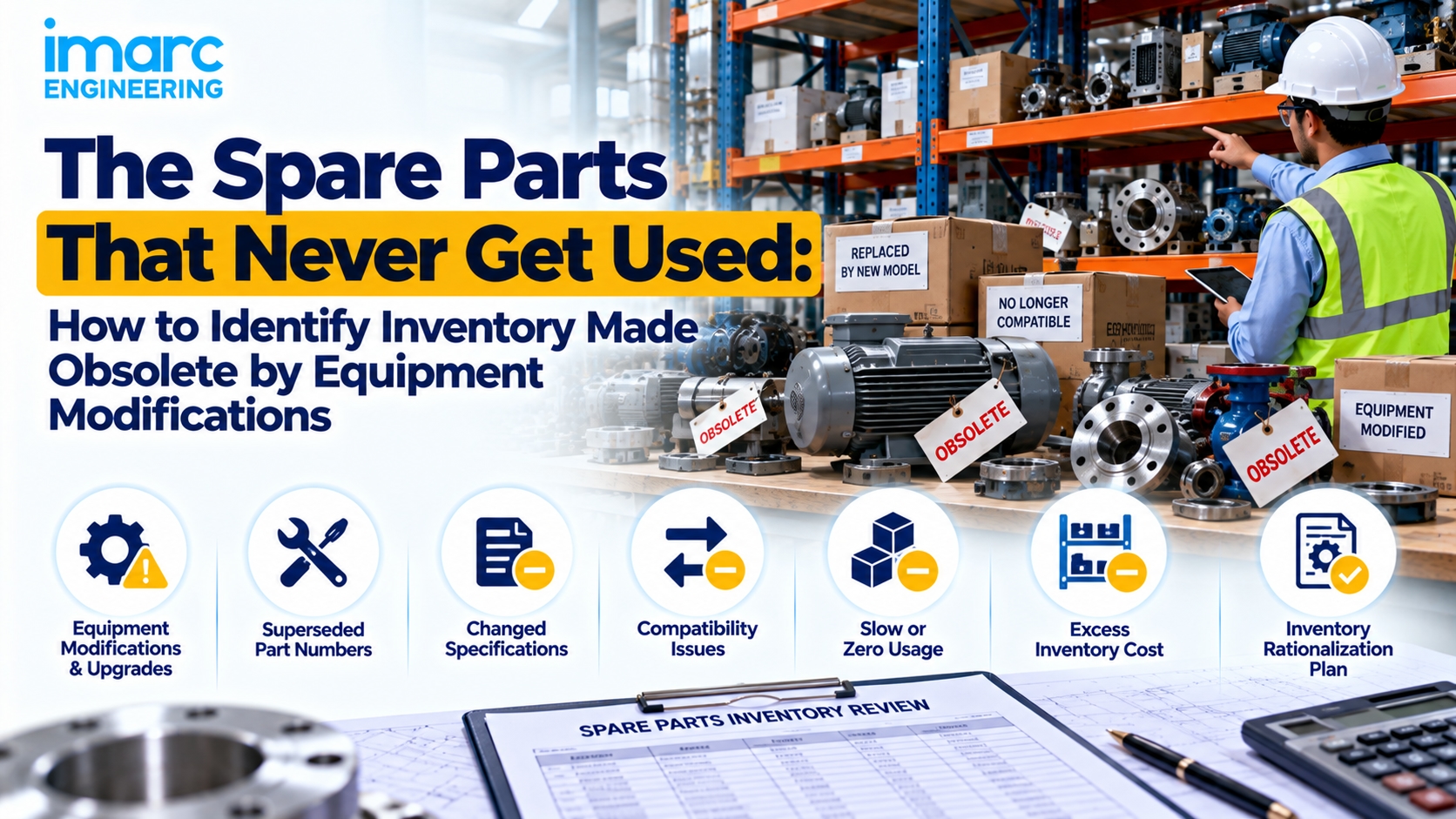
Stores hold filters, seals, bearings and control cards “for the critical line.” A modification replaced the pump model, changed the drive or upgraded the panel years ago. The old parts still sit on the rack, still appear in the min-max report, and still get ordered when a planner trusts the system more than the shop floor.
Equipment modifications routinely create spare parts that will never fit the machine that remains. Identifying that obsolete inventory is not a year-end clean-up exercise. It is the only way to stop capital, shelf space and false confidence from being tied to parts the plant can no longer use.
Manufacturers can work with a spare parts consultant in India to review spare-parts planning, identify inventory linked to outdated equipment configurations, and reduce unnecessary replenishment.
What “Obsolete by Modification” Means
Obsolescence here is not only age or non-moving stock. It is loss of fit or function because the asset changed:
A component was redesigned or substituted on the equipment
A complete assembly was replaced with a different OEM or model
Controls, sensors or actuators were upgraded
A line was removed, relocated or permanently mothballed
Interchangeability was broken by a drawing or BOM revision that stores never received
The part may still be new in the bag. It is obsolete relative to the as-maintained plant.
Why These Parts Stay Invisible
Modifications are closed as project jobs. The bill of materials and spare-parts list are not updated in the same transaction. ERP item masters remain active. Min-max rules keep triggering replenishment. Maintenance still searches by old equipment tag habits. Surplus is treated as “insurance” without checking whether the insurance policy still matches the machine.
Non-moving reports flag sleepers; they do not explain why something will never move again. Modification-driven obsolescence needs a link between engineering change and inventory identity.
How Modifications Create Unusable Stock
Model change
New pump, gearbox or motor: flanges, mechanical seals, couplings and wear parts no longer match.
Partial upgrade
Same frame, new internals or instrumentation: some kit still fits; adjacent line items do not. Partial fit is more dangerous than total mismatch because planners assume interchangeability.
Control and electrical change
PLC, drive or field device upgrade orphans cards, modules and sensors that only worked on the old configuration.
Standardisation projects
One preferred brand replaces several. Old brand spares become dead unless a remaining sister machine still uses them—and that link is often not recorded.
Permanent removal
A line is sold or scrapped; its dedicated spares remain coded to a live store location.
How to Identify Inventory Made Obsolete by Equipment Modifications
Step 1: Build a modification history for critical assets
List significant changes over a defined period: replacements, upgrades, OEM changes, control migrations, decommissioned tags. Sources include project close-out files, MOC records, maintenance work orders and vendor commissioning documents.
Step 2: Tie each modification to the affected spare identity
For every change, list the old part numbers, assemblies and kits that applied before the change. Do not start from the stock list alone; start from the engineering event.
Step 3: Compare against the current as-maintained BOM / spare list
Where a current recommended spare list or asset BOM exists, mark items that no longer appear. Where it does not exist, rebuild a minimal “what we can still fit” list with maintenance and engineering.
Step 4: Confirm residual use on sister equipment
A part obsolete on Line A may still be valid on Line B. Obsolescence is asset-specific until proven plant-wide. Document remaining applications before disposal.
Step 5: Segment the stock decision
Typical bins:
Confirmed obsolete — no remaining fit; stop reorder; dispose or sell
Restricted — fits only named residual assets; lower max, no blind reorder
Superseded — new number must be used; link old-to-new in the system
Unverified — needs physical or drawing check before any decision
Step 6: Hard-stop replenishment in the system
Obsolete and superseded items should not remain on active min-max without a rule. System behaviour must change on the same day as the engineering conclusion.
Step 7: Quarantine and dispose with control
Physical segregation prevents emergency “use anything that looks similar.” Follow company write-off and scrap procedures; keep a short audit trail to the modification that caused obsolescence.
Step 8: Make MOC close-out include spare-parts update
Every future equipment modification should exit with an updated spare list, item status changes and planner notification—not only a mechanical completion certificate.
Practical Scenarios
Scenario A: Seal kits for a retired pump model
Mechanical seals were stocked for five years of “critical coverage.” The pump was replaced in a reliability project. Kits still reorder on min-max until someone matches the project file to the item code.
Scenario B: Partial drive upgrade
Motor remained; drive and feedback devices changed. Half the electrical spares still fit. The other half will never install. Without segmentation, both stay “critical.”
Scenario C: Sister-line exception
Old bearing is obsolete on the modified mill but still correct on an unmodified twin. Blanket disposal would create a real shortage; asset-level mapping prevents that error.
Scenario D: Controlled identification
Modification register → old vs new spare map → sister-asset check → system status change → quarantine. Working capital drops without increasing downtime risk on live equipment.
Decision Point: Hold, Supersede or Exit?
Ask:
Does this part number still fit any in-service configuration?
If yes, which tags—and is the stock level sized only for those tags?
If no, why is the item still active in planning?
Was the orphaning change already paid for as a project while we continue to pay for its leftovers?
Holding “just in case” is rational only when the case still exists on the floor.
Practical Checklist
Critical equipment modification history compiled
Pre-change spare identities listed per modification
Current fit confirmed or denied against as-maintained plant
Sister-asset residual use checked
Items classified: obsolete / restricted / superseded / unverified
ERP or stores status updated; min-max stopped where obsolete
Physical quarantine for confirmed dead stock
Write-off / disposal executed under approval
MOC template updated to require spare-list close-out next time
When to Run This Review
Run it:
after every significant equipment modification or OEM change
when non-moving value is high on parts linked to modified areas
before a major overhaul campaign that might consume “wrong” stock
during spare-parts optimisation or working-capital programmes
when acquiring a plant whose stores may reflect years of undocumented changes
Waiting for an annual stock take finds dust. Linking to modifications finds root cause.
How IMARC Engineering Can Help
IMARC Engineering supports manufacturers who need plant changes and maintenance readiness to stay aligned—including the spare-parts consequences of equipment modifications. Structured review of what the plant actually runs, versus what stores still plans for, reduces dead inventory without weakening coverage on live assets.
Relevant guidance on planning and controlling spares in an industrial context is discussed in IMARC’s perspective on how to plan spare parts inventory in India, which pairs naturally with modification-driven obsolescence reviews.
Talk to IMARC Engineering if equipment upgrades have left stores full of parts that never get used and you need a clear method to identify, segregate and stop replenishing inventory that modifications have already made obsolete: https://www.imarcengineering.com/contact?service=spare-parts-planning-and-inventory-setup
Conclusion
Spare parts that never get used are often not planning errors in isolation. They are the inventory shadow of equipment modifications that changed fit while item masters, min-max rules and shelf locations stayed the same. Identification starts from the modification, maps old part identities, checks residual sister-asset use, then forces system and physical status to match the as-maintained plant.
Teams that close this loop free working capital and trust their critical-spares list again. Teams that only rank “non-moving” keep funding history.
The practical takeaway is clear: after every meaningful equipment change, ask which part numbers lost their machine—and remove them from active inventory logic before the next automatic reorder.
Contact Us:
IMARC Engineering
Phone: +91-120-433-0800
Email: sales@imarcengineering.com
India: C-130, Sector 2, Noida, Uttar Pradesh 201301
LinkedIn: https://www.linkedin.com/showcase/imarc-engineering/



