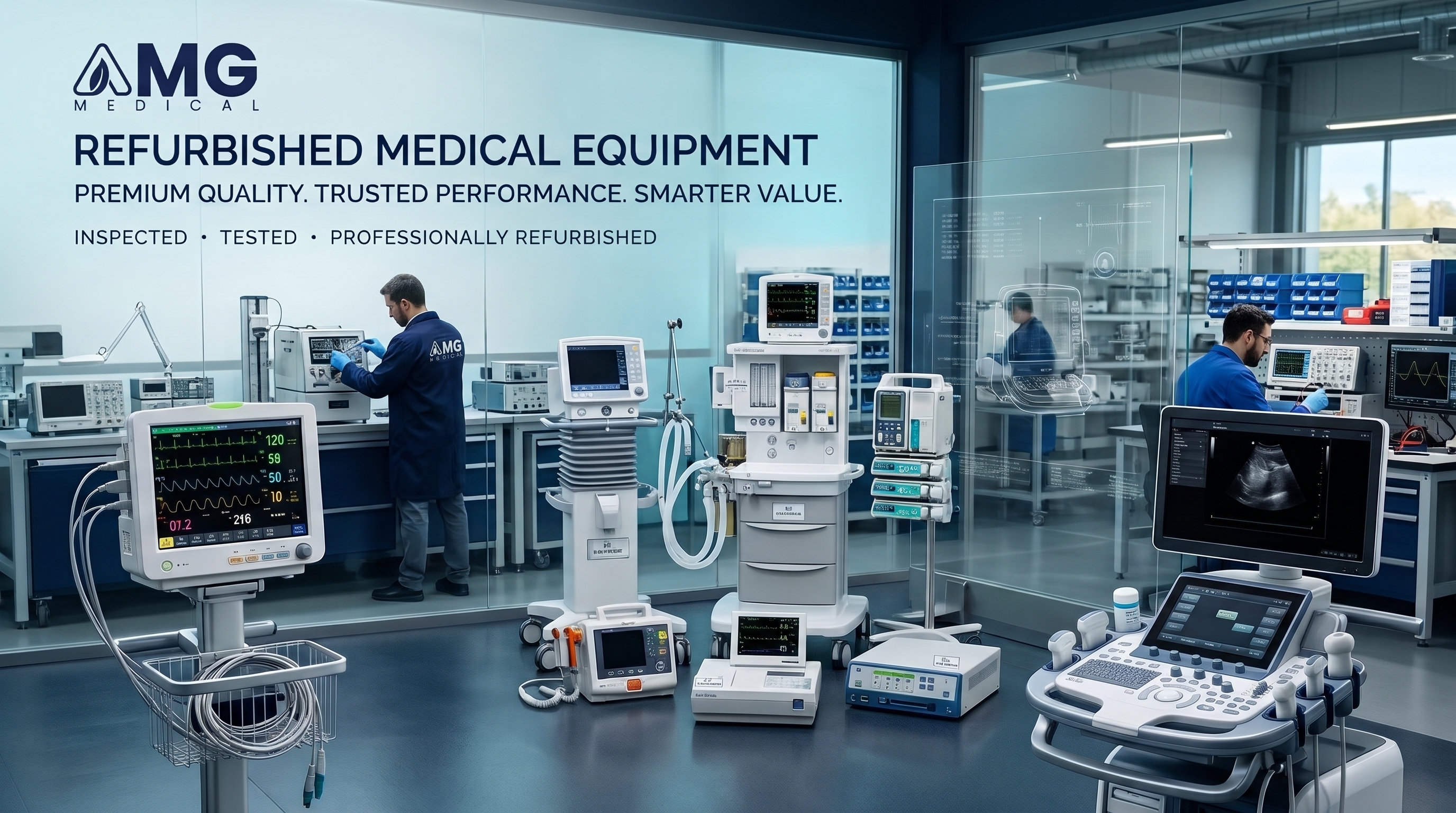
Medical equipment plays an important role in hospitals, clinics, laboratories, and other healthcare facilities. Doctors and medical staff use different devices to examine patients, diagnose health problems, provide treatment, and monitor recovery. However, purchasing brand-new equipment can be expensive, especially for small clinics and healthcare centers with limited budgets.
Refurbished equipment offers another option for healthcare providers. These products have been used before but are inspected, repaired when needed, cleaned, and tested before being offered for use again. There are many types of products that may be suitable for refurbishment, depending on their condition and intended use. Understanding these types helps healthcare buyers choose equipment that meets their needs and budget.
What Is Refurbished Equipment?
Refurbished equipment refers to previously used products that have gone through a process of inspection and restoration. This process may include cleaning, repairing faults, replacing worn parts, updating software, and testing the product's main functions.
The level of work depends on the type and condition of the equipment. Some products may need minor repairs, while others may require more detailed technical work. A professional refurbishment process should include proper checks to make sure the product is suitable for its intended purpose.
In healthcare, different machines, devices, and furniture items may be considered for refurbishment. However, not every used product is suitable for restoration. A qualified technician should assess its condition before it is returned to use.
Refurbished Diagnostic Equipment
Diagnostic equipment is one of the main categories of medical products that may be refurbished. These devices help doctors examine patients and identify possible health problems.
Ultrasound machines are commonly used to create images of internal body parts through sound waves. ECG machines record the electrical activity of the heart, while some X-ray systems help medical staff examine bones and detect injuries.
These machines contain important electronic and technical parts, so their condition must be checked carefully. Refurbishment may include replacing faulty components, testing image quality, checking controls, and confirming that the machine performs as expected.
Healthcare facilities should review service records and testing reports before purchasing any restored diagnostic device.
Refurbished Patient Monitoring Equipment
Patient monitoring equipment helps doctors and nurses observe important body functions. It is commonly used in emergency rooms, intensive care units, operating rooms, and recovery areas.
Patient monitors can display readings such as heart rate, blood pressure, and oxygen levels. ECG monitors record heart activity, while pulse oximeters measure the oxygen level in the blood. Some advanced monitors can display several readings at the same time.
These devices may be refurbished when their condition allows safe restoration. Technicians may inspect sensors, screens, cables, power systems, and other parts. They should also test the device's readings and functions according to suitable technical standards.
Reliable monitoring equipment is important because medical staff use its readings to observe changes in a patient's condition.
Refurbished Laboratory Equipment
Laboratories use different machines and tools to test blood, urine, tissue, and other samples. Some laboratory equipment may be suitable for refurbishment if it can be restored and tested properly.
Centrifuges are used to separate parts of blood and other liquids. Microscopes help laboratory staff examine small samples, while laboratory refrigerators store certain materials at suitable temperatures. Some testing machines and sample preparation devices may also be restored.
The refurbishment process can include cleaning, checking moving parts, replacing damaged components, and testing performance. Laboratories should confirm that the equipment is suitable for the tests they plan to perform. They should also check calibration needs and access to spare parts.
Refurbished Surgical Equipment
Surgical departments use different tools and devices during medical procedures. Some larger surgical equipment may be suitable for refurbishment, depending on its design, age, and condition.
Examples may include operating tables, surgical lights, suction machines, and selected electrosurgical units. These products support surgeons and medical staff during operations by providing lighting, positioning, or other functions.
Refurbishment may involve checking electrical systems, controls, moving parts, and safety features. Any device used during surgery must meet the required safety standards and be tested by qualified technicians.
Reusable surgical instruments such as forceps, scissors, and needle holders require proper cleaning and sterilization. Their suitability for reuse should be assessed separately from the restoration of larger machines.
Refurbished Hospital Beds and Furniture
Hospital furniture supports patient comfort and helps medical staff carry out daily tasks. Some furniture products can be repaired and restored when their main structure remains safe and suitable.
Hospital beds are a common example. Refurbishment may include repairing bed frames, checking wheels, replacing damaged side rails, and testing adjustment controls. Examination tables, medical trolleys, wheelchairs, and bedside cabinets may also be suitable for restoration.
The condition of each item is important. Furniture should be strong, stable, easy to clean, and suitable for the needs of patients and staff. Healthcare facilities should inspect moving parts and safety features before placing refurbished furniture into service.
Refurbished Dental Equipment
Dental clinics use specialized equipment for examinations, cleaning, and treatment. Depending on the product's condition and available parts, some dental machines and furniture may be refurbished.
Dental chairs, operating lights, compressors, suction systems, and selected imaging devices are examples of products that may be considered. Technicians should inspect the electrical systems, controls, moving parts, and other functions before the equipment is returned to use.
Dental clinics should also check whether the product meets the requirements of their planned treatments. A proper service record and suitable warranty can help buyers understand the support available after purchase.
Refurbished Rehabilitation Equipment
Rehabilitation centers use different devices to support patients during recovery and physical therapy. Some equipment may be restored when it remains safe and suitable for its intended purpose.
Examples include treatment tables, exercise bikes, walking aids, and selected therapy machines. Refurbishment may involve checking frames, handles, moving parts, resistance systems, and electronic controls.
The equipment should be suitable for the needs of the patients who will use it. Healthcare providers should check stability, comfort, and safety before making a purchase. Regular maintenance is also important to keep these products in good working condition.
Role of Medical Equipment Refurbished for Healthcare Facilities
Medical equipment refurbished by trained professionals can help hospitals and clinics access suitable products at a lower cost than many new models. It may support facilities that need to expand their services while managing limited budgets.
However, buyers should not assume that every restored product is suitable for every medical task. They should review the product's history, repair records, test results, and warranty. The device must also meet the safety and regulatory requirements that apply to its intended use.
Careful selection helps healthcare providers understand the condition of the equipment before bringing it into service.
Importance of Equipment Refurbishment Services
Professional equipment refurbishment services help restore suitable products through inspection, repair, cleaning, and testing. These services may also include replacing worn parts, updating software, and checking important functions.
A reliable service provider should explain the work completed and provide clear records. Buyers should ask about technician experience, testing methods, spare parts, warranty terms, and after-sales support.
Regular maintenance after purchase is also important. It helps identify faults early and supports the continued safe use of the equipment.
How to Choose the Right Type of Refurbished Equipment
Healthcare facilities should first identify the purpose of the product and the medical tasks it needs to support. They should then compare available options based on condition, age, features, expected working life, and service support.
It is important to request inspection reports and confirm that the product has passed suitable safety and performance checks. Buyers should also consider installation, staff training, spare parts, and future maintenance costs.
A careful selection process helps hospitals and clinics choose equipment that fits their needs without ignoring patient safety.
Conclusion
There are many types of refurbished equipment used in healthcare, including diagnostic machines, patient monitors, laboratory devices, surgical equipment, hospital furniture, dental equipment, and rehabilitation tools. Each type serves a different purpose and requires its own inspection and testing process.
Choosing medical equipment refurbished by qualified professionals and supported by reliable equipment refurbishment services can help healthcare facilities manage costs and make better use of resources. By checking product quality, safety records, warranties, and maintenance needs, hospitals and clinics can make informed purchasing decisions.
More Info: Amg Medical