
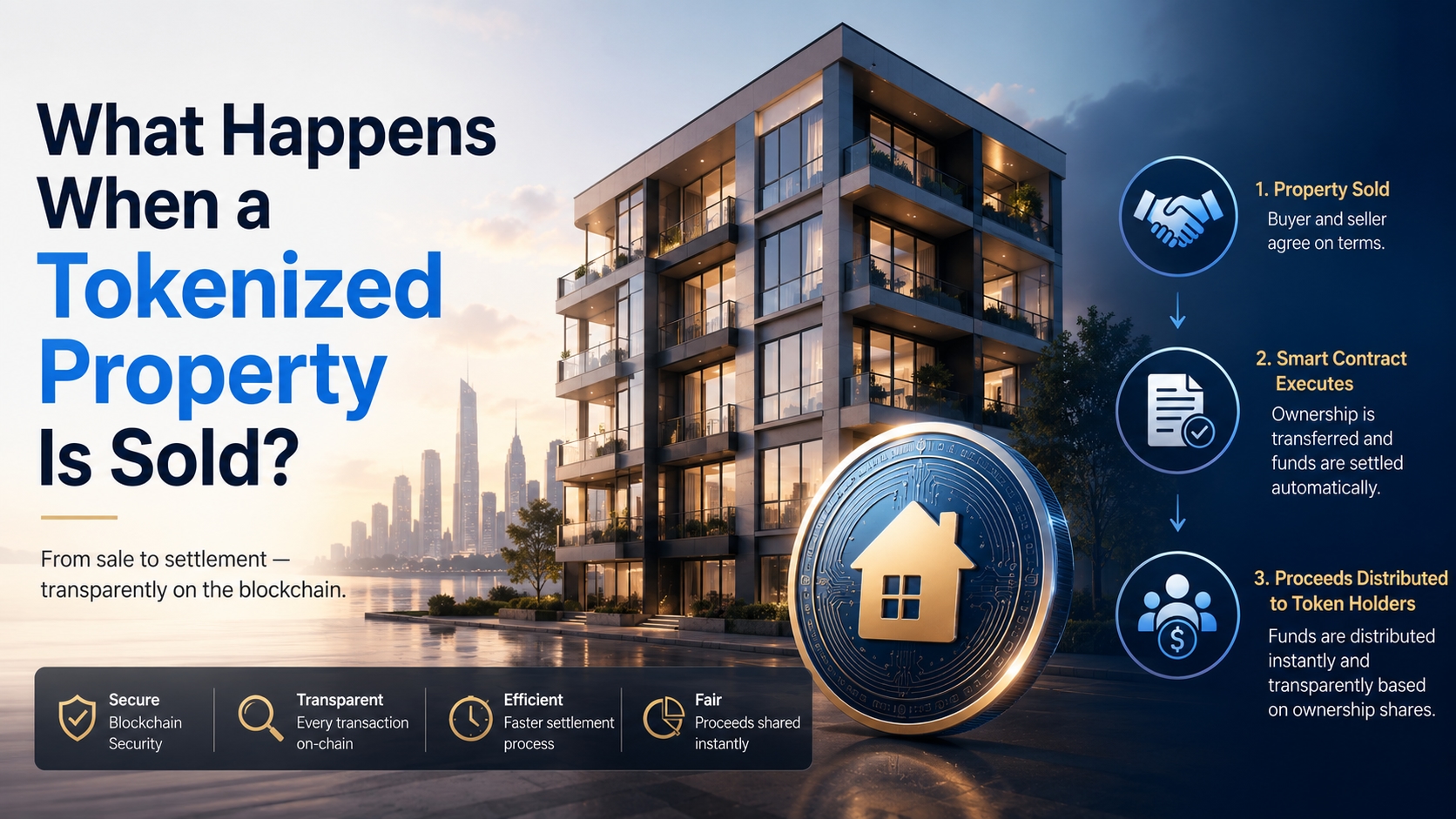
Real estate tokenization can represent ownership interests or economic rights connected to a property through blockchain-based tokens. Investors may be able to hold or transfer these tokens depending on the legal structure, regulatory requirements, and rules established by the issuer.
But tokenization raises an important question: what happens when the underlying property is eventually sold?
The sale of the property may impact token holders, distributions, token validity and the investment structure. It's important to delve into the intricacies of this process, and more than just the blockchain itself, it's important to consider the legal rights of land ownership related to these digital tokens.
The Property Sale Is Different From a Token Transfer
There are 2 types of transactions that can occur with a property that's been tokenized.
A token transfer is when the token is sold or given to someone else that is eligible. The actual property doesn't alter.
When the legal owner of the real estate is selling the actual real estate to a third party, then the property is being NOT a property sale.
Such transactions may have very contrasting effects. If the underlying property is sold, the investment structure of the associated tokens might have to be settled or modified under the conditions pre-negotiated in the issue of the tokens.
What Happens to Token Holders?
The impact of a sale of a property is largely based on what the tokens are.
Some tokens might give a monetary stake in the legal entity as the owner of the property. Others could be contractual rights to income or proceeds from the asset.
Eligible investors could get the property sale proceeds distributed to them after the transaction is finalized, once the duties are completed.
But if you have tokens then you don't automatically get the proceeds just because you have the tokens. The rights are contingent on the associated legal arrangements and investment model behind these tokens.
How Are Property Sale Proceeds Distributed?
Typically, as soon as the property has been sold, the income is supposed to pass through in order for investors to get a distribution.
The final amount available for distribution can be affected by:
Outstanding property debt
Taxes and transaction costs
Legal and administrative expenses
Management fees
Other contractual obligations
Once these commitments are taken care of, there is money to spare, which can further be paid out based on the rights of the investment pattern.
Transparency is all the more essential, and it is especially important to make sure that this is observed. The sale price of the property is also a detail to understand, and how much investors might end up getting back.
What Happens to the Tokens After the Sale?
Once the underlying property has been sold, the tokens may require a lifecycle process.
Continuing to represent a property after the sale if a token you have made has been created specifically for that property might cause confusion.
Depending on the structure, the tokens could be:
Redeemed
Investors can use their tokens to receive the proceeds or benefits they are due.
Burned or Cancelled
When the investment is determined, the matching tokens can be taken off the circulation, signifying that the primary financial investment has actually concluded.
Retained Temporarily
Tokens can live on a settlement period while distributions are made, compliance checks are performed or other administrative actions are taken.
This varies of course according to the agreement of the terms for the token.
How Smart Contracts Can Support the Process
Some aspects of the post-sale process can also be automated through smart contracts.
They could, for instance, handle balances of tokens, check eligibility of addresses, issue out already planned distributions, or redeem per programmed rules.
Smart contracts... but do not sell real estate by themselves.
All the real world processes for the property transaction are still the same: normal legal documentation, transfers of ownership, financial settlement, and so on.
The blockchain is thus used as a component of the wider system instead of being the system itself.
What If the Tokens Have Changed Hands?
Tokenized properties can have multiple investors over time. The seller of a token and holder of the token may not be the same person.
This is why tracking ownership is important.
The Distribution rules and fact of the Settlement date must be taken into account to determine who is eligible for the Distribution via the relevant Settlement process. Factors such as transfer restrictions, investor eligibility, and compliance requirements can also impact investors who receive proceeds.
While blockchain records can offer a clear chain of transactions for tokens, they might not satisfy the legal and compliance needs in that case.
Why the Exit Mechanism Matters
A structure is needed to be effective for asset tokenization, and it needs to take into account the eventual exit from the property before the tokens are issued.
Investors should guide themselves as to what happens when the property is sold, refinanced, transferred, or otherwise exited from the investment vehicle.
A clearly defined exit mechanism can establish:
How sale proceeds are calculated
Who receives the proceeds
When distributions occur
What happens to outstanding tokens
How the investment is formally closed
These rules aim to prevent the scenario where the sale of the asset would result in lack of harmony between the physical asset, the legal title of ownership and blockchain records.
What Happens After the Investment Ends?
The tokenized investment can grow beyond its lifetime, once the sale of the property has been finalized and the investors whose investments were tokenized have been awarded their returns.
They may involve closing investment vehicles, updating employee records, burning the tokens, canceling them and redeeming the tokens.
It is possible for the investors to invest in another opportunity, if there are several properties on a platform. But it would be based on the structure of the platform concerned and the titles connected to the initial coins.
What's crucial is that the goal of the investment must be set at the end of the investment and not be added in as an add-on.
Final Thoughts
A tokenized property is more than simply a property you are selling. It has to be co-ordinated with the property legal ownership, investor rights, sale returns, compliance criteria, blockchain records, and the token lifecycle.
While blockchain technology can be used for tracking the origin of assets and to automate part of the process, it cannot be used to replace the legal and financial steps required for a real estate transaction.
In the end, a secure and useful tokenised property should have one answer to the query from the outset: what is going to take place if the underlying property is sold?
With that process clearly outlined, investors will know their rights and the representation of that asset in the digital realm will be aligned with the real-world asset throughout its life.