
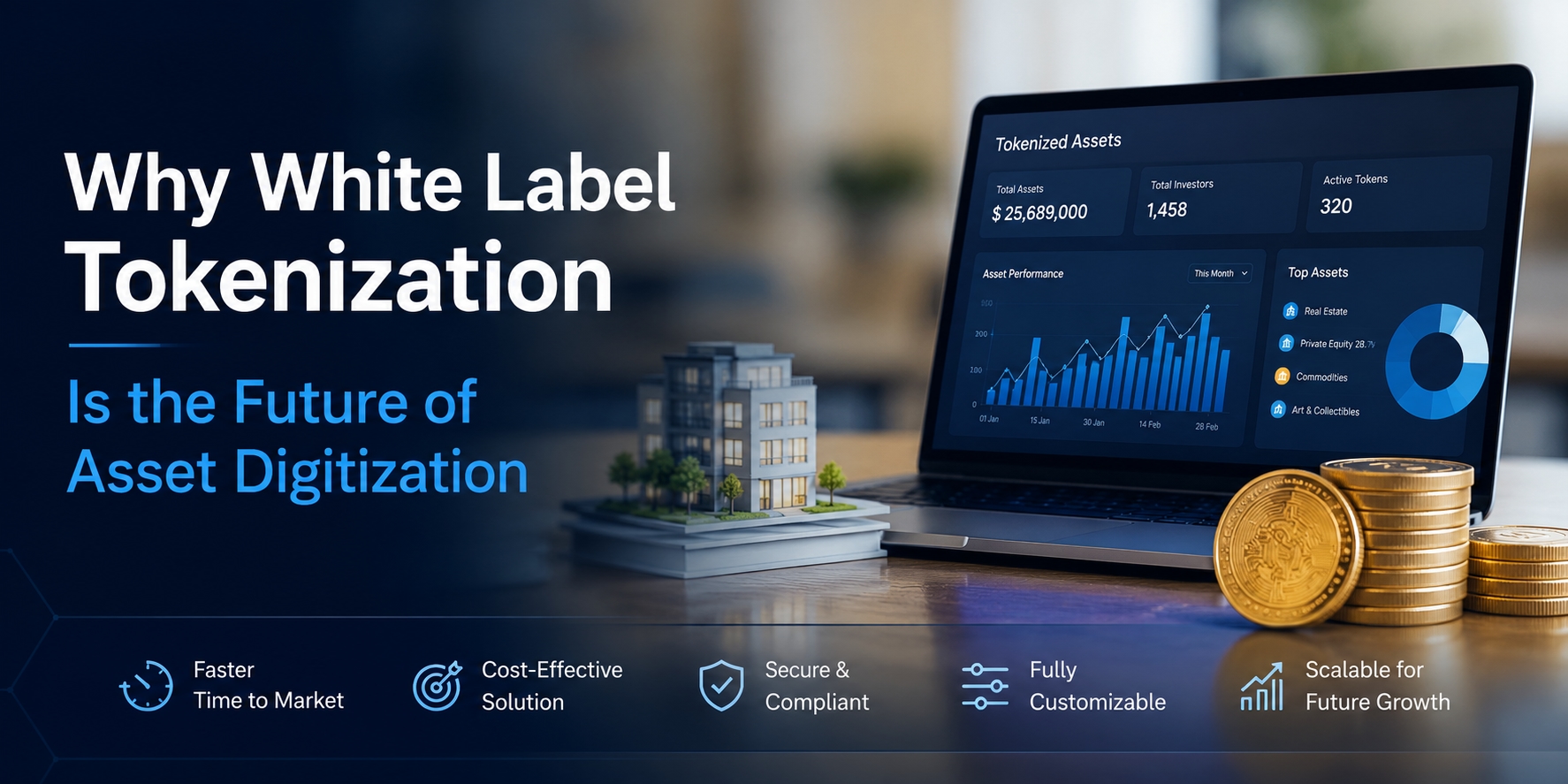
The financial world is rapidly shifting toward digital ownership, and asset tokenization is leading this transformation. By converting real-world assets into blockchain-based digital tokens, businesses can improve liquidity, simplify transactions, and make investments more accessible. From real estate and private equity to commodities and intellectual property, tokenization is creating new opportunities across industries.
However, launching a tokenization solution from scratch requires significant investment in blockchain infrastructure, smart contracts, security, and regulatory compliance. This is why many organizations are adopting white label solutions that offer a faster and more cost-effective path to market.
What Is White Label Tokenization?
White label tokenization is a pre-installed and pre-built blockchain solution that enables companies to quickly roll out their own asset tokenization platform. The platform provider builds the underlying system and the businesses build upon the platform to customize the branding, workflows, and features to their needs.
These solutions typically support the tokenization of:
Real estate
Investment funds
Private equity
Precious metals
Fine art
Commodities
Intellectual property
This approach enables organizations to focus on business growth instead of managing complex blockchain development.
Why Asset Digitization Matters
Traditional asset management often involves lengthy paperwork, multiple intermediaries, and restricted access to investors. These processes can be simplified through asset digitization, which involves recording ownership on the blockchain, as transactions become quicker, more transparent, and easier to manage.
Some key advantages include:
Fractional ownership opportunities
Faster settlement times
Improved transparency
Enhanced security
Global investor access
Better liquidity for illiquid assets
These benefits are driving businesses worldwide to explore blockchain-powered investment ecosystems.
Why White Label Tokenization Is the Future
Faster Market Entry
Building an ecosystem from the ground up takes several months and demands a lot of blockchain knowledge. White label platforms have pre-designed asset issuance, investor onboarding, compliance and wallet integration modules, which drastically decrease deployment time.
Companies can get their websites up and running rapidly, and start providing products to the client right away.
Cost-Effective Implementation
Creating a customized blockchain platform requires significant investment in software development, security testing, infrastructure setup, and continuous maintenance.
A white label solution reduces these expenses by offering a tried and tested platform that only has to be tailored, making it appropriate for both startups and established businesses.
Enterprise-Grade Security
Protecting both businesses and investors is essential with digital assets demanding robust security measures. The features that most modern white label platforms have:
Secure smart contracts
Multi-factor authentication
Data encryption
Secure wallet connectivity
Access control management
Continuous security updates
These elements minimize risks in operation and provide trust among the users of the platform.
Built-In Compliance
Compliance with regulations is essential for any digital asset business. Some white label platforms come with all the following features:
KYC verification
AML monitoring
Identity management
Transaction tracking
Audit logs
The features make compliance with regulations easier and user onboarding more seamless.
Scalable and Customizable
Each company will have its own needs. With white label solutions, companies can brand their platform, provide the assets they desire, set up the investment process, establish administrative features, and design their user interface.
For business needs to change, additional modules and integrations can be added without a rebuild of the platform.
Industries Driving Adoption
White label tokenization is becoming popular in various sectors such as:
Real Estate: Fractional ownership and making property investment more accessible.
Financial Services: Digital securities and alternative investments.
Private Equity: Making investments easier and managing investors.
Commodities: Digitizing assets such as gold and agricultural products.
Art and Collectibles: Enabling collaborative ownership of valuable possessions.
With the increasing adoption of blockchain, the industries are poised to further adopt tokenization for efficiency and investment opportunities.
Choosing the Right Technology Partner
To ensure long-term success, it's crucial to select a blockchain development company with experience. Key features to consider when evaluating blockchain providers include their technical knowledge in blockchain architecture, smart contract coding, regulatory compliance, platform security, and post-launch support.
An effective technology partner can support scaling of the digital asset business in terms of performance, security, and regulatory readiness.
Conclusion
The demand for digital assets keeps on expanding, and tokenization is one of the most encouraging advancements in the present money related system. White label solutions offer businesses a viable alternative to creating everything from scratch, allowing them to get a head start in this market.
Investing in white label tokenization platform development can help you to speed up your platform launch, achieve lower development expenses, and provide a secure, scalable, and fully branded digital asset platform ready for the future, whether you're looking to tokenize real estate, private equity, investment funds, or any other valuable asset.