
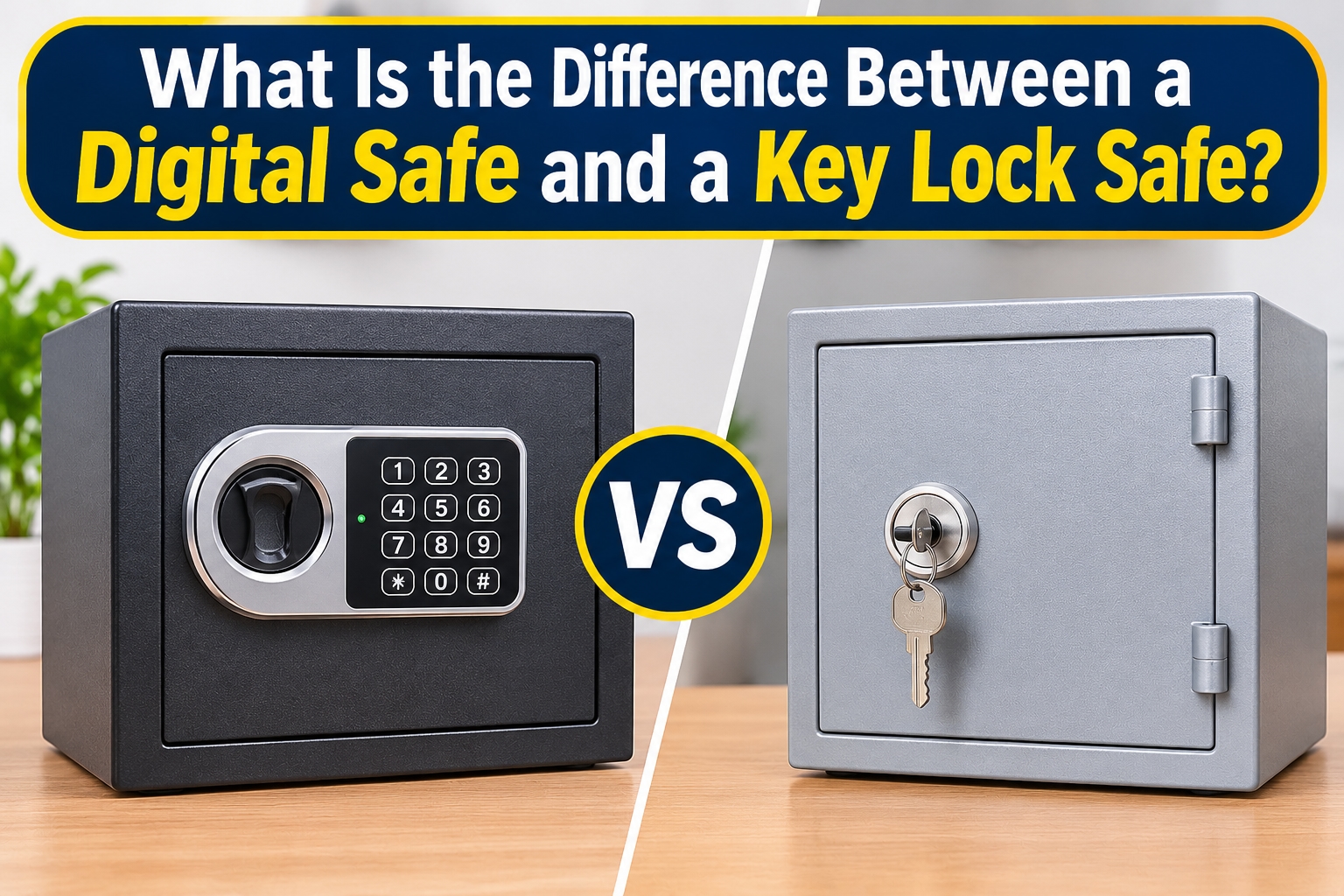
Keeping valuable belongings secure at home is important for protecting personal documents, jewellery, cash, and other important items. A home safe provides a dedicated storage space that helps prevent unauthorised access and keeps valuables organised. However, choosing the right type of safe can sometimes be confusing, especially when comparing digital safes and traditional key lock safes.
Both options offer security, but they differ in their locking mechanisms, convenience, maintenance requirements, and access methods. Understanding these differences can help you select a safe that suits your household needs.
What Is a Digital Safe and a Key Lock Safe?
A digital safe uses an electronic keypad or another electronic access method to control entry. Users generally enter a PIN code to unlock the safe. Some models may also include biometric access, such as fingerprint recognition.
A key lock safe uses a traditional mechanical locking system that requires a physical key to open. It does not normally depend on batteries or electronic components.
People searching for a Home Safe in Dubai should understand how these two types work before choosing one. The right option depends on personal preferences, security requirements, ease of use, and the type of belongings being stored.
1. Difference in Locking Mechanism
The main difference between digital and key lock safes is how they are opened.
Digital Safe:
Uses an electronic keypad or access system.
Requires a PIN or password.
Some models support fingerprint recognition.
Certain models provide an emergency override key or backup access method.
Key Lock Safe:
Uses a traditional physical key.
Does not require a PIN or electronic access.
Can be operated without batteries.
Requires the correct key to unlock the safe.
Digital safes offer electronic access, while key lock safes provide a simpler mechanical approach.
2. Ease of Access and Convenience
Convenience is an important factor when choosing a home safe. Digital safes allow users to access their belongings by entering a code instead of searching for a physical key.
This can be useful when several authorised family members need access to the safe. Depending on the model, the access code may also be changed when necessary.
Key lock safes are straightforward to operate, but users must keep the key in a secure and accessible location. Losing the key can make access difficult and may require professional assistance.
The better option depends on how frequently you need to open the safe and your preferred access method.
3. Security Features
Both digital and key lock safes can provide protection against unauthorised access. However, their security features depend on the model's construction and locking design.
Digital safes may include:
Incorrect PIN entry protection.
Automatic locking features.
User code management.
Fingerprint access in selected models.
Alarm systems in certain models.
Key lock safes may include:
Strong mechanical locking systems.
Reinforced locking bolts.
High-quality key cylinders.
Durable steel construction.
It is important to remember that the locking mechanism alone does not determine the overall security of a safe. Body strength, door construction, lock quality, and installation also matter.
4. Power and Battery Requirements
Digital safes usually operate using batteries. Therefore, users need to monitor battery levels and replace batteries when required.
Some models provide low-battery warnings before the power runs out. Others include an emergency access option, such as an override key or external power connection.
Key lock safes do not require electricity or batteries. Their mechanical operation makes them suitable for people who prefer a simple locking system without electronic maintenance.
However, users should still maintain the lock and keep the key protected from damage or loss.
5. Maintenance Requirements
Both types of safes require occasional maintenance, but their requirements are different.
Digital safes may need:
Battery replacement.
Keypad inspection.
Electronic system checks.
Proper care of fingerprint sensors, if available.
Attention to manufacturer maintenance instructions.
Key lock safes generally require less maintenance. Users should keep the keyhole clean, avoid forcing the key, and follow the manufacturer's recommendations for lock care.
Regular maintenance helps keep the locking system functional and reduces the possibility of access problems.
6. What Happens If You Forget the Access Code or Lose the Key?
Access problems are an important consideration before purchasing a safe.
With a digital safe, forgetting the PIN can prevent normal access. Some models offer an override key, master access procedure, or manufacturer-supported recovery method. The available solution depends on the specific model.
With a key lock safe, losing the physical key can create a similar problem. A replacement key or professional locksmith service may be required, depending on the lock design.
Before purchasing, check what emergency access options are available and how they work.
7. Price and Budget Considerations
The price of a safe depends on several factors, including its size, construction, security rating, locking system, and additional features.
Digital safes may cost more than basic key lock models because they include electronic components and additional access features. However, this is not always the case, as prices vary across brands and specifications.
Key lock safes may be suitable for people looking for a straightforward storage option without electronic features.
Instead of comparing products only by price, consider their build quality, security features, warranty, and long-term maintenance requirements.
8. Which Safe Is Better for Home Use?
There is no single answer because both types can be suitable for different households.
A digital safe may be a good choice if you:
Prefer PIN-based access.
Want convenient everyday operation.
Need access for multiple authorised users.
Prefer models with additional electronic features.
A key lock safe may be suitable if you:
Prefer traditional mechanical locking.
Do not want to manage batteries.
Need a simple access system.
Are comfortable keeping a physical key secure.
Your choice should depend on your daily requirements and the level of protection you expect from the product.
9. Other Features to Check Before Buying
Apart from the locking mechanism, several other features should be considered when selecting a home safe.
Look for:
Strong steel body construction.
Reliable door and locking bolts.
Suitable internal storage capacity.
Secure installation options.
Fire resistance, if required.
Water resistance, if required.
Manufacturer warranty and after-sales support.
Not every safe provides fire or water protection. If these features are important, check the product's tested ratings and certifications before purchasing.
Conclusion
Digital safes and key lock safes both provide useful storage options for protecting household valuables. Digital models offer PIN-based access and additional electronic features, while key lock models provide simple mechanical operation without battery requirements. The right choice depends on convenience, security needs, maintenance preferences, and budget. Before purchasing a Office Safe in Dubai, compare the locking mechanism, construction quality, storage capacity, and available protective features to find a suitable option for your home and offices.