
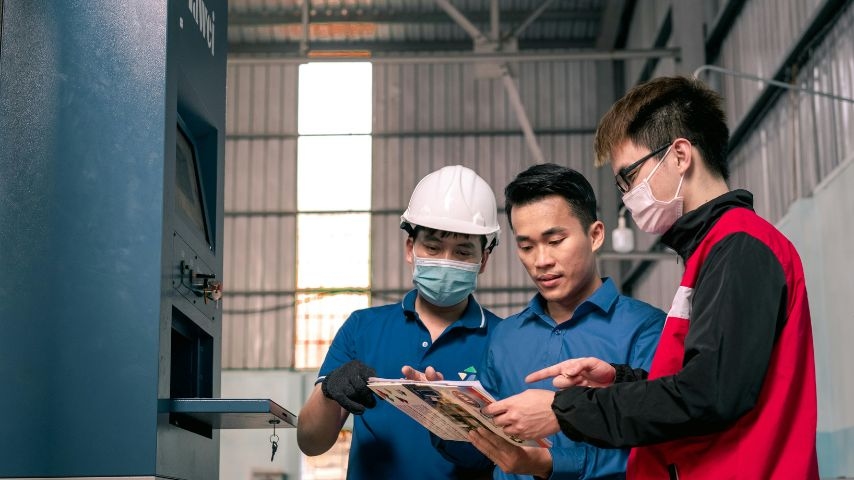
A HAZOP study should include a trained facilitator, a scribe, the process or design engineer who explains the design intent, an operations representative who knows how the plant really runs, an instrument and control engineer, a mechanical or maintenance engineer and a safety or environmental specialist, with additional specialists joining when a node needs them. The combination matters more than the headcount: a good HAZOP team brings the design view, the operating view and the safety view into the same room.
The reason for assembling people from different disciplines is simple. No single person sees every way a process can go wrong. Designers know what the system was intended to do, operators know what it actually does on a bad night, maintenance staff know what breaks, and safety specialists know how failures turn into harm. HAZOP, as described in the IEC 61882 application guide and in CCPS hazard evaluation guidance, is explicitly a team-based technique for this reason.
This article explains who should participate, what each role is responsible for before, during and after the study, and where practitioners disagree about team size, independence and remote participation.
Who Should Participate in a HAZOP Study?
Participants should cover facilitation, recording, design knowledge, operating experience, control systems, mechanical integrity and safety. Each role contributes a different kind of challenge to the discussion, and the study is weaker when any of them is missing.
The exact composition depends on the facility, the stage of the project and the regulations that apply. Where regulations such as OSHA's Process Safety Management rule (29 CFR 1910.119) apply, they set expectations for team expertise, and companies often add their own requirements. The roles below are the commonly accepted core.
What Is the Minimum Team?
The practical minimum is a facilitator, a scribe, a process or design engineer, an operations representative and a person who can speak for instrumentation and control. For simple or low-hazard systems a smaller group can suffice, but the facilitator should be able to justify the composition against the hazards involved. Dropping the operations voice is rarely wise, because it removes the closest view of real behaviour.
How Large Should the Team Be?
Teams are usually kept small enough to stay focused, with specialists attending only the nodes where they add value. A group that is too small risks gaps in expertise, while one that is too large invites side conversations and slows progress. Facilitators often agree a core group and a list of on-call specialists in advance.
What Does the HAZOP Facilitator Do?
The facilitator, also called the chair or leader, guides the team through the method, keeps discussion on track and makes sure the analysis is complete. This is the most influential role in the room.
What Are the Facilitator's Responsibilities?
Before the study, the facilitator agrees scope, nodes, guidewords, the risk matrix and the schedule, and checks that documents are ready. During sessions, the facilitator introduces each node, prompts the team with guidewords and parameters, challenges unsupported assumptions, controls the pace and ensures that deviations are neither skipped nor over-analysed. After the study, the facilitator reviews the draft report for accuracy and completeness.
What Qualities Matter Most?
Experience with the method, familiarity with the process type, neutrality and the ability to manage people matter most. A strong facilitator draws out quiet participants, handles strong personalities without bruising egos and keeps the team honest about safeguards. Training and an experienced facilitator are widely recommended as best practice.
Should the Facilitator Be Independent?
Many organisations prefer a facilitator who was not involved in the design, so that they can ask uncomfortable questions without defending their own work. Others use trained in-house facilitators who know the plant well. The trade-off between independence and familiarity is discussed later in this article.
What Does the HAZOP Scribe Do?
The scribe records the discussion in the worksheet, capturing deviations, causes, consequences, safeguards, risk ratings and recommendations accurately and consistently. The worksheet is the study's main output, so the scribe's work shapes its quality.
What Are the Scribe's Responsibilities?
The scribe prepares the worksheet template, records entries as the team agrees them, reads back wording for confirmation, tracks recommendations and the parking-lot list, and produces the draft report. A scribe who understands the process can summarise discussion precisely, but should not make technical judgements on behalf of the team.
Why Is the Scribe Role Often Underestimated?
Because vague or incomplete records are hard to repair later. An entry that says only "operator error" gives a reviewer nothing to work with. A skilled scribe asks for clear wording, which improves the whole study.
What Does the Process Engineer Contribute?
The process or design engineer explains the design intent, the operating conditions, the control philosophy and the basis of design for each node. They are the team's main source of technical detail on how the system is supposed to work.
What Are the Process Engineer's Responsibilities?
Before the study, the process engineer prepares and verifies the P&IDs, process flow diagrams, heat and material balances, data sheets, relief information and operating limits, and drafts the design intent for each node. During the study, they explain the design, answer questions and take away actions. After the study, they help close recommendations and update drawings.
How Should the Process Engineer Handle Challenge?
By treating questions about the design as part of the method and not as criticism. A designer who becomes defensive can shut down useful discussion. The facilitator's role includes protecting an open atmosphere.
What Does the Operations Representative Contribute?
The operations representative brings real-world knowledge of how the plant behaves, how operators respond to alarms and what happens during start-up, shutdown and abnormal situations. This is the voice that tests the study against reality.
What Are the Operations Representative's Responsibilities?
They describe actual operating practice, explain how deviations would be detected, say how operators would respond and highlight workarounds or known problems. They also help judge whether a procedural safeguard is realistic. For a new plant, a representative from the future operating team, or from a similar facility, fills this role.
Why Is Operating Experience Essential?
Because safeguards that look adequate on paper may fail in practice, for example when an alarm is frequently ignored or a manual action takes longer than the scenario allows. Operators can say so.
What Do the Instrument, Mechanical and Safety Specialists Contribute?
Specialists test whether instruments, equipment and protective systems can really perform the safeguard roles assigned to them. Their input turns general discussion into credible assessment.
What Does the Instrument and Control Engineer Do?
They explain control loops, alarms, trips and interlocks, including how they fail, and advise on whether a safeguard is independent of the initiating cause. They also help identify where a safety instrumented function may need further assessment.
What Does the Mechanical or Maintenance Engineer Do?
They provide knowledge of equipment design, mechanical integrity, materials, maintenance history and practical issues such as access and isolation. They can say whether a failure mode is realistic and how reliable a given piece of equipment has been.
What Does the Safety or Environmental Specialist Do?
They advise on consequence severity, hazardous properties of materials, regulatory expectations and the facility's risk criteria. They help the team apply the risk matrix consistently and flag scenarios that may need additional analysis.
Who Else May Be Needed?
Depending on the node, the team may call on electrical engineers, vendor representatives for packaged units, process chemists for reactive systems, human factors specialists or representatives from interfacing facilities. The facilitator should schedule these participants for the relevant sessions.
What Are the Responsibilities of Management and the Study Sponsor?
The sponsor, often a project or operations manager, commissions the study, releases people and time, and ensures recommendations are acted on. Management support determines whether findings lead to change.
What Should Management Do?
Management should define the study's purpose and scope, provide resources, protect participants' time, review the final report and assign owners and deadlines for recommendations. They should also link findings to the risk register and the Management of Change process.
Should Management Attend Sessions?
Usually not for the full study. Senior presence can discourage candid discussion, although managers may attend an opening or closing session. The key is that they stay engaged with the outcome.
How Should Participants Prepare and Behave?
Participants should read the scope, drawings and method briefing in advance, attend for the whole of their nodes and contribute openly. Good behaviour in the room is part of the method.
What Are Good Ground Rules?
Common ground rules include respecting all contributions, focusing on the process rather than individuals, limiting distractions such as phones, recording but not solving every issue in the room and keeping a parking-lot list for items outside scope. Participants should challenge assumptions and ask what could go wrong, not only what is likely to.
How Do Team Dynamics Affect the Study?
Strongly. Dominant voices, hierarchy and fatigue can all skew the discussion. The facilitator should invite input from each discipline, rotate attention and call breaks when energy drops.
What Are the Different Views on HAZOP Team Composition?
Practitioners agree on the importance of a multidisciplinary team, but they differ on size, independence and format. These choices reflect different priorities.
What Do Advocates of Larger Teams Say?
Advocates argue that broader representation reduces blind spots, builds ownership across disciplines and spreads learning. They point out that a missed hazard is far more costly than extra attendance.
What Do Advocates of Smaller Teams Say?
Others argue that large teams slow the study and dilute accountability, and that a core group with on-call specialists is more efficient. They favour focused sessions where each person has a clear role.
What Do Advocates of Independent Facilitators Say?
Supporters of independent facilitation argue that distance from the design allows tougher questioning and avoids conflicts of interest. Supporters of in-house facilitators argue that familiarity with the plant and company standards improves relevance and reduces cost. Many organisations choose according to the hazard level of the facility.
What Do Views on Remote Participation Say?
Some see remote attendance as a practical way to bring in specialists, while others worry that it weakens engagement and makes it harder to work from large drawings. Teams considering a remote format should agree how drawings and the worksheet will be shared and how the facilitator will keep everyone involved.
FAQ: Common Questions About HAZOP Participants
Who Leads a HAZOP Study?
A trained facilitator, also called the chair or leader, who guides the method and keeps the discussion on track.
Does Every HAZOP Need a Scribe?
Yes. A dedicated scribe records the worksheet so the facilitator can concentrate on the discussion.
Should Operators Attend?
Yes. An operations representative provides practical knowledge of how the plant behaves and whether safeguards are realistic.
Can the Designer Facilitate the Study?
It is generally discouraged, because the designer may find it hard to challenge their own work. Independence from the design is preferred, especially for higher-hazard systems.
Do Specialists Need to Attend the Whole Study?
Not necessarily. They can join the nodes where their expertise matters, provided the schedule is planned in advance.
Who Is Responsible for Closing the Recommendations?
Each recommendation should have a named owner and deadline, and the sponsor or management is responsible for ensuring follow-through.
Conclusion
A HAZOP is only as strong as the people in the room and the way they work together. A skilled facilitator, an accurate scribe, a clear design explanation, real operating experience and specialist input on controls, equipment and safety give the method its power.
Organisations that choose participants deliberately, brief them well and support the follow-up will get findings that are credible and actionable. Adapt the roles in this article to your facility, your regulations and your company procedures, and keep the focus on bringing the right perspectives together.