Businesses depend on suppliers, manufacturers, contractors, and vendors to deliver products, materials, and equipment according to defined requirements. But when quality problems are discovered only after delivery or installation, the consequences can include rework, rejected products, shipment delays, additional costs, and project disruption.
Independent inspection can help businesses obtain greater visibility before these problems progress further through the supply chain. However, choosing an inspection provider should involve more than finding a company that offers inspection services.
One important consideration is whether the organization is an accredited inspection body for the relevant inspection activities.
An accredited inspection body has been independently assessed against defined requirements for competence, impartiality, and consistent operation within its accreditation scope. For businesses using inspection findings to support procurement, supplier, shipment, or project decisions, this provides an additional level of confidence in how inspection activities are managed.
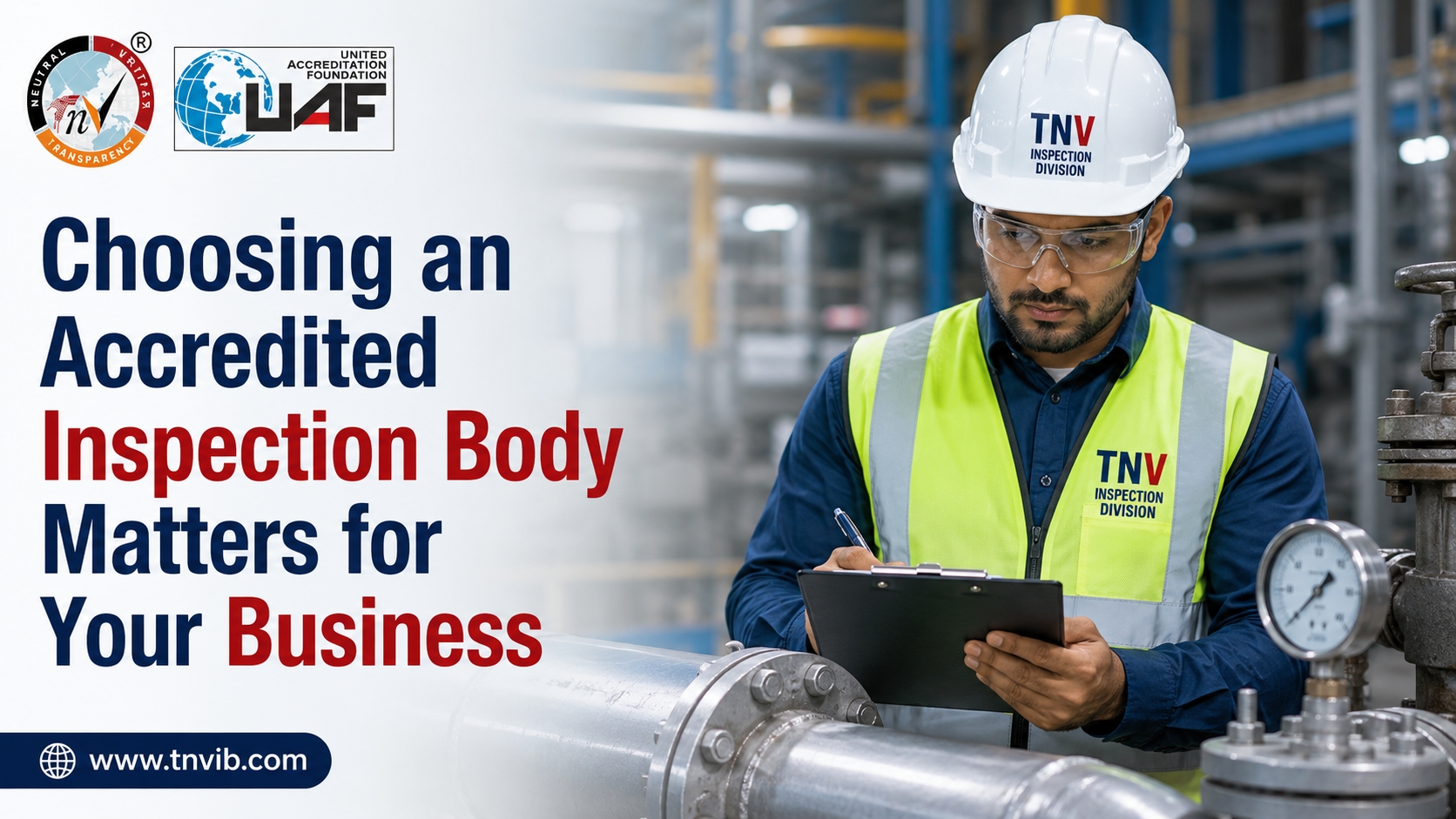
What Is an Accredited Inspection Body?
An accredited inspection body is an organization that has been formally assessed by an accreditation body for its competence to perform specified inspection activities within an approved scope.
Accreditation does not simply mean that an organization has registered itself or obtained a general business certificate.
It involves an external assessment against applicable requirements.
Depending on the accreditation framework and scope, areas considered can include:
Technical competence
Inspector qualifications
Independence and impartiality
Inspection procedures
Equipment and resources
Record management
Reporting practices
Management of inspection activities
This distinction is important because businesses often make significant commercial decisions using inspection findings.
Why Does Accreditation Matter in Third Party Inspection?
Third-party inspection is intended to provide an independent assessment of products, materials, equipment, processes, or other defined requirements.
The usefulness of that assessment depends on the competence and independence of the organization performing it.
Accreditation provides a structured framework for evaluating these characteristics.
Greater Confidence in Technical Competence
Inspection is not simply a visual examination.
Depending on the assignment, an inspector may need to understand:
Engineering drawings
Product specifications
Material requirements
Manufacturing processes
Inspection and test plans
Dimensional requirements
Technical documentation
Applicable inspection criteria
An accredited inspection body is assessed for competence within the activities covered by its accreditation scope.
For businesses, this can provide greater confidence that inspection work is being performed within an established system.
Accreditation Scope Is Just as Important as Accreditation
One of the most important things businesses should understand is that accreditation has a defined scope.
An inspection company should not automatically be assumed to be accredited for every service it offers simply because it holds an accreditation.
Before appointing a provider, businesses should therefore ask:
Which organization has accredited the inspection body?
Is the accreditation currently valid?
Which standard applies?
What inspection activities are included?
Is the required inspection activity within the applicable scope?
This is a more meaningful way to evaluate an accredited inspection agency than relying only on an accreditation logo or marketing statement.
What Is ISO/IEC 17020?
ISO/IEC 17020 provides requirements for the competence of bodies performing inspection and for the impartiality and consistency of their inspection activities.
It is widely associated with organizations conducting different types of inspection.
For businesses seeking independent inspection, understanding the distinction between inspection-body types can be useful.
What Is an ISO 17020 Type A Inspection Body?
An ISO 17020 Type A inspection body is a third-party inspection body subject to requirements concerning independence from the parties involved in the items it inspects.
This makes Type A particularly relevant where the objective is genuinely independent third-party inspection.
A buyer, manufacturer, exporter, EPC contractor, or project owner may prefer this model when inspection findings need to come from an organization that is structurally independent of the parties directly involved.
Why Independence Matters to Businesses
Independence is one of the main reasons businesses use external inspection in the first place.
Manufacturers normally have internal quality control systems. These remain essential, but they represent first-party checks.
A buyer may also inspect a supplier directly, which can represent a second-party activity.
An independent third-party inspection body provides another perspective.
Independent Findings Support Better Decisions
An independent inspection can provide information that helps businesses decide whether they need to:
Accept inspected products
Discuss deviations with a supplier
Request corrective action
Arrange further inspection
Review manufacturing progress
Assess shipment readiness
Evaluate supplier performance
The inspection organization provides findings based on the defined scope; the appropriate commercial or acceptance decision remains with the relevant parties.
How an Accredited Inspection Body Helps Manage Quality Risks
1. Independent Product Verification
Businesses may need products checked before they are accepted or shipped.
Depending on the inspection scope, verification may include:
Workmanship
Dimensions
Quantity
Physical condition
Identification
Packaging
Relevant documentation
Independent product inspection can help identify specified concerns before the goods progress further through the supply chain.
2. Material Verification
Incorrect materials can create significant problems when they enter manufacturing unnoticed.
Depending on the agreed requirements, material inspection may involve checking:
Material identification
Specified grades
Dimensions
Physical condition
Traceability
Relevant certificates
Identifying discrepancies earlier may reduce the risk of incorrect materials becoming part of the finished product.
3. Manufacturing Stage Inspection
For technically complex or high-value products, businesses may not want to wait until production is complete.
Inspection can be scheduled at defined manufacturing stages.
This may provide visibility into:
Manufacturing progress
Fabrication
Workmanship
Assembly
Specified dimensions
Material use
Defined inspection points
Relevant production documentation
Earlier inspection can make it easier to identify concerns before they affect a larger portion of production.
4. Pre-Shipment Verification
Once goods are shipped, correcting quality problems can become more difficult and expensive.
Pre-shipment inspection can provide information about finished products before dispatch.
Depending on the scope, this may include:
Product condition
Quantity
Workmanship
Packaging
Labels
Shipping marks
Identification
Relevant documentation
The inspection findings can then support the buyer's shipment decision.
Why Accreditation Is Important for Industrial Projects
Industrial projects can involve high-value machinery, fabricated equipment, steel components, electrical systems, materials, and other technically complex items.
A quality concern discovered after equipment reaches the project site may create significant disruption.
Independent inspection can therefore be planned at relevant stages before dispatch.
An accredited inspection body can be particularly valuable where businesses require a structured and technically competent inspection process for defined project requirements.
Industries That Use Accredited Inspection Services
Independent inspection can support businesses across a wide range of sectors.
Manufacturing and Engineering
Inspection can cover materials, components, fabrication, machinery, equipment, and finished products.
Oil and Gas
Depending on the applicable scope, inspection may support equipment, materials, fabricated components, and vendor-related project requirements.
Construction and Infrastructure
Inspection may be used for materials, fabricated items, equipment, and other defined project requirements.
Steel and Metal
Businesses may require independent verification of materials, dimensions, fabrication, workmanship, identification, and relevant records.
Railway
Inspection can support defined requirements involving railway-related components, equipment, materials, and manufacturing activities.
Electrical Equipment
Independent inspection may involve equipment condition, identification, specified characteristics, documentation, and defined verification activities.
Automotive Components
Manufacturers and buyers may use independent inspection to verify specified dimensions, workmanship, condition, identification, packaging, and documentation.
Accredited Inspection Body vs General Inspection Company
Not every organization offering inspection services is necessarily an accredited inspection body.
A general inspection company may provide useful services, but accreditation adds an independent assessment framework for the activities included within its scope.
When the project requires accredited inspection, businesses should verify the provider rather than assuming that terms such as "professional," "certified," or "approved" mean the same thing as accreditation.
They do not necessarily have the same meaning.
Questions Businesses Should Ask
Before appointing an inspection provider, ask:
Are you an accredited inspection body?
Which accreditation body provides the accreditation?
Which standard applies?
Is the accreditation currently valid?
Is my required inspection activity within your scope?
What technical experience does the assigned inspector have?
How will inspection findings be documented?
These questions help businesses evaluate the provider based on relevant evidence rather than promotional claims.
What Should You Look for Beyond Accreditation?
Accreditation is important, but it should not be the only factor considered.
Businesses should also evaluate the provider's suitability for the specific project.
Relevant Technical Experience
The provider should understand the product, equipment, manufacturing process, or industry being inspected.
Clear Inspection Scope
The organization should establish what will and will not be inspected before the assignment begins.
Reporting Quality
Reports should clearly document the inspection performed and relevant findings.
Geographic Capability
The provider should be able to coordinate inspection at the required supplier, factory, or project location.
Communication
Clear communication between the buyer, supplier, inspector, and inspection organization helps reduce misunderstandings.
Why Price Alone Should Not Determine Your Choice
Procurement teams naturally consider inspection cost, but selecting an inspection body solely because it offers the lowest quotation may create unnecessary risk.
The overall value of inspection depends on factors such as:
Technical competence
Relevant accreditation
Applicable scope
Inspector experience
Independence
Inspection coverage
Reporting quality
Businesses should therefore compare what is actually included in each quotation rather than simply comparing the final price.
How TNV Inspection Division Supports Independent Inspection
TNV Inspection Division provides independent third-party inspection services for manufacturers, exporters, importers, suppliers, buyers, EPC contractors, procurement organizations, and project owners.
TNV Inspection Division operates as a UAF accredited inspection body and an ISO 17020 Type A inspection body, with inspection activities conducted according to applicable requirements and scope.
Depending on the relevant scope and assignment, inspection services can support requirements involving:
Products
Materials
Industrial equipment
Vendors
Manufacturing activities
Factory-related requirements
Pre-shipment verification
Industrial and engineering projects
The objective is to provide independent and documented inspection findings that can help businesses obtain greater visibility into quality and supplier-related requirements.
When Should Your Business Use an Accredited Inspection Body?
An accredited inspection body may be particularly relevant when:
Independent third-party verification is required
Contractual requirements specify inspection
Products or equipment are technically complex
High-value procurement is involved
Buyers cannot regularly visit supplier facilities
Equipment needs inspection before shipment
A project requires inspection at defined manufacturing stages
Applicable requirements call for accredited inspection
The decision should always reflect the specific project, product, risk, and contractual requirements.
How to Choose the Right Accredited Inspection Body
Before making a final selection, businesses should compare providers based on:
Accreditation status
Applicable accreditation scope
Independence and impartiality
Relevant technical competence
Industry experience
Inspection capabilities
Inspector availability
Reporting practices
Geographic coverage
Rather than asking only, "Which inspection company is cheapest?" a better question is:
"Which accredited inspection body has the appropriate competence and scope for our specific inspection requirement?"
That approach places technical suitability and quality risk ahead of price alone.
Conclusion
Choosing an accredited inspection body matters because businesses often rely on inspection findings when making important quality, procurement, shipment, and project decisions.
Accreditation provides an independent framework for assessing an inspection body's competence and operation within a defined scope. When combined with relevant technical experience, independence, clear inspection criteria, and structured reporting, it can provide businesses with greater confidence in the inspection process.
Organizations should still verify the accreditation scope rather than assuming that every service offered by an accredited organization is covered.
For businesses requiring genuinely independent third-party inspection, an ISO 17020 Type A inspection body can be particularly relevant because of the framework's independence requirements.
As a UAF accredited inspection body operating as an ISO 17020 Type A inspection body, TNV Inspection Division supports applicable independent inspection requirements for manufacturers, buyers, exporters, suppliers, EPC contractors, and project organizations.
The goal is not to eliminate every possible quality risk or replace a manufacturer's internal quality controls. It is to provide competent, independent, and documented inspection findings that help businesses make better-informed decisions.
Frequently Asked Questions
What is an accredited inspection body?
An accredited inspection body is an inspection organization independently assessed for competence and operation against applicable requirements for activities included within its accreditation scope.
Why should businesses choose an accredited inspection body?
Accreditation provides an additional level of confidence that the organization has been assessed for relevant competence, impartiality, processes, and consistent inspection activities within its approved scope.
What is a UAF accredited inspection body?
A UAF accredited inspection body is an inspection organization accredited by the United Accreditation Foundation for specified activities within its applicable accreditation scope.
What does ISO 17020 Type A inspection body mean?
An ISO/IEC 17020 Type A inspection body is a third-party inspection body subject to requirements concerning independence from the parties involved in the items it inspects.
Is every service provided by an accredited inspection body accredited?
Not necessarily. Accreditation applies to a defined scope. Businesses should verify whether the specific inspection activity they require is included within the provider's applicable accreditation scope.
What is the difference between an accredited inspection body and an inspection company?
An inspection company may offer inspection services, while an accredited inspection body has undergone independent assessment for activities covered by its accreditation scope. The exact accreditation and scope should always be verified.
Does accredited inspection guarantee that a product has no defects?
No. Inspection provides findings according to the defined scope, method, items examined, and conditions at the time of inspection. Accreditation does not turn inspection into a guarantee that every possible defect will be identified or eliminated.
What should I check before hiring an accredited inspection agency?
Check its accreditation status, applicable scope, technical competence, independence, industry experience, inspection methodology, reporting practices, geographic availability, and suitability for your specific requirement.