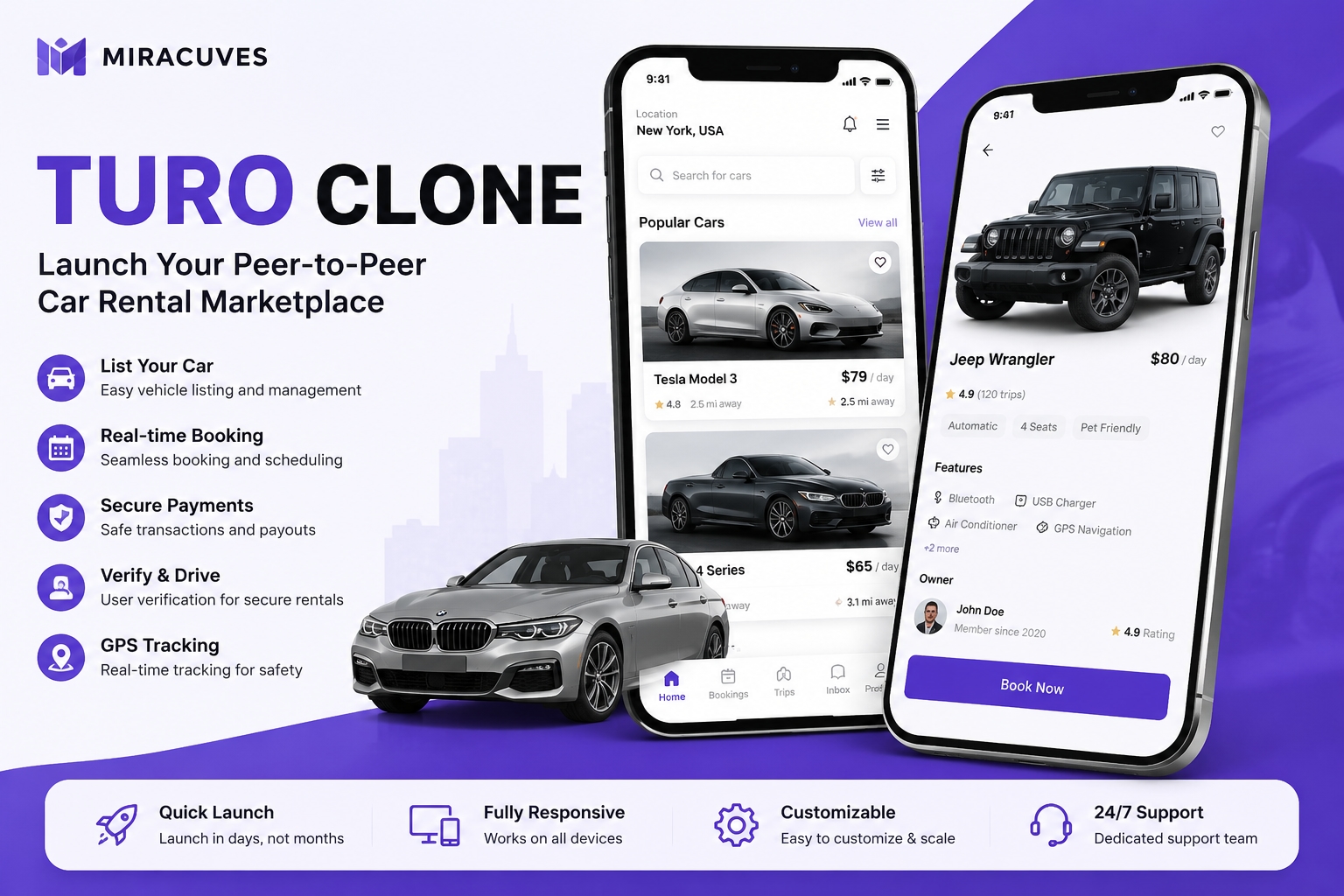
The transportation industry is rapidly evolving as consumers shift from traditional vehicle ownership toward flexible mobility services. Modern users now prefer renting vehicles on demand instead of managing long-term ownership expenses such as maintenance, insurance, parking, and depreciation.
This shift has created strong opportunities for startups building peer-to-peer car rental marketplaces similar to Turo.
Modern car rental platforms are no longer simple booking websites. They now function as complete mobility ecosystems with AI-driven pricing, real-time booking systems, GPS tracking, secure payments, digital identity verification, and scalable marketplace infrastructure. The peer-to-peer mobility market continues growing globally as users prioritize convenience, flexibility, and mobile-first experiences.
Why Peer-to-Peer Car Rental Models Are Growing
Traditional car rental systems often involve:
Lengthy paperwork
Limited vehicle choices
Fixed pricing structures
Manual verification processes
Inconvenient pickup workflows
Modern mobility platforms solve these problems by offering digital-first experiences where users can browse, compare, and reserve vehicles directly from smartphones.
Vehicle owners also benefit because they can monetize unused vehicles instead of allowing them to remain idle for most of the day.
This dual-sided marketplace model has become one of the strongest drivers behind the growth of Turo-like platforms. The global car-sharing industry continues expanding as urban consumers increasingly prefer access-based transportation models instead of ownership-heavy lifestyles.
Features Required in Modern Car Rental Platforms
Successful mobility apps require much more than basic booking functionality.
Real-Time Vehicle Booking
Users expect instant reservation systems with:
Live availability calendars
Instant confirmations
Flexible rental durations
Trip extension support
Automated reminders
Fast booking systems directly improve user retention and platform usability.
GPS Tracking and Telematics
Modern mobility platforms commonly integrate GPS systems for:
Vehicle tracking
Route monitoring
Theft prevention
Emergency assistance
Trip analytics
These systems help improve safety and operational transparency.
Secure Payment Systems
Reliable payment infrastructure remains one of the most important parts of mobility marketplaces.
Modern car rental apps support:
Credit and debit card payments
Digital wallets
Security deposits
Automated payouts
Refund management
Multi-currency transactions
Secure payment systems improve trust for both renters and vehicle owners.
Identity Verification Systems
Trust plays a major role in peer-to-peer mobility businesses.
Platforms therefore integrate:
Driver license verification
Government ID validation
Selfie verification
Fraud detection systems
Host and renter ratings
Strong verification systems help reduce marketplace abuse and improve user confidence.
How AI Is Changing Car Rental Platforms
Artificial intelligence is becoming a major competitive advantage in modern mobility apps.
Many founders initially focus only on dynamic pricing, but AI now supports broader operational automation.
Smart Renter Scoring
AI systems analyze:
Booking behavior
Cancellation history
Payment reliability
Driving records
User activity patterns
This helps identify risky users before rental approval.
Vehicle Utilization Optimization
AI can identify:
Underperforming vehicles
Seasonal demand changes
High-demand locations
Idle inventory patterns
This helps maximize booking frequency and platform revenue.
Fraud Prevention
Machine learning models can detect:
Suspicious booking activity
Fake accounts
GPS inconsistencies
Unusual payment behavior
Fraud prevention directly protects platform profitability.
Predictive Maintenance
AI-driven maintenance systems monitor:
Mileage
Engine performance
Tire conditions
Service schedules
This helps reduce vehicle downtime and operational failures.
Mobile Experience Is Critical
Most car rental bookings now happen through smartphones.
That means mobility apps must prioritize:
Fast-loading interfaces
Smooth navigation
Real-time notifications
Lightweight mobile architecture
Mobile payment systems
Poor mobile experiences often reduce conversions and increase uninstall rates.
Platforms that optimize mobile usability usually achieve better customer retention.
Monetization Models in Car Rental Platforms
Turo-like marketplaces support multiple revenue systems.
Booking Commissions
Most platforms generate revenue by charging commissions on completed rentals.
Premium Vehicle Listings
Vehicle owners can pay for promoted visibility inside search results.
Subscription Systems
Premium memberships may include:
Reduced fees
Priority customer support
Insurance upgrades
Exclusive vehicle access
Add-On Services
Additional monetization opportunities include:
Airport delivery
Insurance packages
Child seat rentals
GPS add-ons
Roadside assistance
These services help increase average transaction value significantly.
Why Startups Prefer Ready-Made Marketplace Infrastructure
Building a car rental platform from scratch can require large budgets, long development cycles, and complex operational planning.
Many startups now prefer scalable white-label mobility architectures because they help reduce:
Development timelines
Infrastructure costs
Operational complexity
Technical risk
Platforms like the Miracuves help businesses accelerate launch timelines with built-in booking systems, GPS integration, secure payment infrastructure, and customizable marketplace architecture. The platform also supports white-label deployment, scalable backend systems, and real-time booking management.
The Future of Mobility Platforms
The future of transportation is increasingly digital, flexible, and automated.
Future mobility ecosystems will likely focus on:
Electric vehicle rentals
AI-powered automation
Contactless vehicle access
Subscription mobility models
Smart fleet analytics
Predictive maintenance systems
Consumers no longer prioritize ownership the way previous generations did.
They increasingly value convenience, flexibility, accessibility, and mobile-first transportation experiences.
As urban mobility behavior continues evolving globally, Turo-like car rental platforms remain one of the strongest opportunities in the growing digital mobility industry.