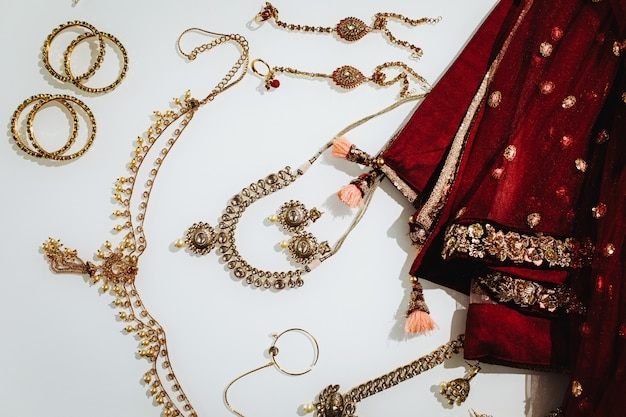
Artificial jewelry is becoming an increasingly visible part of India’s fashion and accessories landscape as consumers seek affordable ways to complement changing outfits, occasions, and personal styles. Unlike precious jewelry, artificial pieces can offer greater flexibility in design and price, allowing buyers to experiment with colours, patterns, materials, and statement styles without making the same level of investment.
A recent study by MarkNtel Advisors highlights that the India artificial jewelry sector was valued at USD 4.98 billion in 2025 and reached USD 5.87 billion in 2026, with the market set to reach USD 9.73 billion by 2032, registering a CAGR of 8.79% during 2026–2032. Growth is supported by changing consumer preferences, affordable fashion accessories, domestic manufacturing capabilities, e-commerce expansion, and increasing purchases for weddings, festivals, and everyday wear.
Earrings Lead Everyday Fashion Choices
Earrings accounted for around 30% of the India artificial jewelry market in 2026, making them the leading product category. Their relatively accessible price points, variety of designs, and suitability for both everyday and occasion-based use contribute to their popularity.
Studs, hoops, danglers, ethnic earrings, and contemporary designs allow consumers to coordinate accessories with different clothing styles. Their smaller size also enables manufacturers to introduce new designs frequently, helping retailers respond quickly to changing fashion preferences.
Metal-Based Designs Offer Versatile Styling
Metal-based artificial jewelry held around 39% of the market in 2026, making it the leading material category. Brass, alloys, plated metals, and related materials can provide the appearance and structural characteristics required for a wide range of fashion accessories.
These materials allow manufacturers to produce traditional-inspired pieces, contemporary collections, statement jewelry, and everyday accessories at different price points. Established production centres also support design development and faster manufacturing cycles.
Millennials and Gen Z Influence Design Trends
Younger consumers are contributing to changes in artificial jewelry preferences by combining traditional Indian accessories with contemporary fashion. Pieces inspired by cultural motifs can be worn with modern western outfits, while minimalist designs can complement ethnic clothing.
Social media platforms further accelerate these shifts by exposing consumers to new styling ideas, celebrity-inspired looks, influencer collections, and rapidly changing fashion trends. The ability to purchase affordable pieces encourages experimentation and allows consumers to refresh their accessory collections more frequently.
Weddings and Festivals Create Seasonal Demand
Indian weddings and festivals remain important occasions for artificial jewelry purchases. Consumers often require different accessories for ceremonies, parties, family gatherings, and traditional celebrations, creating demand for necklaces, earrings, bangles, bracelets, rings, and coordinated sets.
Artificial jewelry can provide an accessible alternative for consumers seeking elaborate designs for specific occasions. It also enables buyers to match accessories with particular outfits without committing to the higher cost associated with precious-metal jewelry.
Online Shopping Expands Product Access
E-commerce and omnichannel retail are improving access to artificial jewelry across India. Consumers can browse larger collections, compare prices, review designs, and purchase products without visiting physical markets.
The MarkNtel Advisors analysis identifies expanding e-commerce and omnichannel retail as important factors supporting wider customer reach. Digital channels also allow direct-to-consumer brands to introduce collections quickly and communicate directly with their target audiences.
For sellers, online channels provide opportunities to test designs, understand consumer preferences, and reach customers beyond established jewellery markets.
North India Holds a Strong Regional Position
North India accounted for approximately 33% of the artificial jewelry market in 2026, representing the largest regional share. The region benefits from significant consumer demand, established retail networks, fashion markets, and cultural occasions where jewelry forms an important part of personal styling.
The market remains highly fragmented, with the top five players collectively accounting for nearly 18% of the industry. This structure provides opportunities for established brands, regional manufacturers, independent designers, online sellers, and specialised fashion jewelry businesses.
Design Innovation Keeps Competition Active
Artificial jewelry manufacturers operate in a market where consumers can quickly shift between designs, colours, materials, and styling preferences. Product development therefore requires close attention to fashion cycles and customer feedback.
Manufacturers can differentiate through design originality, material quality, packaging, price positioning, customization, and online presentation. Faster design turnover can help brands maintain consumer interest, although managing large numbers of styles can also increase inventory and production complexity.
Consumer Trust Matters Alongside Affordability
Artificial jewelry offers accessibility, but consumers still evaluate finish quality, durability, comfort, colour retention, and product appearance. Clear descriptions of materials and appropriate care instructions can help customers make informed purchasing decisions.
The Bureau of Indian Standards provides consumer guidance on hallmarking and purity for precious jewelry, which is distinct from most artificial jewelry products. Consumers should therefore understand the material composition and product description rather than assuming that artificial pieces carry the same characteristics or verification requirements as hallmarked precious jewelry. (BIS)
Artificial jewelry is consequently becoming an important part of India’s fashion ecosystem, supported by affordability, design variety, digital retail, cultural occasions, and changing consumer preferences. As brands continue combining traditional influences with contemporary styling, product innovation and accessible designs will remain central to the category’s development.