Discover the best CNC tools for aluminum machining, including carbide drills, grooving inserts, chamfer tools, and knurling tools for precise results.
Best CNC Tools for Aluminum Machining | Guide
Aluminum is widely used in automotive, aerospace, electronics, and general manufacturing because it is lightweight, corrosion-resistant, and relatively easy to machine. However, achieving accurate dimensions and a clean surface finish depends heavily on selecting the right CNC tool for the job. The correct tooling can reduce cutting forces, prevent material buildup, and improve productivity during aluminum machining.
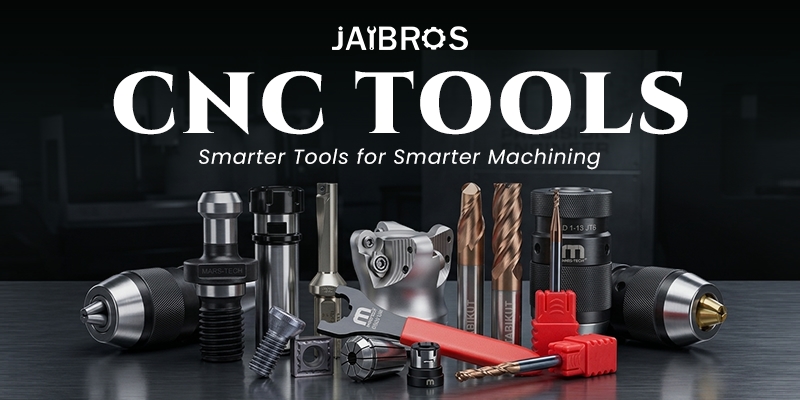
From drilling and grooving to chamfering and threading, different machining operations require different CNC tools. Understanding their applications can help machinists select suitable tooling and achieve consistent results.
Why Tool Selection Matters When Machining Aluminum
Although aluminum is softer than many steels, it can create machining challenges. Its tendency to stick to cutting edges can lead to built-up edges, poor surface finishes, and premature tool wear.
A suitable CNC tool should provide sharp cutting edges, efficient chip evacuation, and enough rigidity for the machining operation. Proper cutting speed, feed rate, coolant, and tool geometry are also important for maintaining performance.
Carbide tooling is commonly used because it can maintain a sharp cutting edge at high cutting speeds. However, the ideal tool depends on the aluminum alloy, machine setup, depth of cut, and type of operation.
1. Carbide Drill for Accurate Hole Making
A carbide drill is an important option when producing precise holes in aluminum components. Carbide provides excellent hardness and wear resistance while allowing high-speed machining.
When choosing a drill, consider the required hole diameter, depth, coolant availability, and machine rigidity. Proper flute geometry helps remove aluminum chips efficiently and reduces the possibility of chip packing.
For production machining, selecting the correct carbide drill can improve hole quality and reduce the frequency of tool changes.
2. Grooving Insert for Groove Machining
A grooving insert is designed to create internal or external grooves, slots, and other narrow features. Aluminum machining requires an insert with suitable geometry to prevent material from sticking to the cutting edge.
Sharp-edged inserts can help produce cleaner cuts and improve chip control. The insert should also be matched with the correct tool holder and cutting parameters.
Using the appropriate CNC tool for grooving helps maintain dimensional accuracy and reduces unnecessary cutting resistance.
3. Filler Gauge for Checking Accuracy
A filler gauge, also known as a feeler gauge, is not a cutting tool but can be useful during machining and inspection work. It consists of thin metal blades with specific thicknesses and is used to measure small gaps between surfaces.
During CNC machining, a filler gauge can help technicians check clearances, machine setups, fixture conditions, and component alignment.
Although it does not remove material, accurate measurement is an important part of maintaining quality when working with precision-machined aluminum components.
4. Torx Screw for Secure Tool Assembly
A Torx screw is commonly used in various industrial and mechanical assemblies because its star-shaped drive provides good torque transfer. In machining environments, screws of this type may be used for securing inserts, components, or tooling assemblies, depending on the tool design.
A properly tightened Torx screw helps keep components securely positioned during machining. Loose or incorrectly installed fasteners can cause vibration, dimensional errors, or even damage to the tooling.
For this reason, fastener condition should be checked whenever tooling is installed or replaced.
5. Chamfer Tool for Clean Edges
A chamfer tool is used to create angled edges on machined components. Chamfering removes sharp edges and can also improve the appearance and assembly of aluminum parts.
Because aluminum is relatively soft, a sharp chamfering edge can produce a smooth finish when the correct cutting parameters are used. The tool diameter, chamfer angle, spindle speed, and feed rate should be selected according to the application.
Using a dedicated CNC tool for chamfering can also make edge preparation more consistent across multiple components.
6. Knurling Tool for Surface Patterns
A knurling tool produces a patterned texture on the surface of a component. Knurling can improve grip on handles, knobs, shafts, and other cylindrical parts.
When machining aluminum, the pressure and feed must be controlled carefully because excessive force can deform the workpiece. The appropriate knurling pattern and tool setup depend on the required surface design and component dimensions.
A stable machine setup is particularly important because vibration can affect the consistency of the pattern.
How to Choose the Right Tool for Aluminum
Before selecting a CNC tool, consider the following factors:
Type and grade of aluminum
Machining operation
Required surface finish
Cutting speed and feed rate
Depth of cut
Machine rigidity
Tool material and coating
Coolant or lubrication requirements
Required dimensional tolerance
Sharp cutting edges and efficient chip evacuation are especially important when machining aluminum. Operators should also monitor tool wear and adjust machining parameters when necessary.
Tips for Better Aluminum Machining
Using suitable CNC tools is only one part of achieving good machining results. Keep the workpiece securely clamped and make sure the tool holder has minimal runout. Use appropriate cutting parameters and avoid excessive tool engagement whenever possible.
Chip buildup should also be monitored because aluminum chips can interfere with the cutting process. Regularly inspecting the cutting edge can help identify wear or built-up material before it affects component quality.
Frequently Asked Questions
What type of CNC tool is best for aluminum?
Carbide tools with sharp cutting edges are commonly used for aluminum because they support high-speed machining and can provide good surface finishes.
Why does aluminum stick to cutting tools?
Aluminum can adhere to cutting edges when cutting conditions, tool geometry, lubrication, or cutting parameters are not suitable. Proper tool selection and chip evacuation can help reduce this issue.
Are carbide drills suitable for aluminum?
Yes. A suitable carbide drill can provide accurate holes and support high-speed machining when the correct geometry and cutting parameters are used.
What is a chamfer tool used for?
A chamfer tool creates angled edges on a machined component. It can remove sharp edges and prepare parts for assembly.
How can CNC tool life be improved when machining aluminum?
Tool life can be improved through proper cutting parameters, effective chip evacuation, suitable lubrication, secure workholding, and regular inspection of the cutting edge.
Conclusion
Successful aluminum machining requires more than simply selecting a cutting tool. The machining operation, material grade, machine setup, cutting parameters, and inspection process all influence the final result. Choosing suitable CNC tools such as carbide drills, grooving inserts, chamfer tools, and knurling tools can help improve accuracy, surface quality, and machining consistency.
With the right tooling strategy and regular inspection, manufacturers can achieve reliable results while maintaining efficient aluminum machining operations.