Healthy skin plays an essential role in protecting the body from environmental irritants, bacteria, and moisture loss. When skin becomes damaged through minor cuts, scrapes, or other everyday injuries, appropriate care can help support its natural repair process. Choosing a suitable cream to heal wounds involves understanding how moisture balance, gentle protection, and proper wound-care practices contribute to recovery. Rather than focusing only on a product’s claims, it is important to consider the type of injury, the condition of the surrounding skin, and whether professional medical guidance is needed.
Understanding the Skin’s Natural Repair Process
Skin repair is a coordinated biological process that begins soon after an injury. The body works to control bleeding, respond to damage, rebuild tissue, and gradually strengthen the affected area. The time required for recovery varies according to the wound’s depth, location, size, and the individual’s overall health.
Why Moisture Matters During Recovery
Maintaining an appropriate level of moisture is an important principle in modern wound care. When a suitable dressing or topical product prevents a wound from drying excessively, it can support the movement of skin cells across the affected area. However, excessive moisture can soften the surrounding skin and contribute to irritation.
The goal is to maintain a balanced environment rather than allowing the wound to become either excessively dry or waterlogged. Gentle cleansing, appropriate wound coverage, and regular observation can help support this balance throughout recovery.
The Importance of Protecting Damaged Skin
Damaged skin needs protection from friction, contamination, and repeated irritation. Cleaning minor wounds with clean running water and covering them with an appropriate sterile dressing can help reduce exposure to dirt and further injury. The dressing should be changed according to its instructions and whenever it becomes wet or dirty.
Topical products may be useful in selected situations, but no cream can replace proper wound cleaning, suitable dressings, or medical assessment when an injury requires professional care.
Choosing a Suitable Topical Product
Selecting a topical formula requires more than comparing packaging or marketing claims. Consumers should consider the product’s intended use, ingredients, directions, warnings, and compatibility with the affected area.
Features Worth Considering
A suitable product for minor wound care should have clear usage instructions and be appropriate for the particular injury. Some formulations are designed to soothe the skin, while others help maintain moisture or protect the wound surface.
People with sensitive skin should pay attention to potential irritants and avoid ingredients that have previously caused an adverse reaction. Products intended for intact skin should not automatically be assumed suitable for open wounds.
What to Look for in a Formula
When comparing options marketed as the best cream for healing skin, consider whether the product is specifically intended for the type of skin damage being treated. A useful evaluation includes the formulation, safety information, application instructions, and any relevant professional recommendations.
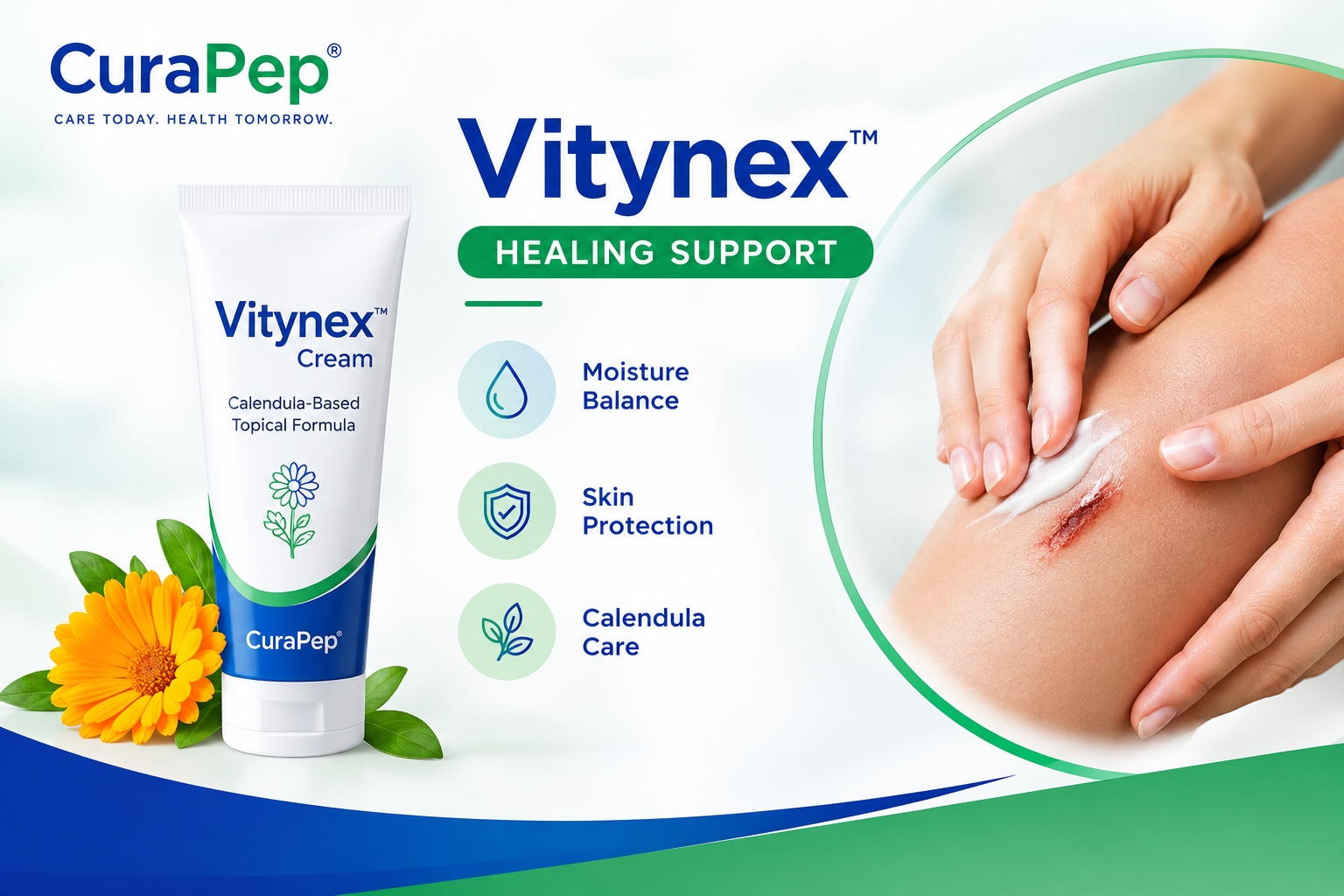
CuraPep offers Vitynex™ Cream, a calendula-based topical product intended for selected minor skin injuries. Its product information describes soothing and moisture-retention properties. Consumers should review the official label and consult a healthcare professional when uncertain about whether a product is appropriate for their wound.
How Moisture Balance Supports Skin Recovery
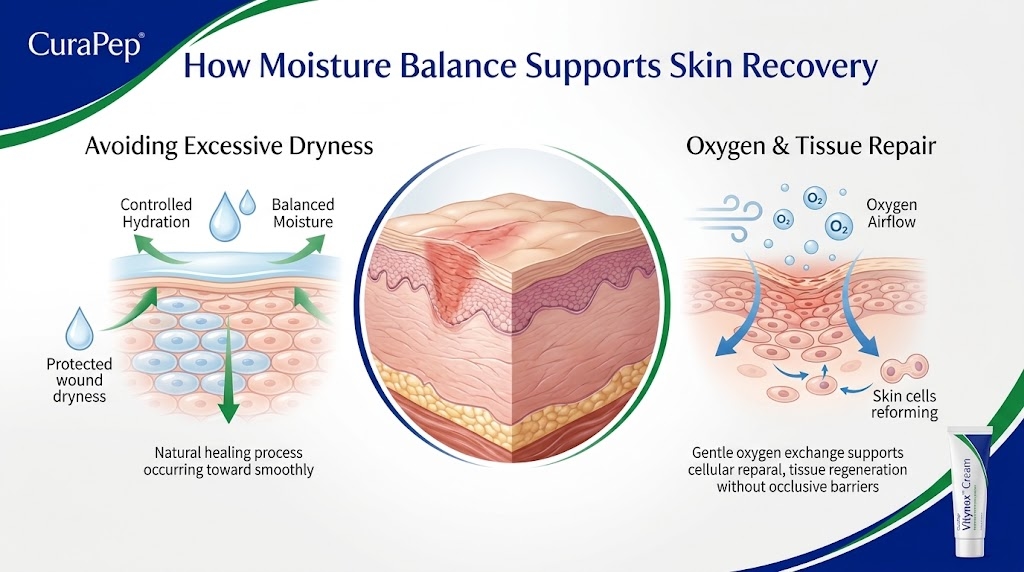
Moisture management is only one part of effective wound care, but it can make a meaningful difference in how the affected area is protected during recovery. The objective is to create conditions that allow the body’s natural repair mechanisms to function while limiting avoidable irritation.
Avoiding Excessive Dryness
A wound that becomes excessively dry may develop a firm surface that can interfere with the movement of new skin cells. Appropriate wound coverings can help preserve a favorable moisture balance and protect the area from friction.
However, keeping a wound moist does not mean leaving it wet or applying thick layers of any available cream. Follow the product’s directions and use appropriate dressing when needed. If the surrounding skin becomes pale, softened, or increasingly irritated, reassess the wound-care routine.
Understanding Oxygen and Tissue Repair
Oxygen is essential for many processes involved in tissue repair, including cellular activity and the formation of new tissue. Healthy circulation helps deliver oxygen to injured areas, while certain medical conditions and circulation problems may slow recovery.
Some wound-care products are designed around moisture management and oxygen-supportive principles. When considering the best healing cream for skin, consumers should distinguish between a product’s intended design and independently established evidence of its effectiveness. Product claims should be evaluated carefully, and persistent or complex wounds should be managed with appropriate medical guidance.
Considering Ingredients and Individual Skin Needs
Different skin conditions call for different approaches. A product suitable for a minor scrape may not be appropriate for an infected wound, a deep injury, or sensitive skin around the eyes. Understanding the intended use of each ingredient and formulation can help people make more informed choices.
Calendula-Based Topical Care
Calendula is a botanical ingredient used in various topical preparations. Some products containing calendula are marketed for soothing and supporting the care of minor skin injuries. However, the presence of a botanical ingredient alone does not establish that a product will accelerate healing, and evidence may differ according to the formulation and intended use.
Vitynex™ Cream contains calendula as its active ingredient, according to its product labeling. People who are sensitive to botanical ingredients or any listed component should review the label before use and discontinue the product if an adverse reaction occurs.
Supporting Sensitive Facial Skin
Facial skin can be particularly vulnerable to irritation because of frequent cleansing, cosmetic use, and environmental exposure. Small injuries in this area should be handled gently, without aggressive scrubbing or unnecessary application of multiple topical products.
When evaluating the best healing skin cream, consider whether it is labeled for the specific use you have in mind. Products suitable for minor wounds elsewhere on the body are not automatically appropriate for the face, eyelids, or areas close to the eyes. Follow the product label and seek professional advice for facial wounds that are deep, infected, or slow to improve.
Practical Steps for Caring for Minor Wounds
A consistent routine helps protect damaged skin and makes it easier to notice signs that a wound may need additional attention.
Clean and Protect the Area
Begin by washing your hands and gently rinsing a minor wound with clean running water. Apply gentle pressure with clean gauze or a cloth if there is minor bleeding. Once bleeding is controlled, cover the area with a suitable sterile dressing.
Avoid using harsh household chemicals or irritating substances on open wounds. If you use a topical product, make sure it is intended for that type of injury and follow its labeled directions.
Monitor the Healing Process
Check the wound regularly for changes in appearance, discomfort, swelling, and drainage. Minor injuries should generally show gradual improvement, although the pace of recovery varies.
Increasing redness, warmth, swelling, worsening pain, pus, or fever can indicate a complication and warrants medical assessment. Deep punctures, animal bites, heavy bleeding, serious burns, and wounds that may require stitches should receive appropriate medical attention rather than being treated with cream alone.
People with diabetes, poor circulation, reduced sensation, or a history of difficult wound healing should seek professional advice early, even when an injury initially appears minor.
When Professional Guidance Is Necessary
Choosing the right topical product is not always enough to ensure a wound heals appropriately. Persistent wounds may be affected by infection, reduced blood flow, underlying health conditions, or repeated pressure on the injured area.
For these situations, a healthcare professional can assess the wound, recommend suitable dressings, and determine whether additional treatment is necessary. Products intended for minor injuries should not be used as substitutes for medical care in serious or complicated cases.
Conclusion
Supporting skin recovery starts with proper wound cleaning, appropriate protection, balanced moisture, and careful observation. A suitable topical product may complement these practices when it is intended for the injury being treated, but results depend on the wound and the individual’s circumstances.
For people exploring the best skin healing cream for face, it is especially important to verify that the chosen product is appropriate for facial use and to avoid sensitive areas unless the label specifically permits application there. CuraPep’s Vitynex™ Cream is one option to review for its labeled uses and ingredient information. Ultimately, informed product selection, realistic expectations, and timely professional care provide a more responsible foundation for supporting the skin’s natural repair process.