
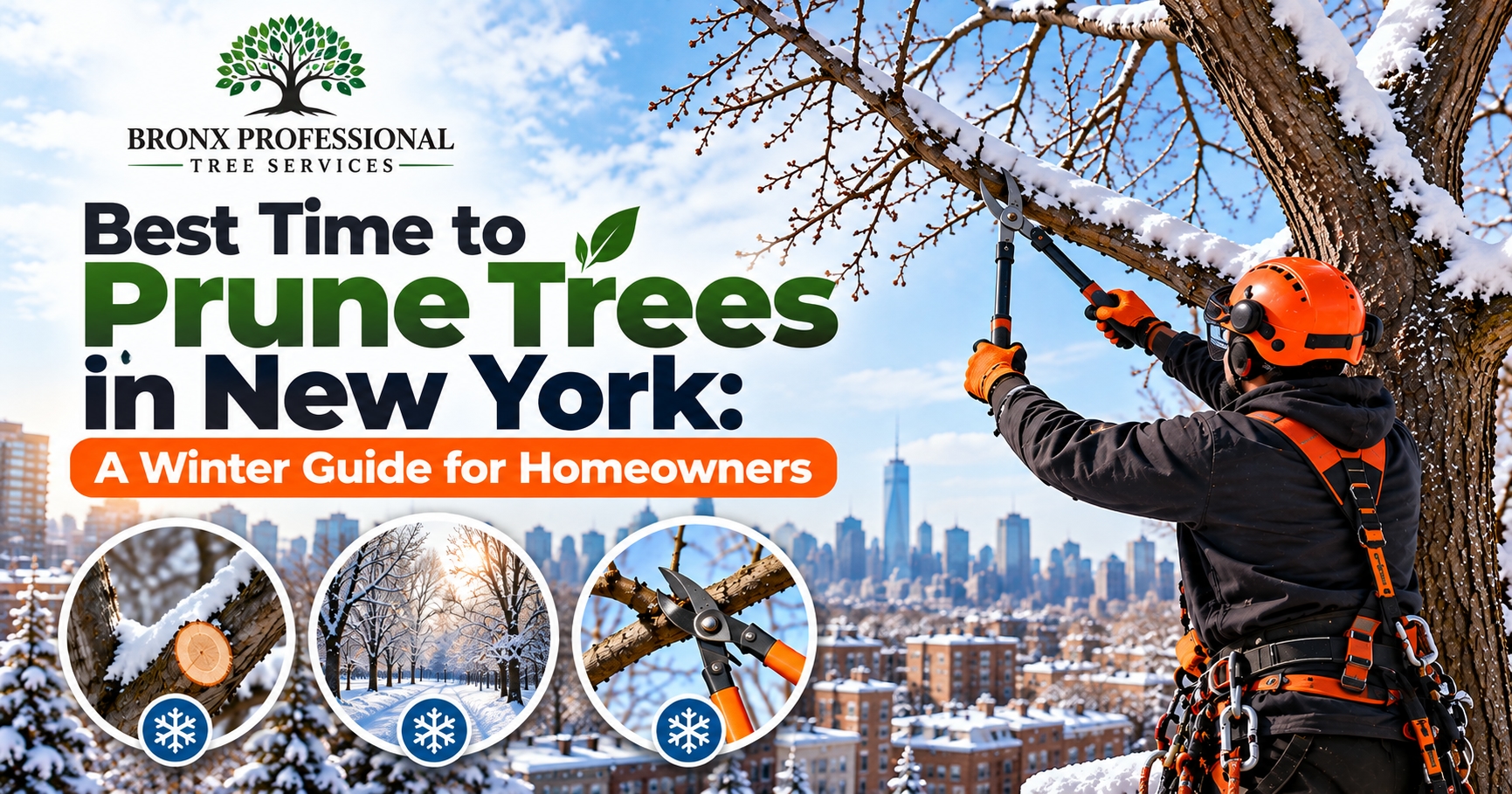
As winter approaches in New York, homeowners in the Bronx should assess their trees before freezing temperatures, snow, and ice put additional stress on damaged branches. A professional Bronx tree service can help identify structural weaknesses and determine whether pruning is needed. Late winter is often suitable for pruning many deciduous trees because bare branches make structural problems easier to spot. However, the ideal timing depends on the tree species, its condition, and the reason for pruning.
Winter tree care is not just about appearance. Removing selected dead or damaged branches, identifying structural weaknesses, and addressing potential hazards can help protect people and property. Knowing when to prune—and when a tree may need more extensive attention—can help Bronx homeowners prepare their landscapes for the colder months.
Why Winter Can Be a Good Time to Prune Trees in New York
Many deciduous trees enter dormancy during winter, meaning active growth slows and their leaves have fallen. This makes it easier to see the tree's overall structure and identify branches that are dead, crossing, damaged, or poorly attached.
Dormant-season pruning can also reduce the risk of certain insect and disease problems, although the appropriate timing varies by species. New York homeowners should avoid assuming that every tree benefits from the same pruning schedule.
Some benefits of properly timed winter pruning include:
Better visibility: Without leaves, homeowners and tree-care professionals can inspect the branch structure more easily.
Removal of damaged limbs: Dead, broken, or hazardous branches can be identified and addressed.
Improved tree structure: Selective cuts can help manage crossing branches and structural problems.
Preparation for spring: Appropriate pruning can help maintain a tree's structure before new growth begins.
Winter pruning should be planned carefully. Severe cold, ice-covered branches, and unsafe working conditions can make tree work hazardous, so timing should account for both tree health and worker safety.
When Is the Best Time to Prune Trees in the Bronx?
For many established deciduous trees, late winter, before spring growth begins, is a suitable pruning window. At this stage, the tree is generally dormant, and its branch structure is visible. Nevertheless, some species require different timing to reduce disease risks or preserve seasonal flowering.
New York's weather can vary considerably from one winter to the next. Homeowners should consider the tree's condition rather than relying only on the calendar.
Early Winter: Inspect and Plan
Early winter is a useful time to inspect trees for obvious problems and plan necessary maintenance. Look for broken limbs, visible cracks, dead branches, and branches that may interfere with buildings or walkways.
Avoid climbing trees or cutting large limbs yourself. If a branch is hanging over a roof or appears unstable, arrange a professional assessment rather than waiting for the next storm.
Mid to Late Winter: Plan Dormant-Season Pruning
Mid to late winter can be appropriate for pruning many trees while they remain dormant. A professional can determine which branches need removal and whether the proposed work is suitable for that species.
Not every tree should be pruned according to the same schedule. Certain diseases, including oak wilt, require particular attention to pruning timing. Consult a qualified tree-care professional when the species or condition makes the decision uncertain.
After Snow or Ice Damage: Address Hazards Promptly
Snow and ice can weigh down branches and contribute to breakage, especially when a tree already has structural weaknesses. After severe weather, inspect trees from a safe distance.
If a major branch has split or is hanging precariously, keep people away from the area and arrange a professional evaluation. Never attempt to cut branches that are entangled with electrical wires; contact the utility provider or appropriate emergency service.
Signs Your Trees May Need Winter Pruning
Not every tree needs seasonal pruning. However, certain warning signs indicate that an inspection may be worthwhile.
Dead branches: Bare or brittle limbs that show no signs of life may need assessment.
Cracked or split limbs: Visible cracks can indicate structural weakness, particularly after storms.
Crossing branches: Branches rubbing against each other can damage bark and create wounds.
Overextended limbs: Branches growing toward roofs, driveways, or walkways may need selective management.
Unusual leaning or root disturbance: A sudden change in a tree's position requires prompt professional evaluation.
These signs do not automatically mean that a tree must be cut down. In many cases, targeted pruning may address the issue. More serious structural damage, extensive decay, or instability may require additional assessment to determine whether the tree can be retained safely.
Tree Pruning vs. Tree Removal: Which Is Right for Your Property?
One of the most important winter tree-care decisions is determining whether a tree can be maintained or needs removal.
Pruning involves selectively removing branches while retaining the tree. Removal involves cutting down the entire tree when keeping it is no longer appropriate or when a significant risk cannot be managed adequately.
Situation | Possible approach |
A few dead or crossing branches | Selective pruning |
Minor structural problems | Professional assessment and corrective pruning |
Broken branches after a storm | Prompt hazard assessment |
Severe trunk damage or extensive instability | Assessment for possible removal |
A remaining stump after removal | Stump grinding or removal, if needed |
For homeowners researching Bronx tree removal, the key is to avoid assuming that removal is necessary simply because a tree has damaged branches. A qualified professional should evaluate the tree's condition, the surrounding property, and the available options before recommending major work.
When to Consider Bronx Tree Cutting Services
Some tree problems require more than routine pruning. A large, damaged tree near a house, garage, driveway, or pedestrian area may need a professional evaluation to determine the safest approach.
When comparing tree cutting Bronx services, consider the nature of the problem, the size of the tree, access to the work area, and the proximity of buildings or utilities. Large branches and trees can shift unexpectedly during cutting, making professional equipment and appropriate safety procedures essential.
Homeowners looking for Bronx tree cutting assistance should ask the provider to explain why the proposed work is necessary, whether selective pruning could solve the problem, and what precautions will protect nearby property.
If complete removal is recommended, ask whether the estimate includes cutting and hauling away the tree, cleanup, and any additional stump work. The scope of these services can differ from one provider to another.
What Bronx Homeowners Should Know About Stump Removal
After a tree has been cut down, the remaining stump may interfere with landscaping, create a tripping hazard, or occupy space intended for a new planting or outdoor project.
Stump removal Bronx services may include stump grinding, which reduces the stump to wood chips below or near ground level, or more extensive extraction, depending on the site and the homeowner's plans.
Before choosing an option, consider:
The stump's diameter and location.
The proximity of foundations, walkways, and underground utilities.
Whether the area will be replanted or landscaped.
How the resulting wood chips and disturbed soil will be handled.
Stump work does not usually need to happen immediately after tree removal unless the stump creates a specific hazard or interferes with planned work. Homeowners can discuss timing and the most suitable method with their tree-care provider.
How to Choose a Tree Service in the Bronx
Winter tree work often involves heavy limbs, slippery surfaces, limited visibility, and nearby structures. Choosing a qualified professional can help reduce risks and prevent unnecessary damage.
When evaluating a tree service Bronx provider, ask about insurance, relevant qualifications, safety procedures, and experience with similar trees and properties.
A dependable provider should be able to explain the difference between maintenance pruning, hazardous-branch removal, and complete tree removal. They should also provide a clear estimate outlining the work, cleanup, and any additional charges.
When comparing Bronx tree service options, avoid choosing solely on price. A clear assessment and a well-defined scope of work help you understand what the service includes and why it is recommended.
New York City also distinguishes between public street trees and trees on private property. NYC Parks handles eligible street-tree pruning requests, including certain cases involving damaged branches, blocked sidewalks, or property damage. Private-property trees are generally the owner's responsibility. Homeowners can check the city's official guidance before arranging work on a street tree.
Winter Tree-Care Checklist for Homeowners
Before winter weather becomes more severe, take a few minutes to review your property's trees.
Inspect visible branches from the ground.
Look for cracks, deadwood, and recent storm damage.
Keep vehicles and outdoor furniture away from visibly damaged limbs.
Arrange professional assessment for large or unstable branches.
Confirm that any proposed pruning is appropriate for the tree species.
Plan removal and stump work separately when necessary.
Recheck trees after significant snow, ice, or wind events.
Routine inspections cannot prevent every tree-related hazard, but they can help homeowners recognize problems before they become more serious.
Frequently Asked Questions
Is winter a good time to prune trees in New York?
Yes. Late winter is suitable for many deciduous trees, although timing depends on the species, tree condition, and disease risks.
Should damaged branches be removed immediately?
Hazardous branches should be assessed promptly. Keep away from unstable limbs and leave dangerous cutting work to qualified professionals.
Does every damaged tree need removal?
No. Selective pruning may be enough for some trees. Removal may be considered when serious structural problems or risks cannot be adequately managed.
Can a tree stump be removed during winter?
Stump grinding or removal may be possible during winter, depending on ground conditions, access, and the equipment required.
Who is responsible for pruning street trees in the Bronx?
NYC Parks handles eligible street-tree maintenance requests, while private-property trees are generally the property owner's responsibility. Check the city's current guidance for specific situations.
Conclusion
Preparing trees for winter is an important part of responsible property maintenance in New York. Identifying damaged branches, planning suitable dormant-season pruning, and addressing genuine safety concerns can help homeowners protect their properties while preserving healthy trees.
For Bronx homeowners, the best approach is to assess each tree individually rather than automatically choosing extensive cutting or removal. With appropriate planning and professional guidance, winter tree care can address existing problems and help prepare the landscape for spring.


